Maritime Flags for Recreational Boaters: What to Know
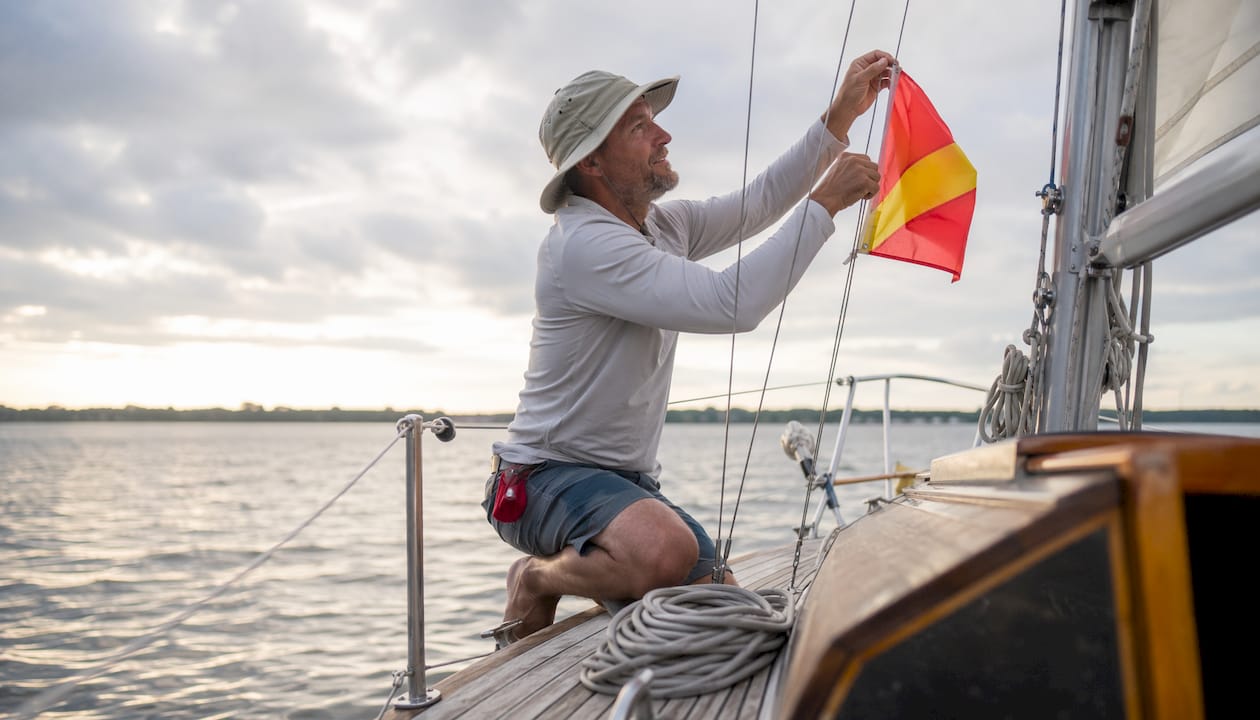
Maritime flags are standardized visual signals used for identification, navigation intentions, and emergency alerts at sea. Every recreational boater operating in U.S. waters needs three skills: recognize single-letter emergency flags on sight, fly the correct national ensign and courtesy flag in the right position, and treat flags as a reliable backup when VHF radio fails or a language barrier makes voice communication impossible.
If you see a distress hoist: Reduce speed immediately, keep clear of the vessel, switch to VHF Channel 16, and render assistance only when it is safe to do so. The International Code of Signals is the authoritative reference for all formal flag meanings used in U.S. and international waters.
Must-know flags at a glance:
- O (Oscar): Man overboard
- V (Victor): I require assistance
- W (Whiskey): I require medical assistance
- A (Alfa): Diver down, keep clear at slow speed
- N + C (November + Charlie): International distress combination
Safeboatingamerica’s NASBLA-approved courses, taught by USCG-Licensed Captains and State Certified Instructors, cover these signals as part of every state-approved certification curriculum.
Table of Contents
- What do maritime flags mean? A quick-reference guide
- What are ensigns and courtesy flags, and when must you fly them?
- How should you place flags correctly on your boat?
- Why does context change what a flag signal means?
- How do you hoist, maintain, and respond to signal flags on your boat?
- Key Takeaways
- Why maritime flags still deserve serious attention in 2026
- Safeboatingamerica: state-approved training that covers flag procedures
- Useful sources and further reading
- FAQ
What do maritime flags mean? A quick-reference guide
The International Code of Signals (INTERCO) governs the formal meanings of all nautical signal flags. A complete set includes 26 alphabet flags, 10 numeral pennants, 3 substitute flags, and an answering pennant. Single-letter flags carry the most urgent, safety-critical meanings and are the ones every recreational boater must recognize.
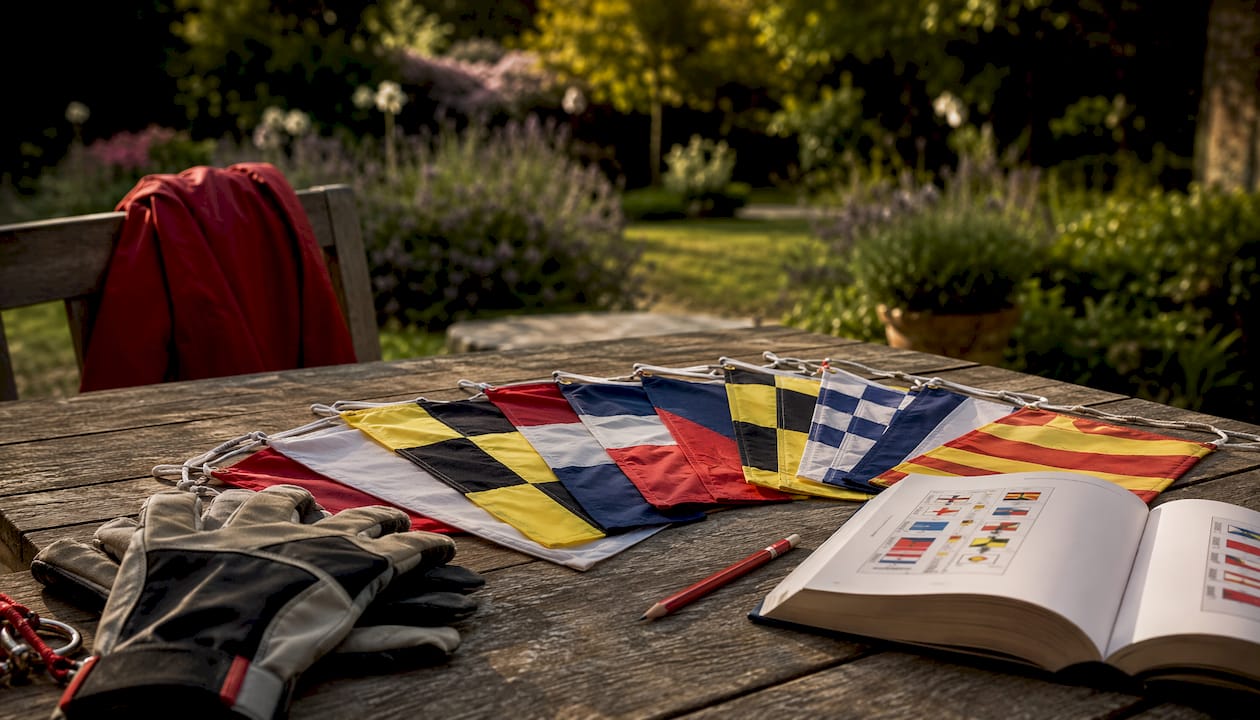
| Flag | Name | Single-Flag Meaning |
|---|---|---|
| A | Alfa | I have a diver down; keep well clear at slow speed |
| B | Bravo | I am taking in, discharging, or carrying dangerous goods |
| D | Delta | Keep clear of me; I am maneuvering with difficulty |
| H | Hotel | I have a pilot on board |
| K | Kilo | I wish to communicate with you |
| L | Lima | Stop immediately |
| N | November | Negative |
| O | Oscar | Man overboard |
| P | Papa | In harbor: all persons report on board; vessel about to proceed to sea |
| Q | Quebec | My vessel is healthy; I request free pratique |
| V | Victor | I require assistance |
| W | Whiskey | I require medical assistance |
| X | Xray | Stop carrying out your intentions and watch for my signals |
| Z | Zulu | I require a tug |
The N + C distress combination: When November and Charlie are hoisted together, the combined meaning is a recognized international distress signal. Neither flag alone carries that meaning. Context determines everything.
Pro Tip: Substitutes (repeater flags) let you signal duplicate letters without carrying multiple flag sets. The first substitute repeats the uppermost flag in the hoist, the second repeats the second, and the third repeats the third. Misreading a hoist often happens when a flag is folded, obscured by smoke, or hoisted where it cannot blow out clearly.
What are ensigns and courtesy flags, and when must you fly them?
Maritime ensigns identify a vessel’s country of registration and are customarily flown at the stern. They are required when entering or leaving a harbor and when operating in foreign waters. For recreational powerboats without a mast, the ensign goes on a dedicated staff at the stern, not taped to a rail or clipped to a backstay.
A courtesy flag is a smaller version of the host nation’s flag. When visiting foreign waters, it flies at the foremasthead or jackstaff, not at the stern alongside your own ensign. Confusing the two positions is one of the most common etiquette errors recreational boaters make, and in some ports it draws official attention.
Placement rule to memorize: Ensign at the stern identifies your vessel. Courtesy flag at the bow or foremasthead honors their country. Reversing these positions signals ignorance at best and disrespect at worst.
Practical reminders for U.S. recreational craft:
- Fly the U.S. ensign at the stern whenever underway or at anchor in a foreign port.
- In U.S. waters, flying the ensign is customary and expected, though not always legally mandated for recreational vessels.
- Size matters: an ensign too small to read at a reasonable distance defeats its purpose. A general guideline is one inch of fly length per foot of overall boat length.
- The Q flag (Quebec) is flown when entering a foreign port to request customs clearance; lower it once pratique is granted.
How should you place flags correctly on your boat?
Correct placement depends on your boat type. Powerboats without a mast fly the ensign from a stern staff. Sloops and ketches fly it from the leech of the aftermost sail when underway, or from a stern staff at anchor. Multi-mast vessels follow the same stern-staff rule at anchor.
Timing and etiquette rules:
- Hoist the ensign at 0800 local time; lower it at sunset when in port.
- At sea, the ensign may fly continuously.
- Dipping (briefly lowering and re-hoisting) is a naval salute; recreational vessels are not required to dip but should acknowledge a dip from a warship by returning it once.
- Club burgees fly from the bow staff or masthead; private signals go on the starboard spreader.
- Never fly a courtesy flag larger than your own ensign.
Pro Tip: Choose a flag staff long enough and positioned far enough aft that the ensign flies clear of the wake spray and exhaust. A flag that stays wet or smoke-stained becomes unreadable and looks unprofessional in any port.
Why does context change what a flag signal means?
A single flag means one thing alone and something entirely different in a multi-flag hoist. Signal flags can be used with numeric complements and two- or three-letter groups to convey specific messages, including medical requests and positional data. The table below shows how the same flag system operates at different levels.
| Signal Type | How It Works | Example |
|---|---|---|
| Single-letter flag | One flag, one urgent meaning | O = Man overboard |
| Two-letter combination | Paired flags form a coded message | N + C = Distress |
| Numeric complement | Flag + number group = specific data | A + bearing digits = azimuth |
| Substitute/repeater | Repeats a flag already in the hoist | Avoids carrying duplicate flags |
Only one hoist should normally be shown at a time; when multiple hoists are necessary, separate them with a tackline and position each where it can be clearly seen. Wind, smoke, distance, and darkness all degrade readability. At night or in low visibility, flags are unreliable. Switch to VHF Channel 16 as the primary channel and use flags as a secondary confirmation.
If you see an emergency hoist:
- Reduce speed and keep clear.
- Switch to VHF Channel 16.
- Report the vessel’s position to the U.S. Coast Guard.
- Render assistance only when it is safe.
How do you hoist, maintain, and respond to signal flags on your boat?
Pro Tip: Practice hoisting during calm conditions at the dock. A flag set you have never deployed before is nearly useless in an actual emergency.
- Assemble a flag kit. Carry at minimum: U.S. ensign, Q flag, diver-down flag (A or the red-and-white recreational diver flag), and Oscar. Store flags in a labeled, dry bag to prevent mildew and stitching failure.
- Choose the hoist location. Flags must blow out clearly and be free from smoke. Avoid positions where rigging or the superstructure blocks the view.
- Hoist single-letter signals. Attach the flag to the halyard with the correct orientation (hoist edge up), pull it to the masthead or spreader, and secure the halyard.
- Hoist combination signals. Fly flags in sequence from top to bottom on the same halyard. Use substitutes to repeat any letter already in the hoist.
- Respond to a distress signal. Follow the four-step emergency checklist above. Do not attempt a physical rescue without proper boat safety equipment on board.
- Inspect and store. After each trip, check flags for fading, fraying, and mildew. Replace any flag that is no longer clearly identifiable.
State-approved training through Safeboatingamerica covers these procedures within its USCG-compliant curriculum, giving boaters structured practice before they need it on the water.
Key Takeaways
Maritime flags function as a universal visual language that every U.S. recreational boater must understand to operate safely and legally in domestic and foreign waters.
| Point | Details |
|---|---|
| Know the emergency flags | Oscar (man overboard), Victor (assistance needed), and Whiskey (medical help) are the three highest-priority single-letter flags. |
| N + C is the distress combo | November and Charlie hoisted together form a recognized international distress signal; neither flag alone carries that meaning. |
| Ensign at stern, courtesy flag forward | The national ensign goes at the stern; the host nation’s courtesy flag goes at the foremasthead or jackstaff in foreign waters. |
| Flags back up VHF, not replace it | Use VHF Channel 16 as the primary emergency channel; flags are a reliable secondary signal when radio fails or language is a barrier. |
| Safeboatingamerica covers flag procedures | NASBLA-approved courses taught by USCG-Licensed Captains include signal recognition and emergency response as part of state-approved certification. |
Why maritime flags still deserve serious attention in 2026
Most recreational boaters treat flag etiquette as a formality, something to learn once and forget. That is a mistake. The cases where flags matter most are precisely the ones where everything else has already failed: the VHF battery is dead, the crew speaks a different language, or the vessel is too far from cell coverage for a digital distress call.
The International Code of Signals exists specifically to overcome language barriers and maintain safety of navigation when other communication channels are unavailable. That is not a historical footnote. It is the reason commercial vessels still carry full flag sets today.
What experienced mariners actually watch for is not the flag itself but the position and condition of the hoist. A flag that is folded, partially obscured, or flying from a non-standard position is frequently misread. The practical lesson: if you are signaling, make the flag visible and unobstructed. If you are reading another vessel’s hoist, take a second look before assuming you have the right meaning.
Recreational boaters who complete structured, state-approved training are significantly better prepared to recognize and respond to these signals correctly. The skill gap between someone who has practiced a hoist and someone who has only read about it is real, and it shows up at the worst possible moment.
Safeboatingamerica: state-approved training that covers flag procedures
Safeboatingamerica offers three course formats for recreational boaters and PWC operators across all U.S. states: online self-paced, live Zoom, and in-person classes. All formats use NASBLA-approved materials and are taught by State Certified Instructors and USCG-Licensed Captains. Flag recognition, emergency signaling procedures, and VHF protocol are covered within the USCG-compliant curriculum.
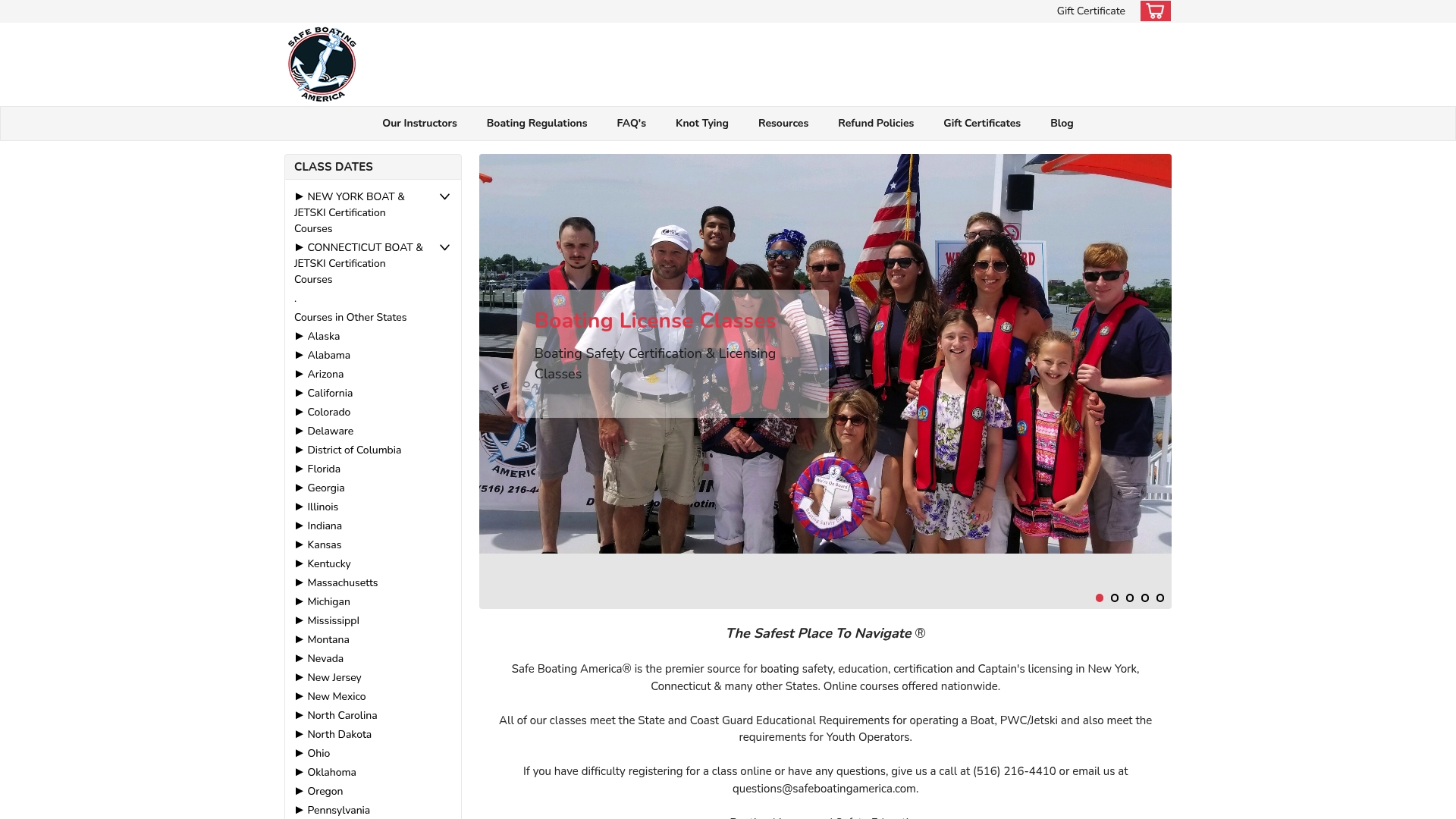
Completing a course earns your official state-approved boating safety certificate, satisfying requirements in New York (Brianna’s Law), Connecticut, Florida, California, New Jersey, Texas, and every other state. Same-day certification options are available for many class formats.
Register for a boating safety certification course at Safeboatingamerica and get the practical skills, flag knowledge, and legal certification you need before your next trip on the water.
Useful sources and further reading
The sources below are primary references for signal flag meanings, placement rules, and U.S. boating compliance.
| Source | What It Covers |
|---|---|
| International Code of Signals (Pub. 102) | Official flag meanings, hoist procedures, substitutes, and numeric complements |
| International maritime signal flags (Wikipedia) | Full flag table with single-flag and numeric-complement meanings |
| Maritime flag (Wikipedia) | Ensign placement, courtesy flag rules, and national identification requirements |
Safeboatingamerica internal reading list:
- Boat navigation methods, tools, and safety — when to rely on flags versus electronic navigation and VHF
- USCG boating safety compliance — how official maritime rules apply to recreational vessels
- Essential boat terms every boater needs to know — definitions for hoist, jackstaff, ensign, and related terminology
The International Code of Signals is the authoritative reference for all signal meanings. Safeboatingamerica’s courses cover practical application within a state-approved, USCG-compliant curriculum.
FAQ
What does the Oscar flag mean on a boat?
Oscar (O) means “man overboard.” It is one of the most critical single-letter flags and is often attached directly to the man-overboard pole on recreational vessels.
What is the N + C flag combination used for?
November (N) and Charlie © hoisted together form a recognized international distress signal. Neither flag carries that meaning when flown alone.
Where does the U.S. ensign go on a recreational powerboat?
The ensign flies from a dedicated staff at the stern. Powerboats without a mast should never fly the ensign from a backstay or rail clamp, as incorrect placement causes confusion and can draw enforcement attention in foreign ports.
When should a recreational boater fly the Q (Quebec) flag?
Fly the Q flag when entering a foreign port to signal that your vessel is healthy and to request customs clearance (free pratique). Lower it once clearance is granted.
Do recreational boaters in the U.S. need to know maritime signal flags?
Yes. VHF radio has replaced routine visual signaling for most communication, but flags remain a critical backup when radio fails or a language barrier exists. Safeboatingamerica’s state-approved courses include signal recognition as part of the USCG-compliant curriculum.
Recommended
- Coast Guard Boat Requirements: What Boaters Must Know - Safe Boating America
- USCG License Explained: What Recreational Boaters Need - Safe Boating America
- Life Jacket Regulations: What Every Boater Must Know - Safe Boating America
- Boat Requirements: What Every U.S. Boater Must Know - Safe Boating America