Learn How to Boat: A Beginner’s Safety Guide
Learning how to boat means acquiring the safety knowledge, control skills, and navigation competence required to operate a vessel responsibly on U.S. waters. Boating education, as defined by USCG and NASBLA standards, combines theoretical coursework with practical on-water experience. Safeboatingamerica delivers NASBLA-approved instruction that covers everything from required safety equipment to docking technique. This guide walks you through every stage of that process, from pre-launch preparation to confident boat handling, so you can get on the water legally and safely.
What safety equipment and legal requirements must you know before boating?
The U.S. Coast Guard mandates specific safety equipment aboard every recreational boat. Meeting these requirements is not optional. It is the legal baseline for operating any vessel on American waterways.
Required safety equipment includes:
- Life jackets (PFDs): One USCG-approved personal flotation device per person aboard, sized correctly for each passenger
- Throwable device: A Type IV throwable PFD such as a ring buoy or cushion for boats 16 feet and longer
- Fire extinguisher: At least one B-I rated extinguisher on enclosed engine compartment vessels
- Navigation lights: Required for operating between sunset and sunrise or in restricted visibility
- Sound signaling device: A horn or whistle audible for at least half a mile
The mandatory safety gear list from Safeboatingamerica provides a complete breakdown of each item and the vessel sizes it applies to. Knowing this list before your first trip prevents fines and, more critically, prevents emergencies from becoming fatalities.
Legal requirements extend beyond equipment. Boater education cards are required by many states depending on operator age and boat engine horsepower. That means a teenager operating a 50-horsepower outboard in New York must hold a valid boating safety certificate under Brianna’s Law. Check your state’s specific rules before you launch.
Filing a float plan is a non-mandatory but critical safety practice. A float plan is a basic summary of your trip route, timing, passenger list, and emergency contact. Leave it with a trusted person onshore. If you do not return on time, that person contacts the Coast Guard with actionable details.
Pro Tip: Learn the basic boat terminology before your first trip. Knowing the difference between port and starboard, bow and stern, and helm and transom helps you communicate clearly and respond correctly in emergencies.
| Equipment Item | Legal Requirement |
|---|---|
| Life jackets (PFDs) | One per person, USCG-approved |
| Throwable PFD | Required on boats 16 feet and longer |
| Fire extinguisher | Required on enclosed engine compartment boats |
| Navigation lights | Required for nighttime or low-visibility operation |
| Sound signal device | Required on all recreational vessels |
How to prepare and launch your boat step-by-step
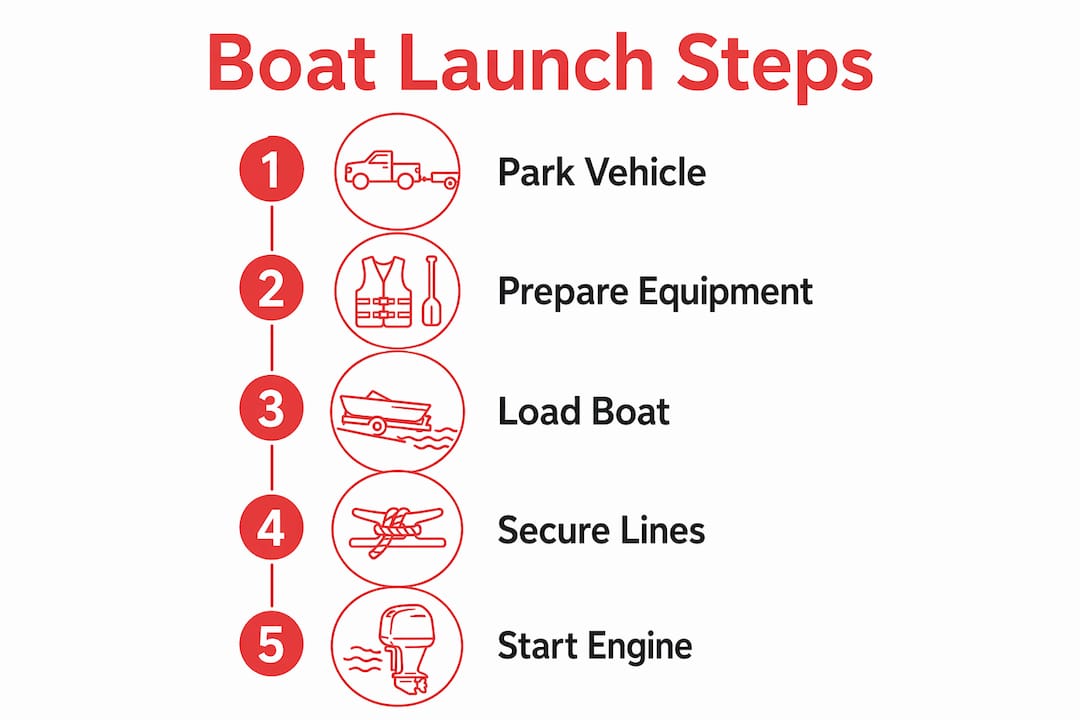
A safe launch starts hours before you back down the ramp. Skipping the pre-launch checklist is the single most common mistake new boaters make. Calm conditions are preferable for initial practice sessions, so check the marine weather forecast before you leave home.
- Check the weather. Use NOAA marine forecasts for your specific body of water. Winds above 15 knots and wave heights above 2 feet are not beginner conditions.
- Inspect the trailer. Check tire pressure, wheel bearings, trailer lights, and the winch strap. A failed trailer on the highway is far more dangerous than anything on the water.
- Load and secure gear. Stow all safety equipment, fuel, food, and personal items before you reach the ramp. Fumbling at the ramp creates delays and hazards for other boaters.
- Remove tie-down straps. Leave only the bow safety chain and winch strap attached until the boat is in the water.
- Back down the ramp slowly. Use your mirrors and take your time. Stop when the trailer wheels reach the waterline.
- Float the boat off the trailer. Have a helper hold the bow line while you release the winch strap. Let the boat float back gently.
- Attach the kill switch lanyard. The engine safety cut-off shuts down the engine if you leave the helm unexpectedly. Clip it to your wrist or life jacket before starting the engine. This step is non-negotiable.
- Start the engine and check for water flow. Confirm the engine’s cooling water is flowing from the telltale outlet before moving away from the dock.
Pro Tip: Park your tow vehicle and trailer before boarding the boat. Leaving a vehicle blocking the ramp while you sort out gear is the fastest way to make enemies at a public boat launch.
How to operate and steer your boat effectively on the water
Operating a boat is fundamentally different from driving a car. Boats do not have brakes and require longer stopping distances. That single fact changes everything about how you approach speed, turns, and close-quarters situations.
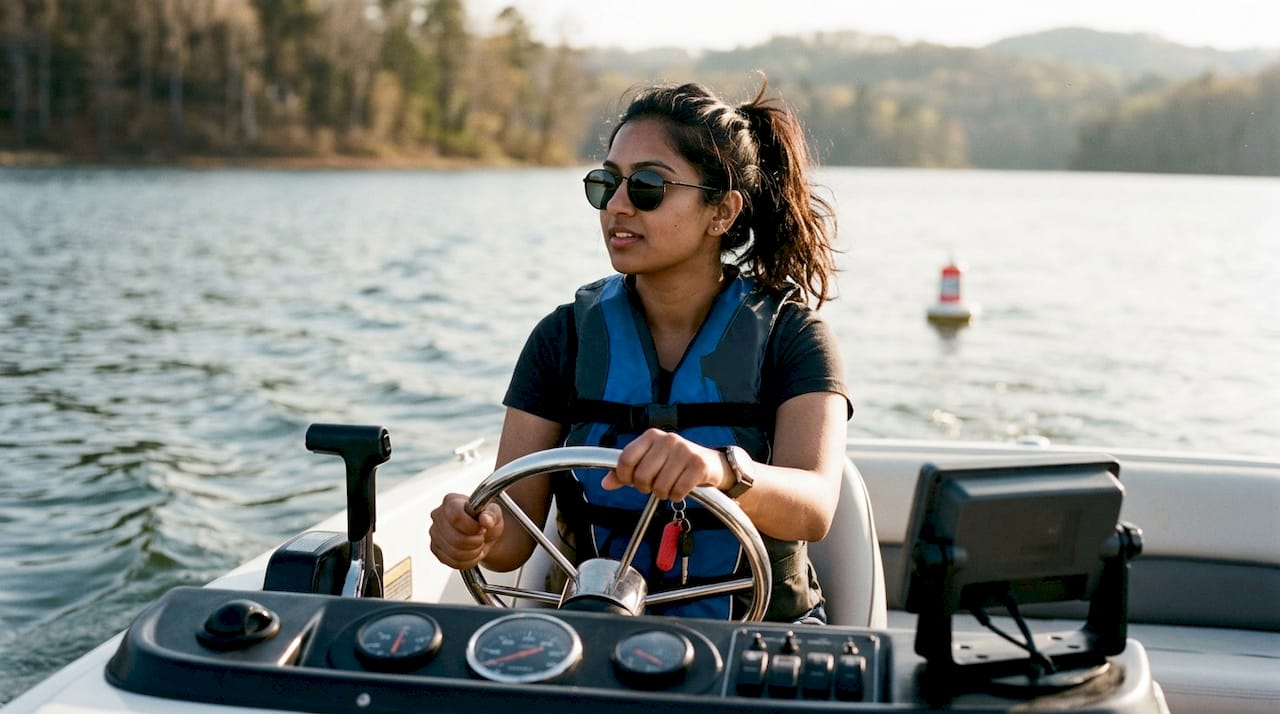
Understanding the throttle and gear controls
The throttle controls engine speed. The gear shift moves the engine between forward, neutral, and reverse. Most beginners make the mistake of treating the throttle like a gas pedal in a car. On a boat, you use short bursts of power to maneuver, then return to neutral. Smooth, deliberate inputs produce predictable results.
Steering also behaves differently. Most powerboats use outboard or sterndrive engines that pivot to steer. The stern swings out when you turn, which means the back of the boat moves in the opposite direction of the bow. This catches beginners off guard in tight spaces.
Maintaining situational awareness on the water
Key operational habits for new boaters:
- Maintain a proper lookout. Assign someone to watch for other vessels, swimmers, and obstacles while you focus on steering.
- Obey no-wake zones. These zones protect shorelines, docks, and other boaters. Violating them carries fines in most states.
- Use VHF radio channel 16. Channel 16 is the international distress and hailing frequency. Monitor it at all times when underway.
- Know the navigation rules. The USCG Inland Rules define right-of-way between vessels. A powerboat generally yields to a sailboat under sail, and both yield to commercial traffic.
- Watch your wake. Your wake is your responsibility. A large wake near a marina or anchored vessel can cause serious damage.
Pro Tip: Use the helm control guide from Safeboatingamerica to understand how your specific boat type responds to throttle and steering inputs before you take it out for the first time.
Speed management is the most underrated skill in boat handling. New boaters tend to go too fast when they feel comfortable and then panic when they need to stop. Practice slowing down well in advance of any obstacle, dock, or vessel. The water gives you no margin for error at speed.
What are the key steps and tips for docking, anchoring, and mooring safely?
Docking is where most beginner mistakes happen and where most boat damage occurs. The good news is that docking follows a repeatable process. Master the process, and the anxiety disappears.
- Assess wind and current before approaching. Both forces push your boat after you cut power. Always plan to dock into the wind or current when possible.
- Approach at a 20–30 degree angle. Proper docking technique requires a low-speed approach at this angle to give you control without excess momentum.
- Use short power bursts. Do not hold the throttle in forward. Brief forward and reverse inputs let you creep toward the dock without building speed.
- Assign a crew member to handle lines. Have dock lines ready before you approach. Throwing a line after you have already hit the dock is too late.
- Use reverse to stop. A short burst of reverse kills forward momentum cleanly. Time it so the boat stops parallel to the dock with minimal gap.
Docking slowly is always the right call. A boat that arrives at the dock too fast causes damage that takes weeks to repair and minutes to regret. Speed is the enemy of clean docking. Patience and small power inputs are the tools that work every time.
For anchoring, drop the anchor from the bow, not the stern. Lower it until it hits the bottom, then let out scope at a 7:1 ratio of line to water depth. That ratio gives the anchor the angle it needs to dig in and hold. Cleat the line and let the boat drift back to set the anchor naturally.
Key takeaways
Boating safety requires combining legal compliance, proper equipment, and practiced boat handling skills before you ever leave the dock.
| Point | Details |
|---|---|
| Safety equipment is mandatory | USCG requires life jackets, fire extinguishers, lights, and sound signals on all recreational boats. |
| State certification laws vary | Many states require a boater education card based on operator age and engine horsepower. |
| Boats have no brakes | Throttle control and anticipation of stopping distance replace braking in all maneuvers. |
| Docking demands slow speed | Approach at 20–30 degrees with short power bursts to stop cleanly without collision. |
| Float plans save lives | Leave your route, timing, and passenger list with a trusted contact before every trip. |
What I have learned from years of watching beginners on the water
The biggest gap I see between new boaters and confident ones is not skill. It is patience. New boaters rush. They rush the pre-launch checklist, they rush the approach to the dock, and they rush to get out on open water before they have practiced in a protected cove.
The boaters who progress fastest are the ones who treat every outing as a training session. They practice docking ten times before they call it a day. They use checklists on every single launch, not just the first few. They take an online or in-person course first, then get on the water with an experienced operator before going solo.
The other thing I tell every beginner: log your outings. Write down what conditions you practiced in, what went well, and what felt uncertain. That log becomes a record of real progress. It also forces you to be honest about gaps in your skills before those gaps become problems on the water.
Certification is not just a legal checkbox. It builds the mental framework that makes every skill click faster. Safeboatingamerica’s NASBLA-approved courses give you that framework in a format that fits your schedule, whether online, via live Zoom, or in person.
— Richard
Safeboatingamerica’s certification courses for new boaters
Safeboatingamerica offers state-approved boating safety courses for beginners across every U.S. state, taught by USCG-Licensed Captains and State Certified Instructors.
Whether you need a New York boating safety certificate under Brianna’s Law, a Connecticut Safe Boating Certificate, or a Florida boating safety course, Safeboatingamerica has a format that works for you. Courses cover navigation rules, required safety equipment, emergency procedures, and legal requirements specific to your state. Same-day certification options mean you can complete your course and get on the water without delay. Start your boating safety certification today and operate with full legal confidence.
FAQ
What do I need to legally operate a boat in the U.S.?
Legal requirements vary by state, but most require a USCG-approved life jacket for each passenger, a fire extinguisher, navigation lights, and a sound signal device. Many states also require a boater education card based on your age and the engine horsepower of the vessel.
How long does it take to learn how to boat?
A beginner can complete a foundational boating safety course in one day and gain basic operational confidence within a few practice sessions on calm water. Building full competence in docking, anchoring, and navigation takes several outings across different conditions.
Do I need a license to drive a boat?
Most U.S. states do not issue a traditional driver’s license for boats, but many require a boater education certificate or card. New York’s Brianna’s Law, for example, requires all operators to hold a boating safety certificate regardless of age.
What is a float plan and why does it matter?
A float plan is a written record of your trip route, departure time, expected return, passenger list, and emergency contact. You leave it with someone onshore so they can alert the Coast Guard if you do not return as scheduled.
What is the safest way to practice boating as a beginner?
Practice on calm, protected water with light winds and minimal boat traffic. Bring an experienced boater with you for your first few outings, and complete a boating safety course before your first solo trip.