Boat Fueling Safety Precautions: A Complete Guide
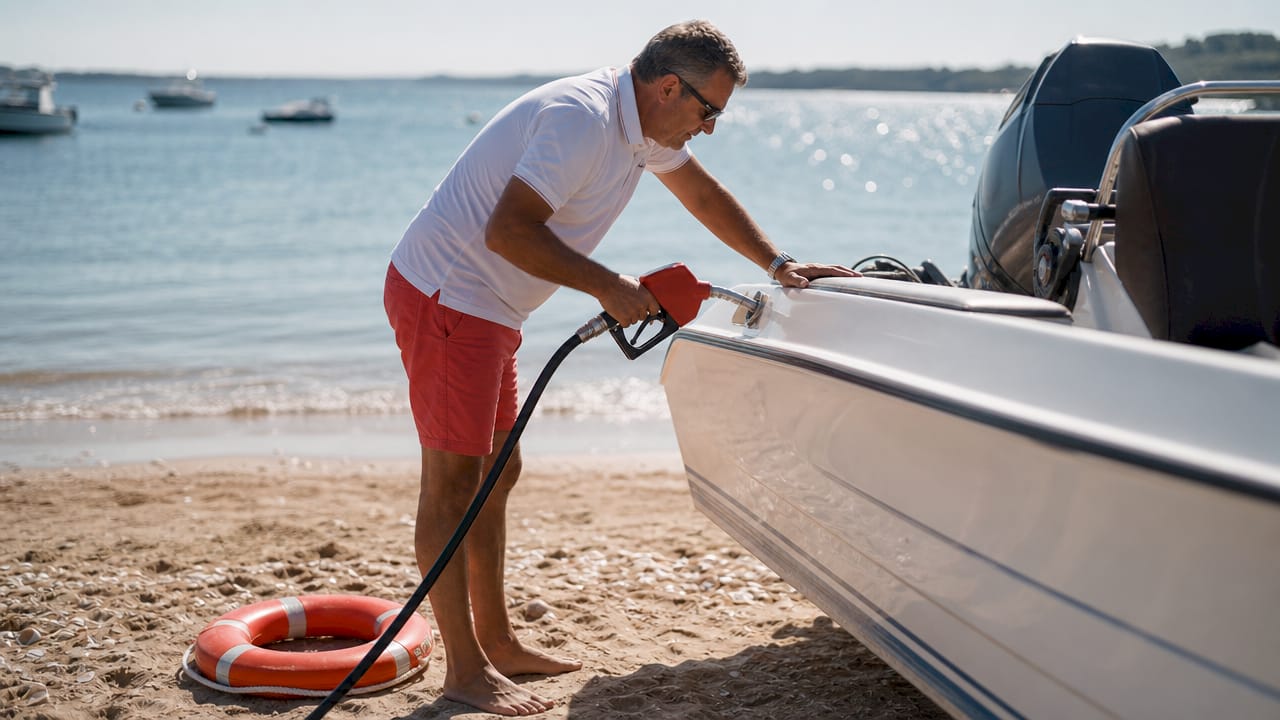
The single most effective safety precaution when fueling your boat is to turn off all engines and electrical equipment before the first drop of fuel flows. Running electronics or a warm engine creates ignition sources that can turn gasoline vapors into a fire or explosion within seconds. Proper fueling procedure, as defined by U.S. Coast Guard guidelines, also requires adequate ventilation, a grounded fuel nozzle, and a tank filled to no more than 90% capacity. Safeboatingamerica covers all of these protocols in its NASBLA-approved boating safety courses, giving boaters the procedural knowledge to fuel safely every time.
What are the essential steps to safely fuel your boat?
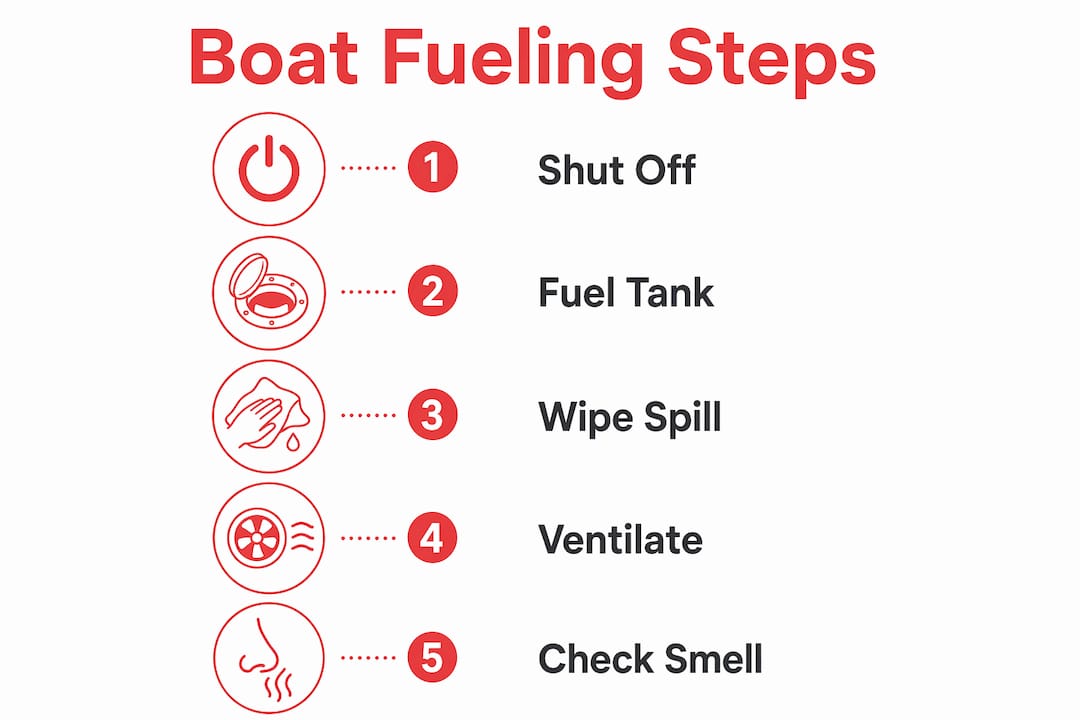
Safe boat fueling follows a fixed sequence. Skipping any step raises the risk of fire, spill, or explosion. The industry term for this process is “fueling protocol,” and every boater operating a motorized vessel should know it by heart.
-
Turn off the engine and all electrical equipment. Running engines or active electronics can generate sparks that ignite fuel vapors. This includes radios, bilge pumps, and navigation lights.
-
Ask all passengers to leave the boat. Removing non-essential people reduces distraction and keeps bystanders out of the blast zone if something goes wrong. This step is one of the most overlooked fueling boat precautions in recreational boating.
-
Remove portable fuel tanks and fill them on the dock. Filling tanks dockside minimizes fume buildup inside the hull and improves spill control. Never fill a portable tank while it sits inside the boat.
-
Close all doors, windows, and hatches. Sealed openings prevent fuel vapors from drifting into the cabin or engine compartment during fueling.
-
Ground the nozzle against the filler neck. Grounded fueling contact prevents static electricity from building up and causing a spark at the fuel inlet.
-
Fill the tank to no more than 90% capacity. Fuel expands as temperatures rise, and exceeding 90% fill risks dangerous overflow and fire hazards. Stop before the tank is full.
-
Ventilate the boat before starting the engine. Run the bilge blower for at least four minutes after fueling if your vessel has an inboard engine. Open hatches and allow fresh air to circulate before anyone re-boards.
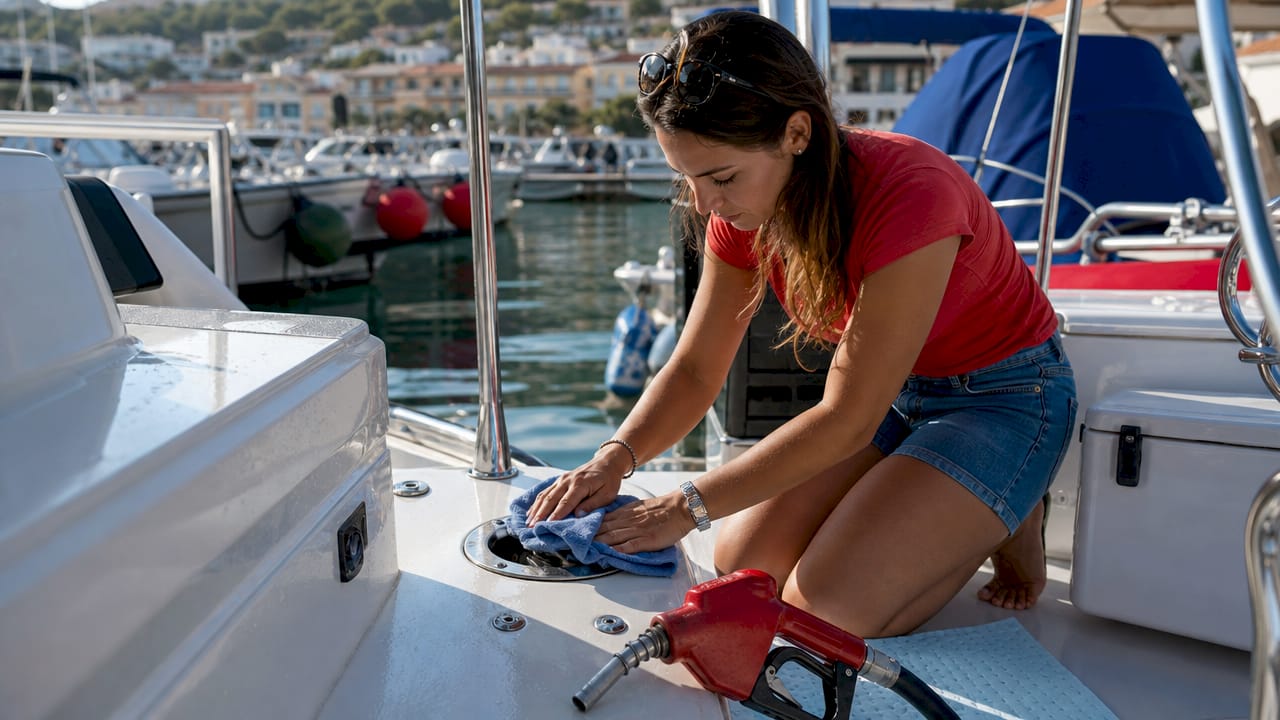
Pro Tip: Wipe the filler neck and surrounding deck with a dry cloth after fueling. Residual fuel on a hot deck evaporates fast and creates vapor pockets that linger longer than most boaters expect.
Following this sequence every time you fuel is the foundation of best practices for fueling boats. Consistency matters more than speed at the fuel dock.
Why is proper ventilation critical during boat fueling?
Ventilation is the most underestimated safety measure for fueling. Gasoline vapors are heavier than air, which means they sink and collect in the lowest parts of a boat, including the bilge and engine compartment. A single spark in a vapor-filled bilge produces the same result as a confined explosion.
Closing all openings during fueling prevents vapors from entering the cabin or below-deck spaces. After fueling is complete, the process reverses. Open hatches, ports, and doors to flush vapors out before anyone re-boards.
- Inboard engines require a bilge blower run for a minimum of four minutes after fueling. Proper ventilation disperses flammable vapors that would otherwise accumulate in enclosed compartments.
- Outboard engines mount outside the hull, so vapor accumulation below deck is less severe. Ventilation is still required, but the risk profile is lower than with inboard setups.
- Enclosed cabins trap vapors longer than open cockpit designs. Boaters with cabin cruisers or enclosed helm stations need to ventilate for longer periods before starting the engine.
- Bilge blowers are mechanical fans that pull air through the bilge and exhaust it overboard. They are required equipment on many inboard vessels under USCG regulations.
Pro Tip: Before you hit the ignition after fueling, put your nose near the engine hatch. If you smell fuel, keep ventilating. Your nose is a reliable vapor detector that costs nothing.
The sniff test is not a substitute for running the bilge blower, but it adds a final confirmation before you introduce an ignition source. Ventilation is not optional. It is a core safety measure for fueling that applies to every vessel type.
How to prevent and manage fuel spills during boat fueling
Spill prevention is both a safety and an environmental obligation. Marine fuel spills harm aquatic ecosystems and carry legal penalties under federal environmental law. The good news is that most spills are preventable with simple preparation.
- Place absorbent pads around the fueling area. Spills should be contained promptly to protect environmental health. Absorbent pads catch overflow before it reaches the water.
- Never top off the tank. Stopping before full reduces vapor release and prevents overflow from the vent line. Topping off is the leading cause of fuel spills at marina docks.
- Tighten the fuel cap securely after fueling. A loose cap allows fuel to slosh out underway and creates vapor release while the boat is in motion.
- Avoid using detergents to clean up spills. Detergents disperse fuel into the water column, making it harder for the ecosystem to recover. Use only oil-absorbent materials approved for marine use.
- Report significant spills immediately. Federal law requires boaters to report spills that create a visible sheen on the water. Contact the U.S. Coast Guard National Response Center at 1-800-424-8802.
| Spill scenario | Correct response |
|---|---|
| Small drip at filler neck | Wipe with absorbent pad; dispose of pad in marina waste bin |
| Overflow from full tank | Stop fueling; contain with pads; ventilate before starting engine |
| Spill reaching water | Do not use detergent; report to USCG; use approved absorbent boom |
| Fuel leak from hose or fitting | Stop fueling immediately; identify source; do not start engine |
Spill management is part of any complete boat fueling safety checklist. Preparation before you pick up the nozzle is far easier than cleanup after a spill reaches the water.
What safety equipment should you have on board related to fueling?
The right equipment on board does not prevent a fueling accident, but it determines how quickly and safely you can respond to one. USCG regulations specify minimum requirements, and smart boaters carry more than the minimum.
- Class B fire extinguisher. Quick access to fire extinguishing equipment is critical if fuel ignition occurs. Mount it within arm’s reach of the helm and the fueling point. Check the pressure gauge before every trip.
- Approved fuel containers. Portable tanks must carry a USCG or UL approval marking. Non-approved containers can crack, leak, or fail to vent properly under pressure.
- Proper labeling. Every fuel container must be clearly labeled with the fuel type. Mixing gasoline into a diesel tank, or vice versa, causes engine damage and creates unpredictable combustion conditions.
- Spill kit. A basic marine spill kit includes absorbent pads, an absorbent boom, and disposal bags. Keep one accessible at the fueling station on your vessel.
- No open flames or smoking materials. Fuel vapors ignite easily, and maintaining at least 10 feet of distance from all flames or sparks is a non-negotiable rule at any fuel dock.
A full breakdown of required gear appears in Safeboatingamerica’s guide to boat safety equipment, which covers fire extinguisher ratings, fuel container standards, and USCG compliance requirements in detail.
Key takeaways
Safe boat fueling requires turning off all ignition sources, filling to no more than 90% capacity, and ventilating the vessel before restarting the engine.
| Point | Details |
|---|---|
| Engine off first | Shut down all engines and electronics before fueling to eliminate ignition sources. |
| 90% fill limit | Stop fueling before the tank is full to allow for thermal expansion and prevent overflow. |
| Ventilate before starting | Run the bilge blower for at least four minutes after fueling an inboard engine. |
| Passengers off the boat | Remove all non-essential people from the vessel during fueling to reduce risk and distraction. |
| Spill containment ready | Place absorbent pads at the filler neck and never use detergents to clean marine fuel spills. |
What I’ve learned watching boaters skip the basics
Richard here. After years of watching boaters at fuel docks up and down the East Coast, the pattern is always the same. The steps that get skipped are the ones that feel unnecessary when nothing has gone wrong yet.
Passengers staying on board during fueling is the most common mistake I see. Boaters treat it as a minor inconvenience to ask people to step off. It is not minor. Disembarking passengers is not only for their safety. It sharpens the operator’s focus at a moment when full attention is required.
The second pattern I notice is boaters who top off the tank. They want a full tank for a long day on the water, which is understandable. But fuel expands in heat, and a marina fuel dock in july is not a cool environment. The overflow goes into the water, not back into the pump.
The fix for both problems is the same: treat fueling as a procedure, not a chore. Boaters who have completed a certified safety course, like those offered through Safeboatingamerica, approach fueling with a checklist mindset. That mindset is what boating education actually builds. It is not just rules memorized for a test. It is habits that hold up under pressure, distraction, and a full boat of people asking when you’re leaving.
— Richard
Boating safety certification from Safeboatingamerica
Knowing how to fuel a boat safely is one part of a much larger skill set that every boater needs before leaving the dock.
Safeboatingamerica offers state-approved boating safety courses taught by USCG-Licensed Captains and State Certified Instructors using NASBLA-approved materials. Courses cover safe fueling procedures, fire prevention, emergency response, navigation rules, and USCG compliance requirements. Options include online courses, live Zoom classes, and in-person sessions available in New York, Connecticut, Long Island, and all 50 states. Boaters who complete a course receive an official boating safety certificate that satisfies state licensing requirements. Certification is the clearest path from knowing the rules to actually following them every time you fuel up.
FAQ
What is the first thing to do before fueling a boat?
Turn off the engine and all electrical equipment before fueling. Running electronics can generate sparks that ignite fuel vapors.
How full should you fill a boat’s fuel tank?
Fill the tank to no more than 90% capacity. Fuel expands as temperatures rise, and a full tank risks overflow and fire hazard.
Why should passengers leave the boat during fueling?
Removing passengers reduces distraction for the operator and keeps bystanders away from potential ignition or spill hazards during fueling.
How long should you run the bilge blower after fueling?
Run the bilge blower for at least four minutes after fueling an inboard engine to clear flammable vapors from the bilge compartment.
What should you do if fuel spills into the water?
Do not use detergent to clean the spill. Use approved absorbent materials and report any spill that creates a visible sheen to the USCG National Response Center at 1-800-424-8802.