How Boating Education Lowers Accident Rates and Saves Lives
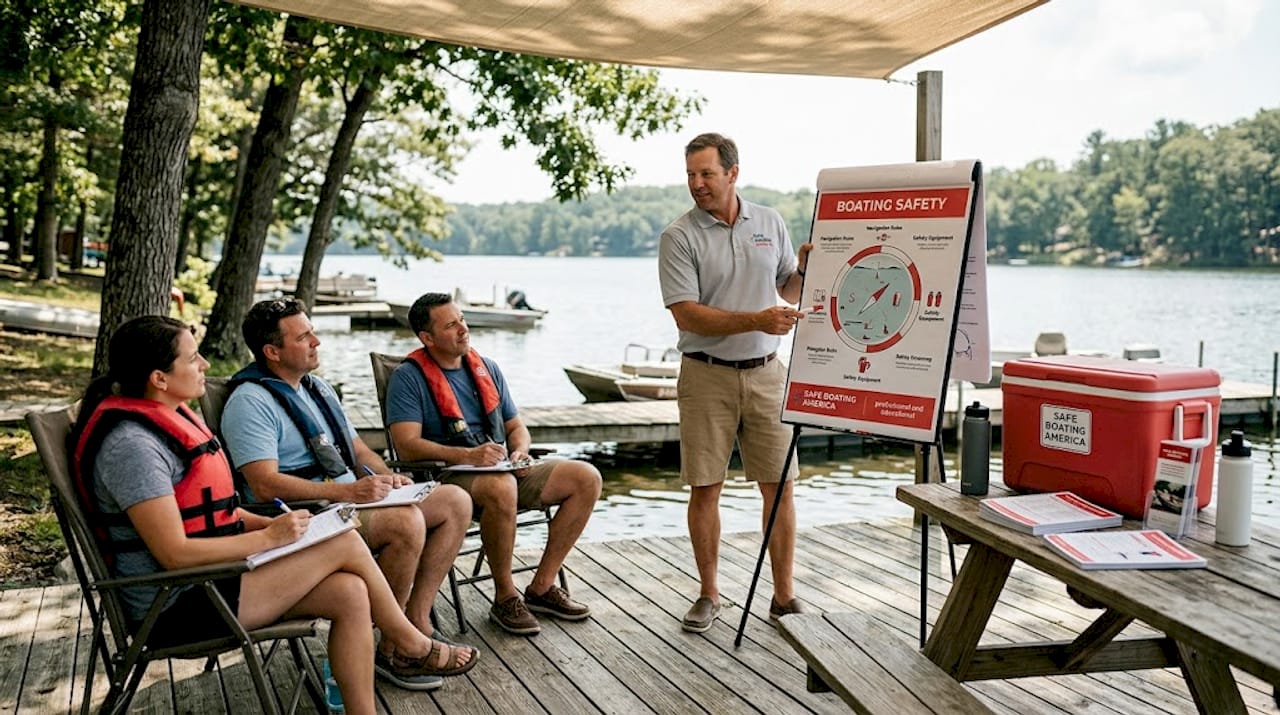
Most recreational boaters believe they can handle the water on instinct alone. That assumption is one of the most dangerous on any lake, river, or coastal waterway. States with mandatory boater education had markedly lower accident and fatality rates compared to states where training remained optional. The gap is not marginal. It is measurable, consistent, and documented across decades of U.S. Coast Guard data. This article breaks down the evidence, compares state policies, explains exactly what structured training covers, and shows how certified boaters perform better in real situations.
Table of Contents
- Why boating education matters: The evidence
- Mandatory education vs. optional: A state-by-state comparison
- The mechanics: What boating education actually teaches
- Real results: How boaters and PWC operators benefit
- Why knowledge still beats technology—and what most boaters overlook
- Ready to boost your safety on the water?
- Frequently asked questions
Key Takeaways
| Point | Details |
|---|---|
| Education saves lives | Mandatory boating education leads to sharply reduced accidents and fatalities in every studied state. |
| State requirements vary | Safety outcomes depend on whether your state enforces boating education laws. |
| PWCs need unique training | Personal watercraft courses focus on handling and rescue skills, leading to lower incident rates. |
| Practical knowledge beats technology | Operator skill and judgment, gained through education, prevent more accidents than gear upgrades. |
| Refresh skills regularly | Ongoing learning keeps every boater safer, no matter their experience level. |
Why boating education matters: The evidence
The connection between formal boating education and reduced accidents is not a theory. It is documented in state-level data, federal reports, and independent research spanning more than two decades.
States that mandated boater education consistently recorded lower accident and fatality rates than states where training was voluntary. Minnesota is a strong example. After strengthening its boating education laws, the state recorded historic lows in boating fatalities in 2025, with both crashes and deaths dropping to their lowest levels in recorded state history. Officials credited boating education requirements as a key contributing factor.
The numbers at the national level are equally compelling. Research shows that states introducing mandatory education laws experienced a 15 to 20 percent drop in fatality rates following the mandate. That kind of reduction does not happen by accident. It reflects what happens when operators understand navigation rules, emergency procedures, and vessel handling before they ever leave the dock.
“Mandatory boating education laws are among the most effective interventions available to reduce waterway fatalities. States that enforce them see consistent, measurable improvements in safety outcomes year after year.”
Beyond the statistics, education delivers several practical advantages for every boater who completes a certified course:
- Preparedness: Trained operators know how to respond to engine failure, capsizing, and man-overboard situations without panic.
- Confidence: Understanding navigation rules and right-of-way reduces hesitation in high-traffic waterways.
- Emergency response: Certified boaters learn how to use flares, fire extinguishers, and distress signals correctly.
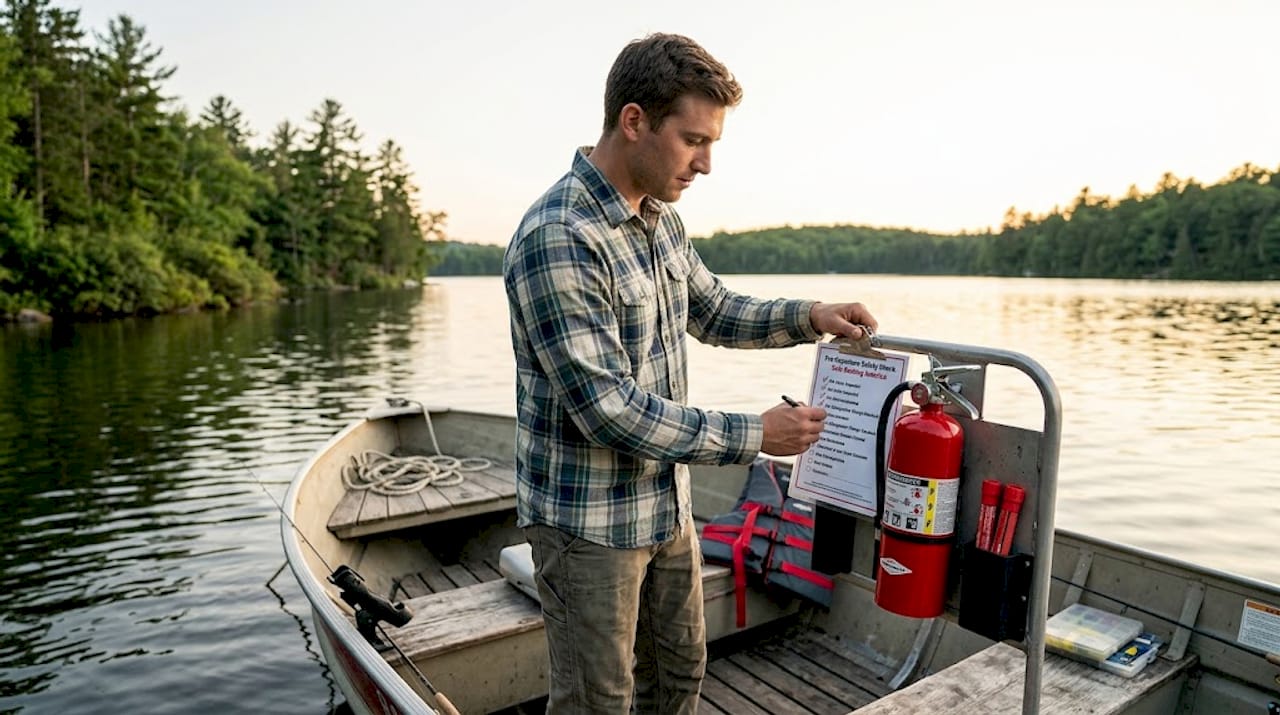
- Equipment knowledge: Courses cover required safety gear, proper life jacket selection, and how to inspect your vessel before departure.
- Weather awareness: Trained operators recognize warning signs and know when to stay ashore or return to port.
Tracking boating safety improvements over time shows a clear pattern: education is not just a legal formality. It is a functional tool that changes how operators behave on the water. Enrolling in online boating courses is now one of the most accessible ways to gain that advantage.
Mandatory education vs. optional: A state-by-state comparison
State policy shapes boating safety outcomes more directly than most people realize. When you compare states with strict mandatory education requirements against those with optional or age-limited rules, the difference in accident data is hard to ignore.
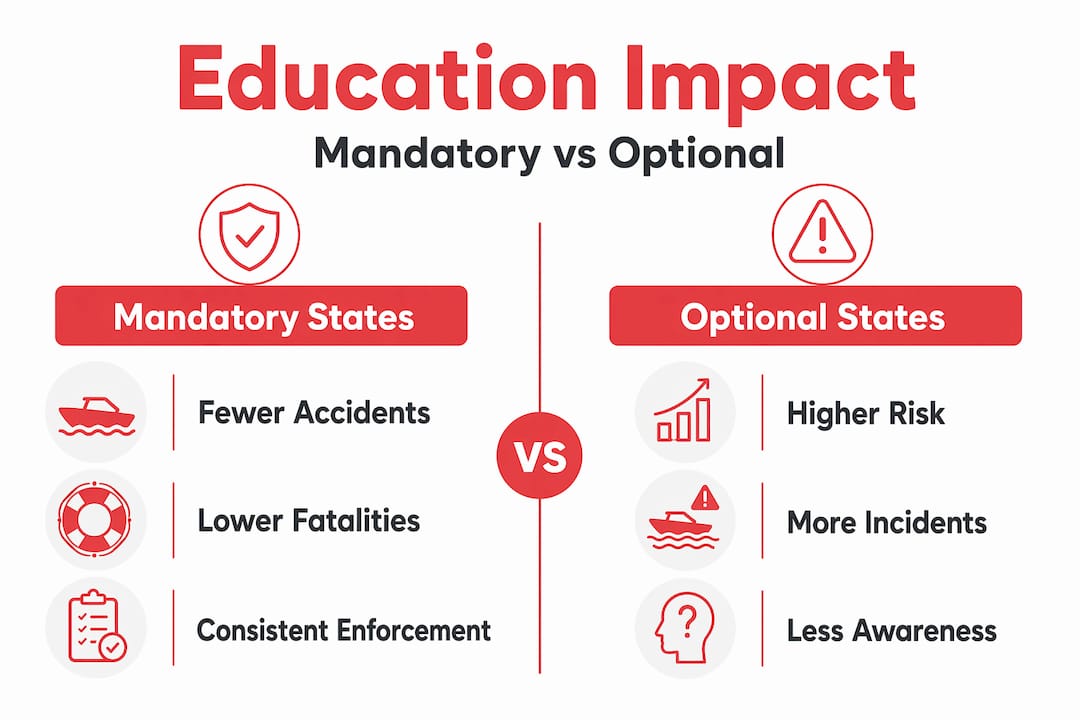
USCG data from 2000 established the baseline: states with mandatory boater education had markedly lower accident and fatality rates. More recent data confirms that trend has held. States mandating education for all operators continue to outperform states where training is only required for younger or first-time operators.
| State | Education requirement | Accident trend | Notes |
|---|---|---|---|
| Minnesota | Mandatory for all ages | Historic lows in 2025 | Strong enforcement, statewide |
| California | Required under age 35 | Moderate improvement | Age gap limits full benefit |
| Oregon | Mandatory for all operators | Below national average | Consistent year-over-year gains |
| Florida | Required under age 14 | Above national average | Minimal age requirement |
| Texas | Required under age 13 | Higher accident rates | Very limited mandate |
| New York | Expanding under Brianna’s Law | Improving trend | Phased rollout through 2025 |
The table above illustrates a clear pattern: the broader the education requirement, the better the safety outcomes. States that limit mandates to younger operators miss a large portion of the boating population, particularly adults who began boating before any rules were in place.
Understanding your own state’s requirements is a practical first step. Here is how to verify what applies to you:
- Visit your state’s official boating or natural resources agency website.
- Search for “boating education requirements” along with your state name.
- Check whether requirements apply to your age group and vessel type.
- Confirm whether your existing certificate meets current standards or needs renewal.
- Register for an approved course if you do not yet hold a valid certificate.
Pro Tip: Boating education laws change regularly. New York’s Brianna’s Law, for example, expanded requirements in phases. Check your state’s current rules annually, especially if you boat in multiple states. Reviewing New York boating license requirements or your Connecticut boating certificate standards is straightforward and takes only a few minutes.
The mechanics: What boating education actually teaches
A boating safety course is not a simple overview of rules. It is a structured curriculum that builds practical knowledge across multiple areas of vessel operation, emergency response, and waterway law. Understanding what is covered explains why trained operators perform better under pressure.
Core topics in a standard boating safety course:
- Navigation rules and right-of-way on the water
- Required safety equipment and how to use it correctly
- Life jacket types, fit, and when each type is appropriate
- Weather reading and storm avoidance
- Alcohol and boating: legal limits and impairment effects
- Distress signals, flares, and emergency communication
- Anchoring, docking, and trailering procedures
- Environmental regulations and no-wake zone rules
- Accident reporting requirements under federal and state law
Personal watercraft (PWC) operators, including Jet Ski and WaveRunner riders, face a distinct set of risks. Most PWC accidents are caused by operator inexperience and inattention, not mechanical failure. PWC-specific training modules address these gaps directly.
PWC course content typically includes:
- Low-speed maneuvering and stopping distance awareness
- Man-overboard recovery procedures specific to PWC design
- Reboarding techniques after falling off
- Collision avoidance at high speeds
- Blind spot awareness and wake interactions
The following table compares general boating and PWC-specific accident data to illustrate where education has the most impact:
| Vessel type | Share of reported incidents | Share of fatalities | Key risk factor |
|---|---|---|---|
| General powerboats | ~60% | ~65% | Operator error, alcohol |
| Personal watercraft | ~19% | ~7% | Inexperience, inattention |
| Sailboats | ~8% | ~10% | Capsizing, weather |
| Other vessels | ~13% | ~18% | Varies |
The PWC data is particularly instructive. PWCs account for 19 percent of incidents but only 7 percent of fatalities. That gap reflects the impact of targeted education. Combining knowledge of rules, equipment, and emergency response with practical skills is what makes the difference between an incident and a fatality.
Pro Tip: Even if you have been boating for years, a refresher course covers updated regulations, new equipment standards, and current navigation rules. Staying current with boating regulations is not just about compliance. It is about staying sharp.
Real results: How boaters and PWC operators benefit
Data tells one part of the story. The other part is what happens on the water when a trained operator faces a real situation.
Consider this scenario: Two boats approach each other head-on in a narrow channel. An untrained operator may hesitate, make an unpredictable turn, or freeze entirely. A certified operator knows the navigation rule immediately: both vessels should turn to starboard (right), pass port-to-port, and maintain speed until safely clear. That single piece of knowledge, practiced during a course, can prevent a collision in under three seconds.
Formal education produces measurable behavioral changes. Operators who complete certified courses consistently demonstrate the following improvements:
- Reduced speed in congested areas: Trained operators recognize no-wake zones and adjust without being prompted.
- Consistent life jacket use: Education reinforces that life jackets must be worn, not just stored onboard.
- Better pre-departure checks: Certified boaters inspect fuel, safety gear, and weather before leaving the dock.
- Improved communication: Trained operators use VHF marine radio correctly and know distress channel protocols.
- Faster emergency response: Rehearsed procedures reduce panic and improve outcomes in man-overboard and fire situations.
- Alcohol avoidance: Understanding the legal and physical risks of boating under the influence changes behavior more effectively than signage alone.
“Education now saves more lives than gear alone. A life jacket on a shelf does nothing. A trained operator who knows when and how to use it is the real safety system.”
For PWC operators specifically, PWCs accounted for 19 percent of incidents but only 7 percent of deaths in 2024, a ratio that reflects how targeted training reduces fatal outcomes even when incidents still occur. That is a meaningful result. It shows that education does not just prevent accidents. It also reduces the severity of the ones that do happen.
Pro Tip: Schedule a refresher course every three to four years. Navigation rules, equipment requirements, and state laws update regularly. Staying current through boating safety license courses keeps your skills and your legal standing in good shape.
Why knowledge still beats technology—and what most boaters overlook
Modern boats come equipped with GPS chartplotters, automatic bilge pumps, digital depth finders, and collision-alert systems. It is tempting to assume that technology closes the gap between trained and untrained operators. It does not.
Technology fails. Batteries die. Screens wash out in direct sunlight. GPS signals drop in certain waterways. When those systems go offline, the only reliable backup is the operator’s own knowledge. An untrained boater with a dead chartplotter is in genuine danger. A trained operator with the same dead chartplotter knows how to read a paper chart, identify landmarks, and navigate by compass.
More importantly, most boating accidents are not caused by equipment failure. They are caused by human error: inattention, overconfidence, poor judgment, and failure to follow basic navigation rules. No technology currently available can override a captain who decides to operate at unsafe speeds in a congested area, or who ignores weather warnings because the water looks calm.
What formal education does that technology cannot is address the root cause. It builds situational awareness. It teaches operators to scan for hazards before they become emergencies. It instills habits, not just knowledge. A boater who has practiced man-overboard drills responds faster and more effectively than one who has only read about the procedure.
There is also the issue of overconfidence, which is arguably the most underestimated risk on recreational waterways. Experienced boaters who have never had an accident often assume they have nothing left to learn. That assumption is where complacency begins. Structured education, including periodic refreshers, resets that mindset and introduces updated rules and scenarios that even veteran operators may not have encountered. Reviewing boating safety advice regularly reinforces that learning is an ongoing process, not a one-time event.
Laws alone do not keep waterways safe. Enforcement is limited. Patrols cover large areas with small teams. The real safety standard is set by individual operators who choose to stay informed, stay trained, and take responsibility for everyone on board.
Ready to boost your safety on the water?
Knowing the data is one thing. Acting on it is what actually reduces your risk on the water. Safe Boating America offers state-approved boating safety courses across the country, including New York Brianna’s Law-compliant classes, Florida boating safety certificates, Arizona boating courses, and Connecticut Safe Boating Certificate programs.
Courses are available online, via live Zoom sessions, and in person, taught by State Certified Instructors and USCG-Licensed Captains using NASBLA-approved materials. Same-day certification options are available in many states. Whether you are a first-time boat owner, a PWC rider preparing for summer, or an experienced captain looking to stay current, your safety certification and license is one course away. Register early to secure your preferred date and format.
Frequently asked questions
Does taking a boating education course reduce my risk of an accident?
Yes. States with mandatory boater education consistently record lower accident and fatality rates than states where training is optional, and the difference is documented in decades of federal and state data.
What’s the difference between general boating and PWC safety training?
PWC courses include specialized content on low-speed maneuvering, stopping distances, reboarding techniques, and man-overboard recovery. These specifics directly address the operator inexperience issues that cause the majority of Jet Ski and WaveRunner incidents.
Is online boating education as effective as in-person courses?
Online courses cover the same NASBLA-approved core curriculum as classroom instruction, including navigation rules, emergency procedures, and equipment requirements, delivering equivalent knowledge outcomes with greater scheduling flexibility.
Do all states require boating education?
Not all states mandate boating education for every operator, but those that do report measurably better outcomes. States mandating education for all operators show lower fatality rates compared to states with age-limited or optional requirements.
How often should I renew my boating knowledge?
A refresher course every three to four years is a practical standard. Navigation rules, state laws, and equipment requirements change regularly, and periodic training keeps your skills and legal standing current.