
Helm Boat: Navigation, Safety, and Control Guide
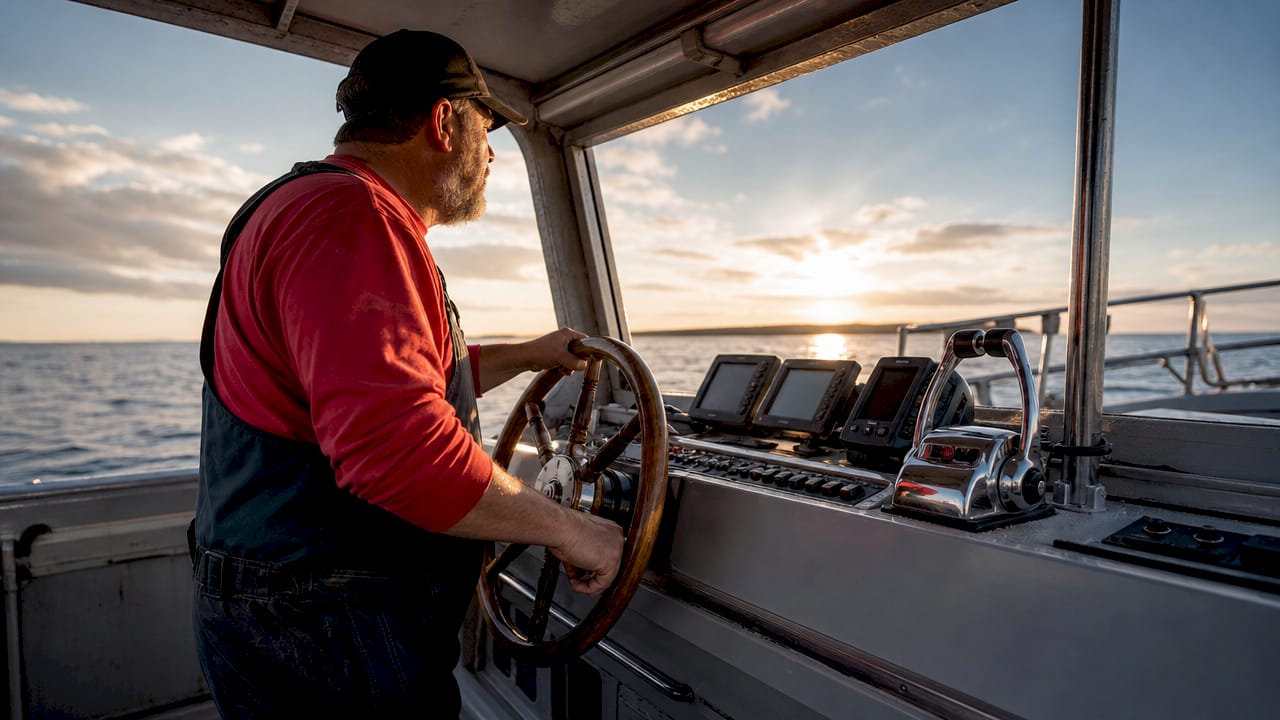
The helm boat station is defined as the primary control position on a vessel where the captain manages steering, throttle, and navigation equipment. Industry professionals use the term “helm station” interchangeably with “helm boat” to describe this integrated command area. A well-configured helm combines a boat steering wheel, engine controls, and marine navigation tools into a single, organized workspace. Getting this setup right directly affects how safely and confidently you operate on the water.
What are the main components of a helm boat?
The helm station is built around four core systems: steering, throttle, navigation electronics, and the console structure itself. Each component plays a distinct role in vessel control, and understanding how they work together is the foundation of safe operation.
Steering wheel types and shaft compatibility
Most modern steering wheels fit a standard 3/4-inch tapered shaft and range in diameter from 12.6 to 15.5 inches. That size range covers the majority of recreational powerboats and center consoles. Materials include corrosion-resistant stainless steel, lightweight carbon fiber, and rubber-coated options. Carbon fiber reduces weight and stays cooler in direct sun. Rubber-coated wheels cost less and provide solid grip in cold or wet conditions. Newer trends include paracord wrapping, which improves grip and manages temperature better than bare metal.
Hub kits, sold separately for around $40, provide universal fitment across shaft configurations. Skipping the hub check before a wheel swap is the most common and most avoidable installation mistake.
Throttle and engine control systems
The throttle and shift control unit sits adjacent to the steering wheel on most helm consoles. Single-lever controls combine throttle and gear shift into one handle, which simplifies docking and low-speed maneuvering. Dual-engine setups use side-by-side levers that allow independent engine control for tight turns in confined spaces.
Navigation and electronics at the helm
A complete helm control system includes a chartplotter, VHF radio, depth sounder, and compass. Chartplotters from manufacturers like Garmin and Raymarine integrate GPS, radar, and sonar into a single display. Boating electronics at the helm give operators real-time situational awareness, which is the single biggest factor in collision avoidance.
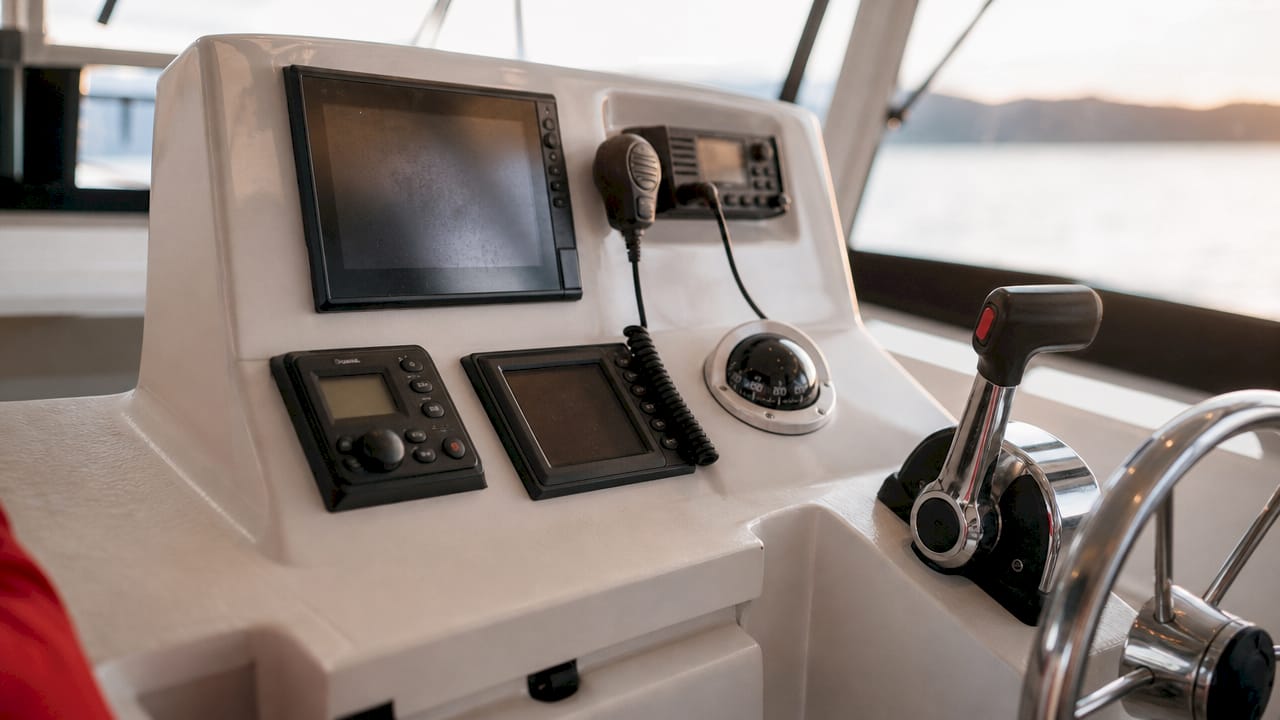
Helm console and accessory mounting
| Component | Function | Typical Specification |
|---|---|---|
| Steering wheel | Directional control | 12.6–15.5 inch diameter, 3/4-inch shaft |
| Hub kit | Shaft adapter | Universal fit, ~$40 |
| Throttle/shift lever | Speed and gear control | Single or dual lever |
| Chartplotter | Navigation display | GPS, radar, sonar integration |
| VHF radio | Communication | USCG-required on most vessels |
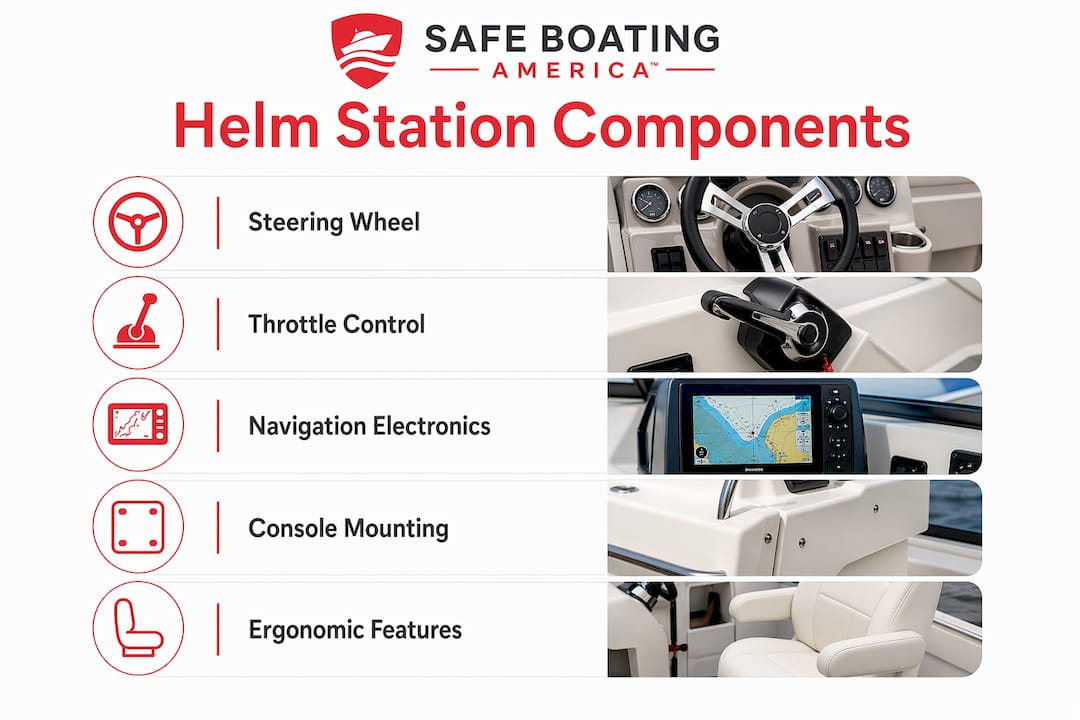
Helm consoles on center consoles and express cruisers include pre-drilled mounting positions for electronics and accessory rails for rod holders, cup holders, and instrument pods. Organizing these accessories reduces clutter and keeps critical controls within reach.
How do modern helm control systems enhance maneuverability and safety?
Modern helm control systems have moved well beyond a fixed wheel and throttle. Wireless and autopilot technologies now give operators control from anywhere on the vessel, which changes how boats are handled in tight situations.
The Yamaha Helm Master EX Wireless Control delivers full joystick, autopilot, and engine control from a handheld unit anywhere onboard. This is particularly valuable for solo operators who need to move around the deck while maintaining vessel control. The unit operates for up to 8 hours per charge and is buoyant, so it floats if dropped overboard.
Key features of advanced helm control systems include:
- StayPoint: Holds the vessel in a fixed GPS position automatically, useful for anchoring without dropping anchor.
- DriftPoint: Maintains a controlled drift at a set angle relative to wind or current, a major advantage for fishing.
- Man-overboard alert: Triggers an automatic return-to-point function when activated, reducing response time in emergencies.
- Joystick docking: Combines bow thruster and engine inputs for precise low-speed maneuvering in marinas.
Wireless helm controllers require the latest integrated system software and function as add-ons to existing platforms. They are not standalone units. That distinction matters during installation planning.
Pro Tip: On extended trips, bring a charging cradle for your wireless controller. Continuous operation is capped at approximately 8 hours, and losing wireless control mid-passage forces a return to the fixed helm station.
Modern wireless systems transform the traditional static helm into a mobile command center. For fishing operations, that flexibility means the captain can manage the vessel from the bow while working a line, without leaving the fish to run back to the console.
What ergonomic and safety features improve comfort at the helm?
Treating the helm station as an operator’s workspace, rather than just a steering position, directly reduces fatigue and improves alertness on long passages. Fatigue is a documented contributing factor in boating accidents, and ergonomic upgrades address it at the source.
Seating and padding
Twin-density foam helm pads start at about $80 and reduce vibration transfer during long days on the water. Helm seat heaters for saltwater fishing applications range from $198 for basic units to over $650 for heated bucket seats. Heated seating is not a luxury item in northern climates. Cold operators make slower decisions.
Windshield and enclosure systems
Wind buffeting at the helm creates constant physical stress that compounds over a full day offshore. Windshield enclosures and dodgers redirect airflow above the operator’s head, reducing that buffeting significantly. Canvas enclosures also block spray and rain, keeping the operator dry and focused.
Steering wheel materials and grip
- Carbon fiber: Lightweight, low heat absorption, premium feel.
- Stainless steel: Durable, corrosion-resistant, heavier than carbon fiber.
- Rubber-coated: Affordable, warm in cold weather, reliable grip when wet.
- Paracord-wrapped: Excellent grip, customizable, manages temperature well in both heat and cold.
Pro Tip: In saltwater environments, stainless steel wheels outlast aluminum alternatives by years. If you run offshore regularly, the material choice on your steering wheel is a long-term maintenance decision, not just a comfort preference.
Ergonomic helm upgrades like seat heaters, padded consoles, and enclosures work together to keep the operator alert. A fatigued captain at the helm is a safety risk regardless of how advanced the navigation equipment is.
How to properly maintain and operate your helm boat for safe navigation
Routine maintenance at the helm station prevents mechanical failures that occur at the worst possible moments. A pre-departure inspection takes less than 10 minutes and covers the most failure-prone components.
- Inspect the steering mechanism. Turn the wheel lock to lock and check for binding, unusual resistance, or play. Any change from the baseline feel warrants investigation before departure.
- Verify shaft and hub compatibility before upgrades. Confirm the steering shaft type and keyway configuration before installing a new wheel. Standard wheels require specific hub kits for 3/4-inch tapered shafts. Skipping this step causes fitment failures that can compromise steering.
- Test throttle and shift controls. Cycle through forward, neutral, and reverse at the dock before leaving. Sticky or stiff controls indicate cable wear or corrosion.
- Check all electronics. Power on the chartplotter, VHF, and depth sounder. Confirm GPS lock and radio function before casting off.
- Inspect the helm console for water intrusion. Saltwater corrosion on wiring connections behind the console is a leading cause of electrical failures underway. A boat safety inspection checklist covers these points systematically.
| Maintenance Task | Frequency | Purpose |
|---|---|---|
| Steering check (lock to lock) | Before every departure | Detect binding or play early |
| Throttle and shift cycle | Before every departure | Identify cable wear or corrosion |
| Electronics power-on test | Before every departure | Confirm GPS lock and radio function |
| Console wiring inspection | Monthly | Prevent saltwater corrosion failures |
| Steering cable lubrication | Annually | Maintain smooth operation |
Coordination between the helm control and navigation instruments is the operational skill that separates competent operators from confident ones. Reading the chartplotter while managing throttle in a channel requires practice. Boating navigation methods and instrument familiarity are skills best developed before you need them under pressure.
Key takeaways
A well-configured helm station integrates steering, throttle, navigation electronics, and ergonomic design to deliver both safety and control on the water.
| Point | Details |
|---|---|
| Steering wheel compatibility | Verify shaft type and hub kit before replacing any wheel to avoid fitment failures. |
| Wireless control systems | Units like Yamaha Helm Master EX operate up to 8 hours and add autopilot and man-overboard functions. |
| Ergonomic upgrades | Helm pads, seat heaters, and enclosures reduce fatigue and improve operator alertness on long trips. |
| Pre-departure inspection | Checking steering, throttle, and electronics before every departure prevents underway failures. |
| Navigation coordination | Familiarity with chartplotters and helm instruments is a trained skill, not an assumed one. |
Why the helm station deserves more attention than it gets
Most boaters focus on engine performance and hull design when they think about vessel upgrades. The helm station gets treated as an afterthought. That is a mistake I have seen play out repeatedly, especially on boats used for long offshore runs or full-day fishing trips.
Fatigue at the helm is cumulative. A captain who is physically uncomfortable after two hours makes worse decisions by hour six. The fix is not complicated. A $80 foam pad, a heated seat, and a proper windshield enclosure change the experience completely. These are not expensive modifications relative to the cost of the boat, but they have a direct impact on how sharp you stay throughout the day.
The wireless control technology available now, particularly systems like Yamaha Helm Master EX, genuinely changes how you interact with the vessel. Being able to manage position and throttle from the bow while working a fishing line is not a gimmick. It is a practical capability that reduces the need for a second person on deck. For solo operators, that matters.
My advice is to evaluate your helm station the way you would evaluate any other piece of safety equipment. If your seat is uncomfortable, your wheel is slippery, or your electronics are disorganized, those are not minor inconveniences. They are conditions that degrade your performance when conditions get difficult. Fix the ergonomics first, then layer in the technology.
— Richard
Safeboatingamerica and helm operator certification
Knowing your helm station is only part of safe vessel operation. Understanding navigation rules, emergency procedures, and legal requirements is what separates a capable operator from a certified one.
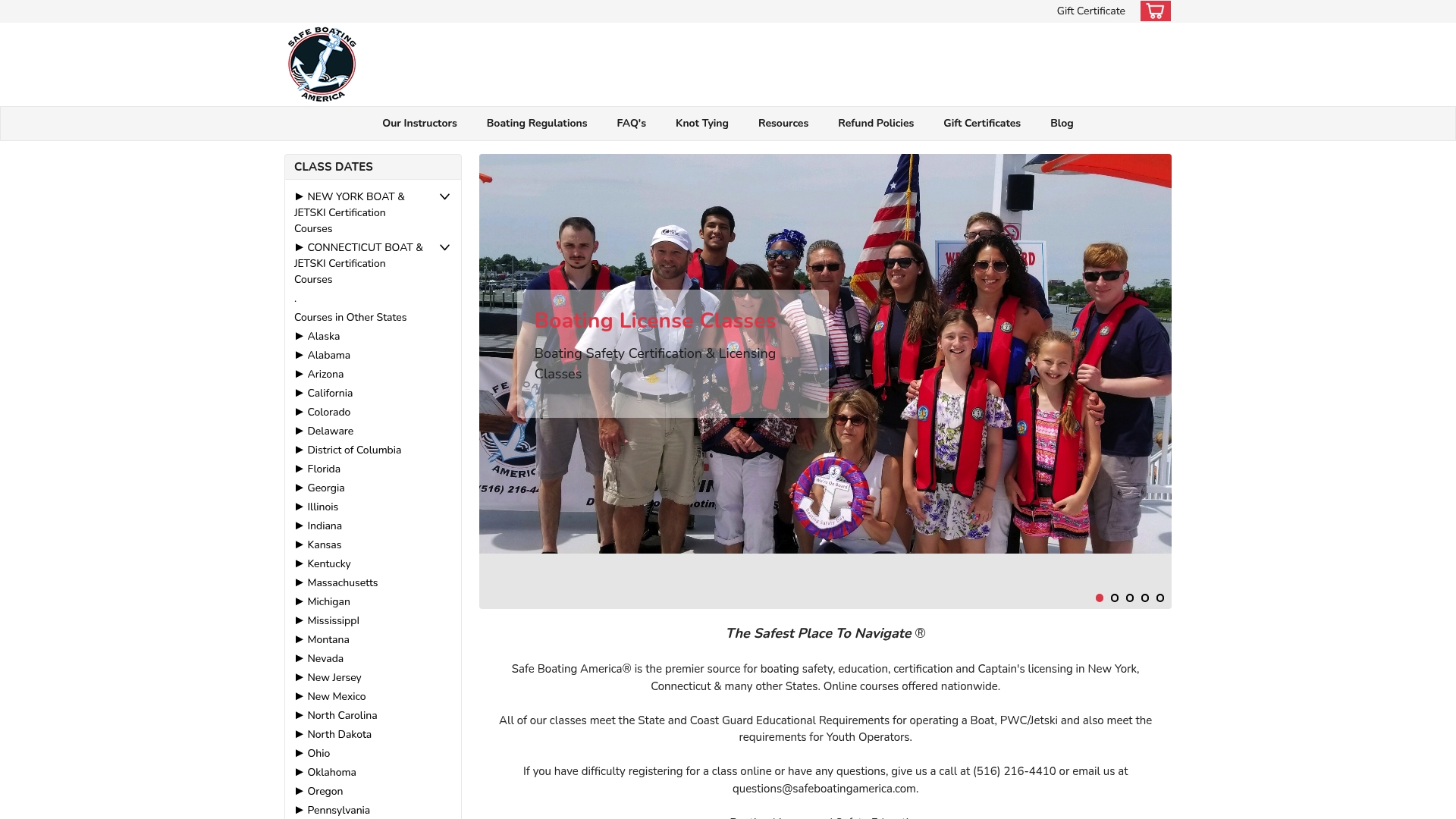
Safeboatingamerica offers NASBLA-approved boating safety courses available online, via live Zoom sessions, and in person across the United States. Courses cover helm operation, navigation rules, docking, emergency procedures, and state-specific legal requirements. Instruction is delivered by USCG-Licensed Captains and State Certified Instructors. Students receive their official boating safety certification upon completion, satisfying state boating law requirements in all 50 states. Same-day certification options are available for boaters who need to get on the water quickly.
FAQ
What is a helm station on a boat?
A helm station is the designated control position on a vessel where the captain operates the steering wheel, throttle, and navigation instruments. It is the functional equivalent of a cockpit in an aircraft.
What size is a standard boat steering wheel shaft?
Most recreational boat steering wheels fit a standard 3/4-inch tapered shaft, with wheel diameters ranging from 12.6 to 15.5 inches. A hub kit, typically around $40, is required for correct fitment.
How long does a wireless helm controller operate on a charge?
Wireless helm controllers like the Yamaha Helm Master EX operate for approximately 8 hours per charge. A charging cradle extends usability on longer trips.
What ergonomic upgrades improve comfort at the helm?
Twin-density foam helm pads, heated seats, and windshield enclosures are the most effective ergonomic upgrades. Helm seat heaters range from $198 for basic units to over $650 for heated bucket seats.
Do I need a boating license to operate a vessel?
Most U.S. states require a boating safety certificate to legally operate a motorized vessel. Safeboatingamerica provides state-approved courses that satisfy these requirements nationwide.