In-Person vs Online Boating Course Differences Explained
Choosing a boating course feels straightforward until you realize the format matters as much as the content. The in-person vs online boating course differences go well beyond where you sit to study. They affect how fast you learn, what it costs, how well you retain technical material, and whether you walk away truly prepared to operate a vessel safely. This article breaks down exactly what each format delivers, where each one falls short, and how to decide which option fits your schedule, budget, and learning style.
Firstly, we offer online courses in States where we are allowed. We are NOT allowed to offer online courses in New York State as an example.
Table of Contents
- Key Takeaways
- In-person vs online boating course differences: what you need to know
- How online boating courses work
- Side-by-side boating course comparison
- How to choose the right boating course format
- Practical tips for success in either format
- My take on the in-person vs online debate
- Start your boating certification with Safe Boating America
- FAQ
Key Takeaways
| Point | Details |
|---|---|
| Cost gap is significant | Online courses often start at $50 to $60; in-person classroom programs typically run $75 to $85 plus travel. |
| Certification validity is equal | Both formats produce legally valid certification when the course holds NASBLA approval or equivalent state authorization. |
| Learning style drives the choice | Structured group settings suit hands-on learners; self-paced online access suits independent, schedule-constrained learners. |
| Discipline is the hidden variable | Online learners need proactive scheduling habits since access periods can extend up to 12 months with no set class dates. |
| Hybrid models offer a middle path | Combining online theory with in-person practical sessions captures flexibility and hands-on skill development simultaneously. |
In-person vs online boating course differences: what you need to know
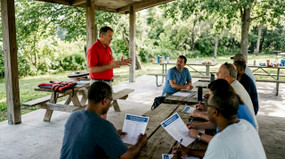
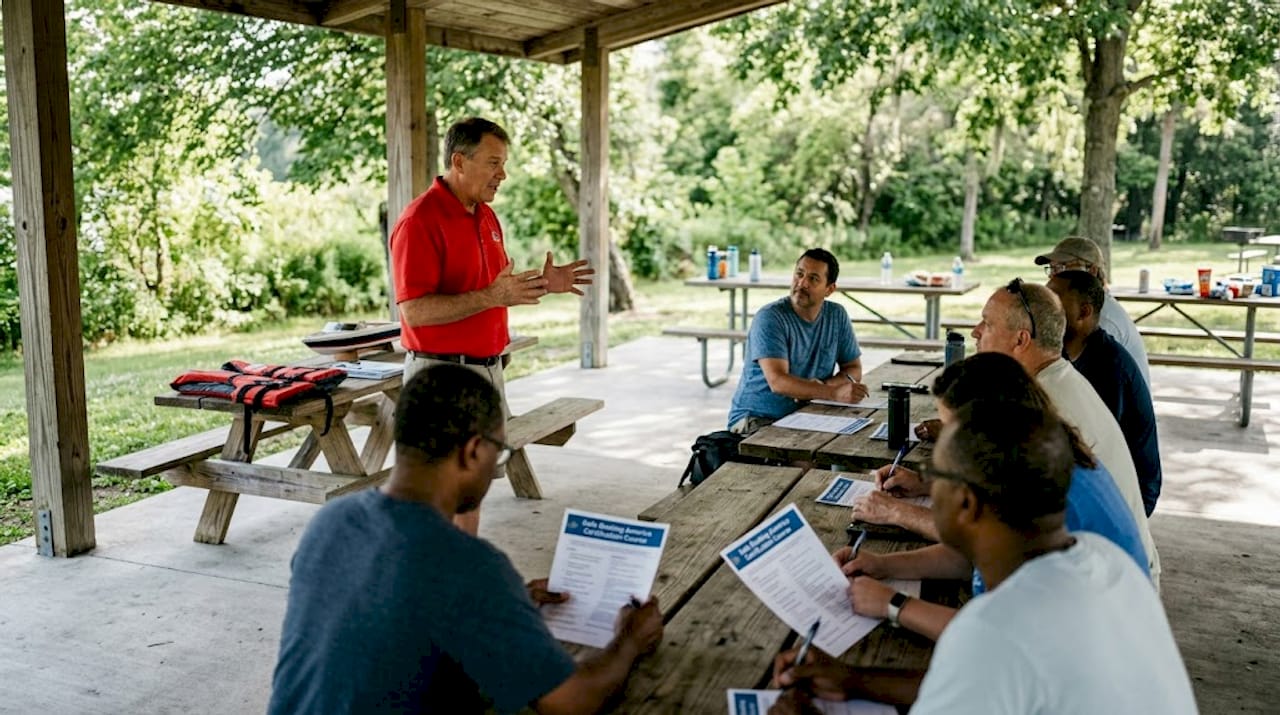
In-person boating courses run on a fixed schedule, typically one full day or spread across two to three evenings, depending on the provider and the state’s required content hours. You show up to a classroom, sit with a group of fellow students, and work through navigation rules, safety procedures, and legal requirements under the direct supervision of a certified instructor.
The structure is the primary asset. Classroom instruction delivers group interaction, real-time correction, and immediate answers to questions that would otherwise stall an online learner for hours. When you misread a navigation rule or confuse a buoy marker, an instructor catches it before the mistake gets reinforced.
Benefits of in-person boating training:
- Immediate feedback from certified instructors during difficult topics
- Group discussion that surfaces questions you did not know to ask
- Fixed schedule that enforces completion and reduces procrastination
- Opportunity to network with other new boaters in your area
- Hands-on review of physical safety equipment in some programs
Challenges of in-person boating training:
- Scheduling conflicts with work, family, or travel commitments
- Fixed pace that may feel too slow for experienced learners or too fast for beginners
- Geographic limitation requiring travel to a specific location
Pro Tip: If you are taking an in-person course, arrive with printed questions about your specific local waterways. Instructors who are licensed captains can give you practical answers that no textbook covers.
How online boating courses work
Online boating courses deliver the same core curriculum through a self-directed digital platform. You log in on your own schedule, work through modules covering navigation rules, emergency procedures, and boating law, and complete a final exam to earn your certificate. Most platforms allow you to pause, rewind, and repeat lessons as many times as you need.
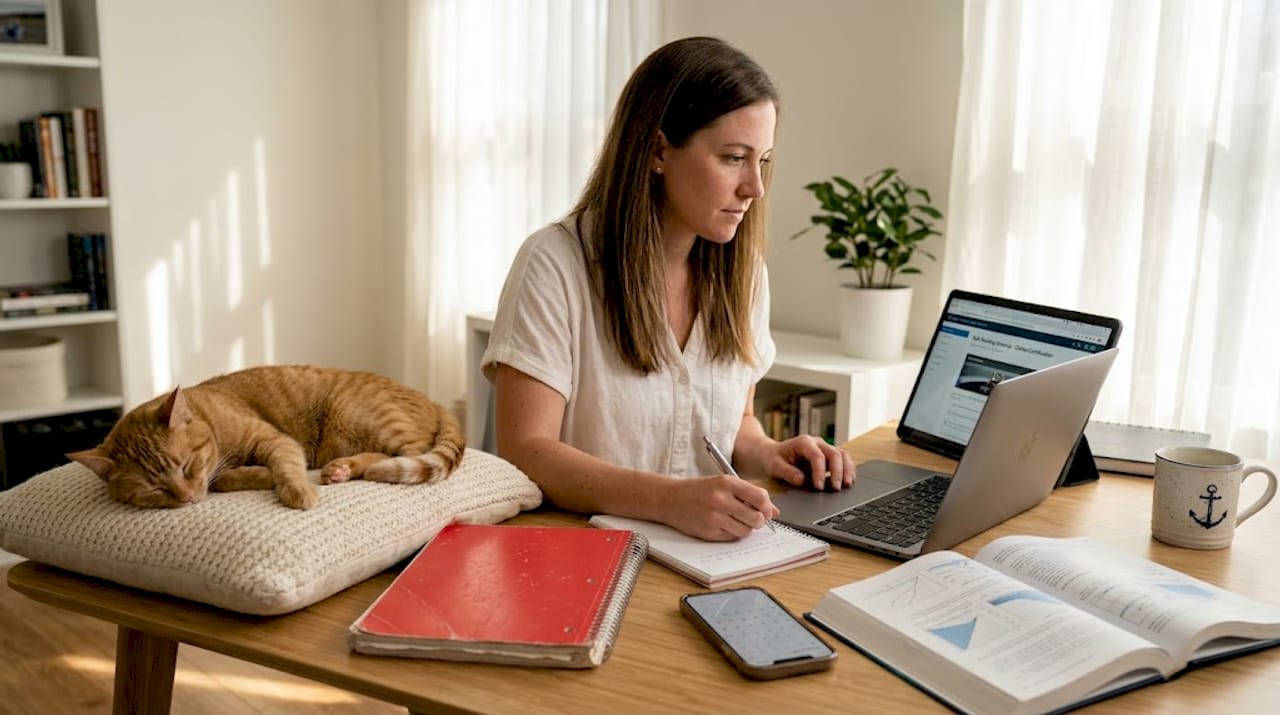
The pacing flexibility and repeat access make online boating classes particularly well suited to people with unpredictable work schedules, family responsibilities, or geographic barriers to a classroom. A Florida resident in a rural county, for example, might have no in-person provider within a two-hour drive. An online boating safety course removes that barrier entirely.
Benefits of online boating classes:
- Study at any time from any location with internet access
- Repeat lessons until material is genuinely understood, not just covered
- Lower cost, often starting around $50 to $60 for state-approved programs
- No commute, no parking, no fixed day blocked off on the calendar
- Many platforms allow access for up to 12 months, supporting busy schedules
Challenges of online boating classes:
- No live instructor to catch and correct mistakes in real time
- Requires consistent self-discipline to avoid indefinitely delaying completion
- Limited peer interaction, which removes a layer of practical discussion
- Some complex topics like chart reading benefit from live correction
Pro Tip: Treat your online boating course like a physical class. Block two-hour sessions on your calendar, find a quiet space, and commit to a completion date at enrollment. Students who set a deadline finish; students who leave it open-ended often do not.
Side-by-side boating course comparison
The table below captures the most practical distinctions between the two formats. These are the factors that most directly affect your experience and outcomes.
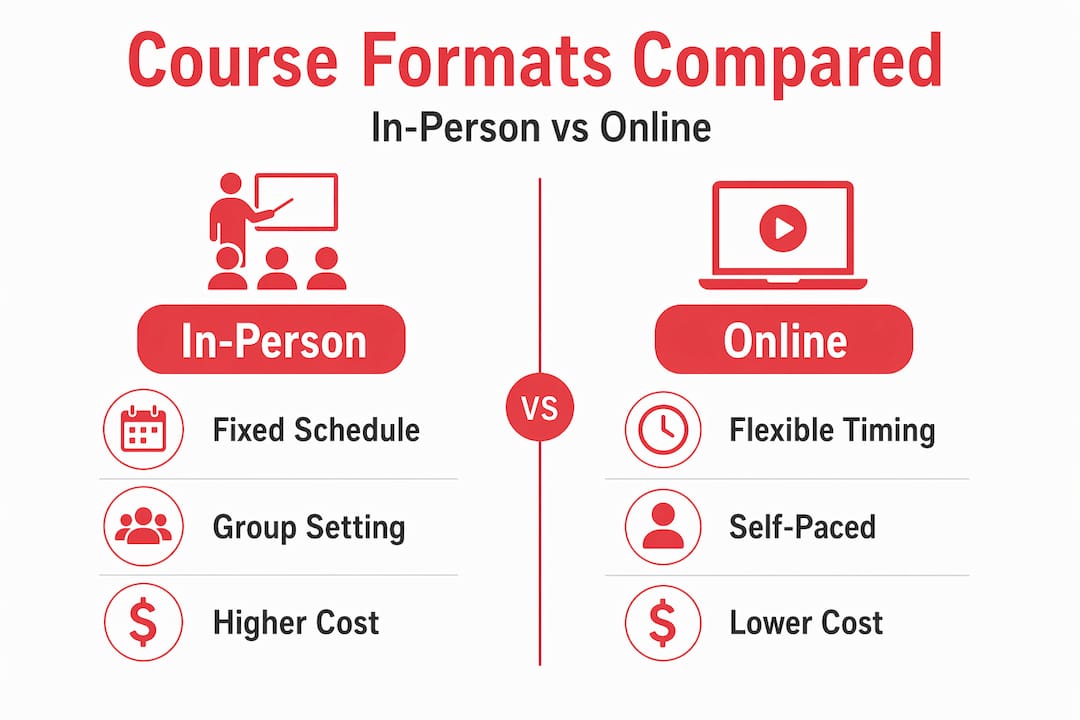
| Factor | In-Person Course | Online Course |
|---|---|---|
| Cost | $75 to $85 | $50 to $60 for most state programs |
| Schedule | Fixed dates and times | Self-paced, study anytime |
| Instructor access | Live, real-time feedback | Limited or none during study |
| Certification speed | Same-day certification in most states | Same-day upon exam completion |
| Legal validity | Valid with NASBLA approval | Valid with NASBLA approval |
| Ideal learner | Structured, group-oriented | Independent, schedule-flexible |
| Complex topic retention | Higher due to live correction | Requires extra self-review |
Learning style suitability deserves more attention than cost alone. Research consistently shows that format choice should align with how an individual actually absorbs and retains information. For topics like chartwork and navigation calculations, live instructor feedback actively prevents the kind of ingrained errors that are difficult to unlearn later. Online formats handle straightforward rule memorization well but carry more risk on technical subjects without supplemental support.
How to choose the right boating course format
Choosing between in-person and online formats comes down to four personal factors. Work through this list honestly before you enroll.
-
Assess your learning style. Do you retain information better in a structured group setting with live discussion, or do you learn efficiently on your own with written and video materials? If you have historically struggled with self-paced courses in other areas, an in-person format reduces that risk significantly.
-
Evaluate your schedule. Can you block a full Saturday or two weekday evenings without conflict? If your schedule is genuinely unpredictable over the next several weeks, a self-paced online boating course gives you the flexibility to progress without losing your spot.
-
Calculate total cost. The course fee alone does not tell the full story for in-person training. Add fuel, parking, and potentially a lost workday to get an accurate cost comparison. For many students, the real price difference is larger than it appears at first glance.
-
Confirm course approval. Before you pay for any program, verify that it carries NASBLA approval or is specifically listed as state-approved for your state’s boating license requirements. Both formats can produce useless certificates if the provider is not properly authorized. You can check the boating safety certification standards for your state before committing.
-
Consider a hybrid model. If you want cost savings from online study but value hands-on learning, hybrid course models combine online theory with in-person practical sessions. This approach reduces travel while protecting your competency on skills that genuinely require practice, especially relevant for personal watercraft operation.
Practical tips for success in either format
Knowing which format to choose is only half the decision. Getting the most out of whichever course you select requires deliberate habits before and during your study.
For online boating course students:
- Schedule study blocks in your calendar the day you enroll, not the day before your exam
- Use the lesson repeat function actively, not just when you fail a quiz
- Print or download the course summary materials for review away from a screen
- Take notes by hand. Research consistently shows handwriting aids retention better than typing for conceptual material
For in-person boating course students:
- Review the course outline before your first session so class time goes to questions, not orientation
- Sit near the front. The quality of your interaction with the instructor changes noticeably
- Bring a waterproof notebook. Notes from live instruction often include practical local knowledge that is not in any manual
- Ask your instructor about the specific waterways, tides, and conditions relevant to where you plan to boat
Pro Tip: Regardless of which format you choose, boating education outcomes improve significantly when students follow up their certification with on-water time alongside an experienced boater before going out solo. Your certificate proves you passed the course. Experience builds actual judgment.
Common pitfalls to avoid:
- Skipping sections you think you already know. State exams test specific legal definitions, not just general boating intuition
- Waiting until the last week of a 12-month online access period to start studying
- Choosing a course based on price alone without checking state approval status
My take on the in-person vs online debate
I have seen both formats produce excellent boaters and, frankly, both formats produce students who walk out certified but underprepared. The format is not the determining factor. The student’s engagement is.
What I have observed repeatedly is that in-person courses benefit all students and a specific type of learner who does not always know they need that structure until they have already struggled through a self-paced program. The classroom’s fixed pace and the social pressure of a group keep people moving through material they would have quietly skipped or glossed over online. That matters enormously for topics like emergency procedures, where confidence under pressure depends on repetition and real-time correction, not passive reading.
The factor most people overlook entirely is community. An in-person course introduces you to other boaters in your area. Those connections lead to on-water mentorship, shared dock tips, and the kind of practical knowledge that no curriculum covers. Online courses offer none of that. For a first-time boat owner, that social layer has real, lasting value that does not appear in any boating course comparison.
My honest recommendation for most new boaters: if budget and schedule allow, take the in-person course. If they do not, a well-chosen online program from an approved provider is fully adequate. Just be honest with yourself about whether you will actually finish it without a deadline.
— Richard
Start your boating certification with Safe Boating America
Safe Boating America offers both online and in-person boating certification programs designed to meet state-specific requirements across the country. Whether you prefer the flexibility of a self-paced online course or the structured environment of a live classroom session, every program uses NASBLA-approved materials taught by State Certified Instructors and USCG-Licensed Captains.
State-specific options are available for students in New York, Connecticut, Florida, and dozens of other states. New York students completing Brianna’s Law-compliant courses can add a boating endorsement directly to their NYS driver’s license. Students in all states receive their official boating safety certificate upon course completion, often the same day.
If you are in New York and need a state-approved class, Safe Boating America’s New York boating certification programs cover both boat and Jet Ski operation with flexible scheduling options. For Georgia residents, the Georgia online certification course provides full state approval with same-day certificate delivery.
FAQ
Are online and in-person boating certifications legally equal?
Yes. Both formats produce legally valid certification when the course carries NASBLA approval or your state’s specific authorization. No licensing authority distinguishes between the two formats.
How much does an in-person boating course cost compared to online?
In-person courses typically cost between $75 and $85, while online programs often start at $50 to $60..
Is an online boating course effective for first-time boaters?
Online boating courses are effective for most foundational content, though complex topics like navigation and chart reading benefit from live instructor feedback to prevent errors that are difficult to correct later.
How long does it take to complete an online boating safety course?
Most state-approved online boating courses take up to eight hours to complete, and many students receive same-day certification upon passing the final exam.
What should I check before enrolling in any boating course?
Confirm that the program is NASBLA-approved or listed as state-approved for your specific state before paying. An unapproved course will not satisfy legal boating requirements regardless of what the provider advertises. All courses offered at Safe Boating America are NASBLA approved!