
Boater Card: How to Get Certified in 2026
A boater card is an officially recognized certificate that proves you have completed required boating safety education to legally operate motorized vessels in many U.S. states. Most states issue this certificate, formally called a boating safety education certificate, rather than a traditional driver’s license. Courses typically run 3–6 hours and cost $30–$50, with certification valid for life in most states. Safeboatingamerica offers NASBLA-approved courses that satisfy these requirements across the country, whether you prefer online, live Zoom, or in-person instruction.
What is a boater card and who needs one?
A boater card is the physical or digital proof that you passed a state-approved boating safety course. Over 40 states require boater education for at least some operators, and the trend is moving toward universal requirements. That means the question is no longer whether you need one. It is when your state will require it of you.
State rules vary significantly by age and birth year. California requires all motorized vessel operators to hold a California Boater Card, regardless of age. Florida requires certification for anyone born after january 1, 1988. New York requires a Boating Safety Certificate for all operators as of 2025, under Brianna’s Law. Knowing your state’s specific cutoff is the first step before you enroll.
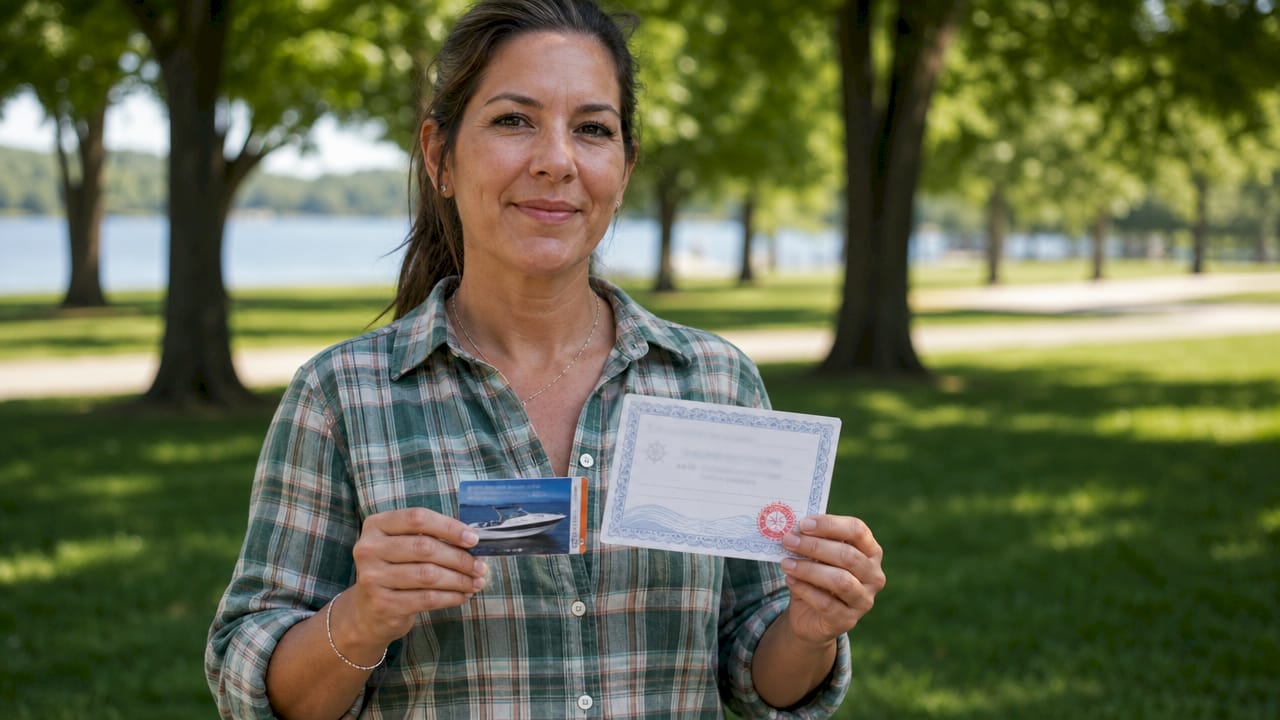
The certificate is not a license in the traditional sense. You do not renew it annually or pay ongoing fees. Once you earn it, it is yours for life in most states. That makes the upfront investment of a few hours and a modest fee one of the best returns in recreational boating.
What do you need before starting a boater card course?
Most state-approved courses have minimal prerequisites, but a few requirements apply before you register.
- Age eligibility. Many states set a minimum age of 10 or 12 to take the course independently. Younger students may complete the course with a parent or guardian.
- Valid identification. You will need a government-issued ID or birth certificate to verify your identity when registering and receiving your certificate.
- Internet access for online courses. Online formats require a reliable connection and a device capable of running video content and a timed final exam.
- Study materials. State-approved providers supply course content directly. No separate textbook purchase is required.
- Basic English literacy. Course content is written at a general reading level, but you must be able to read and understand safety instructions clearly.
Classroom courses typically require a minimum of 8 hours, while online formats offer more flexibility in pacing. Both formats cover the same content volume. The choice comes down to your schedule and how you learn best.
Pro Tip: Register with a NASBLA-approved provider like Safeboatingamerica to confirm your course satisfies your specific state’s requirements before you begin. Not all courses are accepted in every state.
How do you complete the course and pass the exam?
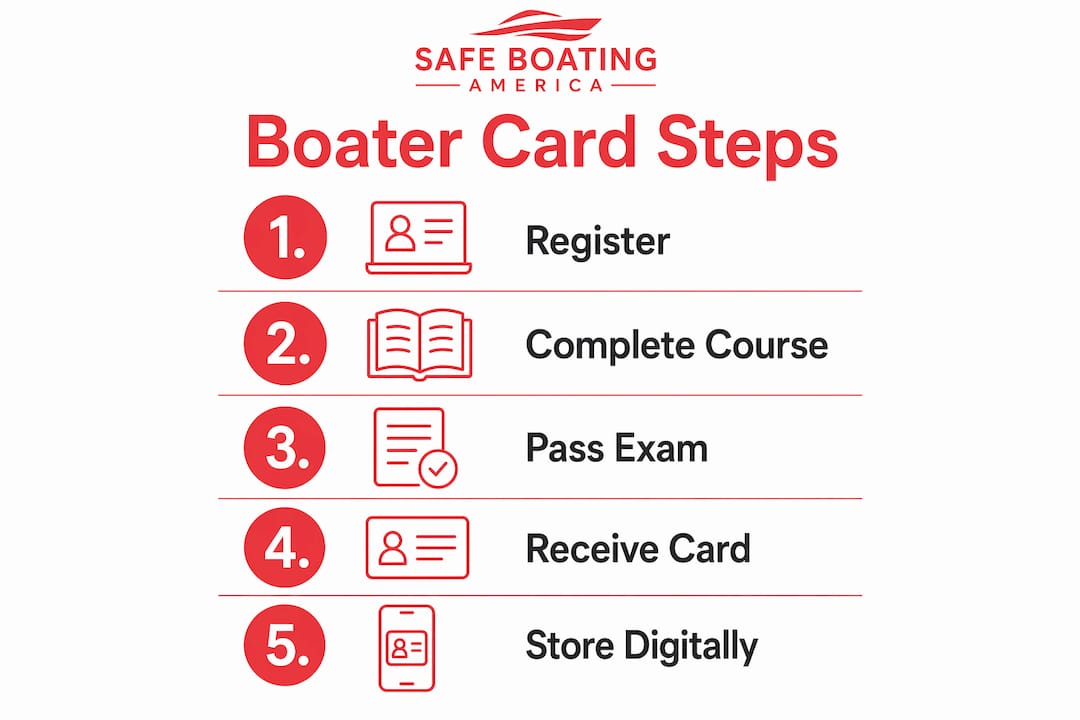
Getting your boating safety certificate follows a clear sequence. Each step builds on the last, and the exam is straightforward if you engage with the material.
- Choose your course format. Select online, live Zoom, or in-person instruction based on your schedule. Safeboatingamerica offers all three formats with state-certified instructors and USCG-licensed captains.
- Complete the coursework. Topics include navigation rules, required safety equipment, emergency procedures, accident prevention, docking, trailering, and marine environmental awareness. Allocate 3–6 hours of focused study regardless of format. Rushing through the material increases the chance of failing the exam.
- Review navigation rules carefully. Right-of-way rules and buoy systems are the most commonly missed topics on the final exam. Spend extra time on these.
- Take practice quizzes. Most approved providers include practice questions at the end of each module. Use them. They mirror the format of the actual exam.
- Pass the final exam. The exam is typically multiple choice. Most states require a score of 70%–80% to pass. You usually get multiple attempts if you do not pass on the first try.
- Receive your certificate. After passing, you receive your official boating safety certificate. Some providers, including Safeboatingamerica, offer same-day certification. You can often print a temporary card immediately and receive a physical card by mail.
The exam is not designed to trick you. It tests practical knowledge you will actually use on the water. Operators who study the material seriously pass without difficulty.
Pro Tip: Take the course through a provider that offers digital record storage. If you ever lose your physical card, a digital record makes replacement far easier.
How do you handle a lost or damaged boater card?
Losing your boating safety certificate is more common than most people expect. The replacement process depends on how your original provider stored your records.
- Contact your original course provider first. If you completed the course through a provider that maintains digital records, they can reissue your certificate quickly. Digital record-keeping makes retrieval straightforward, while paper-only records may require additional verification steps.
- Contact your state boating agency if the provider is unavailable. State agencies sometimes maintain their own databases of certified boaters. Your state’s fish and wildlife or natural resources department is the right starting point.
- Retake an approved course if records cannot be located. This is the last resort, but it is also an opportunity to refresh your knowledge. Online courses are the best option for easy record retrieval going forward.
- Carry your card onboard at all times. Law enforcement officers on the water can and do request proof of certification during routine stops. A digital copy on your phone is acceptable in many states, but check your state’s rules.
- Keep a backup copy at home. Scan your physical card and store the image in a secure cloud folder. This takes two minutes and eliminates most replacement headaches.
The safest approach is to choose a provider with digital record storage from the start. Safeboatingamerica maintains records for its students, which simplifies any future replacement request.
What safety responsibilities come with your boating certification?
Earning your boat safety certification is the beginning of your legal and safety obligations, not the end of them. The statistics behind boating accidents make the responsibilities concrete.
Drowning causes 75%–76% of recreational boating deaths, and 86%–87% of those victims were not wearing life jackets. That single data point explains why life jacket laws exist and why enforcement is strict. Wearing a properly fitted life jacket is the single most effective action you can take to survive an accident.
“The best safety improvement comes from taking a formal safety course plus proactive preparation, emphasizing life-saving techniques beyond legal minimums.” — Captain Peg Phillips, cited by the Safe Boating Council
Alcohol contributes to 20% of fatal boating accidents. Marine patrols operate with strict enforcement and zero tolerance for boating under the influence. The legal limit mirrors driving laws in most states, and the penalties are equally serious.
Additional responsibilities every certified boater must follow:
- Use your engine cut-off switch. Engine cut-off switches are mandatory safety devices on most motorized vessels. They stop the engine automatically if the operator falls overboard, preventing the vessel from circling back and striking the person in the water.
- File a float plan. Tell someone on shore where you are going, your expected route, and when you plan to return. Filing a float plan improves safety and legal compliance and gives rescue teams a starting point if something goes wrong.
- Carry a VHF radio. Cell phones are unreliable on water. A VHF radio tuned to Channel 16 connects you directly to the U.S. Coast Guard and nearby vessels in an emergency.
- Conduct a pre-departure safety check. Verify fuel levels, check navigation lights, confirm all required safety equipment is aboard, and inspect the hull before leaving the dock.
These are not suggestions. They are the practices that separate prepared boaters from those who become accident statistics. Your boating safety education covers all of them, but applying them consistently is your responsibility.
Key Takeaways
A boater card is a lifetime-valid safety education certificate required in over 40 states, earned by completing a NASBLA-approved course and passing a final exam.
| Point | Details |
|---|---|
| Lifetime validity | Most states issue boater cards with no renewal requirement after initial certification. |
| State requirements vary | California requires all operators to certify; Florida and New York use birth year cutoffs. |
| Course length and cost | Courses run 3–6 hours and typically cost $30–$50 through approved providers. |
| Digital records matter | Choose a provider with digital storage to simplify any future certificate replacement. |
| Safety obligations continue | Life jackets, engine cut-off switches, and float plans are legal requirements, not optional practices. |
Why I think most boaters underestimate what a boater card actually teaches
Most people treat the boating safety course as a box to check. They rush through it, pass the exam, and consider themselves done. That approach misses the point entirely.
The content in a NASBLA-approved course covers scenarios that experienced boaters encounter regularly: right-of-way conflicts at channel intersections, night navigation with limited visibility, and how to respond when a passenger falls overboard. These are not hypothetical situations. They happen on busy waterways every weekend.
What I have observed is that boaters who engage seriously with the coursework make better decisions under pressure. They recognize a developing hazard earlier. They know which channel marker to follow when visibility drops. They understand why a float plan matters before they ever need one. The legal requirements for boaters set the floor, not the ceiling.
My honest advice: treat your certification course as the foundation of a skill set you will build on for years. The exam is easy. The water is not.
— Richard
Safeboatingamerica courses: get certified on your schedule
Safeboatingamerica offers state-approved boating safety courses for every U.S. state, taught by State Certified Instructors and USCG-Licensed Captains.
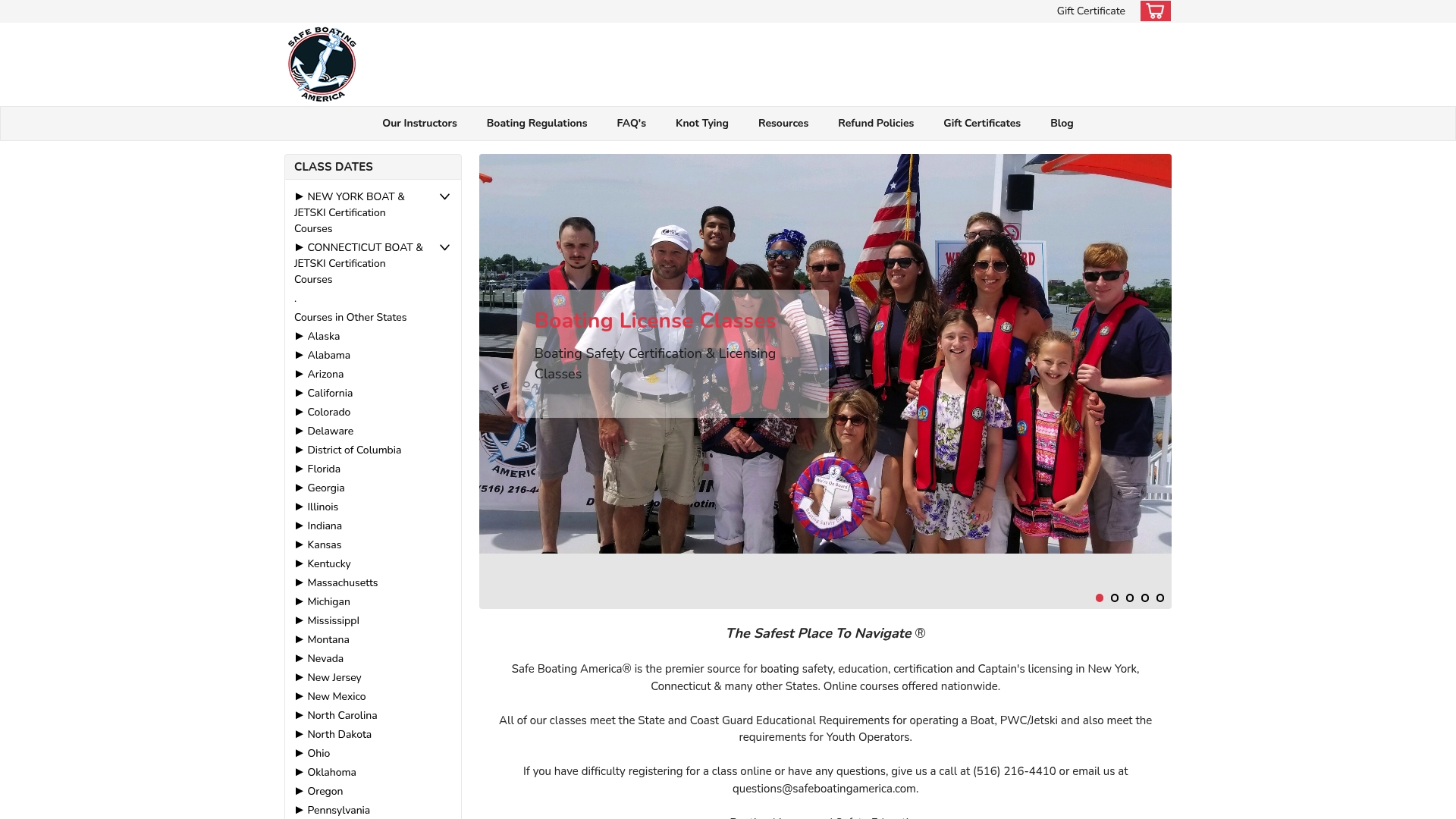
Whether you need an online boating course you can complete at your own pace or a live Zoom class with real-time instruction, Safeboatingamerica has a format that fits your schedule. Same-day certification is available, and digital records are maintained so your certificate is always retrievable. New York students can also add a boating endorsement directly to their NYS driver’s license. Visit Safeboatingamerica to find the course that meets your state’s requirements and get on the water legally and confidently.
FAQ
What is a boater card?
A boater card is an official boating safety education certificate issued after completing a state-approved course and passing a final exam. It proves legal eligibility to operate motorized vessels in states that require boater education.
How long does it take to get a boater card?
Most courses take 3–6 hours to complete, with same-day certification available through providers like Safeboatingamerica. Classroom formats may require a minimum of 8 hours depending on state rules.
Does a boater card expire?
In most U.S. states, a boating safety certificate is valid for life with no renewal requirement. Confirm your specific state’s rules when you register for your course.
What happens if I lose my boater card?
Contact your original course provider to request a replacement. Providers with digital records can reissue your certificate quickly. If records are unavailable, contact your state boating agency or retake an approved course.
Do I need a boater card for a Jet Ski or PWC?
Yes. Personal watercraft such as Jet Skis and WaveRunners are classified as motorized vessels in most states, and the same boater education requirements apply. Safeboatingamerica offers dedicated PWC certification courses to meet these requirements.