NY Boating Safety Course: 2026 Certification Guide
A New York boating safety certificate is mandatory for every motorboat and personal watercraft operator on New York waters, with no age exemptions remaining as of January 2025. Brianna’s Law completed its full rollout, meaning every person who operates a motorized vessel in New York must hold a valid boating education certificate issued by a state-approved provider. Whether you plan to operate a Jet Ski on Long Island Sound, a motorboat on Lake George, or a WaveRunner off Nassau County, completing an approved NY boating safety course is the legal prerequisite. This guide covers every course format, the enrollment process, legal responsibilities, and preparation strategies to get you certified correctly and on time.
What NY boating safety course options are available?
New York State recognizes boating safety courses approved by NASBLA (National Association of State Boating Law Administrators) and the New York State Office of Parks, Recreation and Historic Preservation. commonly accepted in New York include Safe Boating America.
Online courses
Online courses let you study at your own pace from any device.Safe Boating America charges a course fee and provide more structured content with instructor support. Online formats work well for boaters with busy schedules, but you must complete a proctored final exam to receive your boating education certificate. Some online providers also offer live Zoom sessions for students who prefer real-time instruction.

In-person classroom courses
In-person courses are typically one or two full days and are taught by State Certified Instructors or USCG-Licensed Captains. In person courses require pre-registration, charge a fee (commonly around $70), have limited seating, and require you to bring proof of payment on the day of class. These courses cover navigation rules, emergency procedures, personal watercraft operation, fueling safety, and marine environmental awareness. The classroom format is particularly useful for first-time boaters who benefit from direct Q&A with an instructor.
Hybrid and Zoom-based options
Safe Boating America offers live Zoom boating classes that combine the flexibility of remote attendance with real-time instructor interaction. This format is increasingly popular among New York City and Long Island students who want structured instruction without traveling to a physical classroom.
- In-person/Zoom: Safe Boating America, local county-run programs
- Verify approval: Always confirm the course is listed on the NYS Parks boating education page before enrolling
How to enroll in and complete a New York boating safety course
Completing your certification involves more than just showing up. The process has specific steps, and skipping any one of them can delay your legal ability to operate a vessel.
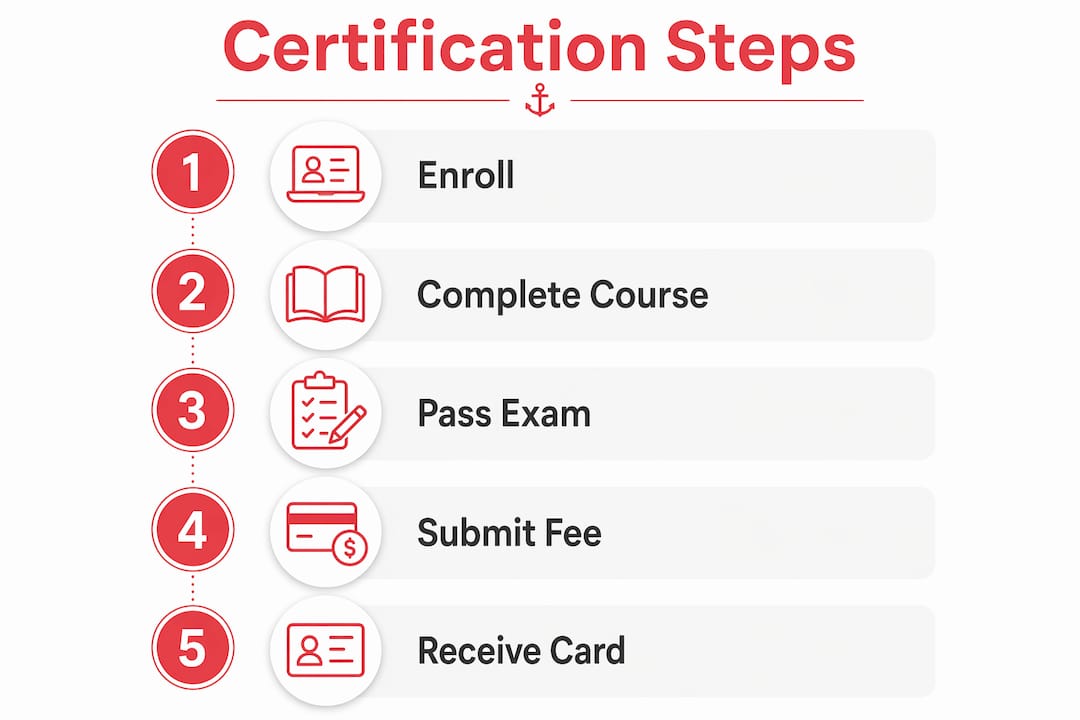
- Choose your course format. Decide between online, in-person, or live Zoom based on your schedule and learning preference. Confirm the course is NYS-approved.
- Register early. In-person classes have limited seating, and online courses can experience high demand near peak boating season.
- Complete all required coursework. Online courses require you to finish all modules before taking the final exam. In-person courses require full attendance. Partial completion does not qualify you for certification.
- Pass the final exam. Most NY-approved courses require a passing score of 70% or higher. The exam covers navigation rules, safety equipment, emergency procedures, and state-specific boating laws.
- Receive your temporary certificate. Same-day certification is issued immediately after passing. This temporary certificate is valid for 90 days and is legally acceptable while operating a vessel.
- Apply for your permanent card. Adults 18 and older must mail a $10 fee to receive the permanent boating safety certificate. The fee is waived for students ages 10 through 17. Do not delay this step, as your temporary certificate has a 90-day expiration.
- Store your certificate properly. Once received, keep the original certificate on board whenever you operate a motorized vessel. A photo on your phone is not legally sufficient.
Pro Tip: Set a calendar reminder to mail your $10 permanent card fee the same week you pass your course. Many boaters forget and find themselves operating on an expired temporary certificate mid-season.
New York also allows many students to add a boating endorsement to their NYS driver’s license after completing an approved course, which provides a convenient backup form of proof.
What are the legal requirements once you are certified in New York?
Holding a boating education certificate in New York is not a one-time checkbox. It carries ongoing legal obligations every time you operate a motorized vessel.
Approved boating safety certificates in NY are valid for life but you must carry the original document on board and present it when requested by law enforcement. A copy or digital photo does not satisfy this requirement under current New York Navigation Law.
Enforcement is handled by multiple agencies:
- NY State Police Marine Detail conducts on-water inspections statewide
- County sheriff’s offices patrol local waterways and lakes
- U.S. Coast Guard has federal jurisdiction on navigable waters
Operating without a valid certificate can result in citations, corrective orders, and vessel impoundment. These are not warnings. Enforcement agencies treat non-compliance as a direct violation of New York Navigation Law.
Important: Temporary renters of motorized boats may be exempt from full certification requirements in some cases, but marina rental policies often require safety briefings or abbreviated certificates regardless of state exemptions. Confirm requirements with the marina before you get on the water.
Requiring all operators regardless of age to hold certification aligns New York with leading national boating safety standards and directly reduces accident rates. This is not a bureaucratic formality. It reflects a measurable shift in how New York manages on-water safety.
How to prepare effectively for your NY boating safety exam
Preparation determines whether you pass on the first attempt and whether you actually retain the knowledge that keeps you safe on the water.
- Review navigation rules first. Rules of the road, right-of-way, and buoy systems are consistently the most tested topics on NY boating exams.
- Study state-specific regulations. New York has specific rules around personal watercraft operation, no-wake zones, and required safety equipment that differ from general NASBLA content.
- Use the course materials provided. Both online and in-person providers supply study guides. Read them before attempting practice quizzes, not after.
- Bring required documents to in-person classes. Your payment receipt, a valid ID, and any pre-registration confirmation are required. Arriving without them can result in being turned away.
- Plan around the season. Completing your course before peak spring season reduces the chance of encountering full classes and enforcement delays on your first day out.
Youth boaters ages 10 through 17 follow the same course and exam requirements as adults. There are no simplified youth versions of the NY certification exam. Parents enrolling younger boaters should plan for a full-day commitment if choosing an in-person format.
Pro Tip: If you are enrolling in a live Zoom or in-person course through Safe Boating America, check the NY PWC certification course page for upcoming session dates. Seats in popular Long Island and New York City sessions fill weeks in advance.
Over 130,000 students completed a New York boating safety course between January and November 2025, a 47,000-student increase over the prior year. That surge in demand directly affects seat availability for in-person and Zoom classes, making early registration a practical necessity rather than optional advice.
Key takeaways
New York’s Brianna’s Law makes a boating safety certificate mandatory for all motorboat operators, and completing a NASBLA-approved course is the only path to legal, on-water compliance.
| Point | Details |
|---|---|
| Certification is mandatory | Every motorboat and PWC operator in NY must hold a valid boating education certificate as of January 2025. |
| Multiple course formats exist | Online, in-person, and live Zoom options are available. |
| Temporary certificate issued same day | A 90-day temporary certificate is issued immediately after passing; adults must mail $10 for the permanent card. |
| Carry the original on board | NY law requires the original certificate on the vessel at all times. A photo or copy does not satisfy enforcement requirements. |
| Register early to avoid delays | Demand surged to 130,000+ students in 2025. In-person and Zoom seats fill fast in spring and summer. |
Why I tell every New York boater to get certified before Memorial Day
I have watched too many boaters scramble to complete their certification in the last week of May, only to find every in-person class fully booked and online exam slots backed up. The enforcement reality in New York is not theoretical. NY State Police Marine Detail, county sheriffs, and the U.S. Coast Guard all conduct on-water inspections, and they are not lenient about missing certificates.
My recommendation is always the same: complete your NY boating safety course in March or early April, mail your $10 fee the same week, and have your permanent card in hand before you launch for the season. The 90-day temporary certificate is a safety net, not a strategy.
On the question of which provider to choose, I favor courses taught by State Certified Instructors with live instruction components. The content in a live Zoom or in-person class from Safe Boating America covers navigation rules, emergency procedures, and PWC-specific regulations in a way that sticks better than self-paced reading alone. The impact of structured boating education on accident reduction is well documented, and the difference between a boater who genuinely understands right-of-way rules and one who memorized answers for a test is visible on the water.
One detail most boaters overlook: the permanent certificate is valid for life, but only if you carry the original. Get a waterproof document sleeve and keep it on the boat permanently. That one habit eliminates the most common compliance problem I see.
— Richard
Get certified with Safe Boating America
Safe Boating America offers Brianna’s Law-compliant NY boating safety courses in online, live Zoom, and in-person formats, all taught by State Certified Instructors and USCG-Licensed Captains using NASBLA-approved materials. Courses cover navigation rules, emergency procedures, personal watercraft operation, and all NY-specific legal requirements. Students receive same-day certification and can complete the process from anywhere in New York, including Long Island, New York City, Buffalo, and Nassau and Suffolk Counties.
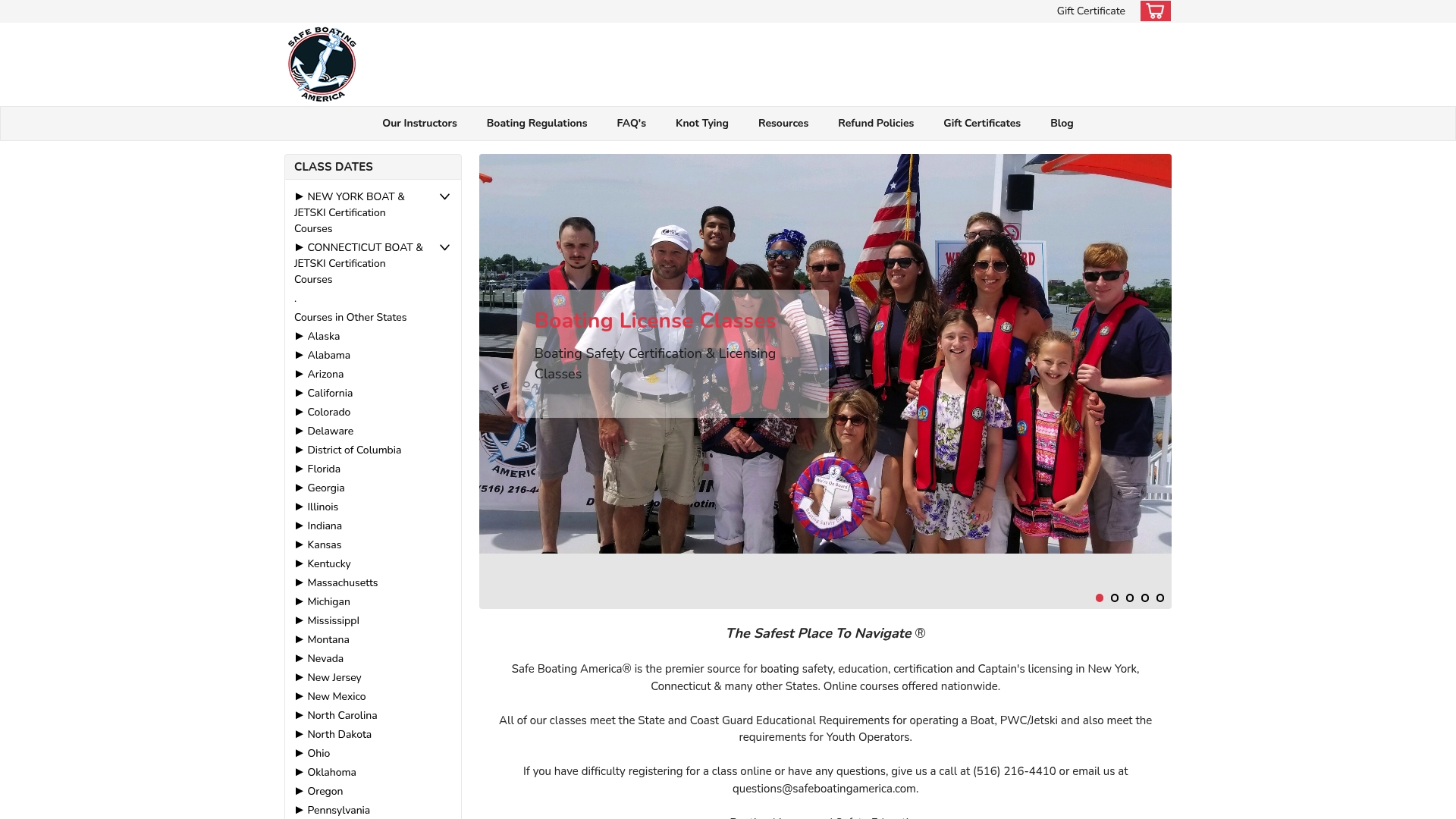
Visit Safe Boating America to view upcoming course dates, enroll in a state-approved online course, and get your New York boating safety certificate quickly and correctly. Seats fill fast in spring, so early enrollment is the most reliable path to on-time certification.
FAQ
What is required to get a NY boating safety certificate?
You must complete a NASBLA-approved boating safety course and pass a final exam through a provider recognized by the New York State Office of Parks, Recreation and Historic Preservation. After passing, you receive a same-day temporary certificate valid for 90 days while your permanent card is processed.
How long does a New York boating safety certificate last?
A New York boating safety certificate is valid for life once the permanent card is issued. You must carry the original document on board whenever you operate a motorized vessel.
What happens if I operate a boat in NY without a certificate?
Operating without a valid certificate can result in citations, corrective orders, and vessel impoundment enforced by NY State Police Marine Detail, county sheriffs, and the U.S. Coast Guard.
Do boat renters in New York need a boating safety certificate?
Temporary renters may qualify for an exemption under certain conditions, but marina policies often require safety briefings or abbreviated certificates regardless. Confirm requirements with the rental operator before getting on the water. For PWC rentals specifically, review the Jet Ski rental check-in process to understand what documentation is typically expected.