
Jet Ski Course Zoom Class: Your 2026 Licensing Guide
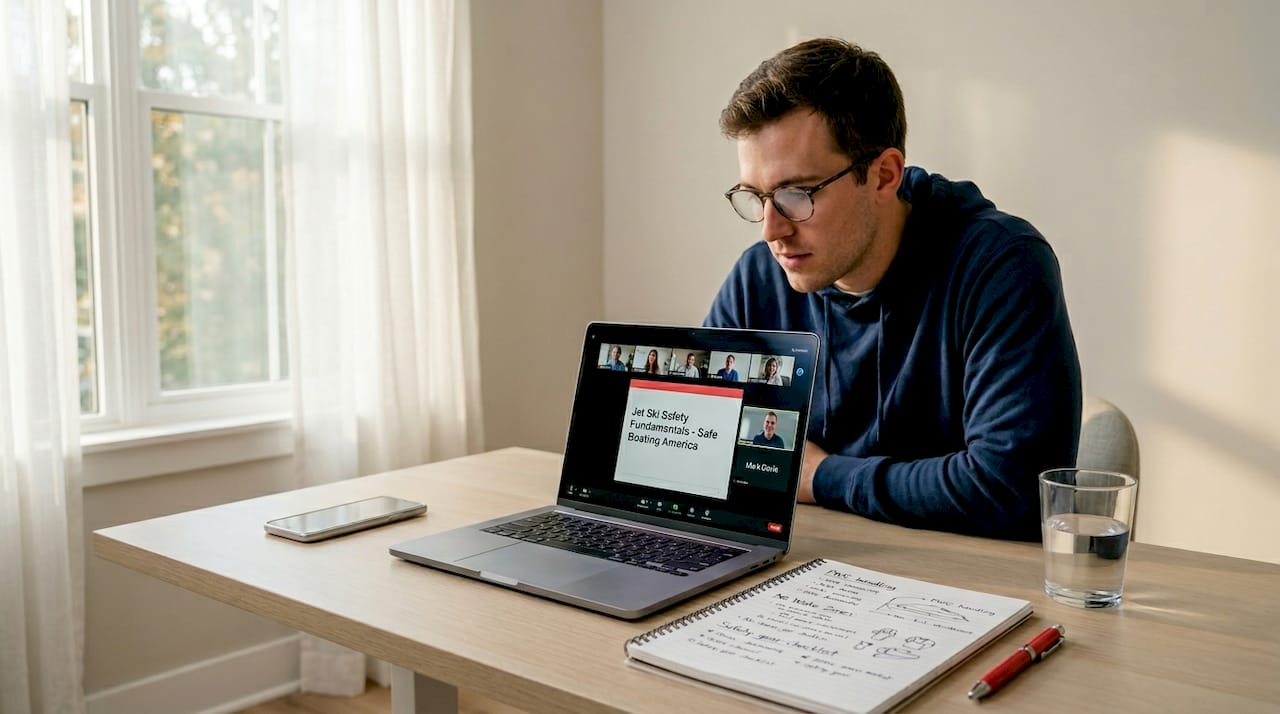
A jet ski course Zoom class is a live, instructor-led virtual training session that lets you earn your personal watercraft (PWC) certification remotely while receiving real-time guidance from a certified instructor. The industry standard term for this format is a “live virtual boating safety course,” though most students search for it as a jet ski safety zoom class. Safeboatingamerica offers this format alongside self-paced online options, giving you a legal path to PWC certification without setting foot in a classroom. Understanding which format your state accepts is the single most important step before you enroll.
What is a jet ski course Zoom class and why does it matter?
A jet ski course Zoom class replicates the structure of an in-person classroom through video conferencing platforms like Zoom, with a certified instructor leading lessons, answering questions live, and administering a proctored final exam. This format is distinct from self-paced online courses, where you watch pre-recorded videos at your own pace with no instructor present. The difference matters legally. Some states require live, instructor-led or proctored virtual classes for PWC endorsements and do not accept asynchronous self-paced courses.
Interactive video lessons and real-time instructor feedback in Zoom classes enhance learner engagement and comprehension compared to purely self-paced formats. This means you are more likely to retain navigation rules, emergency procedures, and operational safety principles when an instructor can respond to your specific questions in the moment. For first-time PWC operators, that retention directly affects on-water safety outcomes.

What state certifications do you need to legally operate a jet ski?
Most states require at least one credential before you can legally operate a Jet Ski, WaveRunner, or any personal watercraft. The specific requirements vary significantly by state, and knowing the difference before you enroll saves time and money.
The typical state framework includes:
- Boating safety certificate. A general certificate covering navigation rules, emergency procedures, required equipment, and boating laws. This applies to all vessel operators, not just PWC riders.
- PWC endorsement or separate certification. Some states require an additional credential specific to personal watercraft. This covers thrill craft risks, operational zones, and PWC-specific regulations.
- Age requirements. Most states set a minimum operating age between 14 and 16, with younger riders often requiring adult supervision.
- Exam passage. Nearly all states require a passing score on a final exam before issuing a certificate.
Hawaii presents the most structured example of the two-step model. Hawaii requires two separate credentials to legally operate a Jet Ski: a general boating safety certificate and a state-approved Thrill Craft operator certification. The Thrill Craft requirement has been in effect since 2005 under Hawaii Administrative Rule §13-256-16, specifically designed to reduce accidents and user conflicts. Critically, Thrill Craft education can only be completed through online or virtual video conferencing. No in-person courses are currently offered, making the Zoom format the only compliant option for Hawaii residents.
Connecticut takes a different approach. The state requires instructor-led classes of at least 8 hours with a proctored final exam, meaning a self-paced online course does not satisfy the requirement. Before enrolling in any virtual jet ski lessons, confirm with your state boating agency whether live instructor-led Zoom classes, self-paced online courses, or only in-person classes satisfy the certification requirement. See the PWC license requirements guide for a state-by-state breakdown.
How to find and choose an approved virtual jet ski training provider
Locating a legitimate, state-approved provider for online jet ski training requires more than a quick search. Jet ski course searches often yield mixed results between rental guidance and state-approved certification courses, making verification essential before payment.
Use these criteria when evaluating any provider:
- State approval status. Confirm the course is approved by your state’s boating authority, not just marketed as “state-approved.” Check your state’s official boating agency website for a list of accepted providers.
- Course delivery format. Identify whether the course is live instructor-led Zoom, self-paced online, or hybrid. Match the format to your state’s acceptance rules.
- Provider reputation and credentials. Look for courses taught by NASBLA-approved instructors or USCG-Licensed Captains. Safeboatingamerica courses are taught by State Certified Instructors using NASBLA-approved materials.
- Exam format and proctoring. Confirm whether the final exam is proctored, how many questions it includes, and whether retakes are permitted.
- Certificate issuance timeline. Some providers issue same-day digital certificates. Others mail physical cards within several business days.
Platforms like Boat-Ed.com offer state-specific self-paced courses, while Safeboatingamerica specializes in live Zoom boating classes and in-person sessions across New York, Connecticut, Long Island, and nationwide. The BoatUS Foundation offers a free self-paced course approved in North Carolina, featuring a video-based curriculum and a 60-question final exam. Each platform serves a different state and format need.
Pro Tip: Call your state boating agency directly and ask: “Does your state accept live instructor-led Zoom classes for PWC certification?” Get the answer in writing or note the representative’s name and date. This protects you if a question arises about your certificate’s validity.
Step-by-step process for completing a jet ski safety Zoom class
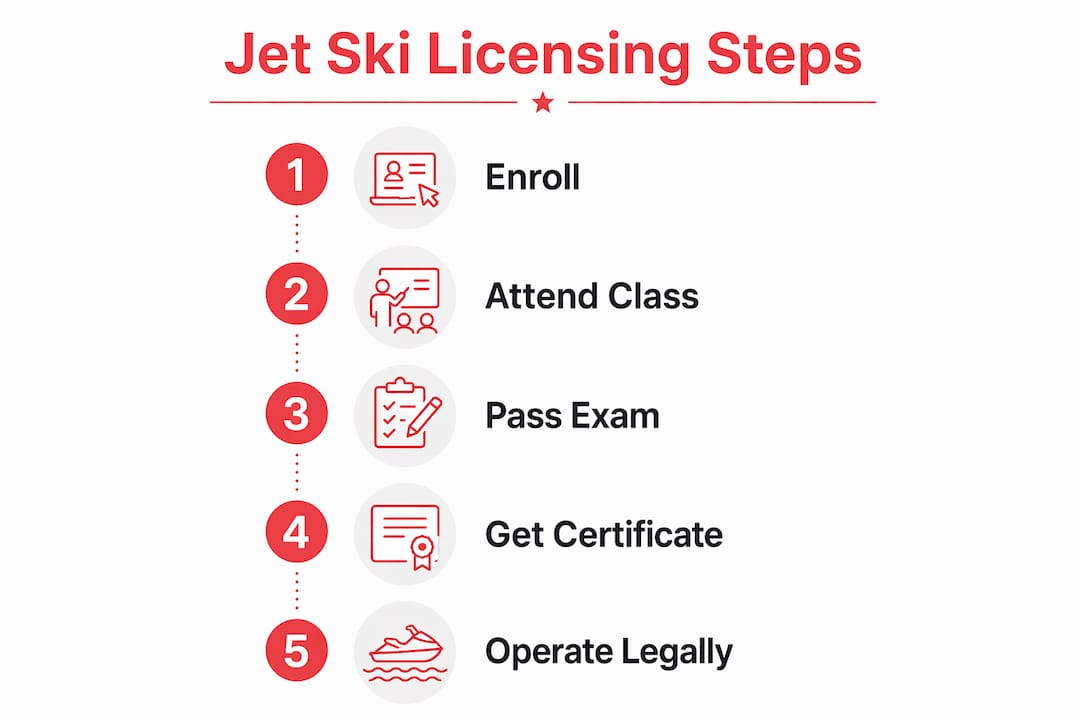
The enrollment and completion process for a live virtual course follows a consistent structure across most approved providers. Here is the standard sequence:
- Confirm your state’s requirements. Before registering, verify which credential you need and whether your state accepts live virtual classes. Review the course format differences to understand what distinguishes a Zoom class from a self-paced course.
- Register online or by phone. Most providers offer online registration with immediate enrollment confirmation. Safeboatingamerica accepts registrations by phone and online, with flexible scheduling options.
- Prepare your technology. You need a device with a functioning camera and microphone, a stable internet connection, and the Zoom application installed. Test your setup at least 24 hours before class to avoid day-of disruptions.
- Attend the live session. Courses typically run 4 to 8 hours depending on state requirements. Instruction covers navigation rules, personal watercraft safety, emergency procedures, required equipment, and boating laws. Online jet ski courses include interactive lessons, quizzes, and safety videos designed to replicate real on-water decision-making scenarios.
- Complete the final exam. The exam is administered at the end of the course, often within the same Zoom session under instructor supervision. Most jet ski courses offer unlimited exam retakes, encouraging mastery rather than a single-attempt pass. Exams focus on safety, navigation, and operational knowledge.
- Receive your certificate. Upon passing, providers issue a boating safety certificate digitally or by mail. This certificate is your legal credential for PWC operation in your state.
Pro Tip: Log into the Zoom session 10 minutes early. Instructors often use the pre-class window to cover housekeeping rules, and late arrivals can be marked absent in states with strict attendance requirements.
Common pitfalls include joining from a phone with a weak connection, failing to have your camera on when required, and not saving or printing your certificate immediately after issuance.
Common misconceptions about learning jet skiing online
Several persistent misconceptions cause students to either avoid virtual courses or enroll in the wrong format.
- “Online means no real instructor.” Live Zoom classes include a certified instructor in real time. You can ask questions, request clarification, and interact with other students. This is not a video you watch alone.
- “Any online course works for any state.” This is the most costly misconception. Verification of state acceptance for course format is critical; some states mandate in-person or live proctoring, others allow self-paced online courses, and a few accept virtual Zoom classes as compliant alternatives. Enrolling in the wrong format means your certificate may not be recognized.
- “The exam is easy because it’s online.” Proctored final exams in live Zoom courses carry the same weight as in-person exams. Instructors monitor participants via camera during the exam portion.
- “Remote jet ski certification is less rigorous.” NASBLA-approved virtual courses cover identical content to in-person classes. The delivery method changes; the safety standards do not.
- “Technical problems will disqualify you.” Most providers have policies for technical disruptions. Contact the instructor or provider immediately if your connection drops, and document the issue.
Staying engaged during a virtual session requires the same discipline as an in-person class. Minimize distractions, use headphones for clearer audio, and participate actively in Q&A segments. Engagement directly correlates with exam performance.
Key takeaways
A jet ski course Zoom class is a legitimate, state-approved path to PWC certification when you select the right provider and confirm your state accepts the live virtual format.
| Point | Details |
|---|---|
| State format acceptance varies | Confirm your state accepts live Zoom classes before enrolling; some states require in-person or proctored sessions only. |
| Two-step certification exists | States like Hawaii require both a general boating safety certificate and a separate PWC-specific credential. |
| Live Zoom beats self-paced for retention | Real-time instructor interaction improves comprehension and safety knowledge compared to asynchronous video courses. |
| Exam retakes are standard | Most approved courses allow unlimited retakes, so focus on understanding the material rather than memorizing answers. |
| Technology prep is non-negotiable | A working camera, microphone, and stable internet connection are required for live virtual class attendance and exam proctoring. |
Why live Zoom jet ski courses deserve more credit than they get
Most of the debate around remote jet ski certification focuses on convenience, which misses the more important point. The real advantage of a live Zoom class over a self-paced course is the quality of instruction, not the flexibility of scheduling.
I have seen students complete self-paced online courses, pass the exam, and still arrive on the water with significant gaps in their understanding of right-of-way rules and emergency procedures. The self-paced format rewards clicking through slides quickly. A live Zoom class rewards paying attention, because an instructor can tell when a student is confused and correct it in real time.
The flexibility argument is real and worth acknowledging. You can join a Safeboatingamerica live Zoom class from Connecticut, Long Island, or anywhere in the country without driving to a physical location. For students in rural areas or those with demanding schedules, this removes a genuine barrier to legal certification. But flexibility is a secondary benefit, not the primary one.
My recommendation: choose a live virtual class over a self-paced course whenever your state accepts both formats. The safety outcomes from interactive boating education are measurably better when students engage with an instructor rather than a progress bar. And always verify your state’s current rules before paying for any course. Regulations change, and a certificate from a non-approved format is not a certificate at all.
— Richard
Get state-approved PWC certification through Safeboatingamerica
Safeboatingamerica offers live Zoom boating classes, in-person sessions, and online boating safety courses that satisfy state certification requirements across the United States. Courses are taught by State Certified Instructors and USCG-Licensed Captains using NASBLA-approved materials, covering navigation rules, PWC safety, emergency procedures, and boating law.
Whether you need a Florida PWC certification, a New York boating safety certificate compliant with Brianna’s Law, or a nationwide online course you can complete from home, Safeboatingamerica provides same-day certification options with convenient scheduling. Visit safeboatingamerica.com to find your state’s approved course and register today.
FAQ
What is a jet ski course Zoom class?
A jet ski course Zoom class is a live, instructor-led virtual boating safety course delivered via video conferencing, where a certified instructor teaches PWC safety, navigation rules, and boating law in real time. It is distinct from self-paced online courses because it includes live interaction, Q&A, and often a proctored final exam.
Does every state accept live Zoom classes for jet ski certification?
No. State acceptance varies significantly. Hawaii explicitly permits virtual video conferencing for its Thrill Craft certification, while Connecticut requires instructor-led classes of at least 8 hours with a proctored exam. Always confirm your state’s accepted formats with the official state boating agency before enrolling.
How long does a jet ski safety Zoom class take?
Most live virtual PWC courses run between 4 and 8 hours depending on state requirements, typically completed in a single day. The session includes instruction, interactive quizzes, safety modules, and a final exam administered within the same Zoom session.
Can I retake the final exam if I fail?
Yes. Most jet ski courses allow unlimited retakes on the final exam, with the goal of ensuring students master safe operation principles rather than passing on a single attempt.
What technology do I need to attend a virtual jet ski lesson?
You need a device with a working camera and microphone, a stable internet connection, and the Zoom application installed. Some providers also require you to keep your camera on throughout the session for attendance and exam proctoring compliance.