Jet Ski licenses for minors: safety rules explained
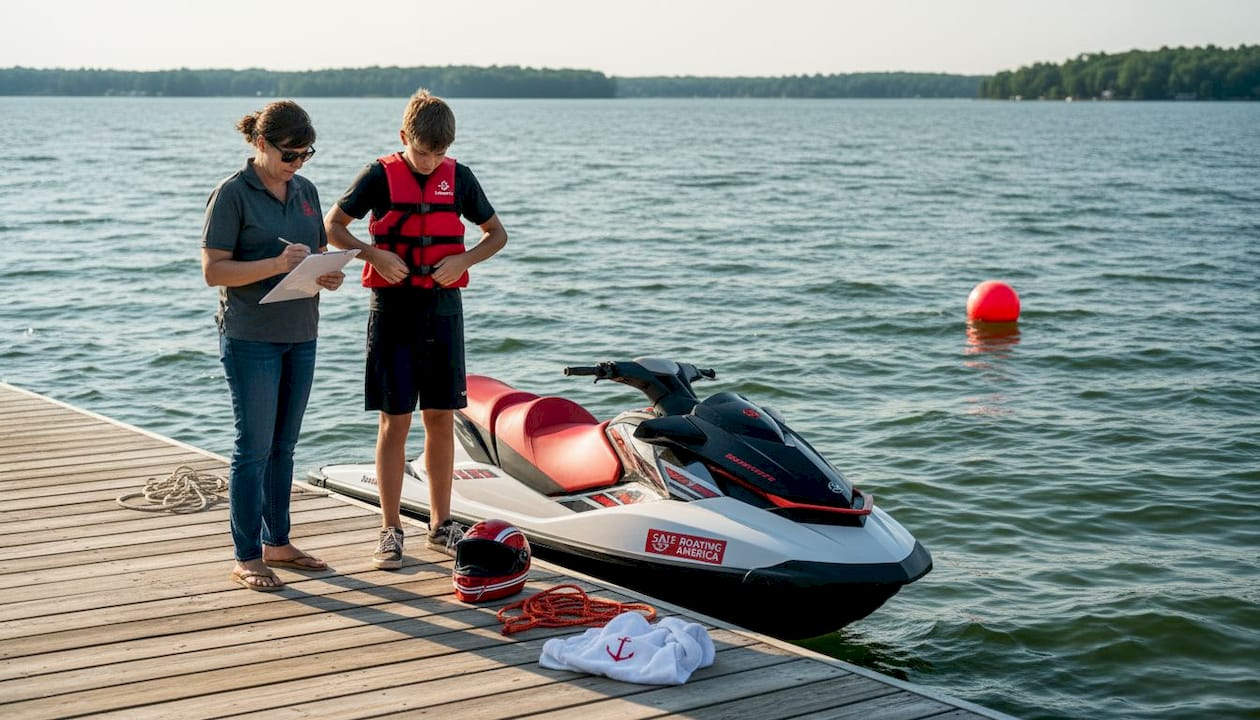
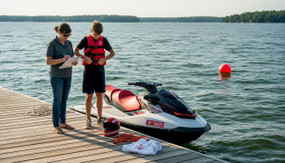
Many parents picture Jet Ski riding as a straightforward warm-weather activity, something kids can jump into the way they would a go-kart or a bicycle. That assumption gets families into legal trouble every summer. Personal watercraft (PWC), which includes Jet Skis and WaveRunners, are regulated vessels, and most states impose age minimums, mandatory safety education, and certification requirements before any minor is allowed to operate one solo. This guide breaks down exactly what those requirements are, why they exist, and what steps parents must take to keep their kids both safe and legally compliant on the water.
Table of Contents
- The real reason Jet Ski licenses are required for minors
- How licensing, permits, and age minimums work for minors
- Why safety rules matter beyond the license
- State rules, rentals, and exceptions parents need to know
- Why ‘license’ is just the start: A family water safety mindset
- Get certified: Next steps for safe boating as a family
- Frequently asked questions
Key Takeaways
| Point | Details |
|---|---|
| Licensing boosts safety | Mandating a Jet Ski license or certificate for minors reduces risks and educates young operators on water laws. |
| Requirements differ by state | Each state sets its own age minimums, credential types, and course requirements for minors. |
| Safety gear is non-negotiable | Rules for life jackets and cutoff lanyards apply to all minors and are strictly enforced. |
| Rental rules may be stricter | Rental companies can enforce higher age or proof standards than state laws, so always check in advance. |
| Education is ongoing | Certification is vital, but long-term safety comes from continued training, supervision, and family habits. |
The real reason Jet Ski licenses are required for minors
A Jet Ski is not a toy. Modern personal watercraft can exceed 50 mph on open water, accelerate from idle to full throttle in seconds, and require fast, precise decision-making to avoid other boats, swimmers, and fixed hazards. For a minor with limited experience, that combination creates real risk fast.
State regulators don’t impose education requirements arbitrarily. According to Minnesota’s Department of Natural Resources, licensing and education requirements exist largely to reduce the safety risk that comes with operator inexperience, especially for youth operating higher-speed, maneuverable PWCs. That single principle drives virtually every age restriction and boater safety course mandate on the books today.
Research consistently shows that the boating education impact is measurable. Operators who complete a formal boating safety course demonstrate better hazard awareness, more consistent use of safety equipment, and faster response times in emergencies than those who learn entirely on their own. For minors, that gap in knowledge is even wider because they have fewer reference experiences to draw on.
“Operator inexperience is one of the leading contributing factors in PWC-related accidents nationwide. Safety education directly addresses that gap by teaching navigation rules, hazard recognition, and emergency response before an operator ever gets on the water.”
What does a safety course actually teach? The core topics include:
- Navigation rules: Right-of-way, no-wake zones, speed limits, and buoy markers
- Emergency procedures: What to do if you fall off, how to signal for help, how to re-board a PWC
- Local regulations: State-specific rules on where and when PWCs can legally operate
- Equipment requirements: Life jacket use, engine cutoff lanyards, and fire extinguisher basics
- Collision avoidance: How to read water traffic and maintain safe distances
Pro Tip: Even if your state technically allows a minor to ride under adult supervision without a certificate, enrolling them in a safety course first is one of the most effective risk-reduction steps you can take as a parent.
Pennsylvania’s PWC safety rules are a useful benchmark. The state prohibits anyone 11 years old or younger from operating a PWC under any circumstances and requires a Boating Safety Education Certificate for operators under a specified age. These rules reflect what safety data consistently supports: formal education and minimum age thresholds both reduce incident rates.
How licensing, permits, and age minimums work for minors
When parents search for a “Jet Ski license,” they often expect something that looks like a driver’s license. In most states, that’s not how it works. According to Pennsylvania’s boating regulations, many states require minors to complete boating safety education or obtain a watercraft operator permit before operating a PWC such as a Jet Ski. The credential issued is typically a safety education certificate or a boater card, not a motor vehicle license.
Massachusetts clarifies this further. As the state’s boater safety FAQ explains, whether minors need a Jet Ski “license” is entirely state-specific. Some states use an education certificate or boater card rather than a traditional driver’s-license style credential. The terminology differs, but the legal weight is the same: you need documented proof of certification to legally operate.
Here is a comparison of how several high-traffic boating states handle PWC operation for minors:
| State | Minimum age to operate | Education requirement | Proof required |
|---|---|---|---|
| New York | 14 years old | Boating safety course | Certificate on board |
| Pennsylvania | 12 years old (solo) | Boating Safety Education Certificate | Certificate on board |
| Massachusetts | 16 years old | Boater safety certificate | Certificate on board |
| Florida | 14 years old | Boater safety ID card | Card on person |
| Connecticut | 16 years old | Safe Boating Certificate | Certificate on board |
| California | 16 years old | Boater card | Card on person |
These requirements are not optional. Law enforcement on the water can and does check for certification. Operating without the proper documentation can result in fines for the operator or, in the case of minors, for the supervising adult.
For parents ready to act, the process follows a clear sequence:
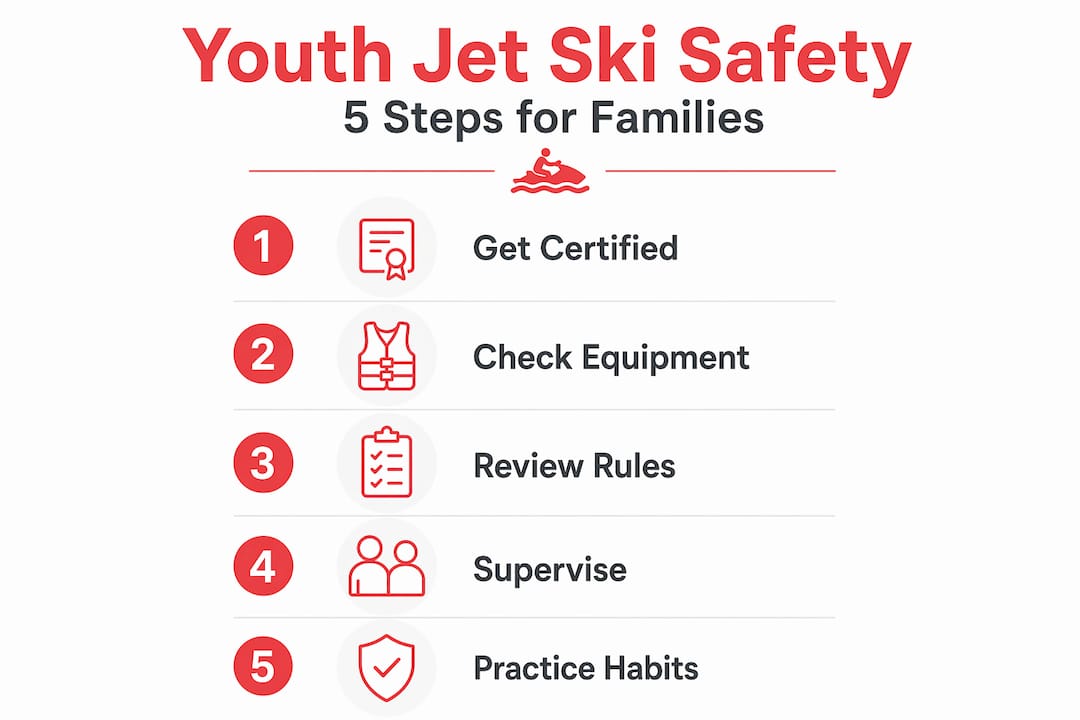
- Identify your state’s specific law. Age minimums, required credentials, and supervision rules vary significantly. Start with your state fish and wildlife agency or boating authority website.
- Enroll in a state-approved boating safety course. Look for courses that are NASBLA-approved, which ensures the content meets national standards.
- Complete the course and obtain the certificate. Online, live Zoom, and in-person formats are all widely available.
- Keep proof of certification accessible. Most states require the boater card or certificate to be on the vessel or on the operator’s person during operation.
- Review the rules annually. State laws update. A minor who was compliant at age 14 may face additional requirements by 16 or 18.
For New York families, the state has specific requirements worth reviewing in detail, including Brianna’s Law mandates. More information on the New York PWC certificate process outlines those steps clearly. Families in New England should also review Connecticut Jet Ski rules, which set the operator age at 16 and require a Safe Boating Certificate. Boating safety education has broader positive effects that go well beyond legal compliance; the evidence on how boating education saves lives is well documented.
Why safety rules matter beyond the license
Getting certified is step one. Staying safe on the water is an ongoing practice that depends heavily on equipment and behavior, not just paperwork. A certificate in your back pocket means very little if your child hits the water without a properly fitted life jacket.
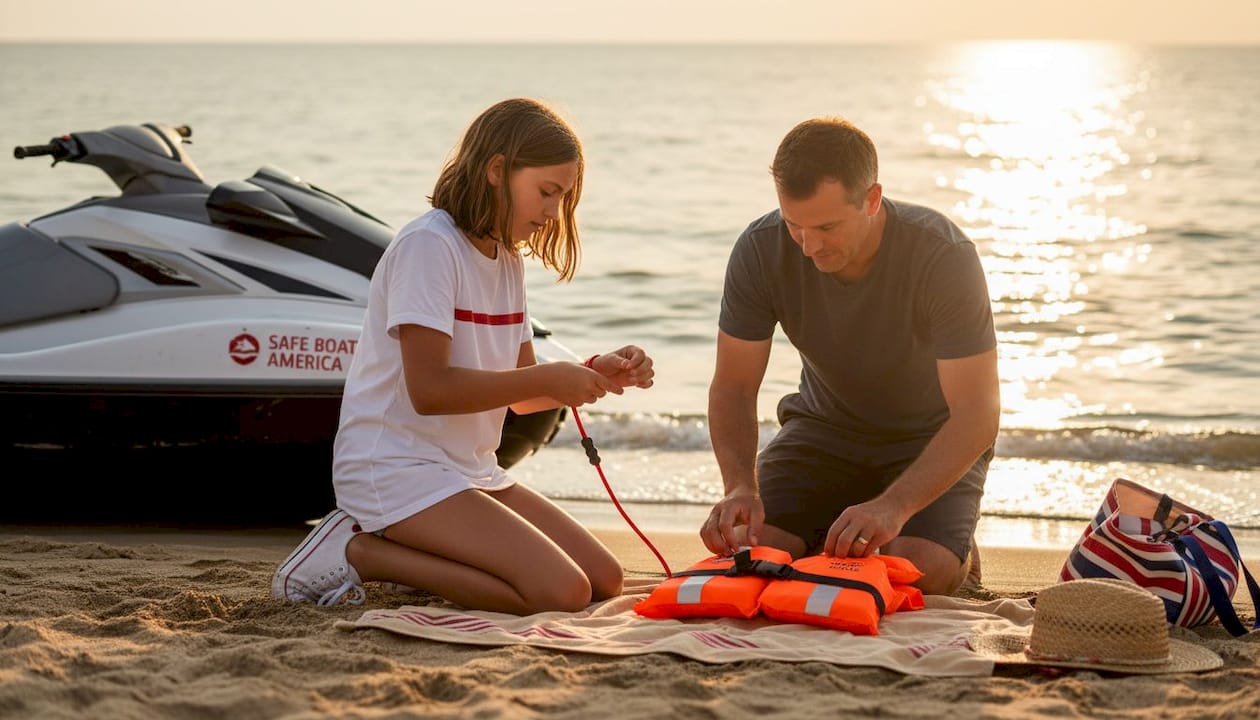
Pennsylvania’s boating regulations note that engine cutoff lanyards and PFDs are critical especially for less experienced or younger operators, because falling off or losing control is one of the most common PWC hazard situations. These two pieces of equipment together form the most basic layer of physical protection for any PWC rider.
Key mandatory safety equipment for minor PWC operators includes:
- USCG-approved life jacket (PFD): Required to be worn, not just present on the vessel. For minors, this is non-negotiable in every U.S. state.
- Engine cutoff lanyard: Also called a kill switch. If the rider falls off, the lanyard disconnects and cuts the engine. Without it, a runaway PWC can seriously injure the person in the water.
- Whistle or sound-producing device: Required on most PWCs for signaling in emergencies.
- Fire extinguisher: Required on enclosed-hull PWCs in many states.
- Wearable safety gear: Some states require protective eyewear or wet suits under certain conditions.
Here is a quick-reference table of common safety equipment requirements by category:
| Equipment item | Required for minors | Notes |
|---|---|---|
| USCG-approved PFD | Yes, all states | Must be worn, not stored |
| Engine cutoff lanyard | Yes, most states | Must be attached to operator |
| Sound-producing device | Yes, federal law | Whistle or horn |
| Fire extinguisher | Varies by hull type | Check state rules |
| Reflective or visual signal | Required for dusk/night | Most states restrict night PWC use |
Pro Tip: Practice attaching the engine cutoff lanyard at home before your child is on the water. It should become as automatic as buckling a seatbelt. Kids who practice the habit on land are far more likely to use it consistently on the water.
For broader guidance on safety tips for minors operating high-speed recreational equipment, the principles around supervision, gear, and graduated skill-building apply directly to PWC operation.
State rules, rentals, and exceptions parents need to know
Even when a minor holds a valid safety certificate and meets the state age minimum, that doesn’t mean every situation is automatically cleared. Practical restrictions at the rental and local level can be stricter than state law, and parents who don’t check in advance often get turned away.
New York’s parks authority makes clear that beyond formal license requirements, states also impose practical compliance rules that function as additional safeguards for minors. These include minimum age cutoffs and supervision or eligibility limits that may apply even to certified operators.
Several real-world scenarios parents need to plan for:
- Rental company age minimums: Many Jet Ski rental businesses require operators to be 18 or older, regardless of what state law says. Even if your 16-year-old holds a valid certificate in Florida, the rental company can legally decline the rental. Review Jet Ski rental age requirements before booking anything.
- Supervised vs. unsupervised operation: Several states allow younger minors to operate with a licensed adult physically on board or nearby, but prohibit solo operation. The rules differ on what “supervised” actually means, so read the statute carefully.
- Holiday and event restrictions: Some waterways impose temporary age minimums or speed restrictions during peak holiday periods. July 4th weekends and Labor Day weekends are common enforcement spikes.
- Private vs. public waterways: HOA lakes, private marinas, and resort waterways may have their own rules on top of state law.
- Out-of-state travel: If you take your family to a different state, that state’s rules apply, not your home state’s.
Pro Tip: Before any PWC outing, including on your own watercraft, call the local marina or launch site to confirm current rules for minors. Rules change seasonally and by location. A two-minute call prevents a trip that ends at the dock.
Parents researching options for their family can explore online boating courses that satisfy requirements in multiple states. Online formats are especially practical for families who want to complete training before a vacation trip to a state they’re not familiar with.
Why ‘license’ is just the start: A family water safety mindset
Here is an uncomfortable but important point: passing a safety course and holding a boating certificate is the legal minimum, not the readiness standard. Those two things are not the same.
A 14-year-old who completes an online boating safety course in 90 minutes is legally eligible to operate a Jet Ski in New York. That same 14-year-old may have zero practical experience reading water traffic, zero muscle memory for emergency maneuvers, and zero habit of using their engine cutoff lanyard. The certificate says they passed a test. It doesn’t say they are ready.
Accident-free boating comes from habits, supervision, and ongoing learning. The safety education lessons covered in certification courses are a foundation. What builds on that foundation is repetition, real-world practice under supervision, and family participation in safety culture.
The most effective approach treats certification as the beginning of responsible riding, not the finish line. This means parents ride alongside their kids in the early sessions, debrief after each outing, and keep reinforcing the gear habits (PFD, lanyard, pre-launch check) until they become automatic. Families that treat PWC safety as an ongoing conversation, rather than a one-time checkbox, consistently produce safer young operators.
A useful family safety guide for powersports in general illustrates this point well. The same graduated approach that works for motorcycles and ATVs applies directly to Jet Skis: start supervised, build skills incrementally, reinforce gear habits every time.
The broader mindset shift is this: water safety is not a credential. It is a practice. Parents who model it consistently, who complete training themselves, and who make it a family activity rather than a solo hurdle for their child, see better outcomes. That investment of time pays dividends every time your family is on the water.
Get certified: Next steps for safe boating as a family
Safe Boating America offers boating safety certification courses designed to meet state-specific requirements across the U.S. Whether your family needs a New York boating certificate under Brianna’s Law, a Connecticut Safe Boating Certificate, or a Florida boater safety ID card, Safe Boating America provides state-approved training in formats that fit your schedule.
Courses are available online, via live Zoom sessions, and in-person throughout Long Island, New York City, Connecticut, and other key locations. Instruction covers navigation rules, emergency procedures, required safety equipment, and PWC-specific regulations. Many students earn same-day certification. Explore online boating courses to find the right format for your family and get your minor certified before your next time on the water.
Frequently asked questions
At what age can a child legally operate a Jet Ski?
The minimum age varies by state, typically ranging from 12 to 16 years old, and most states also require a boating safety certificate. For example, New York requires operators to be at least 14 and to complete a safe boating course, while Pennsylvania prohibits anyone 11 or younger from operating and Massachusetts sets the minimum at 16.
Is a Jet Ski license the same as a boating license?
Not exactly. Most states issue a boating safety certificate or watercraft operator permit for PWC operation rather than a traditional driver’s-style license. Massachusetts issues a boater safety certificate, Pennsylvania issues a Boating Safety Education Certificate, and New York requires proof that operators completed an approved safe boating course.
Do rental companies have different rules for minors?
Yes. Many rental companies apply higher age requirements than state law mandates. Even if a minor meets the state minimum and holds a valid certificate, a rental operator can set stricter minimums such as requiring operators to be 18, regardless of local law.
Are there equipment requirements for minors on Jet Skis?
Yes. Minors must wear a USCG-approved life jacket at all times while operating a PWC, and in most states they are required to use an engine cutoff lanyard. Pennsylvania’s boating regulations confirm that engine cutoff lanyards and PFDs are especially critical for younger, less experienced operators because falling off is a primary PWC hazard.