
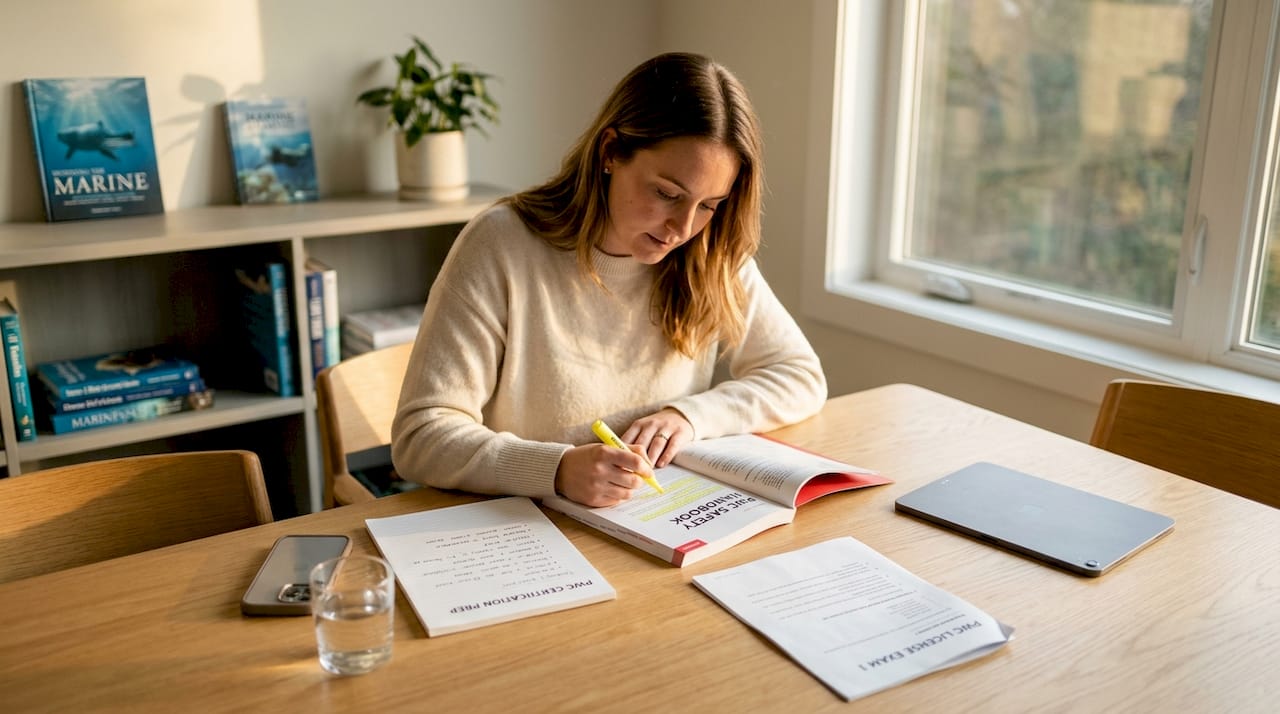
PWC License Requirements: Your 2026 How-To Guide

Getting a PWC license is one of those tasks that looks straightforward until you start researching it. Requirements shift by state, by country, and sometimes by the specific body of water you plan to ride. You might need a general boating certificate first, a separate PWC-specific knowledge test, proof of identity, and fees that vary widely depending on where you live. This guide cuts through that confusion and gives you a clear picture of pwc certification requirements, what the application process actually looks like, and how to find approved safety training that satisfies your jurisdiction’s rules.
Table of Contents
- Key takeaways
- Who needs a PWC license
- How to get your PWC license step by step
- Jurisdiction-specific rules and key examples
- Safety training options and certification courses
- Maintaining and renewing your PWC license
- My take on PWC licensing and operator preparation
- Get certified with Safeboatingamerica
- FAQ
Key takeaways
| Point | Details |
|---|---|
| Requirements vary by location | PWC license rules differ significantly by state and country, so always verify local laws before applying. |
| Safety course often required first | Most jurisdictions require a NASBLA-approved boating education course before you can obtain a PWC license. |
| Testing and fees are standard steps | Expect a knowledge test plus fees ranging from modest to several hundred dollars depending on license duration. |
| License renewal is your responsibility | Stay current on renewal timelines and updated regulations to avoid fines or license suspension. |
| Online courses are widely accepted | Approved online certification programs provide a fast, flexible path to meeting PWC education requirements. |
Who needs a PWC license
A personal watercraft is any motorized vessel that is designed to be operated by a person sitting, standing, or kneeling on the hull rather than inside it. Jet Skis, WaveRunners, and Sea-Doos all fall into this category. Most jurisdictions treat PWCs as a separate class of vessel with their own licensing layer on top of general boating laws.
So who actually needs a PWC license? The short answer: almost everyone who operates one. Age minimums are common. Many U.S. states prohibit anyone under 16 from operating a PWC without direct adult supervision, and some set the minimum age for independent operation at 14 with a valid boating safety certificate. In New South Wales, Australia, the minimum age to hold a PWC license is 16.
Here is what typically determines whether you need a separate PWC credential:
- Vessel type. If the craft is classified as a PWC under local law, a standard boat license alone may not be enough.
- Age of the operator. Younger riders often face additional restrictions or require adult supervision regardless of certification.
- Jurisdiction. Some U.S. states require only a boating safety certificate. Others layer a PWC-specific endorsement on top.
- Body of water. Certain lakes, bays, and coastal zones have independent rules that add certification requirements beyond state law.
Pro Tip: Before you apply for anything, look up your specific state’s boating authority website and search for “personal watercraft” rules. What applies to a neighbor in a different state may not apply to you at all.
How to get your PWC license step by step
The general process follows a predictable sequence, even if the details shift by location. Here is how it works in most jurisdictions.
-
Complete a NASBLA-approved boating safety course. Many states require proof of completing an approved education program before you can test for any boating credential. NASBLA-approved courses are available online and in person across the country.
-
Study PWC-specific material. If your jurisdiction requires a separate PWC knowledge test, get the official handbook. In NSW, for example, the PWC knowledge test consists of 15 multiple-choice questions, and you must answer at least 12 correctly to pass.
-
Book your knowledge test. Scheduling is typically done through your state’s motor vehicle or boating authority. Some jurisdictions allow testing through approved training providers.
-
Gather your documents. Most applications require photo identification, proof of your boating safety course completion, and passport-style photos. In NSW, applicants must provide proof of identity, photos, and evidence of passing the knowledge test.
-
Pay the required fees. Fee structures vary considerably. NSW offers a useful benchmark: the knowledge test upgrade starts at $21, while license durations of 1 to 10 years carry fees ranging from $253 to $2,024. U.S. state fees are generally lower, often in the $10 to $50 range for certification cards.
-
Submit your application. Depending on your location, you can apply in person at a licensing center or through an online portal. NSW applicants complete the process at Service NSW centers or through approved providers.
Pro Tip: Most riders who study the official PWC handbook and take at least one practice test pass on their first attempt. Skipping the practice test is the most common reason people fail and have to pay to retest.
NSW PWC license fee comparison by duration
| License duration | Approximate fee (AUD) |
|---|---|
| 1 year | $253 |
| 3 years | ~$600 |
| 5 years | ~$1,000 |
| 10 years | $2,024 |
Note: Fees subject to change. Verify current rates at Service NSW before applying.
Jurisdiction-specific rules and key examples
PWC regulations are not uniform. Understanding how two real jurisdictions approach licensing shows exactly why you must research your local rules rather than relying on general advice.
New South Wales, Australia
NSW has one of the more structured PWC licensing systems in the world. Before you can even apply for a PWC license, you must already hold a General Boat Driving License. The PWC license is an upgrade, not a standalone credential. You book and pass the 15-question knowledge test, pay the upgrade fee starting at $21, then select a license duration ranging from one to ten years.
Safety equipment rules are strict as well. Every person on a PWC in NSW must wear a Level 50S lifejacket at all times from the moment of launch to retrieval. This is not a suggestion. It is a legal requirement that applies to operators and passengers alike.
Hawaii, United States
Hawaii takes a two-step certification approach that is unique in the U.S. Operators must first complete a NASBLA and State-approved boating education course, then separately obtain a Thrill Craft Operator Certification specific to PWCs. The rule has been in effect since 2005, introduced specifically to improve safety and reduce conflicts between PWC riders and other water users in busy coastal areas.
Comparison at a glance
| Feature | NSW, Australia | Hawaii, USA |
|---|---|---|
| Prerequisite license required | General Boat Driving License | NASBLA-approved boating course |
| PWC-specific test | Yes, 15 questions (12 to pass) | Thrill Craft Certification required |
| Minimum age | 16 | 12 (with restrictions) |
| Fees | $21 upgrade fee plus license fee | Varies by certification provider |
| Mandatory safety gear | Level 50S lifejacket at all times | Personal flotation device required |
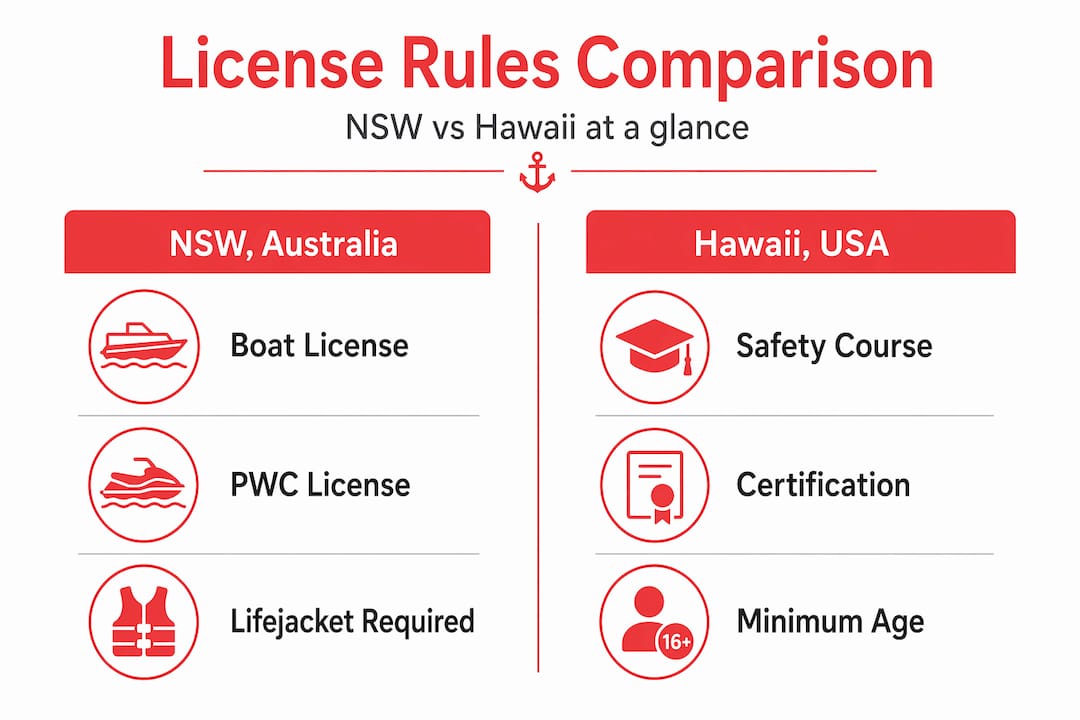
The pattern across both jurisdictions is clear: general boating education comes first, then PWC-specific credentials follow. That structure exists because boating safety education reduces accidents and user conflicts in areas where watercraft density is high.
Safety training options and certification courses
The boating safety course is not just a box to check. It is genuinely the most useful preparation you can do before operating a PWC, especially if you are new to open water navigation, right-of-way rules, or emergency procedures.
NASBLA-approved boating education courses are the standard benchmark in the U.S. NASBLA stands for the National Association of State Boating Law Administrators, and their approval signals that a course meets the education requirements of participating states. If a course carries NASBLA approval, it is almost certainly accepted for PWC licensing purposes in your state.
Here is what to look for when choosing a course:
- State approval. Confirm the course is accepted by your specific state’s boating authority, not just NASBLA in general.
- PWC-specific content. General boating courses cover navigation rules and emergency procedures. The best ones include a PWC module addressing turning radius, stopping distance, and jet propulsion-specific hazards.
- Online flexibility. Approved online certification programs let you complete coursework at your own pace and often provide same-day certificates upon passing the final exam.
- Instructor credentials. Courses taught by State Certified Instructors or USCG-Licensed Captains carry additional weight and tend to produce more prepared operators.
- Refresher availability. Experienced operators who have been off the water for a season benefit from reviewing updated regulations and safety procedures before riding again.
Pro Tip: Complete your safety course before booking your knowledge test appointment. In many jurisdictions, you cannot register for the test without a course completion certificate in hand. Getting the certificate first removes that bottleneck entirely.
Safeboatingamerica offers state-approved courses for Florida, Arizona, Georgia, Ohio, and many other states. Their programs are taught using NASBLA-approved materials and cover navigation rules, emergency procedures, required safety equipment, and PWC-specific operation. You can access a Florida PWC certification course or an Arizona PWC certification course entirely online.
Maintaining and renewing your PWC license
Passing your test and receiving your license is not the final step. Staying legally compliant requires ongoing attention to renewal timelines, updated regulations, and your responsibilities on the water.
Key points to track:
- License duration. Some U.S. states issue boating safety certificates that carry lifetime validity. Others, including NSW, issue licenses for defined periods of 1, 3, 5, or 10 years, each with its own fee structure.
- Renewal process. Most jurisdictions allow renewal through an online portal or in-person visit. You will typically need your current license, proof of identity, and the applicable renewal fee.
- Carry your license. Always have your PWC license and relevant safety certifications on your person or accessible on the vessel while operating. Enforcement officers can request them during routine checks.
- Know the penalties. Operating a PWC without a required license in NSW attracts on-the-spot fines and can lead to vessel impoundment for repeat violations. U.S. states carry similar penalty structures.
- Monitor regulation changes. Boating laws update regularly. Sign up for notifications from your state boating authority or check their website each season before your first ride.
My take on PWC licensing and operator preparation
I’ve worked in boating education long enough to notice a consistent pattern among PWC incidents. The operator almost always had some knowledge of how to ride but very little knowledge of the rules governing where and how to ride. Knowing how to accelerate and turn is not the same as knowing right-of-way rules, wake restrictions, or what to do when your lanyard gets pulled and the engine cuts.
What I’ve found is that operators who complete formal training before getting on the water think differently once they’re out there. They’re scanning for hazards, they know where they can and cannot legally operate, and they’ve mentally rehearsed what to do if something goes wrong. That preparation doesn’t come from reading a handbook the night before your test. It comes from working through a structured course with qualified instruction.
My honest advice: don’t treat the PWC license application process as a bureaucratic hurdle to clear as fast as possible. Treat it as the start of building real competence on the water. Take the knowledge test seriously. If your state allows online courses, use the best one available, not the shortest. And once you’re licensed, review the rules annually. Regulations change, waterways change, and conditions change.
The riders I’ve seen get into serious trouble were never the beginners who asked the most questions. They were the experienced ones who stopped asking questions altogether.
— Richard
Get certified with Safeboatingamerica
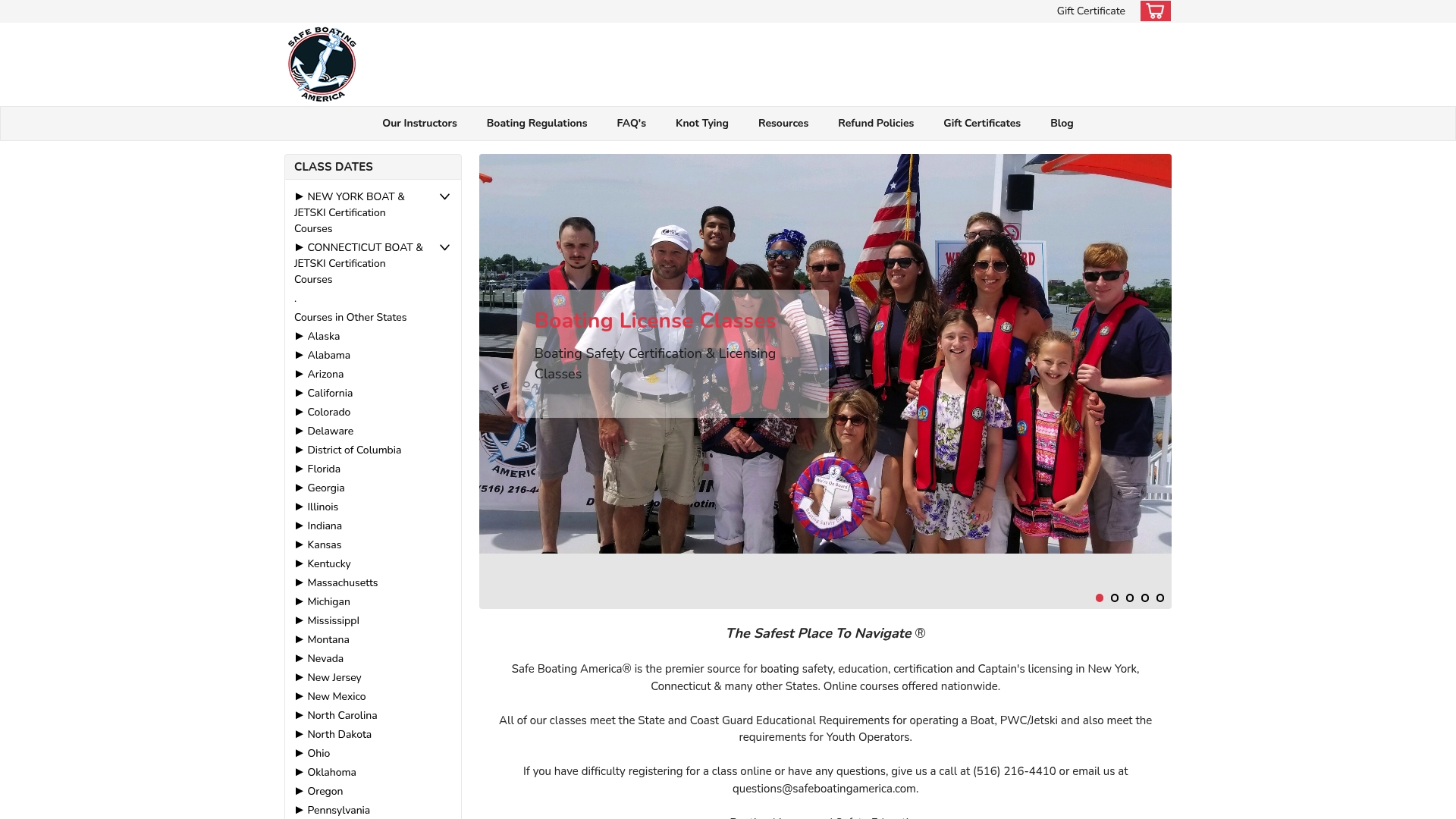
Safeboatingamerica offers state-approved PWC and boating safety certification courses designed to meet each state’s specific requirements, whether you’re a first-time rider or renewing after years away from the water. Courses are taught by USCG-Licensed Captains and State Certified Instructors using NASBLA-approved materials, covering navigation rules, emergency procedures, and PWC-specific operation from start to finish.
You can complete your boating safety certification entirely online, at your own pace, and receive your certificate the same day you pass. Safeboatingamerica serves riders in every U.S. state, with dedicated courses for Florida, Arizona, Georgia, Ohio, and dozens more. Whether you’re preparing for your first PWC license application or staying current with renewal requirements, the courses are built to get you certified quickly and confidently.
FAQ
What is a PWC license?
A PWC license is an official credential authorizing you to legally operate a personal watercraft such as a Jet Ski, WaveRunner, or Sea-Doo. Requirements vary by jurisdiction but typically include a boating safety course and a knowledge test.
How do I get a PWC license in the U.S.?
Most U.S. states require completing a NASBLA-approved boating safety course and passing a written knowledge test. After passing, you receive a boating safety certificate that serves as your legal authorization to operate a PWC.
How much does a PWC license cost?
Costs vary widely. In NSW, Australia, fees range from $253 for a one-year license to $2,024 for a ten-year license, plus a $21 knowledge test upgrade fee. U.S. state certification fees are generally much lower, often between $10 and $50.
Do I need a separate PWC license if I already have a boat license?
In some jurisdictions, yes. NSW requires a separate PWC license on top of the General Boat Driving License. Hawaii requires an additional Thrill Craft Operator Certification. Always verify local requirements for your specific state or country.
How long is a PWC license valid?
Validity depends on your jurisdiction. Some U.S. states issue boating safety certificates with lifetime validity. NSW offers 1, 3, 5, and 10-year PWC license options, each requiring renewal and the associated fee before expiration.
Recommended
- New York Jetski License: How to Get Your NY PWC Certificate - Safe Boating America
- Connecticut Jetski License: How to Get Your CT PWC Certificate - Safe Boating America
- Minnesota Boating License: What You Need to Know in 2026 - Safe Boating America
- Jet Ski Certification Course Types: Your 2026 Guide - Safe Boating America