Minnesota Boating License: What You Need to Know in 2026
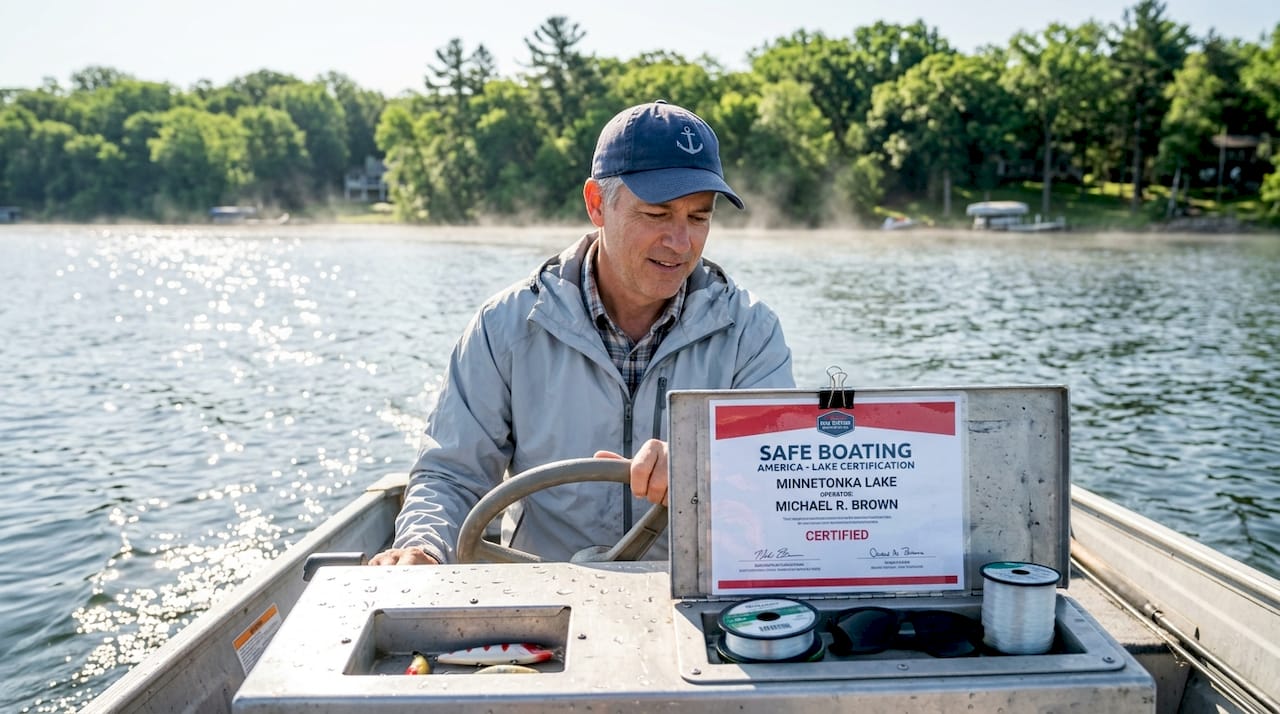
If you plan to operate a motorized watercraft on Minnesota’s lakes and rivers this summer, you may now legally need an MN boating license. Minnesota’s new mandatory permit law took effect July 1, 2025, and it is expanding every year through 2028. Many boaters are still unaware that the rules changed, or that they are already required to comply. This guide covers who must have the permit, how to get it, what it costs, and what happens if you skip it.
Table of Contents
- Key Takeaways
- Who needs an MN boating license
- How to get the permit: a step-by-step process
- Legal obligations once you are licensed
- Common mistakes first-time applicants make
- My take on Minnesota’s new boating education law
- Get your MN boating license through Safe Boating America
- FAQ
Key Takeaways
| Point | Details |
|---|---|
| New law is already active | The phased permit requirement launched July 1, 2025, and applies to more age groups each year through 2028. |
| One-time cost, lifetime valid | The Watercraft Operator’s Permit costs $34.95 and never needs to be renewed or retaken. |
| Age-based rollout applies | As of July 1, 2026, anyone born after June 30, 2000 must hold a valid permit to operate motorized watercraft. |
| Carry the permit on the water | Operators must have the permit physically present while boating; enforcement is active and penalties apply. |
| Registration is separate | Watercraft registration and titling are distinct legal requirements, separate from the boating license itself. |
Who needs an MN boating license
Minnesota’s mandatory permit rollout launched July 1, 2025, for those born after June 30, 2004. As of July 1, 2026, the requirement expands to anyone born after June 30, 2000. The law continues to widen by age group each year until 2028, when all motorized watercraft operators will be required to hold a valid permit regardless of birth year.
The permit applies to operators of motorized watercraft, including motorboats, personal watercraft (PWCs) like Jet Skis and WaveRunners, and any vessel powered by an engine. Non-motorized watercraft under 10 feet, such as kayaks and canoes, are not subject to this licensing requirement.
Exemptions to know:
- Operators with a valid out-of-state certificate from another state are recognized in Minnesota if they are between ages 12 and 26. A nationally recognized boating safety certificate removes the need for a separate MN permit.
- Children under 12 may operate motorboats under 75 horsepower only under supervision by a qualified accompanying operator.
- The accompanying operator must be at least 21, hold a valid permit or qualify for an exemption, and have immediate physical access to the controls. Simply being an adult on the boat does not satisfy this requirement.
- Renting a motorized boat requires operators to be at least 18 years old and hold a valid permit. Individuals under 18 cannot rent motorized watercraft or PWCs under any circumstance.
Pro Tip: If you are between 12 and 26 and completed a boating safety course in another state, verify whether your certificate meets Minnesota’s reciprocity standard before heading out on the water. Bringing documentation from your home state is the safest approach.
How to get the permit: a step-by-step process
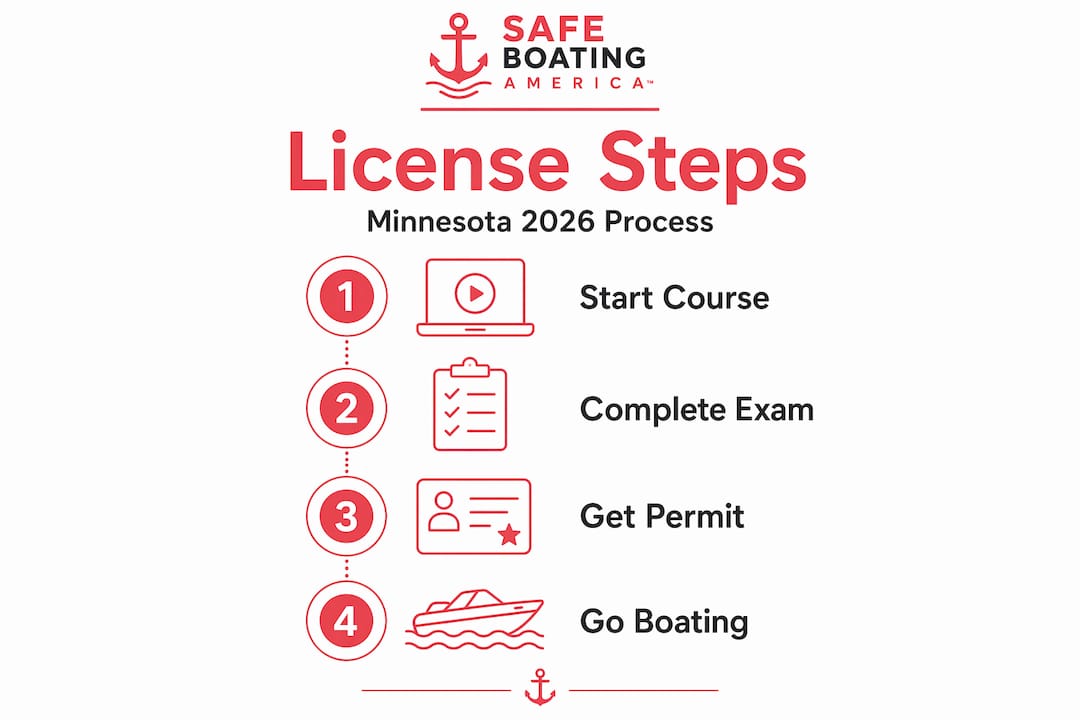
The process is straightforward. There are no in-person classes required. Here is exactly how it works:
-
Enroll in an approved online boating safety course. Minnesota requires completion of a NASBLA-approved course. These are available fully online and can be completed at your own pace. Similar courses are offered for neighboring states, such as those found through online boating courses nationwide.
-
Study the material thoroughly. The course covers navigation rules, emergency procedures, equipment requirements, and Minnesota-specific mn boating laws. Do not skip sections. The final exam draws from all course content.
-
Use a boat license practice test. Before attempting the final exam, work through any practice questions your course provider offers. A boating licence practice test helps identify gaps in your knowledge before they cost you a passing score.
-
Pass the final exam. The one-time $34.95 fee covers unlimited exam retries, so there is no penalty for needing more than one attempt.
-
Print your temporary certificate. After passing, you receive a printable certificate of completion immediately. This serves as your authorization to operate while you wait for the physical permit.
-
Receive your permit by mail. The official Watercraft Operator’s Permit typically arrives within three weeks. Once received, carry it every time you operate a motorized vessel.
The permit is valid for life. Unlike a driver’s license, there is no renewal cycle and no expiration date. You complete the process once.
Course format comparison:
| Format | Availability | Time to Complete | Best For |
|---|---|---|---|
| Online self-paced | 24/7 | 3 to 8 hours | Most first-time applicants |
| Instructor-led online | Scheduled sessions | 4 to 6 hours | Those who prefer live instruction |
| In-person classroom | Limited locations | Full day | Hands-on learners |

Pro Tip: Complete the course on a desktop or laptop rather than a mobile device. Some exam questions include diagrams and navigation charts that are easier to read on a larger screen. You will also find it easier to review flagged questions before submitting.
Legal obligations once you are licensed
Holding the permit is step one. Knowing what it requires you to do is equally important.
- Carry the permit at all times while operating. Enforcement is active, and officers can request to see your permit during any stop. Failure to present it can result in penalties comparable to operating a vehicle without a driver’s license.
- Age-based horsepower restrictions still apply. Operators under 12 may only operate motorboats with less than 75 horsepower, even when supervised by a qualifying accompanying operator.
- Registration is a separate requirement. All motorized boats and non-motorized watercraft over 10 feet must be registered with the Minnesota DNR. Fees vary by boat size. The boating permit does not satisfy the registration requirement and vice versa. Both must be in order before you launch.
- Bring required safety equipment. About 30% of boating deaths in Minnesota occur during cold-water seasons. The DNR recommends carrying sufficient personal flotation devices, emergency whistles, and a throwable rescue device on every outing.
“Boating safety education improves not just legal compliance but significantly reduces risk by preparing operators for emergencies and cold-water hazards.” — Minnesota DNR
Understanding the difference between registration and the operator’s permit prevents a common and costly mistake. You need both. Think of registration as the credential for the boat and the permit as the credential for the operator.
Common mistakes first-time applicants make
Getting the MN boating license is simple, but first-time applicants consistently run into the same avoidable problems.
- Confusing Minnesota requirements with other state rules. Laws vary widely between states. NYS boat registration requirements, NJ boating regulations, and maine boating laws each have their own structures and timelines. What applies in one state does not automatically transfer to another. Minnesotans should not assume that general state boating license requirements explained elsewhere apply here.
- Assuming rental boats do not require a permit. If you are 18 or older and renting a motorized vessel, you still need a valid permit. Renters must hold a valid operator permit, and rental companies are increasingly verifying this before handing over the keys.
- Waiting too long to apply. The permit arrives by mail. If you are planning a July Fourth weekend on the lake, starting the course in late June leaves almost no room for the physical card to arrive in time. Start at least four to five weeks ahead of your first outing.
- Misplacing the permit after receiving it. Lost permits can be replaced through local registrars, but this adds time and a replacement fee. Keep a digital photo of your permit on your phone as a reference, even though the physical card is what officers require.
- Forgetting to report watercraft ownership transfers. If you sell or purchase a boat, transfers must be reported within 15 days to the Minnesota DNR. Missing this deadline can complicate future registration renewals.
Pro Tip: Store your permit in a waterproof card sleeve inside your boat’s dry storage compartment. Keep a separate note of your permit number somewhere accessible. If you ever need a replacement, having the number speeds up the process significantly.
My take on Minnesota’s new boating education law
I have spent years working in boating safety education, and the honest truth is that most people who resisted certification laws changed their minds once they actually took the course. Not because the law forced them to, but because they realized how much they did not know.
Minnesota’s phased rollout is one of the more thoughtful approaches I have seen at the state level. Rather than imposing an immediate statewide requirement that catches everyone off guard, the law gives operators a structured window to comply based on age. That said, I have noticed a recurring pattern: people assume that years of casual boating experience substitutes for formal education. It does not. Cold-water shock, right-of-way rules, and emergency signaling are not things most people pick up informally.
What I respect most about NASBLA-approved courses is the specificity. The material is not generic water safety content. It addresses real scenarios, real equipment, and real legal obligations. The boat licence exam itself, when taken seriously, reflects a standard that protects everyone on the water.
My practical advice: do not treat this as a checkbox. Take the course when you are not distracted, review the sections on emergency procedures twice, and actually carry your permit on every outing. The people most likely to get into trouble on Minnesota’s lakes are not beginners who just finished a safety course. They are experienced boaters who assumed they already knew everything they needed to know.
— Richard
Get your MN boating license through Safe Boating America
Safe Boating America offers NASBLA-approved online boating safety courses that satisfy Minnesota’s DNR requirements, so you can complete your certification from home and stay fully compliant with state law.
Courses are available 24/7 with unlimited exam retries included. After passing, you receive an immediate printable certificate while your official Watercraft Operator’s Permit is processed and mailed. For boaters in neighboring states, Safeboatingamerica also offers courses for states like Michigan boating certification and North Dakota PWC course, all following the same NASBLA-approved format. Visit Safe Boating America to enroll, access your course materials, and secure the lifetime permit that keeps you legal on Minnesota’s waters this season and every season after.
FAQ
Who currently needs an MN boating license?
As of July 1, 2026, anyone born after June 30, 2000 must hold a valid Watercraft Operator’s Permit to legally operate motorized watercraft in Minnesota. The requirement expands to additional age groups each year through 2028.
How much does the Minnesota Watercraft Operator’s Permit cost?
The permit costs $34.95 as a one-time fee that includes unlimited exam retries. The permit is valid for life and does not require renewal.
Do I need to take a boat license practice test before the exam?
A practice test is not mandatory, but it is strongly recommended. Working through practice questions before the final boat licence exam helps identify weak areas and significantly improves your pass rate on the first attempt.
Does Minnesota recognize boating certificates from other states?
Yes. A valid certificate from another state is recognized in Minnesota for operators between ages 12 and 26. Operators outside that age range or without a recognized certificate must obtain the MN permit separately.
Is watercraft registration the same as the boating license?
No. Registration and the operator’s permit are separate legal requirements. All motorized boats and non-motorized watercraft over 10 feet must be registered with the Minnesota DNR, independent of whether the operator holds a valid permit.
Recommended
- New York Boating License: How to Get Your NYS Boating Certificate - Safe Boating America
- How to Add a Boating License to Your Driver’s License (The Anchor Explained) - Safe Boating America
- Safe Boating America Boating Safety Certification & License
- Jet Ski licenses for minors: safety rules explained - Safe Boating America