
What is a jet ski safety course? A complete guide
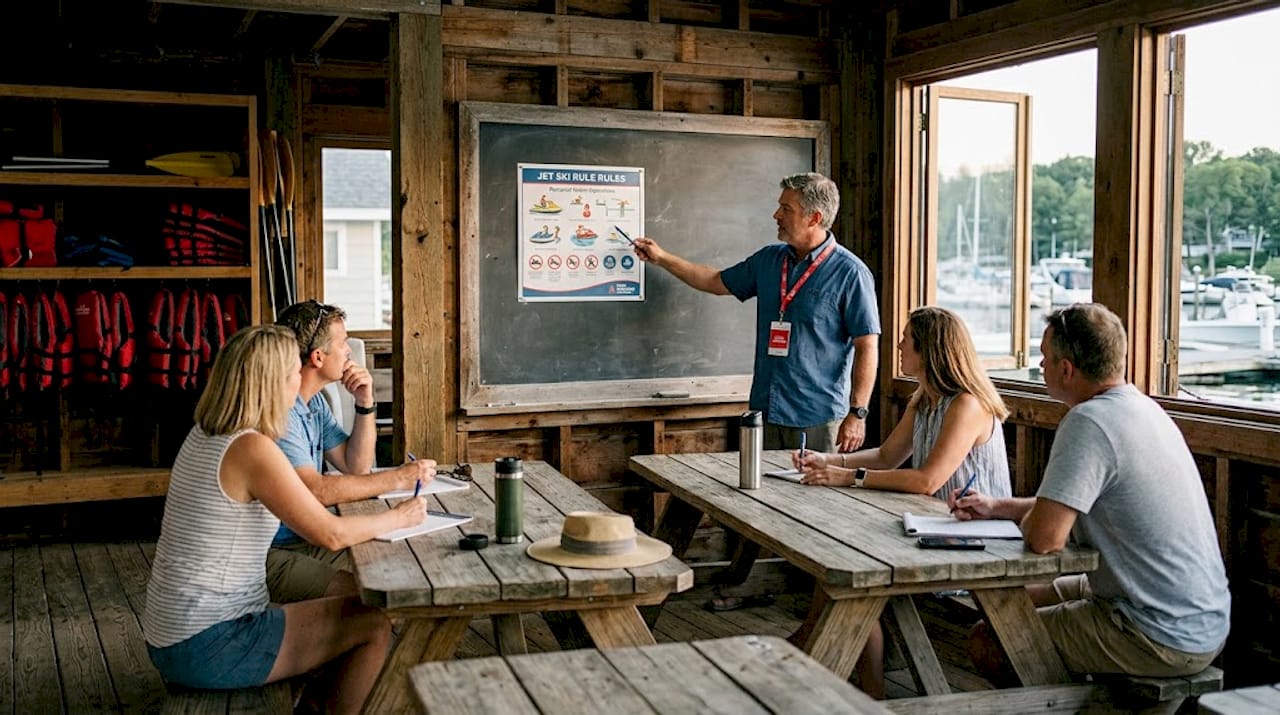
Most people who rent or buy a jet ski assume the only prerequisites are a credit card and a sunny day. That assumption is legally wrong in most U.S. states. A jet ski safety course is a state-approved boater education program that teaches you how to operate a personal watercraft (PWC) safely and lawfully, then certifies that you completed the training. Skipping it doesn’t just put you at risk on the water. It can result in citations, fines, and loss of operating privileges before you’ve logged a single hour on the water.
Table of Contents
- Understanding what a jet ski safety course entails
- Legal requirements for jet ski operation across U.S. states
- Choosing the right jet ski safety course for your state
- What you learn in jet ski safety courses: key topics and skills
- Applying jet ski safety course knowledge on the water
- Why understanding state-specific nuances makes all the difference
- Get certified with Safe Boating America to operate your jet ski confidently
- Frequently asked questions
Key Takeaways
| Point | Details |
|---|---|
| Certification requirement | Many U.S. states legally require a state-approved jet ski safety course certificate to operate a personal watercraft. |
| Course content | Safety courses cover navigation rules, emergency procedures, required equipment, and state-specific laws to ensure safe operation. |
| State-specific rules | There is no nationwide license; always verify your state’s accepted courses and additional regulations for compliance. |
| Practical application | Certification combines with mandatory on-water safety equipment and responsible operation to prevent accidents. |
| Ongoing responsibility | Operator accountability and knowledge updating are crucial beyond earning the certificate to maintain safety and legality. |
Understanding what a jet ski safety course entails
A jet ski safety course is a structured educational program that covers the knowledge and skills required to operate a personal watercraft safely. As confirmed by the Pennsylvania Fish and Boat Commission, a state-approved boater education course tests knowledge of safe PWC operation and issues a legal certificate upon completion. Most courses are approved by state authorities and aligned with standards set by NASBLA, the National Association of State Boating Law Administrators, which is the primary national body overseeing boating education consistency across all 50 states.
The typical jet ski course overview includes these core subject areas:
- Navigation rules and right-of-way: How to read waterways, respect traffic patterns, and avoid collisions
- Required safety equipment: Life jackets, fire extinguishers, sound-producing devices, and engine cutoff lanyards
- Emergency procedures: Man-overboard recovery, distress signaling, and calling for help
- State-specific boating laws: Speed limits, no-wake zones, restricted areas, and age requirements
- Environmental responsibility: Fuel spill prevention, wildlife protection, and clean boating practices
Courses are available online, in person, and increasingly through live virtual formats like Zoom. Most conclude with a proctored or monitored exam. Pass the exam, and you receive a boating safety education certificate that serves as legal authorization to operate a jet ski in your state. The boating education benefits extend well beyond compliance, including measurably lower accident rates among certified operators.
Legal requirements for jet ski operation across U.S. states
Understanding the course structure leads directly to a question most new operators ask: do I actually have to do this? In most states, yes. Boating Safety Education Certificates are required to operate personal watercraft like jet skis and must be carried on your person during operation.
State laws vary considerably. Some states require certification for all operators regardless of age. Others set age thresholds, typically requiring anyone under 16, 18, or 21 to hold a valid certificate. A few states have phased in universal requirements over time. Here is a brief comparison of how selected states approach the rules:
| State | Age requirement for certification | Certificate required on water? |
|---|---|---|
| New York | All operators (Brianna’s Law) | Yes |
| Florida | Born on or after January 1, 1988 | Yes |
| Connecticut | All operators | Yes |
| California | Phased rollout, all operators by 2025 | Yes |
| Pennsylvania | Under 16 cannot operate alone | Yes |
Beyond age rules, most states require PWC operators to wear life jackets, carry fire extinguishers, attach cutoff switch lanyards, and hold a valid certificate. Operating without meeting these requirements can result in fines and forced removal from the water.
Key legal points to know before you launch:
- Carry your physical or digital certificate every time you operate
- Operators under 16 face additional restrictions in most states
- Some states prohibit nighttime operation of PWCs entirely
- Out-of-state operators typically need a NASBLA-approved certificate
If you are operating in Connecticut, the jet ski license process has specific steps and certificate requirements that differ from neighboring states. Likewise, the New York jet ski certification process now applies to all ages under Brianna’s Law, which took full effect in 2023.
Pro Tip: Before enrolling in any course, go directly to your state’s fish and wildlife or boating authority website to confirm which courses they officially approve. A certificate from an unapproved provider is not legally valid.
Choosing the right jet ski safety course for your state
Because there is no single nationwide jet ski license, choosing the right course requires matching the provider’s approval status to your state’s specific requirements. NASBLA alignment is a reliable baseline, but some states add their own approval layer on top.
Follow this process to choose confidently:
- Step 1: Visit your state’s official boating or wildlife agency website and locate the approved course list
- Step 2: Confirm whether the course must be completed in person or if online courses are accepted
- Step 3: Check the age and format restrictions that may apply in your state
- Step 4: If you travel and operate in multiple states, verify that your certificate is recognized across state lines
- Step 5: Enroll only through a provider listed on the official state-approved list
Online boating courses nationwide offer scheduling flexibility and are accepted in the majority of states, but this is not universal. Some states still require a live, in-person component or a proctored exam administered by a certified instructor. Never assume an online course qualifies simply because it’s NASBLA-aligned.
Pro Tip: If you plan to operate in a state other than your own, research that state’s reciprocity rules before your trip. A certificate valid in New York may satisfy Florida’s requirements, but the reverse is not always true.
What you learn in jet ski safety courses: key topics and skills
A jet ski operation safety course covers more practical ground than most first-time students expect. Typical course content includes navigation rules, required safety equipment, emergency procedures, and environmental responsibility. Each topic directly reduces the risk of serious accidents.
Here are the core skill areas covered in most jet ski safety training programs:
- Navigation rules: Understanding right-of-way, channel markers, buoy systems, and how to read a waterway to avoid collisions with boats, other PWCs, and fixed hazards
- Required safety equipment: Knowing which gear is legally required, how to fit a life jacket correctly, how to operate a fire extinguisher, and how to use a sound-producing device
- Engine cutoff lanyard use: Attaching the safety lanyard to your wrist or life jacket so the engine stops automatically if you fall off
- Emergency procedures: What to do if someone falls overboard, how to signal for help using a whistle or flare, and how to re-board a jet ski in open water
- State and federal laws: Speed zones, age restrictions, distance requirements from swimmers and docks, and no-wake zone rules
- Environmental responsibility: How to refuel without spilling, where not to operate near wildlife habitats, and how to minimize your wake in sensitive areas
“Completing a boater education course isn’t just about passing a test. It’s the difference between reacting to a dangerous situation with trained instinct and reacting with panic.”
The boating safety education impact on accident rates is measurable and well-documented. Operators who complete formal training make better decisions under pressure because they have already worked through the scenarios in a structured learning environment.
Applying jet ski safety course knowledge on the water
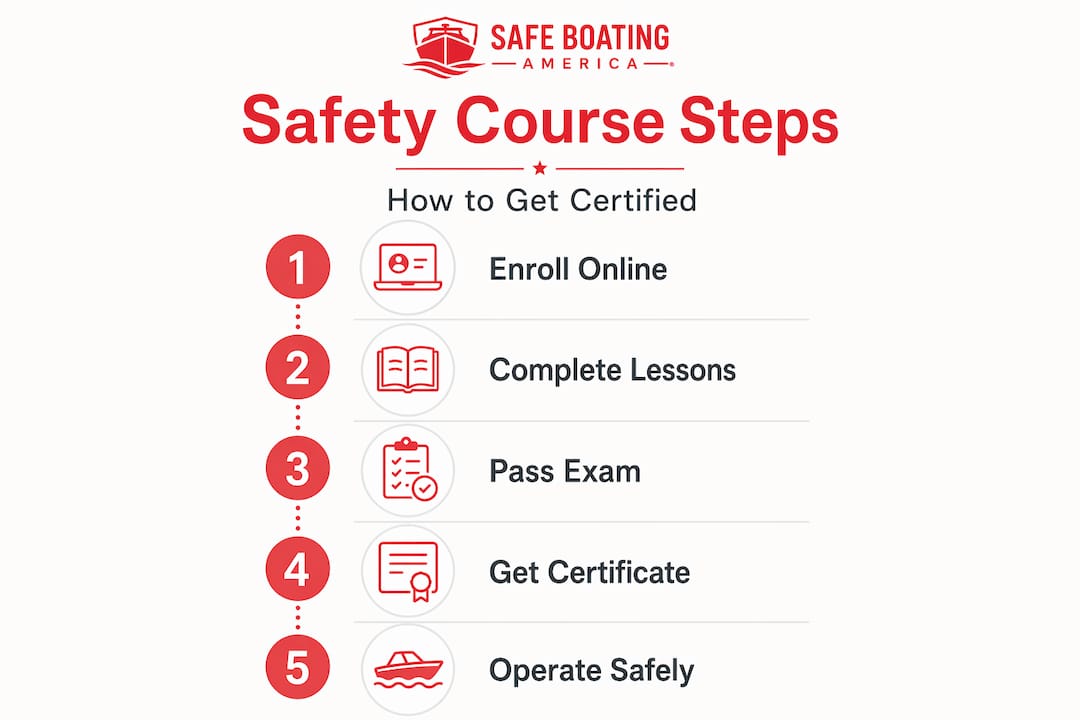
Earning your jet ski safety certification is the foundation. Applying what you learned every single time you operate is what actually keeps people safe. Certification is one layer; most states also require specific operational and safety equipment like life jackets and engine cutoff lanyards.
Here is the short checklist every certified operator should run through before launching:
- Certificate on hand: Carry your boating safety education certificate physically or as a verified digital copy
- Life jacket fitted and worn: A U.S. Coast Guard-approved life jacket must be on your body, not strapped to the craft
- Engine cutoff lanyard attached: Connect it to your wrist or life jacket before starting the engine, every time
- Safety equipment aboard: Confirm you have the fire extinguisher, sound-producing device, and any other required gear for your state
- Situational awareness active: Scan for swimmers, anchored boats, no-wake zones, and other PWCs before and during operation
The practical application of boating safety is where certified operators separate themselves from untrained ones. A certificate tells the authorities you know the rules. Your behavior on the water proves it.
Pro Tip: Attach your engine cutoff lanyard before you even sit down. It takes three seconds and eliminates the single most preventable cause of runaway PWC incidents.
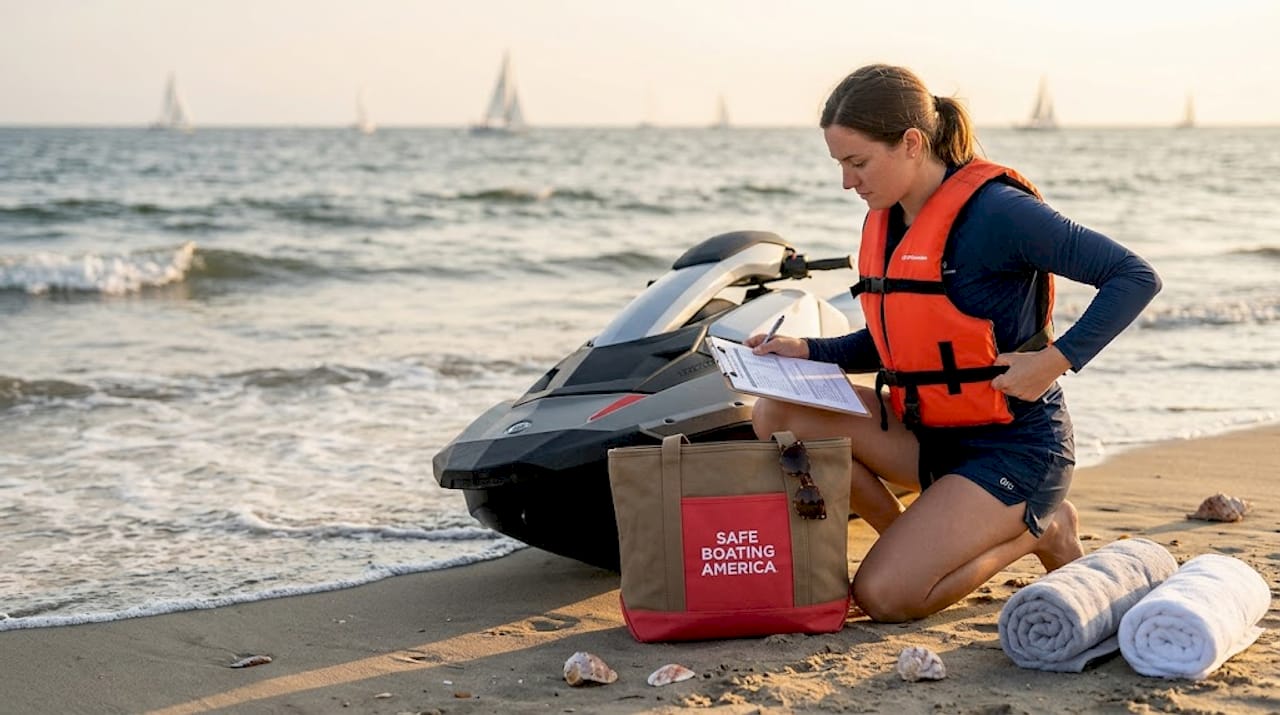
Why understanding state-specific nuances makes all the difference
Here is where most educational content on this topic stops short. Operators complete a course, receive a certificate, and assume they’re fully covered anywhere in the country. That assumption creates real legal exposure.
There is no single nationwide jet ski license. Each state sets its own rules, approves its own course providers, and enforces its own penalties. A certificate earned through a provider that is approved in one state may not satisfy requirements in another. Operators who cross state lines frequently, particularly in coastal regions or along shared waterways like the Long Island Sound or the Intracoastal Waterway, need to actively research each state’s rules, not assume reciprocity.
The second gap is treating certification as a one-time checkbox. State laws change. New requirements get added. Equipment standards evolve. The impact of ongoing boating education is greatest when operators treat it as an ongoing commitment rather than a one-time hurdle. Reviewing updated rules each season takes less than an hour and keeps you legally current.
The deeper point is this: a certificate proves you understood the rules on the day you passed the exam. Personal responsibility on the water proves you actually apply them. The two are not the same thing, and experienced marine enforcement officers know the difference within minutes of observing an operator.
Get certified with Safe Boating America to operate your jet ski confidently
Completing a state-approved jet ski safety course is straightforward when you choose the right provider. Safe Boating America offers NASBLA-aligned, state-approved jet ski and PWC certification courses available online and in person, taught by State Certified Instructors and USCG-Licensed Captains.
Whether you need a Florida PWC certification course, a New York Brianna’s Law-compliant class, or a Connecticut Safe Boating Certificate, Safe Boating America has a state-specific course ready for you. Same-day certification options and convenient scheduling mean you can get certified without disrupting your schedule. Browse all available online boating courses nationwide and find the course that matches your state’s requirements today.
Frequently asked questions
Is a jet ski safety course legally required in all U.S. states?
No, requirements vary by state, but many states mandate a boating safety course and certificate to legally operate a jet ski. Always check your specific state’s boating authority for current requirements.
How long does it take to complete a typical jet ski safety course?
Most courses involve 6 to 8 hours of instruction on key boating safety topics, followed by a written exam, available in online or in-person formats depending on your state.
Does the jet ski safety certificate expire?
Most states issue a lifetime-valid boating safety certificate after course completion, meaning you do not need to recertify periodically. However, staying current with changing laws remains your responsibility.
Can I use an out-of-state boating safety certificate to operate a jet ski?
Often yes, provided your certificate comes from a NASBLA-approved course and the state where you operate recognizes it. Always verify local requirements before operating in a new state.
What safety equipment must I have while operating a jet ski?
PWC operators must wear life jackets, carry a fire extinguisher and sound-producing device, and attach the engine cutoff lanyard. Requirements may vary slightly by state, so confirm with your local boating authority.