How a Responsible Boater Can Protect the Shoreline
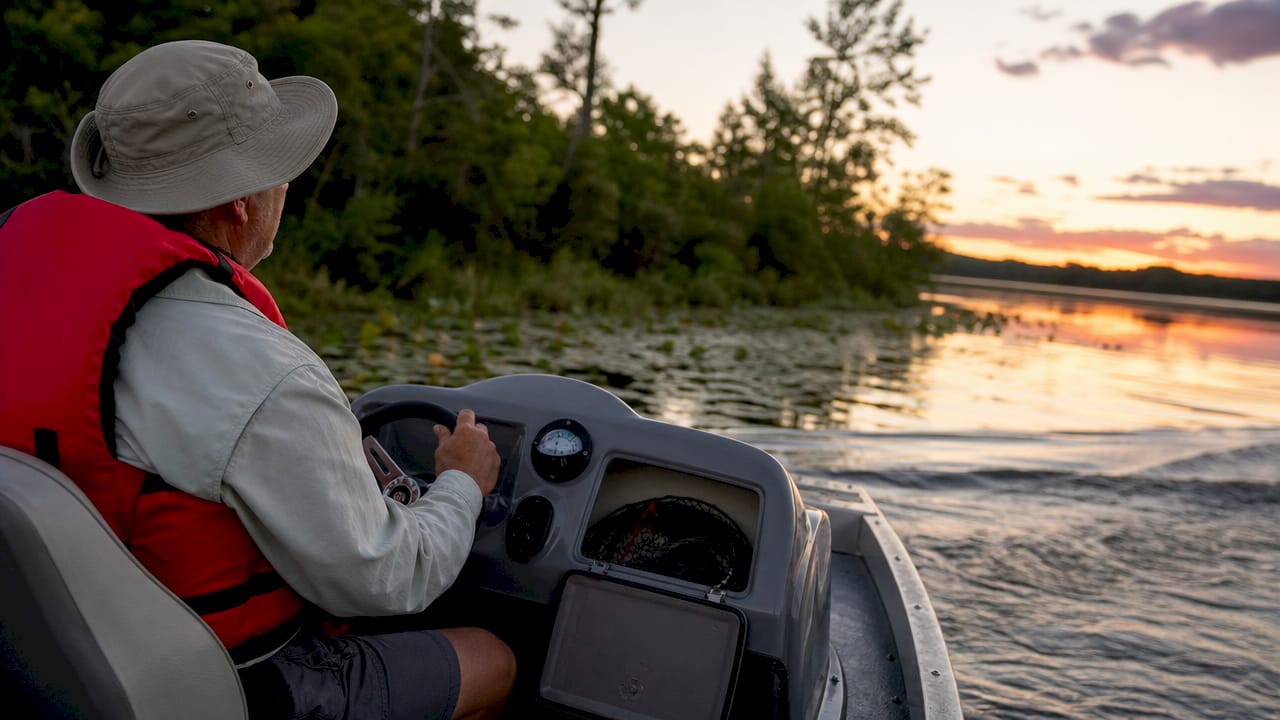
A responsible boater protects the shoreline by controlling speed, maintaining safe distances from shore, and avoiding sensitive aquatic habitats. These practices fall under what marine educators call “environmental stewardship,” a standard embedded in NASBLA-approved boating safety curricula and Leave No Trace principles. Shoreline erosion from boat wakes is not a minor inconvenience. It destabilizes banks, releases phosphorus into the water column, and destroys seagrass beds that fish and wildlife depend on. Understanding how does a responsible boater protect the shoreline starts with recognizing that every throttle decision on the water has a consequence on land.
How does a responsible boater protect the shoreline from wake damage?
Boat wakes cause both surface and long-term erosive damage by undercutting roots and soils, reshaping shoreline geography, and increasing nutrient runoff. That process is not visible in a single pass. It compounds over a season, and the cumulative effect changes the physical structure of a bank permanently.
The ecological consequences go deeper than soil loss. Sediment disturbance releases phosphorus into the water, fueling harmful algae blooms that degrade water quality and suffocate aquatic life. A single wake boat operating too close to shore can trigger a chain reaction that takes years to reverse.
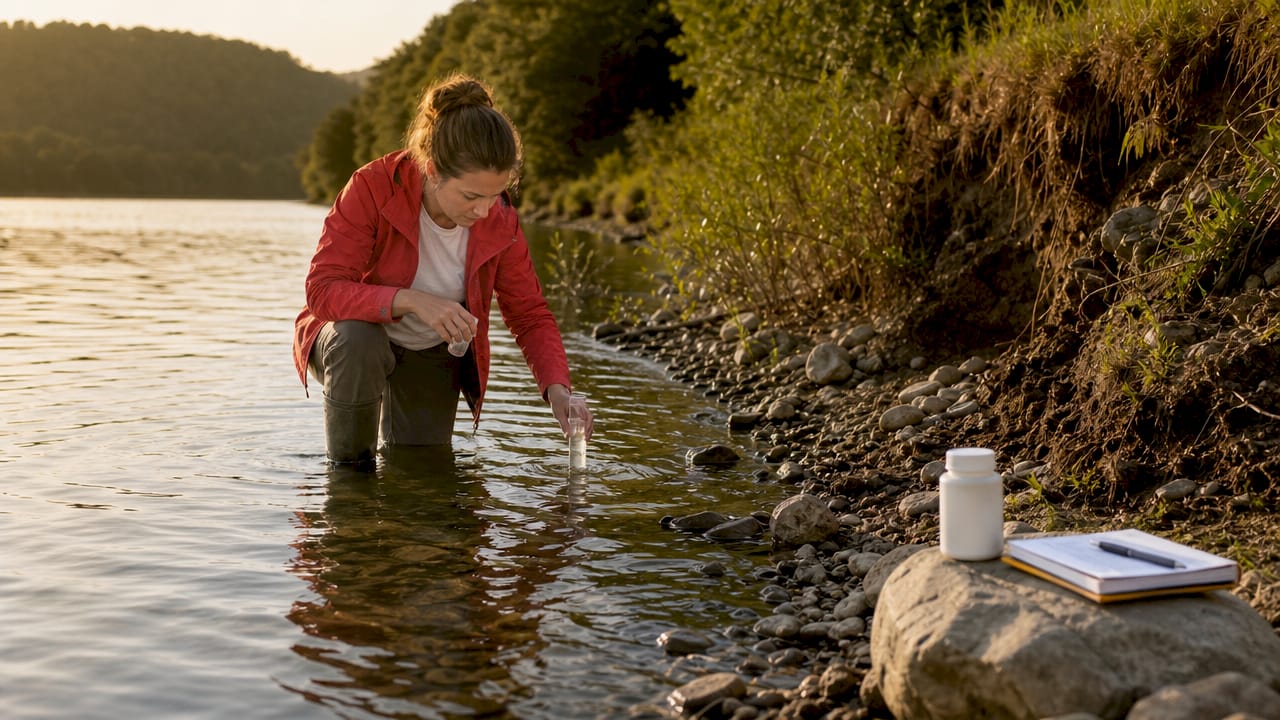
Most boaters underestimate how far wake energy travels. Wake boat waves need 400–1,000 feet to fully dissipate. That distance surprises most operators who assume a few hundred feet is more than enough clearance.
The primary causes of shoreline damage from boating include:
- Wake energy: High-amplitude waves from wake boats and fast recreational vessels strike banks repeatedly, undercutting vegetation root systems.
- Boat speed near shore: Operating at planing speed in shallow or nearshore water amplifies pressure waves that scour the lakebed.
- Improper anchoring: Dropping anchor in seagrass beds or soft-bottom habitats tears up vegetation that holds sediment in place.
- Shallow water operation: Running in water under 10 feet stirs bottom sediment, releasing nutrients and smothering aquatic organisms.
- Repeated traffic in the same corridor: Concentrated boat traffic along a single shoreline path accelerates erosion faster than dispersed use.
What specific actions reduce wake impact and prevent erosion?
Distance and depth are the two most controllable variables a boater has. Standard recreational boats should maintain at least 150 feet from shore and operate in a minimum of 10 feet of water to prevent pressure waves from reaching the bank. In shallower water, those waves have nowhere to dissipate and transfer their full energy directly into the shoreline.
Wake boats require significantly more buffer. Wake boats need a minimum of 500 feet from shore and at least 20 feet of water depth. That depth requirement exists because shallow water causes sediment resuspension, which compounds erosion and nutrient release even after the boat has passed.
The following steps give boaters a practical framework for protecting shorelines on every outing:
- Check water depth before throttling up. Use a depth finder or nautical chart to confirm you are in at least 10 feet of water before reaching planing speed. Wake boats require 20 feet.
- Measure your distance from shore. 150 feet is the minimum for standard vessels. Use landmarks or GPS to calibrate this before you become familiar with it visually.
- Slow to no-wake speed near docks, channels, and sensitive areas. Slowest possible speed near structures and shore is not just courtesy. It is the single most effective way to reduce wave energy at the bank.
- Use boat navigation tools to identify shallow zones. Depth finders, lake maps, and GPS chartplotters all help you avoid areas where your wake will cause the most damage.
- Respect voluntary avoidance zones. Science-backed recommended wake boat zones designate specific lake areas where wake sports are permitted, keeping high-energy wakes away from fragile nearshore habitats.
- Vary your route. Repeated passes along the same shoreline corridor concentrate erosive energy in one spot. Spreading traffic across open water reduces cumulative damage.
Pro Tip: If you can see the bottom clearly while underway, you are almost certainly too shallow. Drop to idle speed immediately and move toward deeper water before resuming normal operation.
How to anchor and navigate responsibly near sensitive habitats
Anchoring in the wrong location destroys habitat that took decades to establish. Seagrass beds are critical for shoreline stabilization and aquatic wildlife. Dropping anchor there tears up root systems and exposes bare sediment to wave action, accelerating the exact erosion that healthy seagrass prevents.
Responsible anchoring and navigation near shorelines follows a clear set of priorities:
- Choose sandy bottoms over vegetated or hard-bottom habitats. Sand recovers from anchor disturbance. Seagrass and coral do not recover on any useful timescale.
- Use mooring buoys where available. Mooring buoys eliminate anchor drag entirely. They are the best option in protected coves and marine sanctuaries.
- Use designated boat ramps and durable access points. Driving a vessel onto an undesignated bank crushes vegetation and creates a new erosion path. Learn proper anchoring methods before you need them.
- Avoid hard-bottom habitats. Rocky or reef substrates support complex communities. An anchor dragged across them causes structural damage that does not heal.
- Plan your trip before leaving the dock. Pre-trip preparation aligns with Leave No Trace principles and reduces unplanned anchoring in sensitive areas caused by weather changes or mechanical issues.
Pro Tip: Download a lake or coastal chart to your phone before departure. Knowing where seagrass beds and shallow zones are located before you arrive removes the guesswork entirely.
How do onshore structures and vegetation work with responsible boating?
Shoreline protection is not only a boater’s responsibility. Onshore structures and natural vegetation work in tandem with responsible boating practices to hold banks together. Natural vegetation buffers near waterlines reduce erosion by stabilizing soil and absorbing wave energy. Native plants along the waterline protect both property value and aquatic habitat health.
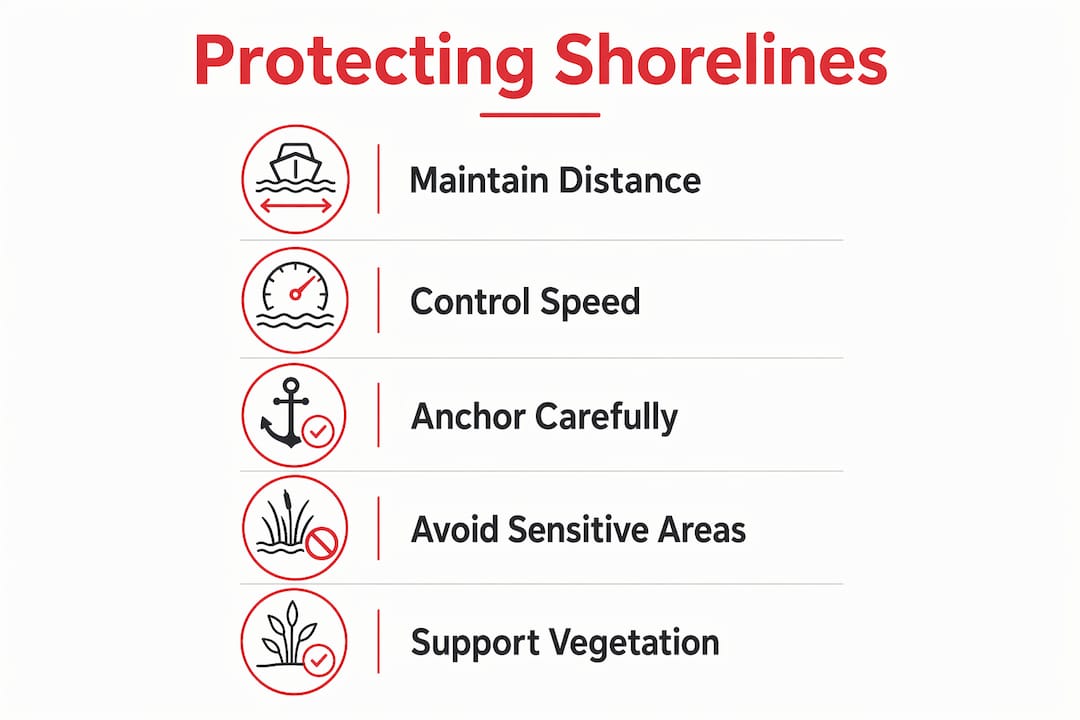
When vegetation alone is not sufficient, riprap provides structural reinforcement. Riprap uses angular stones with filter fabric and toe trenches to absorb wave energy and stabilize shoreline slopes. The stones break up wave force, the filter fabric holds soil in place, and the toe trench anchors the base of the structure against sliding.
The shoreline’s “toe,” the underwater area just below the waterline, is the most structurally significant zone for slope stability. Large stones placed at the toe prevent the entire slope from sliding into the water when wave energy undercuts the base.
| Onshore method | Primary benefit |
|---|---|
| Native vegetation buffer | Stabilizes soil with root systems; absorbs wave energy naturally |
| Riprap with filter fabric | Breaks up wave force; prevents soil loss at the slope base |
| Toe trench anchoring | Secures the underwater base of the slope against wave undercutting |
| Stable access paths | Concentrates foot and equipment traffic away from vegetated banks |
Boaters who own waterfront property carry a dual responsibility. Maintaining a healthy vegetated buffer on their own shoreline reduces the erosion that their own wakes and the wakes of neighbors cause over time.
Key Takeaways
Responsible shoreline protection requires distance control, depth awareness, careful anchoring, and onshore vegetation maintenance working together as a system.
| Point | Details |
|---|---|
| Distance and depth are non-negotiable | Standard boats need 150 feet and 10 feet depth; wake boats need 500 feet and 20 feet depth. |
| Slow down near shore | No-wake speed near banks is the single most effective way to reduce wave energy at the shoreline. |
| Anchor in sand, not seagrass | Seagrass beds take decades to recover; always choose sandy bottoms or mooring buoys. |
| Plan before you leave the dock | Pre-trip chart review prevents emergency anchoring in sensitive habitats. |
| Onshore vegetation amplifies your effort | Native plant buffers and riprap work with responsible boating to hold shorelines together. |
What I’ve learned after years of watching boaters get this wrong
The most common mistake I see is not recklessness. It is ignorance of scale. Boaters genuinely believe that slowing down 50 yards from shore is enough. The science says otherwise. Wake boat waves carry enough energy to cause damage at distances most operators never consider. The gap between what feels responsible and what the data shows is significant.
The second mistake is treating anchoring as a neutral act. Dropping anchor feels passive. It is not. A dragged anchor through a seagrass bed removes habitat that stabilizes the entire nearshore zone. I have seen coves that were healthy 10 years ago now showing bare sediment and algae blooms, and the pattern traces directly to concentrated anchoring pressure in the wrong spots.
What actually changes behavior is education paired with specific numbers. When boaters learn that 500 feet is the minimum for a wake boat, not 100 feet, they adjust. When they understand that phosphorus release from disturbed sediment feeds the algae that kills the fish they came to catch, the connection becomes personal. Boating education lowers accident rates and it changes environmental behavior for the same reason. Knowledge replaces assumption.
The boaters who protect shorelines most effectively are not the ones who care the most. They are the ones who know the most.
— Richard
Safeboatingamerica: certification that covers more than the basics
Shoreline protection is a core component of responsible boating, and it starts with knowing the rules before you leave the dock.
Safeboatingamerica offers state-approved boating certification courses taught by USCG-Licensed Captains and NASBLA-approved instructors. The curriculum covers marine environmental awareness, navigation rules, wake zones, anchoring practices, and required safety equipment. Courses are available online, via live Zoom, and in person across every U.S. state. Whether you need a New York boating safety certificate under Brianna’s Law, a Connecticut Safe Boating Certificate, or a boating safety education credential for any other state, Safeboatingamerica delivers same-day certification options with convenient scheduling.
FAQ
How far should a boat stay from shore to prevent erosion?
Standard recreational boats should stay at least 150 feet from shore and operate in a minimum of 10 feet of water. Wake boats require 500 feet of distance and 20 feet of water depth to prevent shoreline and lakebed damage.
Why do boat wakes cause so much shoreline damage?
Boat wakes undercut root systems, destabilize soil, and release phosphorus from disturbed sediment. That phosphorus fuels algae blooms that degrade water quality and destroy fish habitat over time.
Where should boaters anchor to protect aquatic habitats?
Boaters should anchor in sandy bottoms and avoid seagrass beds, hard-bottom habitats, and reef areas. Mooring buoys are the best option in protected coves because they eliminate anchor drag entirely.
What is riprap and how does it protect shorelines?
Riprap is a layer of angular stones placed with filter fabric and toe trenches along a shoreline slope. It absorbs wave energy, holds soil in place, and anchors the base of the slope against sliding caused by persistent wave action.
Does boating certification cover environmental stewardship?
Yes. NASBLA-approved boating safety courses include marine environmental awareness, covering wake zones, anchoring practices, and shoreline protection standards that apply across all U.S. waterways.
Recommended
- Coast Guard Boat Requirements: What Boaters Must Know - Safe Boating America
- Department of Boating and Waterways: Your 2026 Guide - Safe Boating America
- Boat Safety Equipment: What Every Boater Must Carry - Safe Boating America
- Boater Sports: Activities, Safety, and Certification - Safe Boating America