Small Boat Anchors: Types, Sizes, and Best Practices
Small boat anchors are defined as holding devices that secure a vessel by embedding into the seabed, preventing drift caused by wind, current, or wave action. Selecting the right anchor for your boat is not optional. It is a core safety decision. The wrong anchor type, the wrong weight, or a poorly configured rode can cause your boat to drag in conditions that a properly matched system would hold without issue. Safeboatingamerica recommends that every recreational boater understand anchor types, sizing guidelines, and rode setup before heading out on the water.
1. What are the best types of anchors for small boats?
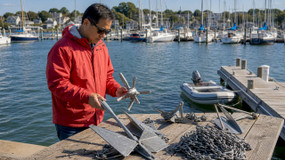
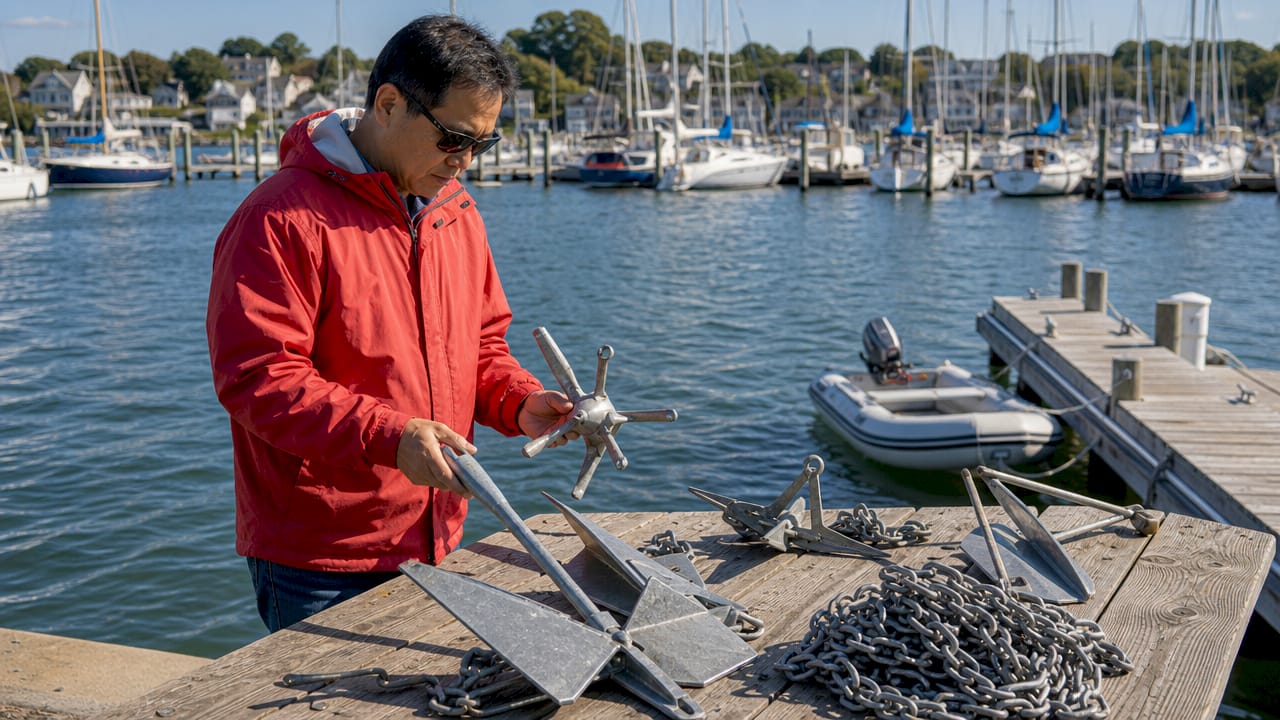
Anchor selection is dictated by bottom type, not personal preference. The four anchor designs most relevant to small boats each perform best in specific conditions.
- Danforth (fluke) anchor. This is the most common choice for recreational small boats. Its wide, flat flukes dig into sand and mud with high holding power relative to its weight. A 4 lb Danforth holds reliably on a 14-foot boat in calm conditions.
- Grapnel anchor. Four or more curved tines hook into rocks, coral, and debris. Grapnel anchors are best for temporary stops on rocky or hard bottoms. They are not suited for sand or mud because they do not bury.
- Plow anchor. A plow-style design rolls and buries into harder or mixed bottoms including gravel and clay. It resets well when wind shifts direction, making it a strong choice for overnight stays.
- Mushroom anchor. A rounded, bowl-shaped base creates suction in soft silt or mud. Mushroom anchors work well as mooring anchors in calm, protected water but provide poor holding in current or wave action.
Anchor design, specifically the ability to penetrate and bury, matters more than raw weight for holding power. A heavy anchor that sits on top of a hard bottom holds nothing.
Pro Tip: Carry at least two anchor types on board. Experts advise carrying multiple anchors optimized for different bottoms to limit boat swinging and handle varied conditions.
2. How to determine the right anchor weight and size for your boat
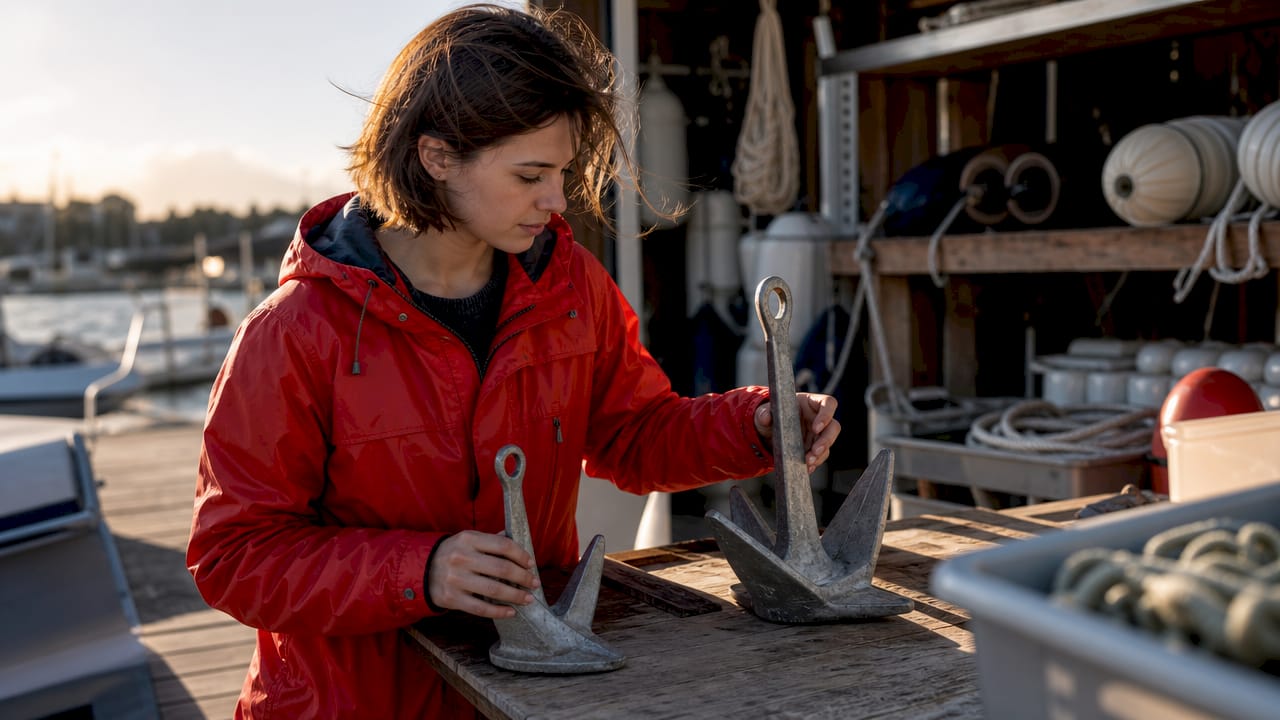
Anchor weight guidelines follow boat length, but weight alone does not guarantee holding power. The anchor must match both the vessel size and the expected bottom conditions.
| Boat Length | Recommended Anchor Weight | Chain Length |
|---|---|---|
| 8–16 feet | 4 lb | 3–6 feet |
| 14–22 feet | 4–8 lb | 3–6 feet |
| 20–28 feet | 10 lb | 6–10 feet |
For small boats 14–22 feet, a 4–8 lb anchor with 3–6 feet of chain is the standard recommendation. Boats in the 20–28 foot range typically step up to a 10 lb anchor. These figures assume calm to moderate conditions. Exposed anchorages or storm conditions require heavier gear.
The anchor must also be manageable by hand. A 25 lb anchor on a 16-foot boat creates a retrieval problem, especially for solo boaters. Weight should be appropriate for the crew’s ability to deploy and recover the anchor safely.
Pro Tip: When in doubt, size up on chain length before sizing up on anchor weight. Chain adds holding power through friction and weight without making the anchor harder to handle.
3. What is the role of anchor rode components in securing small boats?
The anchor rode is the full connection between your boat and the anchor. It includes chain, rope, and the shackles that join them. Most boaters focus on the anchor itself, but the rode system is responsible for most of the actual holding power.
Each component serves a specific function:
- Chain. A length of chain between the anchor and the rope keeps the anchor’s shank horizontal against the seabed. This horizontal pull is what drives the flukes or plow into the bottom. Chain also adds weight that creates a catenary sag in the rode, absorbing shock loads from waves and wind gusts.
- Nylon rope. Nylon stretches under load, acting as a shock absorber. This stretch prevents sudden jerks from snapping the anchor free. Three-strand nylon is the standard choice for recreational anchor rodes because of its elasticity and resistance to abrasion.
- Scope ratio. Scope is the ratio of rode length to water depth. A 7:1 scope ratio is the standard for effective anchoring. In 10 feet of water, you need 70 feet of rode. Lower ratios like 3:1 or 4:1 increase the angle of pull on the anchor, which can pop it free under wind or current shifts.
- Shackles and connections. Galvanized or stainless steel shackles connect the chain to the anchor and the chain to the rope. Mouse the shackle pin with wire or seizing thread to prevent it from unscrewing under load.
4. Which anchoring techniques maximize safety and stability?
Proper technique matters as much as proper gear. The most common cause of anchor drag is not a bad anchor. It is an incorrect scope ratio or a bottom type the anchor was not designed for.
-
Verify scope before blaming the anchor. Recreational boaters frequently use inadequate scope. Before assuming the anchor has failed, let out more rode. A 7:1 scope allows the chain to form a catenary curve on the seabed, maintaining horizontal pull and absorbing shock.
-
Deploy slowly and deliberately. Lower the anchor to the bottom, then back the boat down slowly while paying out rode. Never throw the anchor. Throwing it causes the rode to pile on top of the anchor, preventing it from setting.
-
Set the anchor with reverse thrust. Once the full scope is out, apply gentle reverse throttle for 30 seconds. Watch a fixed point on shore to confirm the boat is not moving. If it holds, the anchor is set.
-
Seek sandy patches in grass or kelp. Anchors fouled in grass have poor holding regardless of style or weight. Look for sandy openings within vegetation beds for a clean set.
-
Use a trip line in rocky areas. Attach a separate line to the crown of a grapnel anchor, opposite the rode, with a small buoy on the surface. If the anchor jams in a rock crevice, pulling the trip line extracts it backwards without losing the anchor.
-
Deploy a second anchor in storm conditions. Carrying at least two anchors allows you to set them in a V-pattern from the bow, reducing swing radius and doubling holding power in deteriorating weather.
-
Inspect the rode and shackles regularly. Check for chafe on the rope where it passes through the bow chock, corrosion on shackles, and kinks in the chain. A boat safety inspection should include the full anchor system before every trip.
Key takeaways
Anchor design matched to bottom type, combined with correct scope ratio and a properly configured rode, determines holding power for small boats.
| Point | Details |
|---|---|
| Match anchor to bottom type | Danforth for sand and mud, grapnel for rock, plow for mixed or gravel bottoms. |
| Follow weight guidelines | Use 4–8 lb anchors for boats 14–22 feet; step up to 10 lb for boats near 28 feet. |
| Prioritize rode configuration | A 7:1 scope ratio and chain length of 3–6 feet deliver most of the holding power. |
| Use trip lines on rocky bottoms | Attach a trip line to grapnel anchors to recover them from rock crevices without loss. |
| Carry two anchor types | Multiple anchor styles handle varied bottom conditions and improve safety in storms. |
What years of anchoring in varied conditions taught me
Most boaters I have encountered on the water make the same mistake. They buy the heaviest anchor they can fit in the bow locker and assume that weight equals security. It does not. I have watched a 15 lb anchor drag across a hard clay bottom while a 6 lb Danforth held a similar boat solid in the sand 50 feet away. The seabed is the variable that matters most.
My personal rule is simple. I carry two anchors on every trip: a Danforth for the sandy bottoms I expect and a grapnel for the rocky spots I might not. That combination covers most situations a small boat encounters in coastal or inland waters. The grapnel lives in a bag with a pre-rigged trip line already attached. Rigging it under pressure wastes time and creates errors.
The other lesson I keep coming back to is rode length. Boaters consistently underestimate how much rope they need. A 7:1 scope in 15 feet of water means 105 feet of rode. Most people have 50 feet out and wonder why the anchor drags when the wind picks up. Scope is free. Use it.
Retrieval is the part nobody talks about until they are stuck. Motoring slowly toward the anchor while pulling in rode reduces the load dramatically. If it still will not break free, cleat the rode tight and let the boat’s bow rise on a wave to break the anchor out. That technique works on most bottoms without damaging the anchor or the boat.
Anchor maintenance gets skipped until something fails. Rinse the anchor and chain with fresh water after every saltwater trip. Check shackle pins monthly. Replace nylon rope when it shows significant abrasion or UV degradation. The boat safety equipment you maintain is the equipment that works when you need it.
— Richard
Boating safety education that goes beyond the anchor
Knowing your anchor system is one part of being a safe boater. Formal safety education covers navigation rules, emergency procedures, required equipment, and the legal requirements that vary by state.
Safeboatingamerica offers state-approved boating courses online, via live Zoom sessions, and in person across the United States. Courses are taught by USCG-Licensed Captains and State Certified Instructors using NASBLA-approved materials. Whether you need a New York boating safety certificate under Brianna’s Law, a Connecticut Safe Boating Certificate, or a license for any other state, Safeboatingamerica provides same-day certification options with convenient scheduling. Anchoring knowledge combined with certified safety training makes you a more prepared and legally compliant boater on any water.
Explore online boating courses to find the right program for your state.
FAQ
What are the main types of boat anchors for small vessels?
The four main types are Danforth (fluke), grapnel, plow, and mushroom. Each performs best in specific bottom conditions, so anchor selection should match the seabed where you plan to anchor.
How do most anchors hold a recreational boat in place?
Anchors hold by burying into or gripping the seabed, with the chain keeping the shank horizontal to maximize penetration. The 7:1 scope ratio ensures the pull on the anchor stays horizontal, which is what keeps it buried under load.
What size anchor does a small boat need?
Boats 8–16 feet typically use a 4 lb anchor, while boats 14–22 feet use 4–8 lb anchors. Boats in the 20–28 foot range step up to a 10 lb anchor, paired with 6–10 feet of chain.
What is the difference between a boat anchor and a mooring anchor?
A boat anchor is deployed and retrieved by the boater for temporary stops. A mooring anchor is a permanent or semi-permanent installation, often a heavy mushroom or concrete block, used to secure a vessel at a fixed location over extended periods.
How do you anchor a boat in rocky or weedy bottoms?
Use a grapnel anchor on rocky bottoms and rig a trip line to the crown for retrieval. In grass or kelp, seek sandy patches within the vegetation where the anchor can bury and set properly.