Boat Types Explained: How to Choose the Right One
Understanding the full range of boat types before you buy is one of the most practical things you can do. The category you choose determines your speed, comfort, fuel costs, maintenance burden, and whether you are even legal on a particular body of water. Boats are classified by purpose, propulsion method, and hull design — which means two boats that look similar on the surface can perform very differently in the water. This guide breaks down the most popular vessel categories, compares their key attributes, and gives you a direct framework for matching the right design to your specific activities and conditions.
Table of Contents
- Key Takeaways
- 1. How boat types are classified
- 2. Bowriders and runabouts
- 3. Pontoon boats
- 4. Fishing boats
- 5. Deck boats
- 6. Cabin cruisers and trawlers
- 7. High-performance and wakeboard/ski boats
- 8. Sailboat types: hulls and rigs
- 9. Comparison of popular boat types
- 10. How to choose the right boat type for your needs
- My take on choosing a boat type
- Get certified before you get on the water
- FAQ
Key Takeaways
| Point | Details |
|---|---|
| Propulsion comes first | Determine whether you want engine power, sail, or human power before evaluating any specific model. |
| Hull design affects everything | Planing vs. displacement hulls change speed, fuel use, and comfort across all motorboat categories. |
| Match boat size to your water | Small lakes favor pontoons and jon boats; large open water calls for V-hull and cabin cruiser designs. |
| Safety requirements vary by type | Equipment regulations differ based on vessel length and category, so confirm classification before purchasing gear. |
| Certification applies to all types | A boating safety course is legally required in most states regardless of which vessel category you operate. |
1. How boat types are classified
Before comparing specific vessels, you need a working framework. Classification criteria fall into three primary categories: propulsion method, intended use, and hull form. Getting clear on these three variables makes every other comparison faster and more reliable.
Propulsion categories:
- Unpowered or human-powered: Kayaks, canoes, rowboats, and paddleboards
- Sail-powered: Monohull sailboats, catamarans, trimarans
- Engine-powered: Outboard, inboard, sterndrive (I/O), and jet-drive vessels
- Towed: Inflatables and non-motorized dinghies pulled by another vessel
Intended use categories:
- Fishing (freshwater and saltwater)
- Cruising and day trips
- Watersports (wakeboarding, tubing, skiing)
- Overnight and offshore passage
- Racing and high performance
Hull shape is the third factor most first-time buyers overlook. A flat-bottom hull gives excellent stability in calm water but pounds badly in chop. A deep-V hull cuts through waves smoothly but sacrifices shallow-water access. Pontoon hulls prioritize deck space over hydrodynamic performance. Planing hulls rise up on top of the water at speed, while displacement hulls push through it at a steady pace. These differences are not cosmetic. They define the on-water experience.
Pro Tip: Identify your primary water body and typical conditions before you pick a hull type. A boat that feels great on a protected lake may be genuinely uncomfortable, or unsafe, in coastal chop.
2. Bowriders and runabouts
Bowriders are the most widely sold recreational motorboat in the U.S. for good reason. They feature open seating in the bow (front) of the boat, a center console or helm amidships, and typically seat 6 to 12 passengers. Hull lengths generally run from 18 to 28 feet.
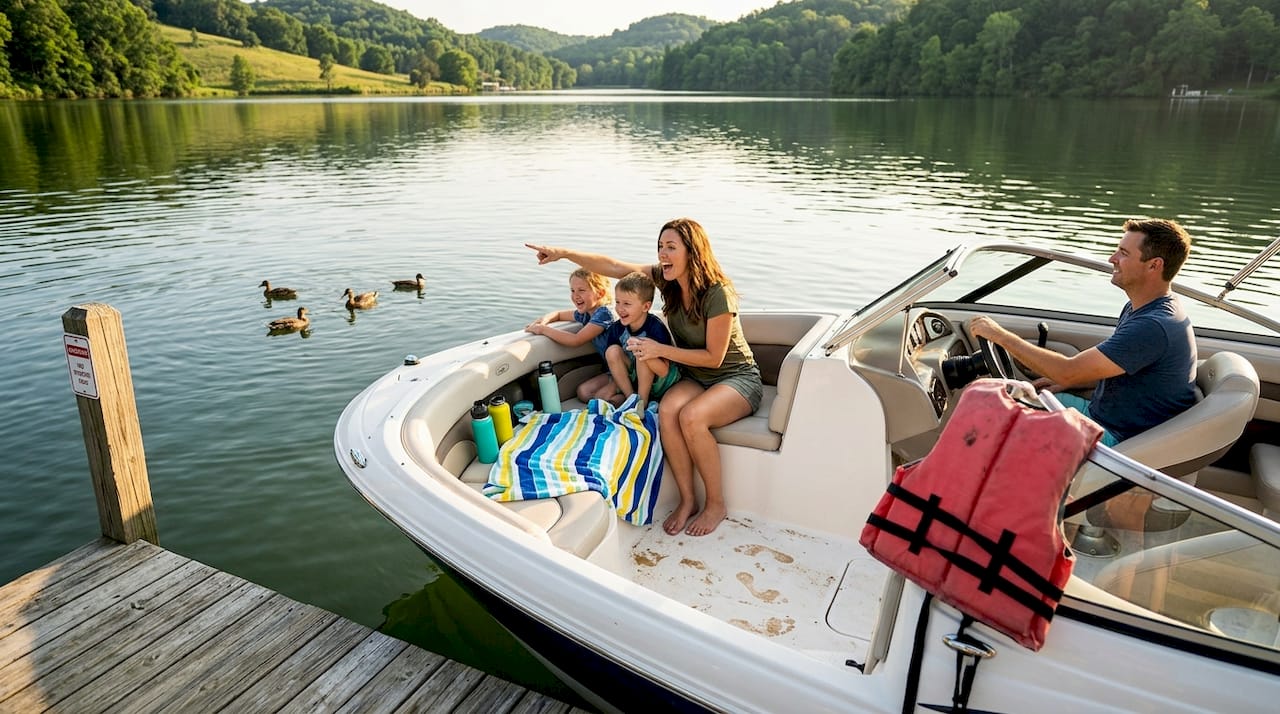
These boats use outboard or sterndrive engines and ride on a modified-V hull that handles moderately rough water without slamming. They work well for day cruising, swimming, tubing, and light watersports. The open layout makes boarding easy from a dock or beach.
The tradeoff is limited gear storage and no shelter from weather. If you spend full days on the water or need to carry significant fishing equipment, a dedicated fishing boat will serve you better.
3. Pontoon boats
Pontoons have become the best-selling boat category on American lakes, and the growth makes sense. The wide, flat deck supported by two or three aluminum tubes gives you more usable surface area than any other similarly priced vessel. You can seat 10 to 15 people comfortably, install a grill, and still have room for fishing chairs.
Family-focused buyers consistently gravitate toward pontoons because the flat deck is safe for children and easy to board from the water. Modern tri-toon designs (three pontoons instead of two) add performance, reaching speeds above 35 mph with the right engine.
Where pontoons fall short: they are not suited for rough open water or ocean conditions, and they are slow compared to V-hull designs at equivalent engine sizes.
4. Fishing boats
The category of types of fishing boats is broad enough to deserve its own breakdown. The right fishing platform depends on your target species, water type, and how serious your fishing gets.
- Bass boats: Low-profile, fast fiberglass hulls with shallow drafts designed for freshwater tournament fishing. They typically carry 2 anglers and run outboard motors up to 250 horsepower.
- Jon boats: Flat-bottom aluminum workhorses. Inexpensive, stable in calm water, and light enough to trailer with a small vehicle. Best for rivers, marshes, and shallow lakes.
- Center console boats: Open deck with a central helm station. Saltwater-capable, ideal for offshore fishing, bay fishing, and diving. Easy to move around the deck when fighting a fish.
- Walkaround and cuddy cabin fishing boats: Add a small forward cabin for gear storage or overnight stays while maintaining fishing functionality on deck.
Pro Tip: For freshwater fishing in small lakes, a jon boat or 14-foot aluminum fishing boat is often a smarter buy than a bass boat. The jon handles more water types, costs far less, and is easier to maintain.
5. Deck boats
Deck boats sit between runabouts and pontoons in the market. The wider beam (boat width) at the bow gives you more deck space than a typical bowrider while maintaining a V-hull that performs better in rough water than a pontoon.
Deck boats generally run 25 to 35 feet, accommodate 8 to 14 passengers, and work well for watersports because the hull shape generates less drag for tow sports compared to a pontoon. They are a practical choice for buyers who want passenger space and do not want to give up performance entirely.
6. Cabin cruisers and trawlers
These two motorboat types cover overnight and multi-day trips on the water.
A cabin cruiser typically runs 25 to 45 feet with an enclosed cabin containing sleeping quarters, a galley, and a head (toilet). They use inboard or sterndrive engines and cruise at moderate speeds. Well-suited for coastal cruising and large lake voyages.
A trawler uses a displacement hull, meaning it moves through the water rather than planing on top of it. Slower than a cruiser (typically 8 to 12 knots), but far more fuel efficient on long passages. Serious long-range cruisers favor trawlers because they can cross significant distances at manageable fuel costs. Many live-aboard boaters choose trawlers for their stability and range.
7. High-performance and wakeboard/ski boats
High-performance boats are purpose-built for speed. They ride on deep-V or stepped hulls with large inboard or outboard engines, and some exceed 80 mph. Unless speed is your primary motivation, they are expensive to own and operate.
Wakeboard and ski boats take a different approach. These inboard-engine vessels are designed to create a consistent, controlled wake for wakeboarding and water skiing. Many feature ballast tanks to increase wake size on demand. They are not fishing boats, cruisers, or open-water vessels. They do one thing well. If watersports are your priority, nothing else comes close.
8. Sailboat types: hulls and rigs
Sailboat selection involves three variables working together: hull type, rig configuration, and intended use.
Hull types:
- Monohulls: Single-hull design. Most common, lower cost to maintain, and capable offshore. They heel (lean) in wind, which some sailors love and others find uncomfortable.
- Catamarans: Twin hulls provide stability, speed, and interior space. Popular for cruising and chartering. More expensive to dock and maintain.
- Trimarans: Three hulls. Extremely fast, often used for racing. Less practical for casual cruisers.
Common rig types:
- Bermuda sloop: Single mast, one mainsail and one headsail (jib). The most popular recreational rig because it is efficient and easy to manage short-handed.
- Ketch: Two masts. The mizzen mast forward of the rudder post. Good for offshore cruising because smaller sail areas are easier to handle.
- Schooner: Two or more masts with the foremast shorter than the main. Traditional and beautiful, but not efficient upwind.
Pro Tip: If you are new to sailing, start with a Bermuda-rigged sloop on a monohull under 30 feet. The single-mast setup keeps sail management simple while you develop real-water skills.
9. Comparison of popular boat types
| Boat Type | Propulsion | Typical Use | Passenger Capacity | Hull Type | Best For |
|---|---|---|---|---|---|
| Bowrider | Outboard/I-O | Day cruising, watersports | 6 to 12 | Modified-V | Families, all-around use |
| Pontoon | Outboard | Entertainment, lake cruising | 10 to 15 | Pontoon/tri-toon | Calm water, groups |
| Jon Boat | Outboard/tiller | Freshwater fishing | 2 to 4 | Flat bottom | Rivers, marshes, small lakes |
| Center Console | Outboard | Saltwater/offshore fishing | 4 to 8 | Deep-V | Anglers, coastal use |
| Cabin Cruiser | Inboard/I-O | Overnight trips | 4 to 8 | Deep-V or modified-V | Extended cruising |
| Trawler | Inboard | Long-range passage | 2 to 6 | Displacement | Fuel-efficient distance travel |
| Catamaran (sail) | Sail | Cruising, chartering | 4 to 10 | Twin hull | Stability, interior space |
| Bermuda Sloop | Sail | Day sailing, coastal | 2 to 6 | Monohull | Beginners, weekend sailors |
10. How to choose the right boat type for your needs
With the vessel categories clear, matching one to your situation comes down to four filters.
Water body and conditions: Small lakes work well with pontoons, jon boats, and fishing boats. Large lakes and coastal waters call for deep-V motorboats, cabin cruisers, or offshore center consoles. Ocean passages require displacement hulls or ocean-capable sailboats.
Passenger count and activity focus: How many people do you typically bring? What are you doing: fishing, entertaining, watersports, or overnight cruising? A 14-foot aluminum fishing boat is a poor choice for a family of six. A 30-foot pontoon is wasted on a solo angler.
Safety equipment and legal requirements: Equipment regulations vary by vessel length and category. Life jacket requirements, flare kits, fire extinguishers, and navigation lights are all tied to your specific vessel class. Confirm your vessel’s category before purchasing safety gear.
Insurance and maintenance costs: Boat insurance premiums and coverage terms shift based on vessel type, engine size, and intended use. High-performance boats and offshore vessels typically carry higher premiums. Trawlers and sailboats may qualify for different coverage structures than fast motorboats.
Pro Tip: Do not buy a boat optimized for 20% of your use. If you fish 80% of the time and occasionally bring guests, buy a fishing boat and rent a pontoon for the party day.
My take on choosing a boat type
I have talked with hundreds of students going through boating certification, and the pattern I see repeatedly is this: people buy for appearance, then realize they bought for the wrong activity.
Someone picks a fast bowrider because it looks exciting, then spends every weekend fishing in a boat with no rod holders and no storage for a tackle box. Someone else buys a serious offshore center console and uses it exclusively on a calm freshwater lake. The boat performs fine, but they paid $20,000 more than they needed to.
What I have learned is that the best decision starts with an honest inventory of your typical use. Not your aspirational use. Your actual use. The boat you take out 40 weekends a year should be optimized for what you do those 40 weekends, not for a trip you take twice.
I also push people to consider boating safety education before they purchase. Taking a course first changes how you evaluate different vessel categories. You understand hull stability, right-of-way rules, and equipment requirements in context. That knowledge directly influences which boat you should buy.
Legal classifications of vessels also matter more than most buyers realize. The regulatory category your vessel falls into determines your safety obligations, not just the name you call it. Treat that as a non-negotiable part of your research.
— Richard
Get certified before you get on the water
No matter which vessel category you choose, boating safety certification is required by law in most U.S. states and practical everywhere else. SafeBoatingAmerica offers nationwide online boating courses covering navigation rules, safety equipment, emergency procedures, and state-specific regulations for every boat type.
Whether you are preparing to operate a pontoon on a Connecticut lake, a center console off Long Island, or a personal watercraft in Arizona, SafeBoatingAmerica has a state-approved course for you. The Arizona boating certification course is fully online and available on demand. New York boaters can complete NY boat and Jet Ski certification with same-day certificate options. Courses are taught by USCG-Licensed Captains using NASBLA-approved materials.
FAQ
What are the most common boat types for beginners?
Pontoon boats and bowriders are the most beginner-friendly choices because they offer stability, simple controls, and forgiving handling in calm water conditions.
What is the difference between a sailboat and a motorboat?
A sailboat uses wind energy through sails as its primary propulsion, while a motorboat relies on an engine. Both can have auxiliary propulsion, but selection should focus on the principal method.
How do I match a boat type to my water conditions?
Match hull design to your typical water: flat-bottom and pontoon hulls suit calm lakes, while deep-V hulls handle chop and coastal conditions more effectively.
Do different boat types require different safety equipment?
Yes. Safety equipment requirements are tied to vessel length and regulatory category, covering life jackets, fire extinguishers, flares, and navigation lights.
Do I need a boating license for all vessel types?
Most states require a boating safety certificate to operate any motorized vessel, including personal watercraft, regardless of size or type. Check your state’s boating regulations for exact requirements.
Recommended
- How to Perform a Boat Safety Inspection Step by Step - Safe Boating America
- In-Person vs Online Boating Course Differences Explained - Safe Boating America
- Boat Captains: Certifications, Skills, and Duties - Safe Boating America
- Essential boating electronics for safe and legal operation - Safe Boating America