Why boating safety education is mandatory
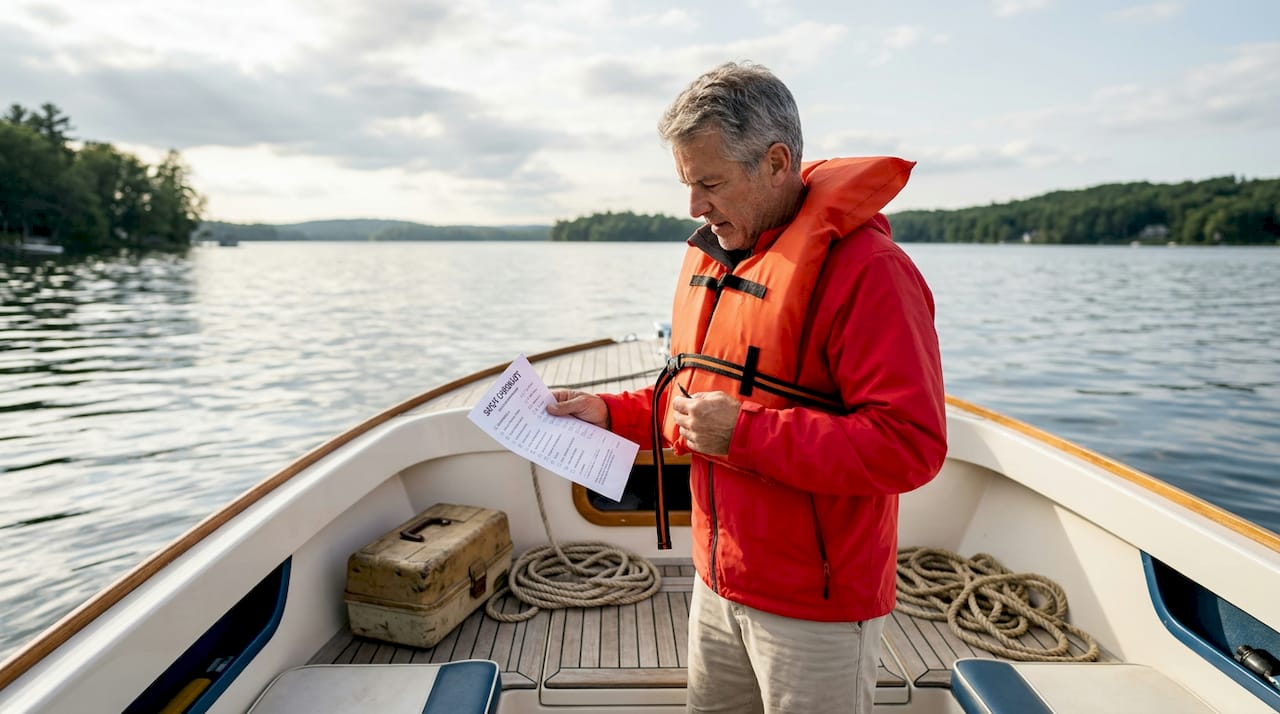
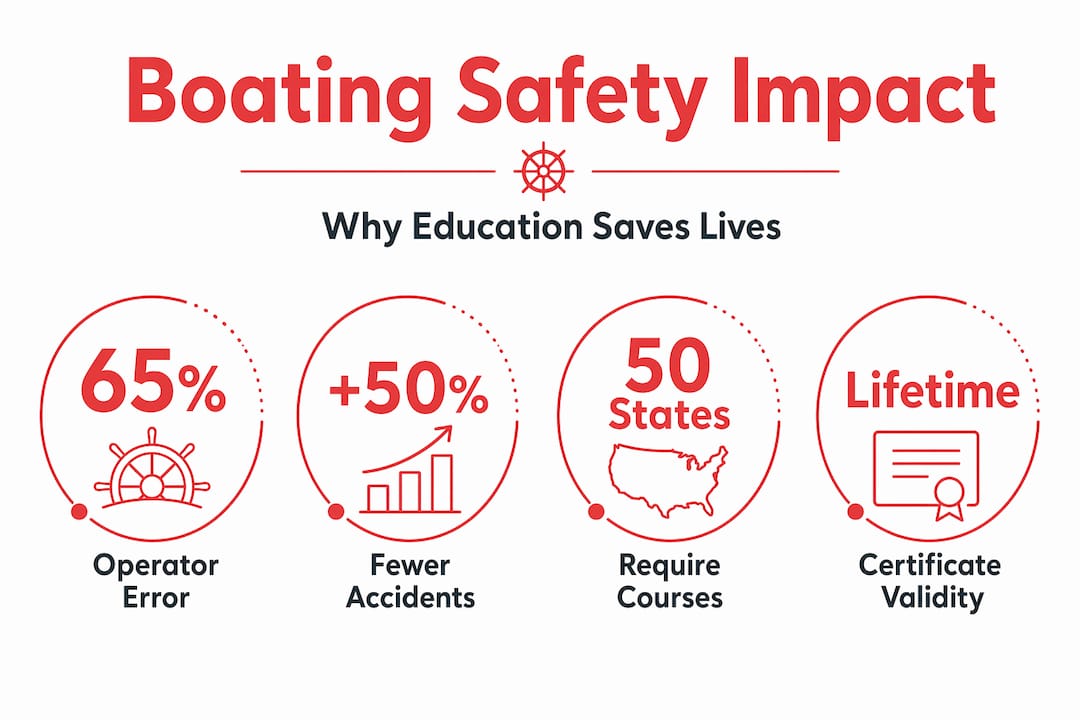
Most people assume boating is low-risk without formal training. That assumption is wrong. Roughly 65% of boating accidents involve preventable operator error, making the case for mandatory boating safety education impossible to ignore. Whether you are a first-time boat owner or a returning recreational boater looking to meet your state’s boating safety training requirements, this guide explains the legal reasoning, the course content, and the real-world benefits that go far beyond checking a compliance box.
Table of Contents
- How boating safety education reduces accidents and saves lives
- Understanding state boating education requirements
- What to expect from boating safety courses
- Beyond the law: practical benefits of boating courses
- Choosing the right boating safety course for you
- Our perspective: the mandatory label undersells the actual value
- Get certified with Safe Boating America
- Frequently asked questions
Key Takeaways
| Point | Details |
|---|---|
| Operator error main cause | Most boating accidents happen due to preventable mistakes by untrained operators. |
| Safety education reduces risks | Mandatory courses significantly lower accidents and fatalities in states enforcing them. |
| Certification is mostly lifelong | Boating safety certificates usually do not expire but must be carried on board. |
| Courses are affordable | Online safety courses typically cost less than $35 and take under 8 hours to complete. |
| Benefits extend beyond law | Education lowers insurance costs, reduces damage, and builds boating confidence. |
How boating safety education reduces accidents and saves lives
The core reason why boating safety education is mandatory in most states comes down to one consistent finding: untrained operators cause the overwhelming majority of incidents on the water. Operator inexperience, inattention, and poor judgment account for more accidents than equipment failure, weather, and mechanical issues combined. Education directly addresses each of those risk factors.
The evidence from states with long-standing mandatory boater education laws is hard to argue with. Minnesota recorded all-time low boating incidents in 2025 following years of enforced education requirements, with fatalities and crashes falling to historic lows. That is not a coincidence. It reflects what happens when operators understand right-of-way rules, buoy systems, speed restrictions, and emergency procedures before they leave the dock.
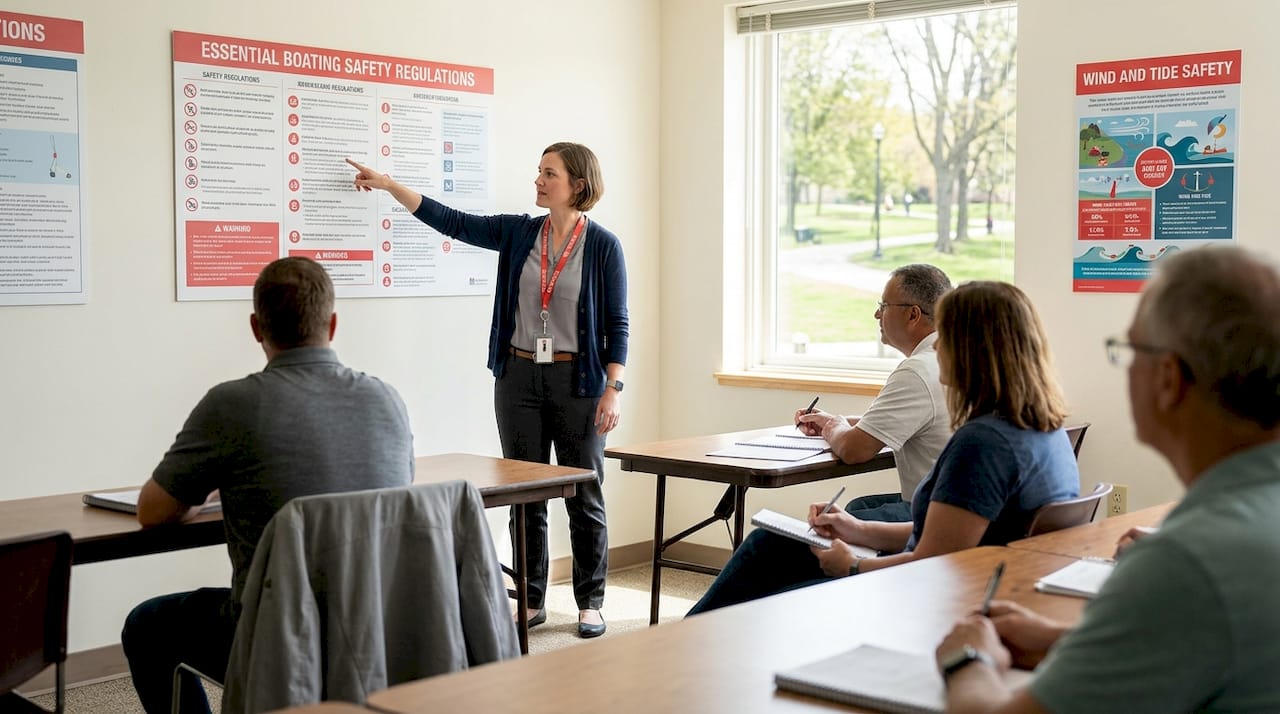
Formal boating safety training requirements build skills in four critical areas:
- Situational awareness: Recognizing navigation hazards, reading water conditions, and anticipating other vessel movements
- Rule comprehension: Understanding USCG navigation rules, no-wake zones, and vessel lighting requirements
- Emergency response: Knowing how to execute a man-overboard recovery, use distress signals, and manage onboard fires
- Equipment proficiency: Correctly fitting life jackets, operating fire extinguishers, and using anchoring systems
You can find additional boating education and accident reduction data that reinforces this pattern across multiple states. The correlation between training and safety outcomes is consistent regardless of region or waterway type. Expert perspectives on boating safety further support the view that structured training is the single most effective tool available for reducing on-water risk.
“Mandatory boater education is not a bureaucratic hurdle. It is the most direct tool states have for reducing preventable deaths on their waterways.”
Understanding state boating education requirements
Boating safety training requirements vary by state, but the overall structure is consistent across the country. Most U.S. states require some form of mandatory boater education, and in the majority of those states, the certificate you earn is valid for life. You take the course once and carry that credential onboard whenever you operate a vessel.
Who must comply depends on your state. Common factors include:
- Age thresholds: Many states phase in requirements based on birth year, meaning younger operators are often held to stricter standards first
- Vessel type: Personal watercraft (PWC) operators such as Jet Ski and WaveRunner riders frequently face separate or additional requirements
- Horsepower limits: Some states require certification only when operating vessels above a certain engine size
- Commercial vs. recreational: Requirements outlined here apply to recreational operators; commercial licenses involve separate federal licensing
Florida and California are useful examples of age-based phased mandates. Florida requires all operators born on or after January 1, 1988 to carry a Boating Safety Education Identification Card. California is progressively expanding its requirement each year until all operators must be certified by 2025, regardless of birth year.
| State | Age requirement | Minimum passing score | Certificate validity |
|---|---|---|---|
| New York (Brianna’s Law) | All operators | 76% | Lifetime |
| Florida | Born after Jan. 1, 1988 | 75% | Lifetime |
| California | All operators (phased in) | 75% | Lifetime |
| Connecticut | Born after Jan. 1, 1983 | 80% | Lifetime |
| Texas | Born after Sept. 1, 1993 | 70% | Lifetime |
NASBLA (National Association of State Boating Law Administrators) approval is the standard that makes all of this work across state lines. A NASBLA-approved course means your certificate is recognized not just in your home state but in other participating states as well. When selecting a course, always confirm it carries that approval. You can review your specific state boating education requirements before enrolling to confirm which course format satisfies your state’s mandate.
What to expect from boating safety courses
One of the most common questions from new boaters is what the actual course experience looks like. The answer is more practical and accessible than most people expect.
Boating safety courses typically cost between $75 and $100, take between 4 and 8 hours to complete, and require passing a final exam with a score of 75 to 80 percent to earn certification. That makes this one of the most affordable and time-efficient safety credentials available for any outdoor activity.
A standard boating safety course covers these core topics in sequence:
- Federal and state boating laws: Registration requirements, operator age rules, and vessel equipment mandates
- Navigation rules: Right-of-way at sea, buoy systems, channel markers, and nautical charts
- Safe vessel operation: Speed management, wake zones, anchoring, and docking
- Weather and water conditions: Reading forecasts, recognizing storm development, and making go/no-go decisions
- Emergency procedures: Man-overboard response, distress signaling, fire response, and capsizing protocols
- Environmental responsibility: Discharge rules, protected areas, and fueling practices
- Personal watercraft safety: PWC-specific rules, blind spot awareness, and re-boarding technique
Most online courses allow you to work at your own pace and pause between sections and can be easily completed in a weekend, but its easy to overlook key aspects. You can explore boating safety course details to see how the format is structured across different formats including live Zoom sessions and in-person programs.
Pro Tip: If you plan to operate in multiple states, confirm whether your home state’s course satisfies NASBLA reciprocity requirements. Choosing a NASBLA-approved course from the start prevents the need to retake training when traveling to different waterways.
Beyond the law: practical benefits of boating courses
Legal compliance is the floor, not the ceiling, of what boating safety education delivers. The benefits of boating courses extend well beyond satisfying a state requirement. They show up in real situations, on real water, where training either protects you or leaves you guessing.
The financial case alone is worth paying attention to. Boating education can qualify you for insurance discounts up to 10% and significantly reduces the risk of the costly collision and docking damage that causes most marine insurance claims. A single preventable docking incident can cost several thousand dollars. That context makes the $35 course fee look very different.
Beyond insurance, the practical benefits of boating education include:
- Confidence under pressure: Knowing exactly what to do when a passenger falls overboard or a squall forms faster than expected
- Better situational decision-making: Trained operators read changing conditions more accurately and make earlier course corrections
- Docking and maneuvering skill: Courses teach nuanced technique for handling wind and current, which informal experience often leaves incomplete
- Group safety awareness: Certified operators are better equipped to brief passengers on safety rules and emergency roles
Pro Tip: Ask your insurance provider directly whether they recognize your specific boating safety certificate. Some require documentation at the time of policy purchase to apply the discount. Having your certificate number ready speeds that process considerably.
The why learn boating safety question ultimately answers itself when you consider the full picture. Reduced accident risk. Lower insurance premiums. Sharper skills. Legal compliance. Few certifications deliver that range of practical return in under eight hours.
Choosing the right boating safety course for you
Not all boating safety courses are equal in content quality, state acceptance, or format flexibility. Making the right choice before you enroll saves time and avoids the frustration of completing a course that does not satisfy your state’s mandate.
NASBLA-approved courses ensure certificate reciprocity across states, which is particularly important for boaters who travel and operate in multiple jurisdictions. Verify NASBLA approval before paying for any course.
| Course format | Best for | Typical cost | Completion time |
|---|---|---|---|
| Online self-paced | Flexible schedules, low cost | $50 | 4 to 8 hours |
| Live Zoom class | Interactive instruction, Q&A access | $75 to $100 | 4 to 6 hours |
| In-person classroom | Hands-on skills, direct feedback | $75 to $100 | 6 to 8 hours |
Additional selection factors to consider:
- State-specific content: Confirm the course covers your state’s specific laws and equipment requirements, not just federal rules
- Certificate delivery: Check whether the certificate is issued same-day or mailed, especially if you have an upcoming trip
- PWC coverage: If you operate a Jet Ski, WaveRunner, or other personal watercraft, verify the course includes PWC-specific modules
- Instructor credentials: State Certified Instructors and USCG-Licensed Captains deliver measurably better instruction than automated-only programs
You can compare NASBLA-approved boating courses by state and format to find the option that fits your schedule and compliance needs. Understanding the importance of NASBLA-approved courses for interstate recognition is also worth reviewing before you commit to a program.
Once you complete your course, keep your certificate accessible on the vessel at all times. Most states require physical or digital proof on board during operation, and officers can issue citations for operators who completed the course but cannot produce the documentation.
Our perspective: the mandatory label undersells the actual value
Framing boating safety education purely as a legal mandate creates a distorted picture. It positions the course as something to get through rather than something to get from. That framing is costing boaters real money and putting them in real danger.
Here is the uncomfortable reality: most operators who complete a course for the first time realize they were already doing things wrong. Not dangerously wrong in every case, but wrong in ways that accumulate risk over time. Using the wrong navigation light pattern at dusk. Misreading a red channel marker. Anchoring in a location that creates a blind spot for faster vessels. These are not rookie errors. They are common patterns among experienced recreational boaters who never received formal instruction.
The states that mandate education are not acting paternalistically. They are responding to accident data that shows a direct, measurable connection between untrained operators and preventable deaths. Minnesota’s historic 2025 lows did not happen by accident. They happened because the state enforced training, and trained operators made better decisions across thousands of separate moments on the water that year.
The boating safety education purpose is not certification. Certification is the evidence that education happened. The purpose is that you come home, and so does everyone on your boat.
Get certified with Safe Boating America
Safe Boating America offers state-approved boating safety courses for recreational boaters and PWC operators in all 50 states, including Brianna’s Law-compliant New York classes, Connecticut Safe Boating Certificate programs, and Jet Ski certification courses throughout Long Island, New York City, Buffalo, and beyond. Courses are taught by State Certified Instructors and USCG-Licensed Captains using NASBLA-approved materials.
Whether you need an online boating safety course, a live Zoom class, or an in-person certification program, Safe Boating America provides same-day certificate options and flexible scheduling designed to fit your timeline. Visit safeboatingamerica.com to find your state’s approved course, confirm your specific requirements, and get certified quickly, legally, and with instruction that actually prepares you for the water.
Frequently asked questions
Why is boating safety education mandatory in so many states?
Most boating accidents involve preventable operator error, and mandatory education gives legislators a direct tool for reducing fatalities and collisions by ensuring operators understand navigation rules, emergency procedures, and vessel handling before taking the helm.
How long does a typical boating safety course take to complete?
Most boating safety courses take between 4 and 8 hours to complete, can cost anywhere from free up to about $35 for online versions, and require passing a final exam to earn your certificate.
Are boating safety certificates valid for life?
In most states, boating safety certificates are valid for life and do not require renewal, but you are required to carry the certificate onboard whenever you operate a vessel.
Do boating safety courses offer any benefits besides legal compliance?
Yes. Boating education can earn insurance discounts of up to 10% and significantly reduces the risk of costly collision and docking damage, while also sharpening the situational awareness and emergency response skills that protect you and your passengers.
Recommended
- How Boating Education Lowers Accident Rates and Saves Lives - Safe Boating America
- USCG boating safety compliance: clear steps for safer boating - Safe Boating America
- Essential boating electronics for safe and legal operation - Safe Boating America
- How to Perform a Boat Safety Inspection Step by Step - Safe Boating America