
Department of Boating and Waterways: Your 2026 Guide
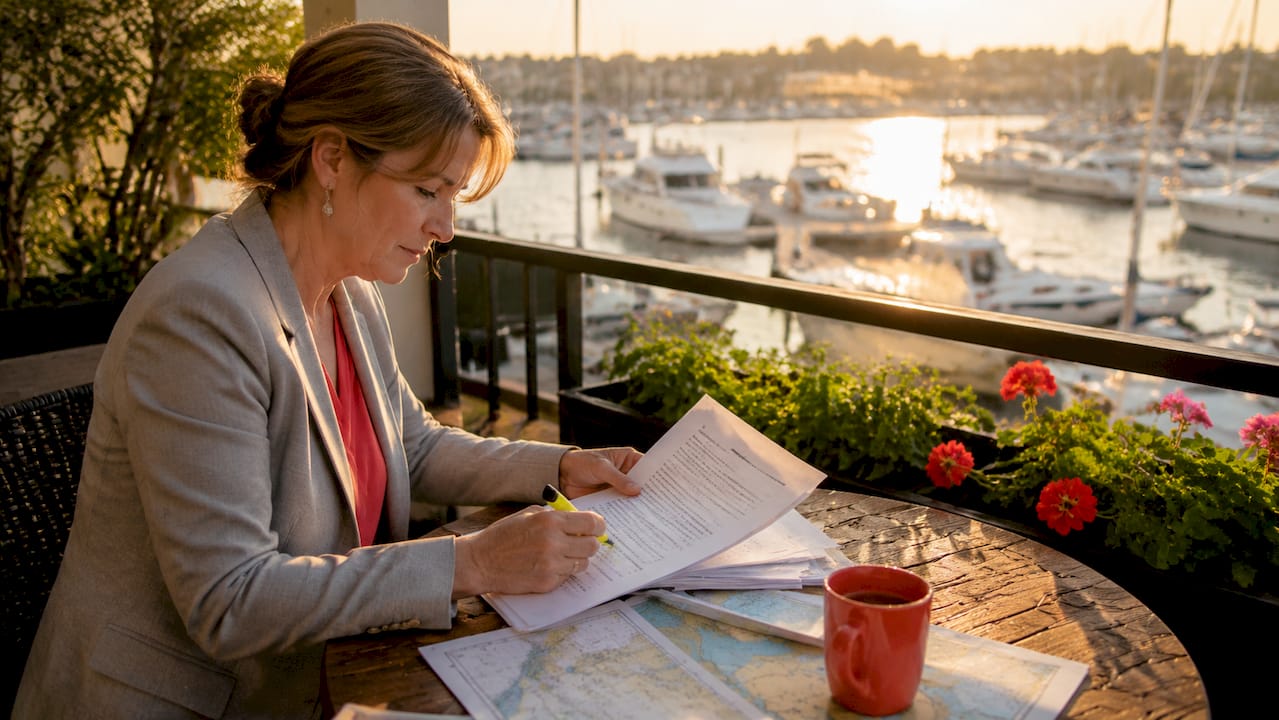
A department of boating and waterways is a state-level agency responsible for enforcing boating regulations, administering safety education programs, and managing licensing for recreational boaters. These agencies do not exist at the federal level. Most departments operate at the state level, which means the rules you follow depend entirely on where you boat. Recreational boating generated $38.4 billion in 2024, making it the dominant sector in the outdoor recreation economy. That scale explains why state agencies take regulation and safety so seriously.
What does a department of boating and waterways actually do?
State boating agencies carry three core responsibilities: regulation, safety education, and waterways management. They set the legal standards every boater must meet, fund enforcement patrols, and protect the water itself. The U.S. Coast Guard sets baseline federal standards, but each state agency fills in the details. California’s Division of Boating and Waterways, for example, runs grant programs, manages public boat launches, and enforces state-specific equipment rules. Understanding your state agency’s role is the first step to staying legal and safe on the water.
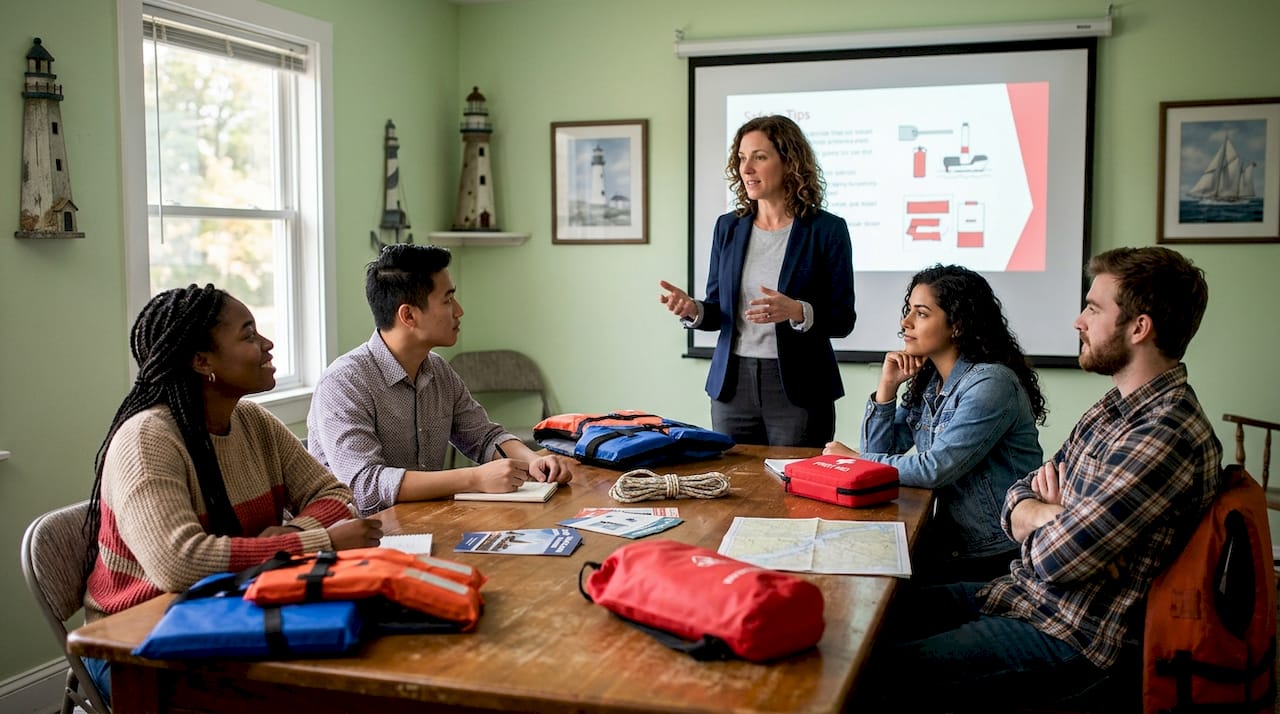
How state departments manage boating regulations and enforce safety laws
State boating agencies enforce a wide range of rules that go beyond what the U.S. Coast Guard mandates. Because boating regulations vary by state, a rule that applies in Florida may not apply in New York. That variability catches many boaters off guard, especially those who travel between states.
Enforcement activities typically include:
- Patrol operations: Uniformed officers on the water check for valid registration, required safety equipment, and sobriety.
- Equipment inspections: Officers verify that vessels carry the correct number and type of U.S. Coast Guard-approved life jackets, fire extinguishers, and signaling devices.
- Speed and wake zone enforcement: Designated no-wake zones near marinas, swim areas, and wildlife habitats are actively monitored.
- Horsepower and vessel size restrictions: Some lakes and rivers cap engine size to protect shorelines and reduce hazards.
- Accident reporting: Operators must file reports with their state agency after collisions, injuries, or deaths.
State agencies fund much of this enforcement through competitive grant programs. California’s Division of Boating and Waterways awarded over $2.27 million in 2025 through its Boating Safety and Enforcement Equipment (BSEE) and Surrendered and Abandoned Vessel Exchange (SAVE) programs. That funding covered 20 BSEE grants totaling $1.23 million and 26 SAVE grants totaling $1.04 million. Grant funding is competitive and supplements local agency budgets rather than replacing them entirely.
State agencies also coordinate with the U.S. Coast Guard on joint patrols and data sharing. The Coast Guard’s 2026 National Recreational Boating Safety Survey will survey over 50,000 households nationwide through NORC at the University of Chicago. That data directly shapes how states allocate enforcement resources and safety funding.
Pro Tip: Check your state boating agency’s website before traveling to a new waterway. Rules for life jacket requirements, speed limits, and registration can change at the county or lake level.
What boaters need to know about licensing and safety education
Boating safety education is the most direct way to reduce accidents on the water. Safety education lowers accident rates and saves lives by building the skills and situational awareness that prevent collisions, capsizings, and drownings. Most state boating agencies now require a safety certificate for operators below a certain age, and many states are expanding those requirements to all operators.
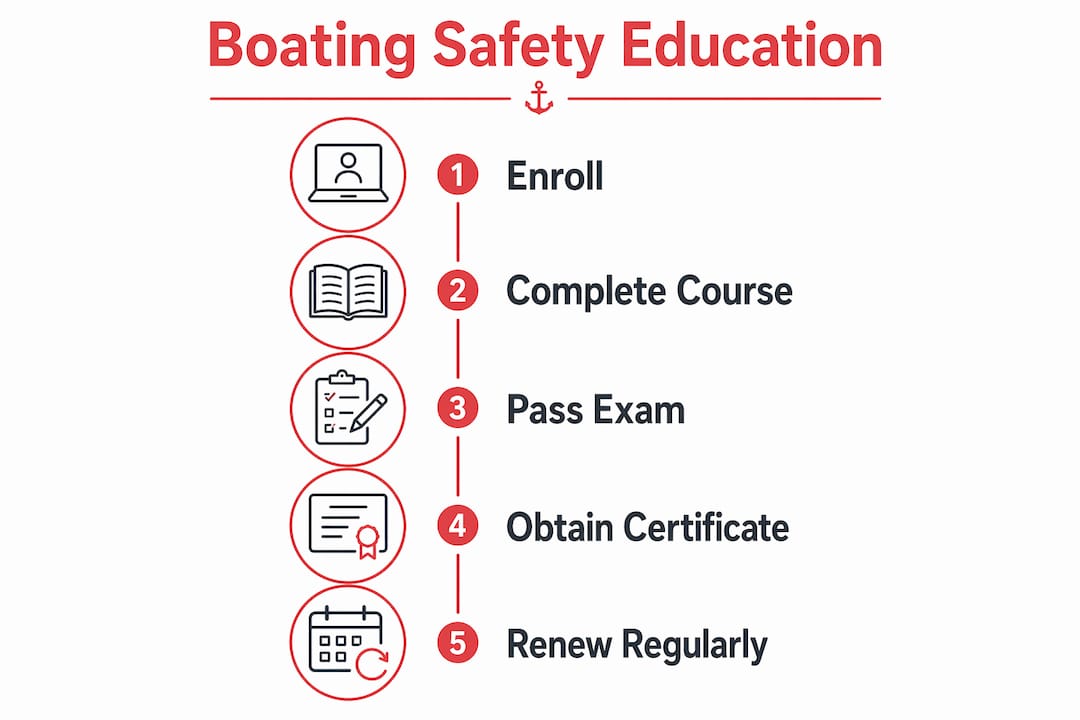
The typical path to a boating license or safety certificate follows these steps:
- Identify your state’s requirements. Age thresholds, vessel types, and horsepower limits all affect whether you need a certificate. Contact your state boating agency or visit its official website.
- Choose an approved course. State agencies maintain lists of approved providers. Courses are available online, in person, and through live video formats like Zoom.
- Complete the coursework. Topics include navigation rules, emergency procedures, required equipment, and state-specific laws. NASBLA-approved materials meet the standard used by most state agencies.
- Pass the final exam. Most courses require a passing score on a proctored or online exam before issuing a certificate.
- Receive your certificate. Some providers offer same-day certification. In New York, boaters can add a boating endorsement directly to their NYS driver’s license after completing a Brianna’s Law-compliant course.
Boating safety education is now mandatory in most states for young operators, and the trend is moving toward universal requirements. States like New York have already passed laws requiring all operators to complete a certified course regardless of age. That shift reflects what safety data consistently shows: trained boaters make fewer critical errors.
Pro Tip: Look for courses taught by State Certified Instructors or USCG-Licensed Captains. Instructor credentials signal that the course meets NASBLA standards, which most state agencies require for certification.
How boating agencies support waterway management and environmental protection
State boating agencies do more than enforce rules. They actively manage the physical condition of waterways and the infrastructure boaters depend on. Environmental stewardship is now a growing priority for these agencies, driven by the increasing number of abandoned vessels and pollution incidents on public waterways.
Key waterway management programs include:
- Abandoned vessel removal: SAVE grants fund the removal of derelict boats that block navigation channels, leak fuel, and create hazards for other boaters.
- Public boat launch maintenance: Agencies maintain and upgrade ramps, docks, and parking facilities at state-managed access points.
- Water quality monitoring: Some agencies partner with environmental departments to track fuel spills, invasive species, and runoff near high-traffic boating areas.
- Habitat protection zones: Agencies designate restricted areas near sensitive ecosystems, including seagrass beds, nesting sites, and spawning grounds.
The table below summarizes the two primary grant programs used by California’s Division of Boating and Waterways to fund safety and environmental work:
| Grant Program | Focus Area | 2025 Awards |
|---|---|---|
| BSEE (Boating Safety and Enforcement Equipment) | Patrol boats, search and rescue gear | 20 grants, $1.23 million |
| SAVE (Surrendered and Abandoned Vessel Exchange) | Derelict vessel removal | 26 grants, $1.04 million |
Environmental stewardship and derelict vessel removal are increasing priorities for boating departments nationwide. Agencies that fail to address abandoned vessels face navigational hazards, environmental damage, and public safety risks that compound over time.
What every recreational boater must know about gear and compliance
Compliance starts with understanding what you are legally required to carry and how you must carry it. Many boaters assume that having safety gear on board is enough. It is not.
Life jackets must be readily accessible and are legally required for all passengers. Storing them in a sealed bag under a seat does not meet the “readily accessible” standard in most states. Officers issue citations for this violation regularly, even when the vessel carries the correct number of jackets. Each jacket must also be the right size for the person it is intended to serve.
Beyond life jackets, state agencies require boaters to carry:
- Fire extinguishers: Required on most motorized vessels. Type and quantity depend on vessel length and fuel type.
- Visual distress signals: Flares or electronic signaling devices are required on coastal and open waters.
- Sound-producing devices: A horn or whistle is required on all vessels for signaling in low visibility.
- Navigation lights: Required for operating between sunset and sunrise or in restricted visibility.
- Vessel registration: Your state registration card must be on board and available for inspection.
Seasonal and location-based rules add another layer. Some states require additional equipment during winter months or in specific bodies of water. Certain reservoirs prohibit gas-powered engines entirely. Boaters should also know their state’s rules on reporting suspicious activity, which most agencies ask boaters to direct to local law enforcement or the U.S. Coast Guard.
Pro Tip: Review the required safety equipment checklist for your specific state before each season. Rules change, and an outdated kit can result in a citation even if you were compliant the year before.
Key Takeaways
State boating agencies are the primary authority for boating regulations, safety education, and waterways management, and every boater’s compliance obligations depend on their specific state’s rules.
| Point | Details |
|---|---|
| State-level authority | No single federal department oversees all boating rules; contact your state agency for accurate requirements. |
| Grant-funded enforcement | Programs like BSEE and SAVE fund patrol equipment and vessel removal, with California awarding $2.27 million in 2025. |
| Education reduces accidents | Completing a NASBLA-approved safety course lowers accident risk and satisfies most state licensing requirements. |
| Life jacket compliance | Life jackets must be readily accessible, not just on board. Stored jackets lead to citations in most states. |
| Waterway stewardship | Agencies manage boat launches, water quality, and derelict vessel removal to keep public waterways safe and navigable. |
Why state boating agencies matter more than most boaters realize
The most common mistake I see is boaters treating their state boating agency as a bureaucratic formality. They get their certificate, register their boat, and assume the relationship ends there. It does not.
State agencies are the ones collecting accident data, funding the patrol boats that respond when something goes wrong, and maintaining the ramps you launch from. The 2026 National Recreational Boating Safety Survey surveying over 50,000 households is a direct example of how agencies use real data to justify funding and shape policy. If you have ever wondered why a particular waterway got a new patrol boat or a no-wake zone, a survey like that is often the reason.
The industry is also changing fast. Trends toward electric boats, smart technology, and budget-friendly access are reshaping who boats and how. Pre-owned boats account for roughly 80% of annual unit sales, which means more first-time owners are entering the water without the dealer orientation that often comes with a new purchase. That gap makes state education programs and agency outreach more important, not less.
My honest view: boaters who engage proactively with their state agency, take a certified course, and stay current on rule changes are safer, face fewer citations, and have better experiences on the water. The agency is a resource, not just a regulator.
— Richard
Safeboatingamerica: state-approved boating courses nationwide
Safeboatingamerica offers state-approved boating certification courses that satisfy the licensing requirements set by state boating agencies across the country. Courses are available online, through live Zoom sessions, and in person, taught by State Certified Instructors and USCG-Licensed Captains using NASBLA-approved materials.
Whether you need a New York Brianna’s Law-compliant course, a Connecticut Safe Boating Certificate, a California boating license, or certification in any other state, Safeboatingamerica provides the training to meet your state’s specific requirements. Online boating courses are available nationwide with same-day certification options, making it straightforward to get certified before your next time on the water.
FAQ
What is a department of boating and waterways?
A department of boating and waterways is a state-level agency that enforces boating regulations, administers safety education programs, and manages public waterway infrastructure. There is no single federal equivalent; each state operates its own agency.
Do I need a boating license in every state?
Boating license and safety certificate requirements vary by state, with most states requiring certification for operators under a specific age and some states expanding requirements to all operators. Check your state boating agency’s website for the current rules.
What does “readily accessible” mean for life jackets?
“Readily accessible” means a life jacket must be within immediate reach and usable without delay. Jackets stored in sealed bags, locked compartments, or under heavy gear do not meet this standard and can result in a citation.
How are boating safety grants used by state agencies?
Grant programs like BSEE fund patrol boats and search and rescue equipment, while SAVE grants fund the removal of abandoned and derelict vessels. California awarded over $2.27 million through these programs in 2025.
Where can I find a state-approved boating safety course?
State boating agencies maintain lists of approved course providers on their official websites. Safeboatingamerica offers NASBLA-approved courses in every state, available online, via live Zoom, and in person.
Recommended
- Minnesota Boating Regulations: 2026 Compliance Guide - Safe Boating America
- PWC License Requirements: Your 2026 How-To Guide - Safe Boating America
- NY Boating Safety Course: 2026 Certification Guide - Safe Boating America
- 50-State Boating License & Jet Ski Certification Guide (2026) - Safe Boating America