Minnesota Boating Regulations: 2026 Compliance Guide
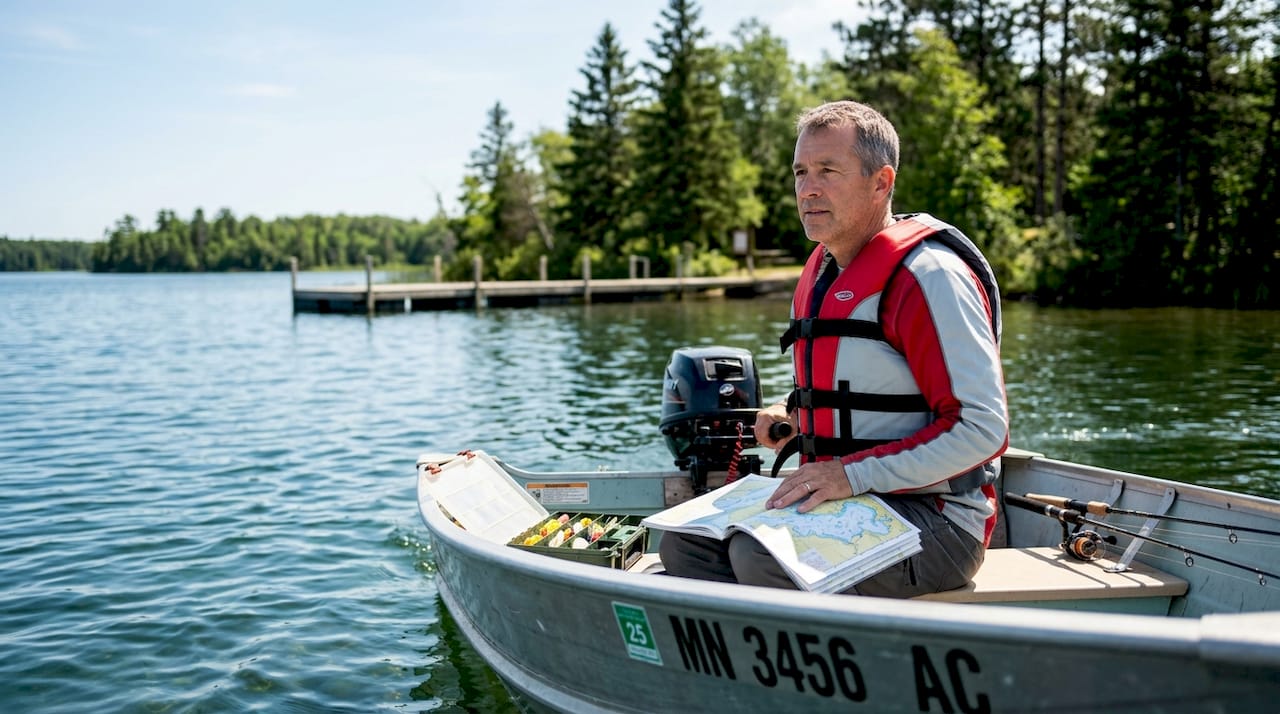
Minnesota boating regulations require licensing for all motorized watercraft of any length and non-motorized vessels over 10 feet, mandatory safety equipment, operator permits for boaters born after June 30, 1998, and strict aquatic invasive species controls. These rules, formally governed by the Minnesota Department of Natural Resources (DNR), apply to every lake, river, and waterway in the state. Whether you operate a fishing boat on Mille Lacs, a pontoon on Lake Minnetonka, or a personal watercraft on the St. Croix River, compliance with current boating law is not optional. This guide covers every major requirement in effect for 2026.
What are the mn boating regulations for watercraft licensing?
Minnesota requires licensing for all motorized watercraft regardless of length and for non-motorized watercraft over 10 feet. That means a 9-foot canoe with no motor is exempt, but a 9-foot inflatable with a trolling motor is not. Knowing where your vessel falls in this framework is the first step toward legal operation.
Who must register and how to do it
Registration is handled through the Minnesota DNR, licensed deputy registrars, and certain sporting goods retailers. Renewals are processed online at the DNR website or by mail. Watercraft licenses expire on March 31 of even-numbered years, so 2026 is a renewal year for most Minnesota boaters. Missing the renewal window does not grant a grace period for operation.
The current fee structure for 2026 includes:
- Watercraft under 17 feet: $27 for a two-year license
- Watercraft 17 to under 20 feet: $40 for a two-year license
- Watercraft 20 feet and over: $57 for a two-year license
- Personal watercraft (PWC): $40 for a two-year license
- Non-motorized watercraft over 10 feet: $18 for a two-year license
| Watercraft Type | Length / Category | 2-Year Fee |
|---|---|---|
| Motorized | Under 17 feet | $27 |
| Motorized | 17 to under 20 feet | $40 |
| Motorized | 20 feet and over | $57 |
| Personal watercraft | All PWC | $40 |
| Non-motorized | Over 10 feet | $18 |
Decals must be displayed on both sides of the bow, at least three inches from the registration number, in a clear and visible location. Faded or improperly placed decals are a common reason for enforcement stops, so check placement before every season.
Pro Tip: Take a photo of your registration decals and store it in your phone each spring. If a decal peels or fades mid-season, you have a dated record showing proper placement at launch.
What safety equipment does Minnesota law require on board?
Minnesota mandates specific onboard safety equipment for all watercraft, and the requirements scale with vessel size and type. The 2026 DNR Boating Guide details every category. Failing to carry required equipment is a misdemeanor offense, not a minor infraction.
Life jackets and personal flotation devices
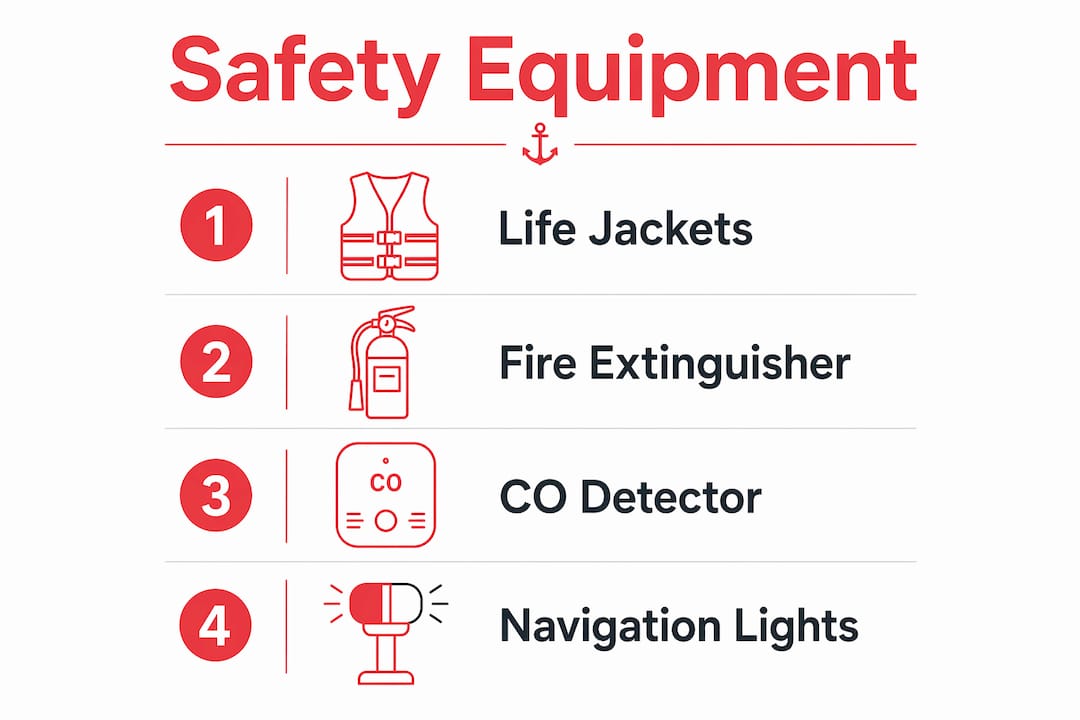
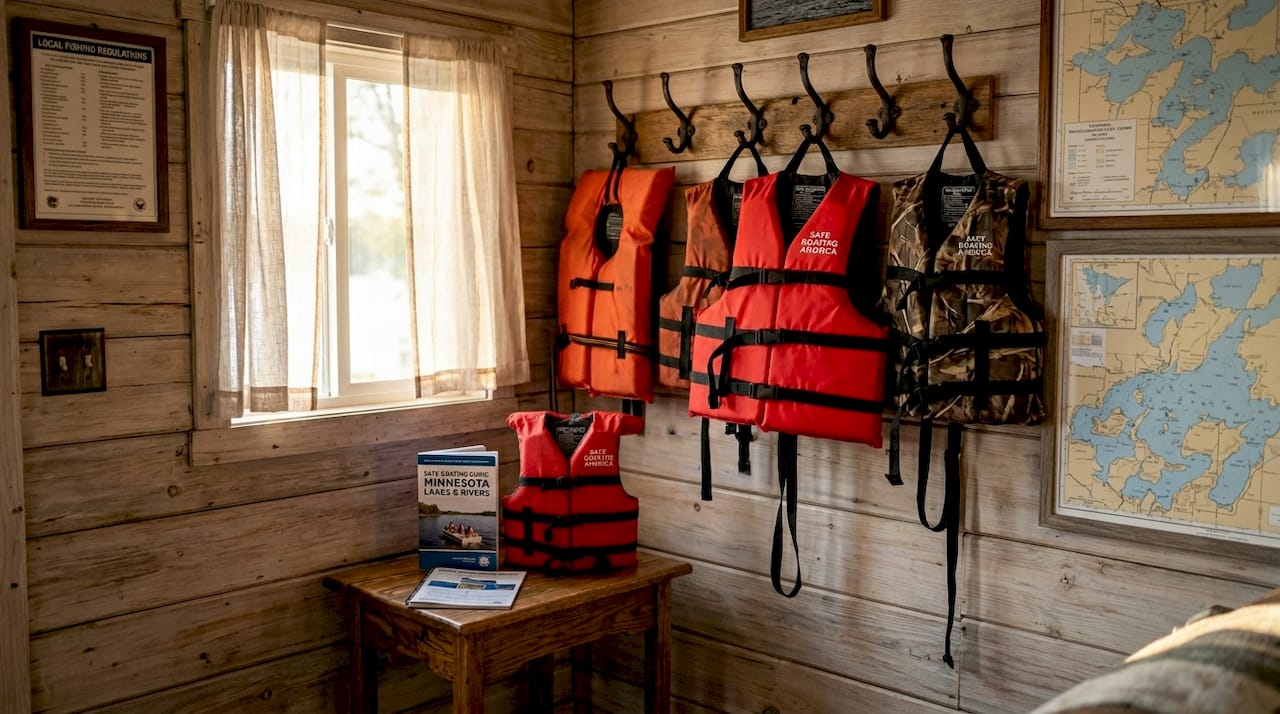
Every person aboard must have a U.S. Coast Guard-approved personal flotation device (PFD) that fits them properly. Children under 10 years old must wear a life jacket at all times while the vessel is underway. This rule applies regardless of swimming ability or water depth. Vessels 16 feet and longer must also carry at least one Type IV throwable PFD.
Fire extinguishers, CO detectors, and navigation lights
Required safety equipment beyond PFDs includes:
- Fire extinguishers: Required on motorized vessels with enclosed compartments, fuel tanks, or cooking equipment. Coast Guard-approved Type B-I or B-II extinguishers apply depending on vessel size.
- Carbon monoxide detectors: Sophia’s Law requires CO detectors or warning stickers on all recreational motorboats with enclosed compartments, mandatory since May 1, 2018. CO poisoning is a leading cause of boating fatalities in enclosed spaces.
- Navigation lights: Vessels 16 feet or longer must use navigation lights from sunset to sunrise. Smaller vessels must carry a flashlight or lantern as a minimum. Operating after dark without proper lighting is one of the most cited boating safety violations in Minnesota.
- Sound-producing devices: A whistle or horn is required on all vessels. Vessels 16 feet and over must carry an electric or mechanical horn.
- Visual distress signals: Required on vessels operating on federal waters, including the Mississippi River and Lake Superior.
Gross load capacity and maximum horsepower ratings are posted on the capacity plate attached to most motorized vessels. Exceeding either limit is illegal and creates serious capsizing risk. The capacity plate is the legal ceiling, not a suggestion.
Pro Tip: Inspect your fire extinguisher gauge and CO detector battery at the start of each season. A dead battery in a CO detector does not satisfy Sophia’s Law, and a discharged extinguisher will not pass a DNR inspection.
Who needs a watercraft operator’s permit in Minnesota?
A watercraft operator’s permit is the formal certification required to legally operate a motorized vessel in Minnesota. The permit requirement has expanded in phases and now covers a broader age group than many boaters realize.
As of July 1, 2026, operators 26 and younger must hold a valid watercraft operator’s permit. The expansion schedule by birth year cohort is:
- Born after June 30, 1998: Required to hold a permit since July 1, 2024
- Born after June 30, 1996: Required as of July 1, 2025
- Born after June 30, 1994: Required as of July 1, 2026
- All operators regardless of age: Requirement scheduled to apply universally by 2028
This phased rollout means that if you were born in 1994 or later, you need a permit right now to legally operate a motorized watercraft in Minnesota. The permit expansion aims to reduce accidents and improve boater education across the state. Minnesota DNR data consistently shows that younger, less-experienced operators are involved in a disproportionate share of reported boating accidents.
To obtain a permit, you must complete a DNR-approved boating safety course. Approved courses are available online, in person, and through live instruction formats. After completing the course, you receive a certificate that serves as your operator’s permit. The certificate must be carried aboard the vessel whenever you operate. An exemption applies if a qualified operator who holds a valid permit is physically present on the vessel and able to take control immediately. That exemption does not allow unsupervised operation by an unpermitted boater.
Understanding the full scope of boating safety education requirements helps you avoid costly fines and, more importantly, reduces your risk on the water.
How do you prevent aquatic invasive species while boating in Minnesota?
Aquatic invasive species (AIS) are non-native plants, animals, and pathogens that damage Minnesota’s lake ecosystems and reduce property values near infested waters. Zebra mussels, Eurasian watermilfoil, and starry stonewort are among the most destructive species currently spreading through Minnesota waterways. Every boater is legally responsible for preventing their spread.
The DNR’s Clean, Drain, Dry protocol is the standard prevention method:
- Clean: Remove all aquatic plants, mud, and debris from the watercraft, trailer, and equipment before leaving any water access. This includes anchor ropes, propellers, and live wells.
- Drain: Drain all water compartments including live wells, bilges, and bait buckets. Remove the drain plug and keep it out during transport. This step alone eliminates the most common transfer pathway for zebra mussel larvae.
- Dry: Allow the vessel and all equipment to dry completely before entering a new water body. The DNR recommends drying boats for 5 days and drying stationary equipment such as lifts, rafts, and docks for 21 days before moving them to a different lake. Most boaters know the 5-day rule for boats but overlook the 21-day requirement for docks and lifts, which is where AIS often hides undetected.
Courtesy decontamination stations are available at many public water accesses throughout Minnesota, particularly during peak fishing and boating season. These stations provide high-pressure hot water treatment and are free to use. The DNR emphasizes that daily behavioral prevention matters more than periodic inspection compliance alone.
Transporting a watercraft with water in any compartment or with aquatic plants attached is a misdemeanor under Minnesota Statute 84D. Repeat violations carry escalating fines and potential license suspension.
Pro Tip: Keep a dedicated scrub brush and a spray bottle of water in your tow vehicle. A quick rinse and scrub at the ramp takes three minutes and satisfies the Clean step before you even hitch the trailer.
How are Minnesota boating laws enforced?
Minnesota boating law enforcement is shared across multiple agencies. DNR conservation officers hold primary authority on state waters and conduct both scheduled patrols and random vessel inspections. County sheriff deputies also enforce boating regulations on lakes and rivers within their jurisdictions. On federal waters such as Lake Superior and the Mississippi River, the U.S. Coast Guard has concurrent authority.
During a routine stop, officers typically check:
- Valid watercraft registration and proper decal placement
- Operator’s permit for applicable age groups
- Presence and condition of required PFDs for all passengers
- Fire extinguisher charge and CO detector function
- Navigation lights and sound-producing devices
- AIS compliance, including drain plug removal during transport
Operators without a valid permit face fines up to $130 per violation. Missing or expired registration, absent PFDs, and non-functional safety equipment each carry separate citation potential. Most first-time violations result in a misdemeanor citation rather than arrest, but repeated offenses or reckless operation can escalate to criminal charges. The DNR also accepts public reports of suspected AIS violations and reckless boating through its Turn In Poachers (TIP) line.
The 2026 Boating Guide summarizes current statutes but directs boaters to contact the DNR directly for updates, since local ordinances and federal rules can add requirements beyond what the state guide covers. Checking with the DNR before boating on an unfamiliar water body is the most reliable way to confirm full compliance.
Key takeaways
Minnesota boating law requires licensing, certified operators, mandatory safety equipment, and strict AIS prevention practices on every state water body.
| Point | Details |
|---|---|
| Licensing applies broadly | All motorized watercraft and non-motorized vessels over 10 feet must be registered with the DNR. |
| Operator permits are expanding | Boaters born after June 30, 1994 must hold a valid watercraft operator’s permit as of July 1, 2026. |
| Safety equipment is non-negotiable | PFDs, CO detectors under Sophia’s Law, fire extinguishers, and navigation lights are all legally required. |
| AIS prevention is a legal duty | Clean, Drain, Dry every time you leave a water body; docks and lifts require 21 days of drying before relocation. |
| Enforcement is active and multi-agency | DNR officers, sheriff deputies, and the U.S. Coast Guard all conduct vessel inspections with fines up to $130. |
What I’ve learned from years of watching boaters get this wrong
The most common mistake I see is treating the watercraft operator’s permit as a one-time checkbox rather than an ongoing legal requirement. Boaters complete a course, get their certificate, and then leave it at home. The certificate must be on the vessel. That single oversight accounts for a significant share of permit-related citations in Minnesota each season.
The second pattern I notice is the dock and lift drying rule. Most boaters know they should dry their boat before moving to a new lake. Almost none of them know that lifts, rafts, and docks require 21 days of drying before relocation. If you move a dock from an infested lake to a clean one after only a week, you may be transferring zebra mussels without realizing it. The DNR’s guidance on this is clear, but it rarely gets the same attention as the boat-specific rules.
My honest observation after years in boating safety education: the boaters who stay out of trouble are the ones who treat the Minnesota Boating Guide as a living document rather than a one-time read. Regulations change. The operator permit age threshold moves every year through 2028. If you boated legally in 2024, that does not guarantee you are legal in 2026. Check the current guide every season, carry your documentation, and when in doubt, call the DNR. They would rather answer a question than write a citation.
— Richard
Get certified and stay compliant with Safeboatingamerica
Minnesota’s operator permit requirement means that completing an approved boating safety course is now a legal necessity for millions of boaters, not just a good idea.
Safeboatingamerica offers NASBLA-approved online boating safety courses accessible from anywhere in Minnesota, with same-day certification options that satisfy the DNR’s permit requirements. Courses cover boating rules of the road, required safety equipment, navigation, emergency procedures, and AIS prevention. Whether you need to meet the 2026 permit deadline or want to sharpen your knowledge before the season starts, Safeboatingamerica provides fast, reliable certification. Visit Safe Boating America to find the right course and get your permit documentation in hand before your next trip on the water.
FAQ
What watercraft require a license in Minnesota?
All motorized watercraft of any length and non-motorized watercraft over 10 feet require a DNR license in Minnesota. Exceptions include watercraft used exclusively on private waters owned by the operator.
Who needs a watercraft operator’s permit in 2026?
As of July 1, 2026, any operator born after June 30, 1994 must hold a valid watercraft operator’s permit. The requirement expands to all operators regardless of age by 2028.
What are the penalties for boating without a permit in Minnesota?
Operators without a valid permit face fines up to $130. Operating without required safety equipment or a valid registration carries separate misdemeanor citations.
What does Clean, Drain, Dry mean for Minnesota boaters?
Clean, Drain, Dry requires removing all aquatic plants and debris, draining all water compartments including live wells and bilges, and allowing the vessel to dry before entering a new water body. Boats require 5 days of drying; docks, lifts, and rafts require 21 days.
Does Sophia’s Law apply to all Minnesota motorboats?
Sophia’s Law requires marine-grade CO detectors or approved warning stickers on all recreational motorboats with enclosed compartments. The requirement has been in effect since May 1, 2018.