Boat Launch Etiquette: How to Use a Ramp Without Holding Up the Line

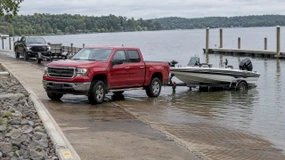
Good boat launch etiquette comes down to one habit: do everything you can before your turn, and clear the ramp the moment the boat is safe. The ramp is for launching and retrieving only. Rigging, loading, sorting gear and parking all happen somewhere else. If you follow that, you will know how to use a boat ramp the way experienced boaters do, and you will rarely hear a horn behind you.
This guide covers who goes first, what to prepare in the staging area, the launch and retrieval sequence, and the mistakes that cause most ramp friction. It is written for boat owners and for personal watercraft (PWC) operators, including Jet Ski and WaveRunner riders, who use the same ramps and follow the same rules.
TL;DR
- The line is formed by vehicles with trailers, not by boats already in the water. Renton’s launch rules say so directly.
- Prepare in the staging area: tie-downs off (bow winch strap stays on), drain plug in, gear loaded, docking line attached, trailer lights unplugged.
- Launch, tie the boat off away from the ramp, then park the vehicle and trailer so the next person can go.
- Retrieve in reverse: drop the driver, wait offshore, load, pull out, and finish securing the boat in the parking area, not on the ramp.
- Practice backing a trailer in an empty lot first, and read the posted signs. Local rules and attendants override general habits.
Table of Contents
- Who has priority at a boat ramp
- Before you leave home
- Prepare in the staging area, never on the ramp
- How to use a boat ramp: launching step by step
- Retrieving the boat and clearing the ramp
- Courtesy rules that keep a crowded ramp moving
- Common ramp mistakes and the fix
- Perspective: why the ramp is where skills show
- Build the skills before your next launch
- FAQ
- Sources
Who has priority at a boat ramp
The general rule is first come, first served, in the order trailers are lined up. Renton, Washington states that the order is formed by vehicles lined up with trailers, not by boats in the water. A boater idling offshore does not hold a place in line. The Big Bear Municipal Water District in California gives the same instruction for retrieval: do not pull the vessel into the ramp until the towing vehicle is there.
Two refinements matter in practice:
- Ready boats go first. South Dakota Game, Fish and Parks advises that boaters take turns, one out and one in, after working out which boats are actually ready. If you reach the front and are not ready, step aside and let someone else go.
- Posted signs and attendants win. Renton requires boaters to follow signs and attendants. Big Bear notes that its staff may launch one boater before another depending on conditions at the line, and that ignoring their instructions can cost a lake use permit.
On a busy ramp with several lanes, use any open lane. Idaho Fish and Game also notes the convention of launching on the left and recovering on the right where traffic runs both ways. Paddlers and small craft should launch at the edge of the ramp so trailered boats keep access.
Before you leave home
A smooth ramp visit starts in the driveway. Big Bear’s launching procedures ask boaters to service and test the engine at home, use fresh fuel and learn to back a trailer in an empty parking lot. Poor engines and dead batteries are common at the start of the season, and a tow from a patrol boat can take a long time on a busy day.
A short home checklist:
- Run the engine, or at least confirm it starts, and check the battery.
- Confirm the trailer is roadworthy. Our boat trailering checklist covers lights, tires, hitch and safety chains.
- Load your required safety gear. See what every boater must carry.
- Load coolers, clothing and tackle in the boat or have them ready to move in one trip.
- Fuel up before you arrive, away from the ramp. Our fueling safety guide explains the precautions.
Prepare in the staging area, never on the ramp
Most ramps have a staging area, make-ready lane or pull-off between the entrance and the ramp. Charleston County Parks tells boaters to use make-ready lanes for preparation. New York State Parks says most ramp friction disappears when the boat is prepared before it pulls into the ramp area.
The Oregon State Marine Board lists what to do in this stage:
- Move gear and supplies from the tow vehicle to the boat.
- Remove tie-downs, but keep the winch line hooked to the bow eye.
- Install and tighten the drain plug.
- Prime fuel lines if your boat needs it, and check batteries.
- Unplug trailer lights that are not waterproof.
- Raise the outboard or stern drive.
- Tie at least one docking line to the boat.
Ohio DNR adds a few checks to the list: disconnect the trailer wiring plug, check accessories such as the blower and bilge pump, place docking equipment within reach, and turn on the blower if equipped. The New Jersey DEP guide also suggests securing fenders if necessary.
The drain plug deserves a second look. It is the one item that turns a launch into an emergency, and it is easy to forget when someone is waiting behind you. Make it the first thing you do, and say it out loud if you have a crew.
Use the waiting time
While you wait in line, you can still work. New Jersey’s guide says waiting in line is the time to move coolers, clothing and equipment from the tow vehicle to the boat, because doing it after the boat is in the water lengthens everyone’s wait. Passengers should stay ashore and off the docks until the boat is tied up, according to Renton’s rules.

Scout an unfamiliar ramp
If you have never used a ramp, look before you line up. Oregon’s guidance says to check the steepness, water depth, and whether the surface is dry or slick with algae, where the dock is, and whether the vehicle and trailer must be parked separately. Tides and currents change what a ramp is like. Charleston County Parks warns that low-tide drop-offs can affect ramp use. Idaho Fish and Game suggests anticipating sandy, slippery ramps with all-wheel drive, so you do not get stuck and block the lane.

How to use a boat ramp: launching step by step
Bring a second person if you can. One drives, and one handles the boat. Renton and Big Bear both recommend working in pairs. Here is the sequence assembled from state guidance.
- Wait in line with your boat ready. Turn off your headlights on a dark ramp so you do not blind the driver pulling out, as South Dakota officials advise.
- Line up the trailer. Approach so the trailer is straight with the ramp. Back slowly. New York State Parks says to back as close to the water as possible without submerging the trailer wheel bearings, then set the parking brake and chock the wheels if needed. Oregon’s cue is to stop when the step in front of the trailer fender is even with the water.
- Check ventilation and start the engine. On boats with an enclosed engine compartment, run the blower. Oregon and New York both specify at least four minutes to clear gasoline vapors before starting. Lower the drive once the boat is clear of the trailer.
- Confirm cooling water. Ohio DNR says to back down until the engine’s cooling water intakes are submerged, start and warm the engine, and ease it into and out of reverse to confirm it works.
- Release the boat. The person at the winch holds the handle before switching the ratchet off, so the handle does not spin free, per Oregon. Unhook the bow winch strap and let the boat roll off, or push it. Oregon notes you can back the trailer a foot farther if needed.
- Secure and move away. Walk the boat down the dock on its line, or hold it off the ramp with the engine. Do not tie onto the launch dock or leave the boat blocking the ramp. If you are boating alone, Ohio DNR suggests pulling into an area away from the ramp before parking the vehicle.
- Clear the ramp. Drive up and park the vehicle and trailer in the designated trailer area. New York State Parks says to clear the vehicle from the ramp as soon as the boat is secure.
Idaho Fish and Game recommends tying up at the end of the dock or down the beach, leaving room for others. If you need help with lines, our guide to docking techniques shows how to tie off cleanly.
Why start the engine early
If the engine will not start, the best place to find out is while the boat is still on the trailer. Starting before release lets you drive back up the ramp and sort out the problem out of the way, rather than drifting with a line in the water. Our six launch checks go through what to verify before you cast off.
Personal watercraft
Jet Skis and WaveRunners follow the same line and the same staging rules. The advantage of a PWC is that it is light and quick to launch, so there is no excuse for slow prep. Keep the engine off until the craft is in the water, attach the lanyard, and move it off the ramp immediately. In many states, PWC operators need a boating safety certificate before riding, so check your state’s rules before your first launch.
Retrieving the boat and clearing the ramp
Retrieval is the reverse of launching, with one key difference: the boat waits offshore and the vehicle takes the place in line. Ohio DNR says to drop someone off to get the vehicle and trailer while the boat waits clear of the ramp.
- Drop off the driver at the dock and move the boat away from the ramp.
- The driver gets the tow vehicle and takes a turn in line. The boat does not enter the ramp area until the trailer is in the water.
- When the trailer is backed in, bring the boat into position. Drive or winch it onto the trailer and center it. Raise the lower unit before pulling out.
- Secure the safety chain to the bow eye, per the New Jersey DEP guide, and pull up the ramp away from traffic.
- Move to the parking or staging area. Secure tie-downs, load gear and coolers back into the vehicle, and take care of anything else there.
New York State Parks tells boaters to be thorough but to handle on land whatever can wait, such as unloading the boat. If you pull a boat out of an inland lake, many states also expect you to clean, drain and dry it. Remove plants, and drain the bilge and live wells in the staging area.
On courtesy docks, Big Bear directs boaters to tie up on the outside of the dock fingers, never the inside, because inside tie-ups block launch and retrieval traffic.
Courtesy rules that keep a crowded ramp moving
| Situation | What to do |
|---|---|
| You are not ready when it is your turn | Move aside and let a ready boater go. |
| Someone is struggling to back up | Offer help. New Jersey’s guide encourages assisting anyone having difficulty. |
| Car without a trailer | Park in standard spaces. Trailer spaces are for tow vehicles and trailers. Charleston County has an ordinance with a fine of up to $500 on weekends and holidays. |
| Dark ramp | Turn off headlights while waiting. |
| Boat on the trailer | Never let anyone walk between the boat and the tow vehicle, since the driver may not see them. |
| Docking | Renton’s rules allow docking only immediately after launching or immediately before retrieving. |
| Idling at the dock | Do not stay on the dock any longer than you need. Charleston County asks boaters to move away. |
| Shared facilities | Keep restrooms and picnic areas clean. New Jersey asks boaters to respect them. |
Idaho Fish and Game also notes that ramps are not for fishing, picnicking or sunbathing. Near the landing, observe no-wake zones and keep to idle speed.
Common ramp mistakes and the fix
- Prepping on the ramp. Move to the staging area. Time spent on the ramp is time everyone else loses.
- Forgetting the drain plug. Install it first, before you line up.
- Leaving the vehicle and trailer at the bottom of the ramp. Park as soon as the boat is secured.
- Letting the boat drift unattended. Tie it off or have a crew member hold it while you park.
- Cutting the line. Respect the order of trailers, and listen to attendants.
- Skipping practice. Oregon’s marine board puts it bluntly: when it is your turn, now is not the time to practice your backup skills. New Jersey recommends practicing between cones or parking spaces before your first ramp attempt.
- Launching a marginal boat. Test the engine at home, as Big Bear advises.
A worked example: you arrive at a four-lane ramp on a Saturday. You pull into the staging area, install the plug, remove straps, unplug the lights, tie a line to the bow and load the cooler. That takes about five minutes. When a lane opens, you back down, run the blower, start the engine, release the winch and walk the boat to the end of the dock. Your passenger holds it while you park. The whole time on the ramp is a few minutes.
Perspective: why the ramp is where skills show
Most ramp conflicts we hear about are not about bad manners. They are about boaters who never learned the sequence. Nobody told them the ramp is for moving boats, not preparing them.
That is why we teach launching, trailering and docking as part of boating safety education. A boater who knows the routine is calmer, safer and faster, and the people waiting behind them notice. Our courses are taught by state-certified instructors and USCG-licensed captains, and we offer on-water training and local boating knowledge for boaters who want to practice with someone beside them.
If you are new to boating, the ramp is a good place to start building habits: prep early, communicate with your crew, and leave room for others.
Richard
Build the skills before your next launch
Ramp confidence comes from knowing your boat, your state’s rules and the right-of-way basics once you are on the water. If you need a boating safety certificate, we offer a Zoom online one-day class for $75, the NYS Safe Boating Class for $85 and online courses for boaters across the country. For Oregon or Ohio boaters, we have state-specific courses for Oregon and Ohio.
First-time owners can also start with our first-time boat owner checklist and our guide on right-of-way rules.
FAQ
Who has the right of way at a boat ramp?
The boater whose vehicle and trailer are first in line goes first. Renton’s rules state that the order is set by trailers in line, not by boats in the water. If the first boater is not ready, they should step aside so a ready boater can launch.
How long should I take on the ramp?
As little as possible. Prep takes place in the staging area, so the ramp portion is only backing down, releasing the boat and driving away. Once the boat is secured at a dock away from the ramp, park the vehicle and trailer promptly so the next boater can go.
What is the best way to back a trailer down a ramp?
Back slowly and in a straight line, and stop when the water reaches the right point, such as the step in front of the trailer fender per Oregon’s guidance. Do not submerge the wheel bearings. Practice in an empty parking lot first, so that you manage it in one attempt.
Can I leave my boat at the dock while I park?
Only briefly, and only tied up securely away from the launch area, or held offshore by someone aboard. Renton’s rules allow docking only immediately after launching or immediately before retrieving. Never leave the boat drifting unattended.
Do Jet Skis follow the same ramp etiquette?
Yes. PWC operators join the same line, prepare in the staging area and clear the ramp quickly. Because personal watercraft are light, launching is usually fast, which makes preparation before you reach the ramp even more important.
Sources
- Renton launch rules brochure
- South Dakota Game, Fish and Parks ramp protocol
- Big Bear Municipal Water District launching procedures
- Oregon State Marine Board: The Art of Boat Launching
- New Jersey DEP Boat Ramp Guide
- Ohio DNR: Launching and Loading for Powerboats
- Idaho Fish and Game: boating etiquette at boat ramps
- New York State Parks boating lesson plan
- Charleston County Parks boat landing tips