Avoid Capsizing or Swamping: Essential Safety Checklist
To avoid capsizing or swamping, put on USCG-approved lifejackets before leaving the dock, keep weight low and centered, stay within the boat’s posted capacity, steer into waves, anchor from the bow, and keep a bilge pump or manual bailer within reach. These actions cover the most common preventable incidents on U.S. recreational waters.
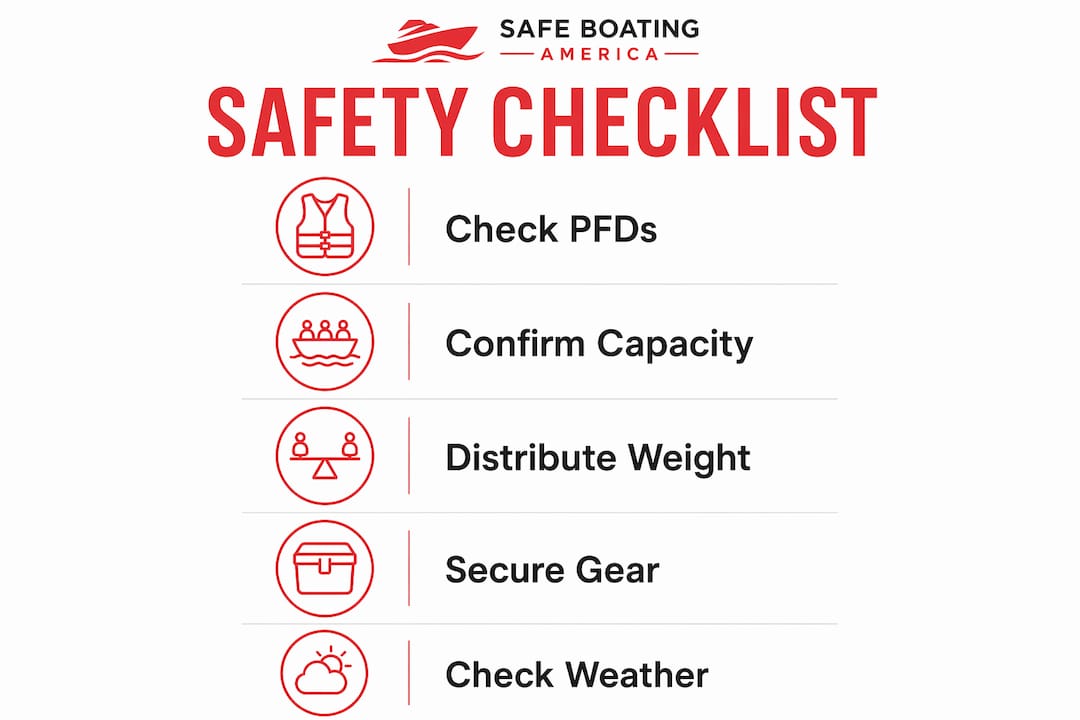
Quick-reference checklist:
- Lifejackets on every person, correct size, USCG-approved
- Check the capacity plate; do not exceed passenger count or weight limit
- Attach the engine kill-switch lanyard before starting the engine
- Distribute weight low, centered, and balanced fore/aft
- Steer bow-first into waves; reduce speed before turns and wakes
- Anchor from the bow, not the stern
- Bilge pump operational; manual bailer on board
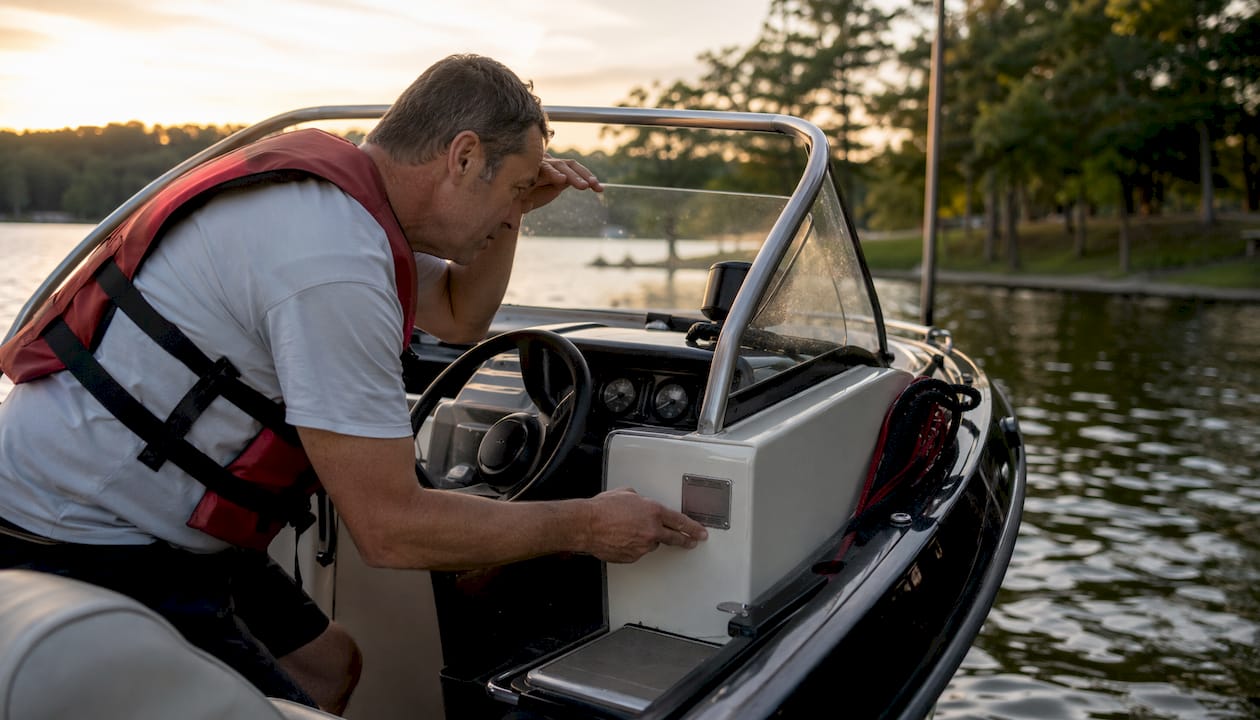
Callout: Before leaving the dock, locate the capacity plate (usually mounted near the helm or transom) and confirm that the kill-switch lanyard is clipped to the operator’s wrist or PFD.
Table of Contents
- What pre-departure checks reduce capsizing and swamping risk?
- How should you handle the boat underway to stay stable?
- Where should you anchor to avoid swamping?
- What should you do immediately if your boat swamps or capsizes?
- Common mistakes that cause capsizes and swamping
- Why formal training helps you prevent capsizing
- Key Takeaways
- Safeboatingamerica courses put these skills into practice
- Useful sources and further reading
- FAQ
What pre-departure checks reduce capsizing and swamping risk?
A two-minute walkaround at the dock catches most of the conditions that cause incidents on the water. Run through the items below before every trip.
| Safety Item | Purpose | Recommended Stow Location |
|---|---|---|
| USCG-approved PFDs (one per person) | Flotation if overboard or swamped | Accessible, not locked in a hatch |
| Throwable PFD (Type IV) | Rescue assist for person in water | Within arm’s reach of operator |
| Engine kill-switch lanyard | Stops engine if operator falls overboard | Clipped to operator’s wrist or PFD |
| Bilge pump (electric or manual) | Removes water if swamped | Mounted low; manual backup in cockpit |
| Manual bailer or bucket | Backup bailing if pump fails | Cockpit, secured but accessible |
| Flares / VHF radio / EPIRB | Distress signaling | Dry bag, accessible to operator |
| Anchor and bow line | Bow anchoring to face waves | Bow storage with clear lead to cleat |
Capacity and load distribution. The capacity plate states the maximum number of persons, total weight, and maximum horsepower. Overloading reduces stability and buoyancy even in calm conditions. Distribute passengers and gear evenly across the beam and fore/aft. Heavy items like coolers, fuel cans, and anchor chain belong low and centered, not stacked on a gunwale or piled in the bow.
Fuel and trim. A full fuel tank in the stern can make a small boat stern-heavy, reducing freeboard at the transom. Review your boat fueling placement before departure and balance fuel load against passenger placement. Close all hatches and transom ports; confirm scuppers and drains are clear.
Pro Tip: Walk the boat from bow to stern before casting off. Check that gear is stowed low, hatches are closed, the kill switch is functional, and every person has a fitted PFD. Make this a crew habit, not a solo task.
How should you handle the boat underway to stay stable?
Stability on the water depends on three variables: speed, weight position, and how you meet waves. Get any one of them wrong and the risk of capsizing or swamping rises sharply.
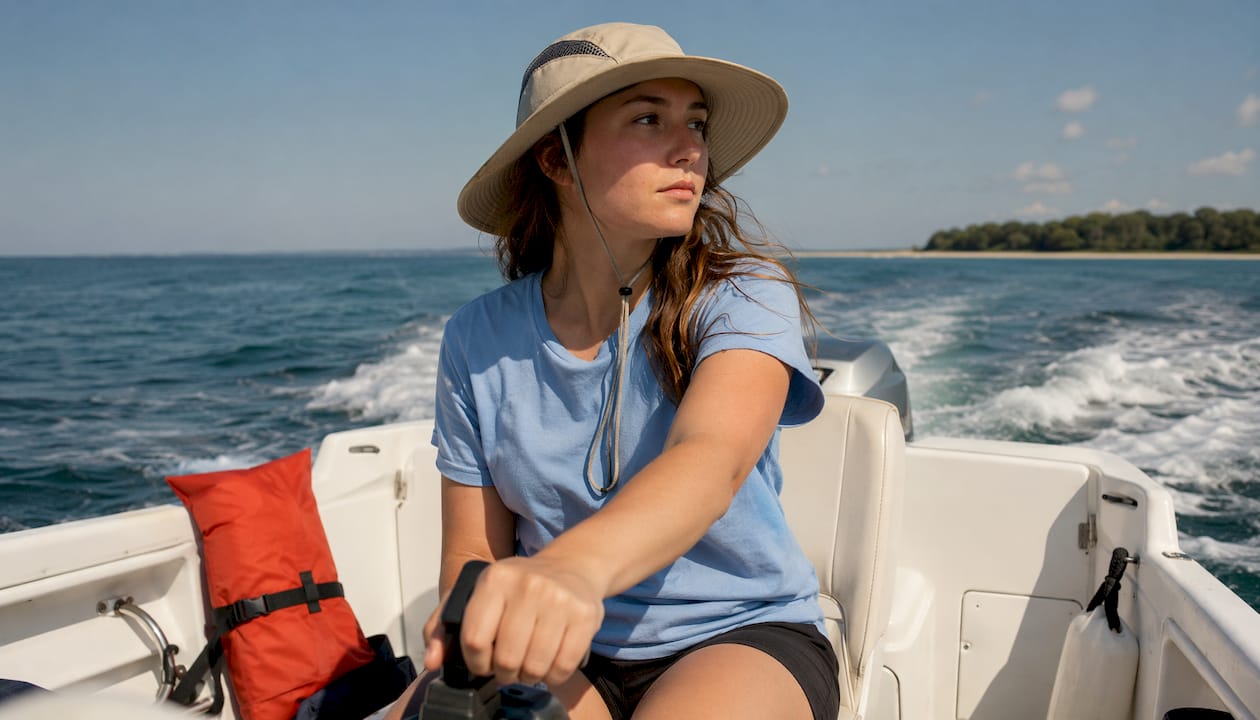
Keep the center of gravity low. No one stands in a moving small boat. Passengers sit on seats, not gunwales or seat backs. Anyone who needs to move does so one at a time, staying low, keeping shoulders inside the gunwales, and maintaining three points of contact. This applies to canoes and kayaks as much as to open runabouts.
Steering and trim into waves. Approach waves head-on from the bow at reduced speed. Taking a wave on the beam is one of the fastest ways to roll a small open boat. In a following sea, the risk shifts: the stern can be pushed sideways if the boat accelerates down the wave face. Control throttle to stay on the back of the wave rather than surfing its face, using short, measured inputs to hold directional control. For related handling decisions on crowded water, collision-avoidance technique follows the same principle of early, deliberate speed reduction.
Speed and turns. Reduce speed before every turn. Sharp turns at speed shift weight to the outside gunwale and can swamp a small boat in seconds. Slow down when approaching another vessel’s wake, then meet it at a slight angle off the bow rather than dead-on or broadside.
When to head for shelter:
- Wind picks up noticeably and waves become choppy or confused
- Visibility drops below comfortable navigation range
- Passengers show signs of fatigue, cold, or seasickness
- Traffic density increases near inlets or bridges
Where should you anchor to avoid swamping?
Anchoring position directly affects whether your boat takes water over the stern. For most small vessels, the rule is straightforward: anchor from the bow.
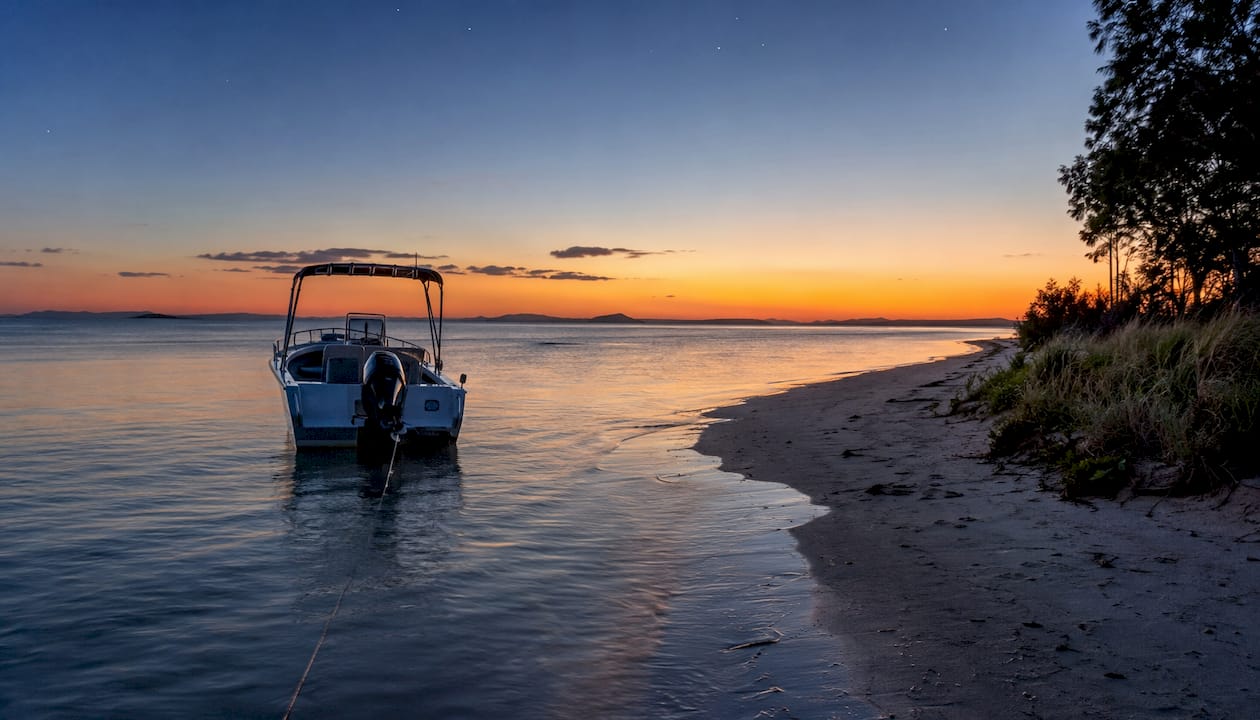
When the anchor line runs from the bow, the boat naturally weathervanes so the bow faces oncoming waves and wind. The stern, which typically has the lowest freeboard and open transom drains, stays protected. Anchoring from the stern on a small boat reverses this geometry: waves approach from behind, water can pour over the transom, and the added weight at the stern reduces freeboard exactly where you can least afford it.
Set scope at a ratio appropriate to depth and conditions. A longer scope reduces the upward pull angle on the anchor and keeps the bow down. In current or wind shifts, check that the anchor line is not fouling the propeller or wrapping the hull.
When rafting alongside another vessel or tying to a fixed dock structure, distribute weight so neither boat lists toward the other. Avoid loading passengers or gear on the outboard side of a raft-up, and maintain enough freeboard on both vessels that a wake cannot wash over the rail.
What should you do immediately if your boat swamps or capsizes?
A calm, prioritized response matters more than speed. Panicked scrambling is the most common post-incident error and burns energy while increasing injury risk.
Immediate steps:
- Confirm every person has a lifejacket on and is accounted for. Do a headcount before anything else.
- Stop the engine and cut fuel if the boat is still running.
- Keep everyone together and hold onto the boat. Most capsized or swamped boats remain partially afloat and are far more visible to rescuers than individuals in the water.
- If swamped but upright: bail with buckets and bilge pumps, redistribute weight toward the center, and plug scuppers if doing so is safe and will help retain freeboard.
- Signal for help: activate VHF radio on Channel 16, deploy flares, or trigger an EPIRB if available.
- Reboard only when the boat is stable and bailable. Use the transom or gunwale as a leverage point, keep weight centered, and remove as much water as possible before adding occupants to avoid immediate re-swamping.
If capsized and unable to right the vessel: Stay with the boat unless remaining aboard is more dangerous than swimming to shore. Climb onto the hull to get out of the water, conserve body heat, and reduce fatigue. Cold water accelerates heat loss rapidly; staying out of the water extends survival time.
In a life raft: Inspect the raft for damage, stream the sea anchor immediately to reduce drift and maintain stability, and secure all emergency equipment inside. AMSEA guidance recommends using the sea anchor as the first stability measure after boarding.
Pro Tip: Store flares, a VHF radio, and a throwable PFD in a single dry bag clipped near the helm. In a real emergency, you will not have time to search three different compartments.
Common mistakes that cause capsizes and swamping
Most capsizing incidents in the U.S. happen in calm conditions during daylight, not in storms. Human error, not weather, drives the majority of events.
Standing and gunwale sitting. Passengers who stand, sit on gunwales, or perch on seat backs raise the center of gravity and shift weight to the boat’s edge. At speed, a single wake or gust can flip a small open boat in under two seconds.
Overloading. The capacity plate is a hard limit, not a suggestion. Exceeding it reduces freeboard and buoyancy simultaneously. Poor fore/aft distribution compounds the problem: too much weight aft drops the transom toward the waterline, and any following wave or wake can wash straight in.
Stern anchoring. Securing the anchor line to the stern cleat on a small boat is one of the most reliable ways to swamp it. Waves approach from behind, the stern sits lower under anchor tension, and transom drains that are open for drainage become entry points for water.
Ignoring weather and wakes. A forecast check before departure takes two minutes. Failing to do it, or dismissing building chop as manageable, accounts for a significant share of preventable incidents. Wakes from larger vessels can be as dangerous as open-water swells for a small boat caught broadside.
Cold water and hypothermia. Water temperatures below 60°F can incapacitate a swimmer within minutes. Dressing for the water temperature, not the air temperature, is a basic survival principle. Layering for cold-water exposure before departure reduces risk if an unexpected swamp or capsize occurs. Staying with the boat after capsizing conserves body heat far better than swimming.
Why formal training helps you prevent capsizing
Reading a checklist builds awareness. Practicing the drills builds the muscle memory that actually works under stress.
NASBLA-approved and state-approved boating safety courses cover capsizing recovery, man-overboard response, bilge and bailer operation, and anchor handling as hands-on components, not just written material. Courses taught by State Certified Instructors and USCG-Licensed Captains include scenario-based instruction that a self-study PDF cannot replicate. Boating education has a measurable effect on incident rates across U.S. recreational boating.
Short drills to practice on calm days:
- Reboarding from the water over the transom or gunwale, with a spotter
- Emergency bilge pump and manual bailer operation, timed
- Anchor deployment and retrieval from the bow cleat
- PFD fitting check for every crew member, including children
- Two-minute pre-departure walkaround with the full crew
These drills take less than 30 minutes on a calm afternoon and pay dividends when conditions change unexpectedly. State certification requirements vary, but the underlying skill set is consistent across all U.S. waters.
Pro Tip: Run the two-minute pre-departure routine with your regular crew until each person can complete their assigned check without prompting. A crew that knows the routine catches errors the operator misses.
Key Takeaways
Preventing capsizing or swamping comes down to three non-negotiable habits: wear a properly fitted USCG-approved PFD, keep weight low and within the capacity plate limit, and steer bow-first into waves every time.
| Point | Details |
|---|---|
| PFDs first, always | Every person wears a USCG-approved, correctly sized lifejacket before the boat leaves the dock. |
| Respect the capacity plate | Never exceed the posted passenger count or weight limit; distribute loads low and centered. |
| Bow into waves | Approach waves and wakes head-on at reduced speed; anchor from the bow, not the stern. |
| Stay with the boat | After capsizing, hold onto the vessel for flotation and visibility until rescue arrives. |
| Train with Safeboatingamerica | NASBLA-approved courses cover capsizing recovery drills, emergency procedures, and state certification. |
The habit that actually prevents most capsizes
The two-minute pre-departure routine gets dismissed as bureaucratic box-checking until the day it catches something real: a kill-switch lanyard left unclipped, a bailer buried under a cooler, or a passenger who grabbed a PFD two sizes too large. Those are not rare edge cases. They show up on boats every weekend.
What most boating guides understate is how little the water cares about experience level. Capsizing incidents cluster in calm conditions with experienced operators who got comfortable. The pre-departure check and the habit of keeping weight low are not beginner precautions. They are what experienced operators do precisely because they have seen what happens when someone skips them.
One correction that comes up repeatedly in instruction: new boaters treat the capacity plate as a weight limit for gear, not for people. A 1,200-pound capacity boat loaded with four adults, a full cooler, and a full fuel tank is at or past its limit before anyone adds fishing gear. Count the people first, then the gear.
Safeboatingamerica courses put these skills into practice
Knowing the checklist is step one. Executing it correctly under pressure requires practice with qualified instruction. Safeboatingamerica delivers state-approved boating certification through online, live Zoom, and in-person formats across all 50 states, taught by State Certified Instructors and USCG-Licensed Captains using NASBLA-approved materials.
Courses cover capsizing recovery, emergency procedures, PFD fitting, anchor handling, and the full pre-departure routine as structured, instructor-led content, not just reading material. Same-day certification options are available in many states.
- Online course: Complete at your own pace; meets state requirements in most U.S. states
- Live Zoom class: Instructor-led, interactive; ideal for New York Brianna’s Law compliance and Connecticut certification
- In-person class: Hands-on drills with a certified instructor; available in Long Island, New York City, Connecticut, and select locations nationwide
Register at safeboatingamerica.com to find the format and schedule that fits your state’s requirements.
Useful sources and further reading
- U.S. Coast Guard Recreational Boating Statistics — annual incident data and fatality breakdowns for U.S. recreational boating
- Ohio Department of Natural Resources: Swamping and Capsizing — state-level guidance on prevention and post-incident response
- Utah State Parks: Stop Your Boat From Capsizing — practical anchoring and handling tips for small vessels
- NSW Government: Capsizing and Swamping — bilge pump, bailing, and following-sea guidance
- OutdoorNebraska Boater Education — load distribution, capacity, and calm-condition incident data
- AMSEA Life Raft Survival — sea anchor use and raft stability procedures
- Safeboatingamerica: Boat Safety Equipment — required equipment lists and stow location guidance for U.S. boaters
FAQ
What should you do first to avoid capsizing or swamping?
Put on a USCG-approved PFD, check the capacity plate, and distribute weight low and centered before leaving the dock. Attaching the engine kill-switch lanyard and confirming the bilge pump is operational are the next two steps.
Where should you anchor to avoid capsizing or swamping?
Anchor from the bow on small boats so the bow faces waves and the stern stays protected. Anchoring from the stern increases swamping risk because waves approach from behind and can wash over the transom.
How do you reduce capsizing risk in rough water or at the bow?
Reduce speed, steer the bow directly into oncoming waves, and keep all passengers seated low with weight centered. In a following sea, control throttle to stay on the back of the wave rather than accelerating down its face.
How should you act in a life raft to avoid capsizing it?
Board carefully, distribute weight evenly, and deploy the sea anchor immediately to reduce drift and stabilize the raft. AMSEA guidance identifies the sea anchor as the primary stability tool after boarding a life raft.
Does a boating safety course cover capsizing recovery?
Yes. NASBLA-approved courses taught by State Certified Instructors include capsizing recovery drills, emergency procedures, and PFD fitting as core curriculum. Safeboatingamerica offers these courses online, via live Zoom, and in person across all U.S. states.
Recommended
- What Should You Do to Avoid Colliding With Another Boat - Safe Boating America
- Boat Fueling Safety Precautions: A Complete Guide - Safe Boating America
- Boat Safety Equipment: What Every Boater Must Carry - Safe Boating America
- Recommended Docking Techniques: Safe Boat Mooring Guide - Safe Boating America