Kentucky Boating License Requirements: Who Needs a Certificate

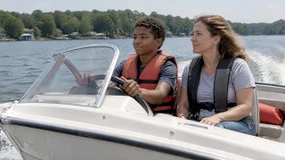
Kentucky does not issue a boating license to adults. The state requires a Kentucky Safe Boating Certificate, the card most people call a boating license, for operators aged 12 to 17, and children under 12 may not operate a motorboat over 10 horsepower or a personal watercraft (PWC) on public waters. Adults 18 and older need no certificate. A parent, a teen or a boat owner who lends the helm to a young operator needs to know the rest of the rules and how to get the card the same day. This guide covers all of it.
TL;DR
- Adults 18 and older do not need a boating license or safe boating certificate in Kentucky, according to Kentucky State Parks.
- Ages 12 to 17 operating a motorboat or PWC over 10 horsepower need a Kentucky Safe Boating Certificate, or must be accompanied aboard by an adult 18 or older or by someone who holds a certificate.
- Under 12 may not operate a PWC or a motorboat over 10 horsepower on Kentucky public waters.
- A course approved by NASBLA (the National Association of State Boating Law Administrators) satisfies the requirement, and out-of-state minors may use an equivalent certificate from home.
- Impaired operation is illegal at any age, with a 0.08 blood alcohol limit.
Table of Contents
- Do you need a boating license in Kentucky?
- Age rules by operator
- What counts as an approved course
- How to get a Kentucky Safe Boating Certificate
- If your teen already has a certificate from another state
- Does the certificate expire?
- Rules that apply to every operator, any age
- What happens if a minor operates without the certificate
- Why a course is worth taking even when the law does not ask for it
- Our view
- Get the Kentucky certificate
- FAQ
- Sources
Do you need a boating license in Kentucky?
Short answer: only if you are 12 to 17 and want to run a boat or PWC without an adult certificate holder aboard. Kentucky has no adult license. The Kentucky Department of Fish and Wildlife Resources (KDFWR) sets the age rules this way:
- A person must be 12 or older to operate a motorboat, including a PWC, of 10 horsepower or more on public waters.
- A person 12 to 17 must hold a Kentucky Safe Boating Certificate Card, or a certificate showing completion of a NASBLA-approved boater education course.
“Boating license” is an everyday label. The law uses a different term. KRS 235.010 defines a safe boating certificate as a document showing the holder completed instruction approved by the department, or given by the U.S. Coast Guard, the Coast Guard Auxiliary or the U.S. Power Squadrons. The instruction prepares a person to operate a motorboat or PWC safely on Kentucky waters.
So when you search for a Kentucky boating license, the document you want is the Safe Boating Certificate. It is the same card that other states call a boater card, boater education card or boating license.
Age rules by operator
The rules sit in KRS 235.285(7), which took effect July 15, 2014 under the Boater Freedom Act. Here is how they apply in practice.
| Operator | Motorboat over 10 hp or PWC |
|---|---|
| Under 12 | May not operate on public waters |
| 12 to 17 | Needs a Safe Boating Certificate, or must have an adult 18+ or a certificate holder aboard |
| 18 and older | No certificate required |
| Nonresident 12 to 17 | May use an equivalent certificate from another state or country |
Three details matter for families.
The adult-aboard option is real, but it needs the right adult. A 12- to 17-year-old without a certificate may operate only when accompanied aboard by a person 18 or older, or by someone who holds a safe boating certificate. Standing on the dock or following in another boat does not count.
Parents carry responsibility. The statute says a parent, guardian or other adult with direct supervision may not knowingly permit a minor to violate the section. If you lend your boat or Jet Ski to a teenager, you are part of the rule.
Small motors are treated differently. The age rule is written around motorboats over 10 horsepower and PWCs. A PWC is a Jet Ski or WaveRunner, whatever its engine size, so the rule applies to it from the start.
The U.S. Coast Guard’s state boating law summary for Kentucky says the same about PWCs: a minor who has passed an approved boater education course does not need an adult aboard.
What counts as an approved course
The approval list is the part that trips people up. The state does not accept just any online quiz. Under 301 KAR 6:060, the Kentucky certificate comes from completing a safe boating course and passing the Kentucky Certification Exam with at least 80 percent correct. The same regulation lets you submit proof of a completed NASBLA-approved course, which waives the state exam.
NASBLA works with the Coast Guard to set national standards for boating education, and its approval is how most states recognize a course. That is why a NASBLA-approved certificate is accepted in Kentucky for a 12- to 17-year-old. We explain the term in more detail in our guide to what a NASBLA approved course means and what separates an approved boating course from one that will not be accepted.
Before you pay for any course, confirm two things:
- The course carries NASBLA approval, which the provider should state on its course page.
- It issues a certificate you can print or show, with the student’s name on it.
How to get a Kentucky Safe Boating Certificate
The steps are short. Most of the time goes into choosing a course format that fits the student.
Step 1: Confirm who needs the card
The card is for the 12- to 17-year-old who will run the boat or PWC. If you are an adult who only rides or drives your own boat, the law does not require it. If your teen will operate alone, even for a short trip across a lake cove, plan for the certificate.
Step 2: Choose a course format
Students of this age differ. Some do best in a live session with an instructor who answers questions. Others prefer to work online at their own pace. We offer three formats nationwide: online computer-based courses, live Zoom classes and in-person classes. Our Kentucky Boating & PWC Certification Course is built for this exact requirement, and our online boating safety courses are open to students in every state.
For a teen who wants a live instructor, the Zoom Online 1-Day Class is $75, taught by State Certified Instructors and USCG-licensed captains. Our families commonly choose it because the certificate is issued the same day.
Step 3: Complete the course and pass the test
A good course covers the topics a young operator actually meets on the water:
- Navigation rules, including who gives way when boats meet or cross
- Required equipment, from life jackets to fire extinguishers and sound signals
- PWC operation, including lanyard use and safe distances
- Handling emergencies such as capsizing, a person overboard and fire
- Alcohol, drugs and operating while impaired
Step 4: Carry the proof
A 12- to 17-year-old operating without an adult aboard should have the certificate with them on the boat. Keep the card in a waterproof pouch with the boat’s registration. KDFWR notes that every boat operated in Kentucky must have its registration certificate on board.
If the card is lost, 301 KAR 6:060 provides for replacement cards at a $5 fee. Our guide to replacing a boating license explains how to get a duplicate quickly.
If your teen already has a certificate from another state
Kentucky recognizes certificates from elsewhere for visiting youth. KRS 235.285(7)© allows a nonresident minor aged 12 to 17 to operate with a recognized and equivalent boat operator license or safe boating certificate from another state or country.
This matters on shared waters. Kentucky borders several states, and families often launch on one side of a lake or river and cruise to the other. A NASBLA-approved certificate is the best bet for travel because most states accept that standard. The details of each state differ, so check the rule for the state you will boat in. The Coast Guard keeps a state-by-state boating law database for that purpose.
For Ohio, we have a separate guide to Ohio boating license age rules, and our general guide to boating license age shows how ranges and horsepower rules vary across the country.

Does the certificate expire?
The Lexington Herald Leader reported in 2023 that the Kentucky card does not expire and is good for life. A teen who earns it at 13 will not need to retake it at 18. That also means the course is a one-time step for a boater’s whole career on the water.
Rules that apply to every operator, any age
The absence of an adult license does not mean the absence of rules. Adults and teens alike must follow these.
Life jackets
Kentucky State Parks guidance says Coast Guard-approved life jackets must be accessible for every person aboard, and children under 12 must wear one at all times. KDFWR’s May 2026 safe boating release repeats the under-12 rule, specifying that the child wears a properly fitting jacket whenever the boat is underway in an open portion.
Alcohol and drugs
Operating a boat, PWC, skis or a surfboard while intoxicated, or under the influence of any substance that impairs your ability, is against the law under KRS 235.240, as summarized by KDFWR. Key points:
- Any operator on Kentucky waters is deemed to consent to alcohol or drug testing when an officer has probable cause.
- Refusing the test is a violation with the same penalties.
- A blood alcohol content of 0.08 or higher, or impairment, can bring fines and possible jail time on conviction.
The Lexington Herald Leader notes the 0.08% limit while steering a boat matches the limit for driving a car. KDFWR’s 2026 release states that alcohol is the leading cause of injuries and accidents on Kentucky waterways.
Registration
All boats operated in Kentucky must carry their registration certificate on board. KDFWR publishes its guidance in the annual Kentucky Fishing and Boating Guide, which is the place to check for changes to registration, equipment and area rules before each season.
What happens if a minor operates without the certificate
KDFWR does not list a specific fine for operating without a certificate on its boating page. The consequences that page spells out are for boating under the influence. The practical risk for a family is different: an officer on the water can stop an underage operator, and the parent or adult who allowed it is covered by the statute’s supervision language. A certificate removes the question, since the minor has proof of completed education when stopped.
Why a course is worth taking even when the law does not ask for it
KDFWR says plainly that the mandate applies to unaccompanied minors, and also that everyone can benefit from a boater education class. We agree with the second half of that. Adults who inherit a boat, buy a first PWC or rent on a vacation weekend face the same navigation rules and the same emergencies as a teenager does.
A certificate course also helps in situations that sit outside Kentucky law:
- Some states require education for adults or for operators born after a set year, so a Kentucky boater who trailers to another state may need the card there.
- Some rental operators and insurers ask for proof of training.
- Teens who take a course alongside a parent learn the same rules together.
Our boating safety education guide explains how certification works from start to finish, and our boater card guide covers getting one in 2026.
Our view
We teach boating safety for a living, and the Kentucky rule is a clear case of a short course doing real work. A 13-year-old who can name the right-of-way rules, wear the lanyard and recognize a bad situation is a safer operator the same afternoon.
Our instructors are State Certified Instructors and USCG-licensed captains, and our courses use NASBLA-approved material. We see the Kentucky requirement as a good reason to book a live class. A teenager asks questions, an instructor corrects a habit on the spot and the family leaves with a certificate in hand, issued the same day.
For parents, the best plan is simple. Choose a format your child will actually finish, whether that is a live Zoom day or a self-paced online course, and sign up before the boating season starts, not the week of the first trip.
Richard
Get the Kentucky certificate
If your 12- to 17-year-old will take the helm, enroll them in our Kentucky Boating & PWC Certification Course or book the Zoom Online 1-Day Class at $75. Teens aged 12 to 17 who want the details can also read our guide to the Kentucky 12 to 17 same-day card.
Courses can also be given as a present. Our gift certificates run $75 to $85 and suit a teen’s birthday, or a family before a first season at the lake.
FAQ
Do you need a boating license in Kentucky?
Not if you are 18 or older. Kentucky requires a Safe Boating Certificate for operators 12 to 17, and children under 12 may not operate a motorboat over 10 horsepower or a PWC. A teen without the certificate may operate only with an adult 18 or older, or a certificate holder, aboard.
How do I get a boating license in Kentucky?
A 12- to 17-year-old completes an approved boater education course and passes the test. A NASBLA-approved course is accepted. Our Kentucky course and our nationwide online courses are open to students who need the certificate.
Can a 16-year-old drive a Jet Ski in Kentucky?
Yes, with the Safe Boating Certificate, or with an adult 18 or older, or a certificate holder, aboard. Anyone under 12 may not operate a PWC on public waters. Our guide to Jet Ski licenses for minors covers the safety rules.
Can I use a boating certificate from another state in Kentucky?
A nonresident minor aged 12 to 17 may use a recognized, equivalent certificate from another state or country under KRS 235.285(7)©. A NASBLA-approved certificate is the safest choice for that.
Is the legal alcohol limit on a boat the same as in a car?
Yes, the limit is 0.08% blood alcohol content for operators in Kentucky. Impairment below that level can still be a violation, and refusing a test carries the same penalties as a failed one.
Sources
- KRS 235.010, Definitions for chapter
- KRS 235.285, Personal watercraft
- 301 KAR 6:060, Kentucky boater education
- Boating, Kentucky Department of Fish & Wildlife
- Kentucky Fish and Wildlife encourages safe summer boating
- Boating at Kentucky State Parks
- USCG state boating laws, Kentucky
- USCG state boating laws database
- Lexington Herald Leader, Do I need a boat license in KY?
- Lexington Herald Leader, alcohol on a boat in Kentucky