
NASBLA Approved Course Meaning: What Boaters Must Know

A NASBLA-approved course is defined as a boating safety education program that meets the curriculum standards established by the National Association of State Boating Law Administrators, the national body responsible for setting uniform boating education requirements across the United States. Completing one of these programs satisfies the mandatory boater education requirements enforced by most states, making NASBLA approval the single most important credential marker when selecting a boating safety course. The National Association of State Boating Law Administrators works directly with state agencies to confirm that approved programs cover navigation rules, required safety equipment, emergency procedures, and accident prevention. Safe Boating America, for example, delivers courses built on NASBLA-approved materials recognized nationwide. Understanding what this approval means before you enroll protects you from wasting time on a course that your state will not accept.
What does NASBLA-approved course mean for state compliance?
NASBLA approval signals a standardized boating safety curriculum that states accept for legal compliance, but state rules govern how certificates are recognized and how proof must be carried. This distinction matters more than most boaters realize. Passing a nationally approved course does not automatically satisfy every state’s specific requirements unless you also follow that state’s proof and reciprocity rules.
New York and Hawaiʻi illustrate how state-level requirements layer on top of the NASBLA baseline:
- New York requires operators to carry the original certificate on their person or on board the vessel at all times while operating a motorized boat. Out-of-state certificates are accepted only if they were issued in the boater’s current state of residence and carry NASBLA approval. A certificate earned in Florida while living in Florida does not transfer automatically once you establish New York residency.
- Hawaiʻi mandates that anyone operating a motorized vessel complete a course that is both NASBLA and state-approved, and operators must show proof upon demand by law enforcement. Hawaiʻi also requires separate approved certifications for thrill craft, meaning personal watercraft operators face an additional layer of state-specific requirements beyond the national standard.
- Reciprocity limits apply in both states. An out-of-state NASBLA-approved certificate is accepted only under specific conditions tied to residency, not simply to the fact that the course met national standards.
- Temporary certificates issued after completing an approved online course are valid for a limited period. New York’s system issues a temporary certificate valid for 90 days while the permanent card is processed and mailed.
- Physical proof requirements are non-negotiable in enforcement situations. Digital screenshots or email confirmations are not substitutes for the official certificate in most states.
Pro Tip: Before enrolling in any course, visit your state’s official boating authority website and confirm that the specific course provider, not just the course format, carries state approval alongside NASBLA recognition.
Understanding the NYS boating certificate process in detail helps New York boaters navigate both the NASBLA requirement and the state-specific proof rules without confusion.

What are the benefits of a NASBLA-approved boating safety course?
Taking a NASBLA certification course delivers advantages that extend well beyond passing a state requirement. The benefits fall into five clear categories:
- Standardized safety knowledge. Every NASBLA-approved program covers the same core curriculum: navigation rules, right-of-way, required safety equipment, emergency response, and environmental regulations. This consistency means a boater certified in Texas carries the same foundational knowledge as one certified in Maine.
- Legal compliance and fine avoidance. States that mandate boater education treat operating without a valid certificate as a citable offense. Completing an approved course eliminates that legal exposure entirely.
- Multi-state recognition. Because NASBLA approval sets a national baseline, certificates from approved programs are recognized across most states, provided residency and proof requirements are met. This is particularly valuable for boaters who travel or relocate frequently.
- Insurance premium reductions. Some marine insurance providers list NASBLA-approved course completion as a qualifying factor for premium discounts. The reduction varies by insurer, but the financial benefit adds up over the life of a policy.
- Access to verifiable certification. Approved courses issue certificates with official NASBLA logos and state endorsements, giving law enforcement and marina operators a clear, verifiable credential rather than an informal completion record.
“NASBLA approval sets a national baseline of safety education standards, but it does not guarantee automatic acceptance across all states without fulfilling state-specific rules.” — NYS Parks, Recreation & Historic Preservation
The combination of legal protection, financial savings, and recognized credentials makes the NASBLA certification course the only rational choice for any boater subject to state education mandates.
How do you verify if a boating course is truly NASBLA-approved?
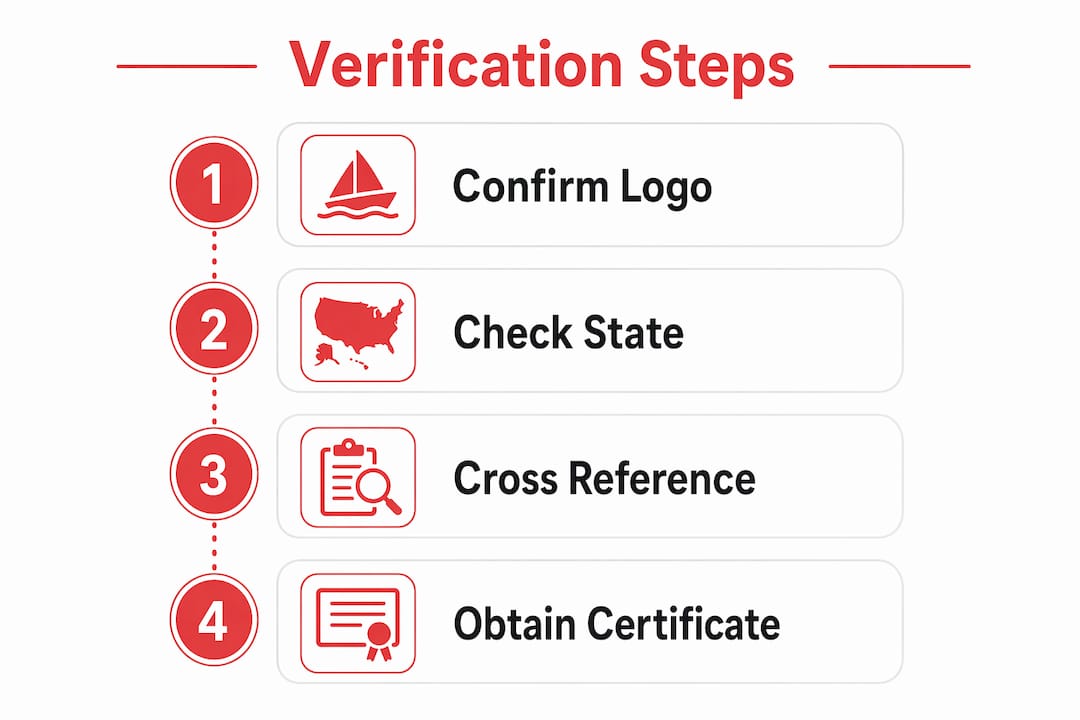
Verification is a two-step process: confirm the course carries the NASBLA logo and confirm your state has independently approved that specific provider or course format. These are separate checks, and skipping either one creates risk.
| Verification Method | What It Confirms | Limitation |
|---|---|---|
| NASBLA logo on certificate | Course meets national curriculum standards | Does not confirm state-specific approval |
| State boating authority website | Course is accepted for state compliance | May not list every approved provider in real time |
| Course provider’s approval documentation | Provider’s claim of dual approval | Requires cross-referencing with official state list |
| Official NASBLA website | National approval status of course type | Does not replace state-level verification |
Online NASBLA-approved courses typically require passing a proctored or monitored exam before issuing any certificate. New York’s approved remote online learning system, for example, issues a 90-day temporary certificate immediately after the exam, with the permanent card arriving by mail. Boaters who go on the water during that 90-day window must carry the printed temporary certificate, not just a digital copy.
Watch for these red flags when evaluating a course:
- No mention of NASBLA approval anywhere on the course website or materials
- Certificate that lacks an official NASBLA logo or state endorsement seal
- No exam requirement at the end of the course
- Provider that cannot name the specific states where their certificate is accepted
Pro Tip: Cross-reference any course you are considering against your state’s official approved provider list. States update these lists periodically, and a course that was approved two years ago may have lost its status.
The boating safety certification guide from Safe Boating America walks through the full verification process and explains what documentation to expect after completing an approved program.
What NASBLA approval means for everyday boating situations
NASBLA approval translates into three practical realities that affect every time you operate a motorized vessel.
Carrying proof is a legal obligation, not a suggestion. Both New York and Hawaiʻi require operators to show proof upon demand by law enforcement. Enforcement focuses entirely on verifying that you hold a valid certificate, not on testing your knowledge of navigation rules in the field. If you cannot produce the certificate, you face the same legal consequences as someone who never completed the course.
- Keep the original physical certificate in your vessel’s document pouch or on your person at all times.
- If you are in the 90-day temporary certificate window, print the temporary document and store it with your vessel registration.
- Boaters who have relocated should verify that their existing certificate is still recognized in their new state of residence. Out-of-state certificates are accepted only when issued in the boater’s current state of residence, so relocation can invalidate a previously valid credential.
- Personal watercraft operators in states like Hawaiʻi may need a separate approved thrill craft certification in addition to the standard NASBLA course completion.
- Digital copies stored on a phone are not universally accepted as valid proof. Always carry a physical document unless your state explicitly permits digital presentation.
Multi-state boating adds complexity. A boater who spends summers in Connecticut and winters in Florida needs to confirm that their certificate satisfies both states’ requirements, since each state layers its own rules on top of the NASBLA baseline. The national standard creates a common foundation, but state enforcement officers apply local rules.
Key takeaways
NASBLA approval defines the national curriculum standard for boating safety education, but state-specific proof requirements and reciprocity rules determine whether your certificate is legally valid on the water.
| Point | Details |
|---|---|
| NASBLA approval defined | A course meets national curriculum standards set by the National Association of State Boating Law Administrators. |
| State rules still apply | NASBLA approval does not override state-specific certificate recognition, residency rules, or proof requirements. |
| Physical proof is mandatory | Most states require the original certificate on your person or vessel; digital copies are not universally accepted. |
| Insurance benefits available | Some marine insurers offer premium discounts for completing a NASBLA-approved course. |
| Verify before enrolling | Confirm both NASBLA and state-level approval for any specific course provider before paying for the program. |
Why the NASBLA baseline matters more than most boaters realize
From my experience working in boating safety education, the single most common mistake I see is treating NASBLA approval as a finish line rather than a starting point. Boaters complete a nationally approved course, receive their certificate, and assume they are covered everywhere. That assumption gets people cited.
The national standard is genuinely rigorous. It covers the material that makes boaters safer: right-of-way rules, distress signals, life jacket requirements, and accident reporting. But the moment you cross a state line or change your state of residence, the legal picture shifts. New York’s residency-based reciprocity rule catches relocating boaters off guard more than any other provision I have seen. Someone who earned their certificate in New Jersey while living there, then moved to New York, discovers that their certificate no longer satisfies New York’s requirements. They need to retake a New York-approved course.
The evolution toward online course delivery has been largely positive. Approved remote learning programs now reach boaters who cannot attend in-person classes, and the exam requirements built into these programs maintain the integrity of the certification. The 90-day temporary certificate system works well in practice, provided boaters understand they must print and carry that document. I have spoken with boaters who completed an online course, assumed their email confirmation was sufficient proof, and were cited on the water. The certificate is the credential. The email is not.
My practical advice: treat the NASBLA approval check and the state approval check as two separate tasks, complete both before enrolling, and store your physical certificate with your vessel registration from day one.
— Richard
Get certified with Safe Boating America’s approved courses
Safe Boating America offers NASBLA-approved boating safety courses recognized across the United States, taught by State Certified Instructors and USCG-Licensed Captains. Courses are available online, via live Zoom sessions, and in person, giving you the flexibility to complete certification on your schedule.
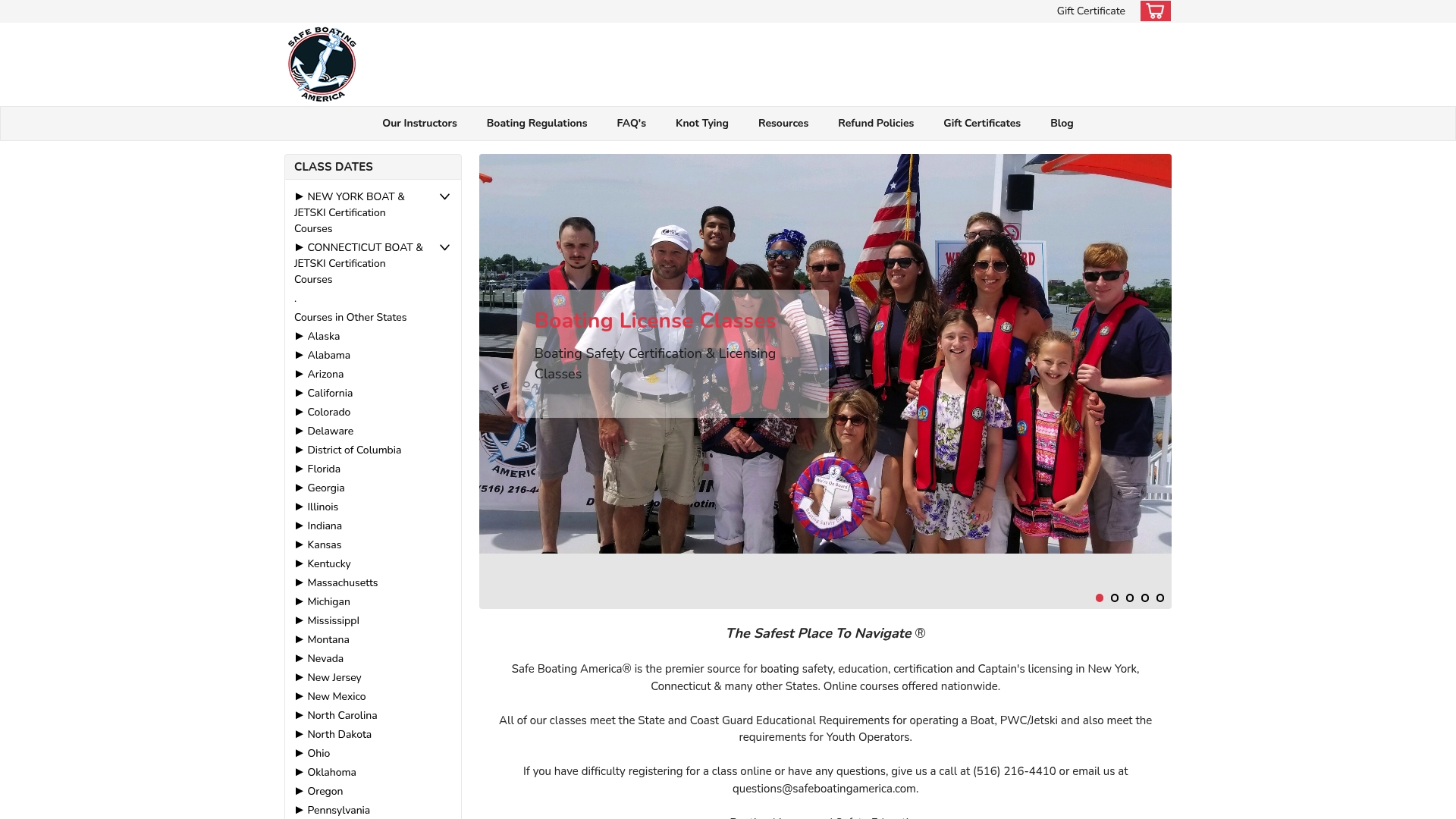
Every student who completes a Safe Boating America course receives an official boating safety certificate with the proper NASBLA and state endorsements, along with a temporary certificate for immediate use while the permanent card is processed. Safe Boating America also offers a Florida PWC certification course for personal watercraft operators who need state-specific approval. Whether you need certification for New York, Connecticut, Florida, or any other state, Safe Boating America delivers the documentation your state requires.
FAQ
What does NASBLA-approved mean on a boating certificate?
A NASBLA-approved designation means the course meets the national curriculum standards set by the National Association of State Boating Law Administrators, making it eligible for acceptance by states that mandate boater education. The approval confirms the program covers required safety topics including navigation rules, emergency procedures, and required equipment.
Does a NASBLA-approved certificate work in every state?
NASBLA approval creates a national baseline, but individual states set their own recognition rules, including residency requirements and proof-of-certification formats. An out-of-state NASBLA-approved certificate is accepted only if it was issued in your current state of residence, so relocation may require retaking a locally approved course.
Do I need to carry my boating certificate on the water?
Yes. States including New York and Hawaiʻi require operators to carry the original physical certificate on their person or on board and to present it upon demand by law enforcement. Failure to produce the certificate carries the same legal consequences as not completing the course.
How long is a temporary boating certificate valid?
Temporary certificates issued after completing an approved online course are valid for 90 days in New York while the permanent card is processed and mailed. Boaters operating during this period must carry the printed temporary certificate, not a digital copy or email confirmation.
Can completing a NASBLA course lower my boat insurance premium?
Some marine insurance providers recognize NASBLA-approved course completion as a qualifying factor for premium reductions. The discount amount varies by insurer, so contact your provider directly to confirm eligibility and required documentation.
Recommended
- NASBLA Boating Safety Standard: What Boaters Must Know - Safe Boating America
- Why boating safety education is mandatory - Safe Boating America
- What is boating safety education: your guide to certification - Safe Boating America
- In-Person vs Online Boating Course Differences Explained - Safe Boating America