12–17 in Kentucky: Get the Blue Card Same Day for 10+ Horsepower

No one under 12 may operate a motorboat or personal watercraft rated over 10 horsepower on Kentucky public waters. Operators aged 12 to 17 running a boat or PWC above that 10-horsepower threshold must carry a Kentucky Boater Education Certificate, often called the Blue Card. Adults 18 and older don’t need the certificate to operate, though they’re still bound by every other Kentucky boating law. Verification for all of this runs through the Kentucky Department of Fish & Wildlife.
TL;DR:
- Children under 12 cannot operate a motorboat or PWC over 10 horsepower on Kentucky waters under any circumstances.
- Boaters aged 12 to 17 must hold a Kentucky Boater Education Certificate to operate vessels exceeding 10 horsepower, including most jet skis.
- Out-of-state or rental boat operators with a NASBLA-approved certificate are generally accepted in Kentucky, but proof must be carried while on the water.
- Certification can be obtained through free online courses, live instruction, or in-person classes, with proof of completion required before operation.
- All boaters, regardless of age or certificate status, are responsible for safety equipment, registration, and adherence to navigation laws.
Table of Contents
- What Are Kentucky’s Boating Age and Horsepower Rules?
- Who Actually Needs the Kentucky Boater Education Certificate?
- How Do You Get a Kentucky Boater Education Certificate?
- Which Courses and Providers Actually Count?
- What Safety Rules Apply Beyond the Certificate?
- What Happens if You’re Cited for a Violation?
- Why Training Matters Even When It’s Not Required
- Get Certified for Kentucky Waters Before Your Next Trip
- Where to Verify Kentucky Boating Age Rules Yourself
- Sources
- FAQ
What Are Kentucky’s Boating Age and Horsepower Rules?
Kentucky doesn’t require a general “boating license” the way the state requires a driver’s license. Instead, the rules hinge on age combined with engine power, and the Kentucky Department of Fish & Wildlife spells out both thresholds clearly. A KDWF boating guide confirms that anyone operating a motorboat or personal watercraft rated over 10 horsepower must be at least 12 years old. Below that age, operating a vessel with that much power isn’t allowed under any circumstance, regardless of supervision.
The regulation behind this isn’t a vague guideline. 301 KAR 6:060 is the administrative regulation that formally establishes the education requirement, and it works alongside Kentucky Revised Statutes governing watercraft operation. The regulation targets a specific age band and a specific power threshold, not boating in general:
- Under 12: Cannot operate a motorboat or PWC over 10 horsepower, period.
- Ages 12 to 17: Can operate a motorboat or PWC over 10 horsepower only after earning the Kentucky Boater Education Certificate.
- 18 and older: No certificate requirement to operate, but full legal accountability for registration, safety equipment, and navigation rules still applies.
The 10-horsepower line matters more than most boaters realize. A small fishing boat with a trolling motor or a low-powered outboard often sits under that threshold, which means younger kids can legally run it without a certificate. Push past 10 horsepower, and the rules change fast. Personal watercraft like Jet Skis and WaveRunners almost always exceed 10 horsepower, so PWC operators in the 12 to 17 range are essentially always required to hold the Blue Card. Non-motorized craft, such as kayaks, canoes, and paddleboards, fall outside this framework entirely since the horsepower trigger doesn’t apply to unpowered vessels.
Who Actually Needs the Kentucky Boater Education Certificate?
The certificate requirement is narrower than a lot of boaters assume. It applies specifically to operators aged 12 through 17 who are running a motorboat or PWC with an engine over 10 horsepower, exactly as 301 KAR 6:060 lays out. If you fall outside that age band or you’re piloting something under the horsepower threshold, the certificate isn’t legally required, even though taking the course is still smart.
A few practical scenarios come up often enough that they’re worth addressing directly:
- Visiting teens from out of state: Kentucky generally accepts equivalent NASBLA-approved boater education certificates issued by other states, so a 15-year-old with a valid card from Ohio or Tennessee typically doesn’t need to retest in Kentucky.
- Rental situations: Marinas and rental operators frequently ask to see a certificate before handing over keys to a PWC, even for renters who technically fall outside the legal requirement, since liability concerns push them toward stricter standards than the statute demands.
- Court-ordered or remedial requirements: Some operators may be directed to complete boater education following a citation or incident, independent of the standard age rule.
- Temporary exemptions: Certain guided or instructional settings, such as operating under direct, immediate supervision of a certified adult during a lesson, can carry different rules than solo operation.
Adults 18 and up are exempt from carrying the certificate, but that exemption only covers the paperwork. Every operator, regardless of age, remains responsible for registration compliance, required safety gear, and navigation rules once the boat is on the water. Kentucky Fish & Wildlife’s own boater education page is the fastest way to confirm equivalency questions if you’re bringing an out-of-state teen onto Kentucky lakes.
How Do You Get a Kentucky Boater Education Certificate?
Getting certified is more straightforward than most first-timers expect, and the whole process can often be finished in an afternoon. Here’s the sequence:
- Pick an approved course. Kentucky offers a free state-endorsed online course through KDWF, and it also permits paid third-party providers whose curriculum meets the same NASBLA standards. Some families prefer a live, instructor-led format instead of self-paced online modules, and that option exists too.
- Complete the training. Course length varies by provider, but most self-paced online options run a few hours total, broken into manageable sections covering navigation rules, safety equipment, and emergency response.
- Pass the final exam. Nearly every approved course ends with a knowledge test. Policies on retakes differ by provider, so check whether a failed attempt requires a waiting period or lets you retry immediately.
- Receive proof of completion. Some providers generate a printable temporary certificate the moment you pass, which is valid to carry while your official Blue Card is mailed. Other providers only mail the card, with no immediate printable option, so check issuance policy before enrolling if you need proof same day.
- Carry the certificate while operating. Once issued, treat the Blue Card like a boating credential you keep on the vessel, similar to how you’d carry a driver’s license in a car.
Costs vary depending on which provider a family chooses, as there are free state courses and paid third-party options available. If a card gets lost, KDWF’s boater education page outlines the reprint and replacement process, which is far less painful than starting the course over.
Pro Tip: Print or screenshot your temporary certificate immediately after passing the exam, even if the official card is on its way in the mail. An officer on the water cares about proof in hand, not what’s sitting in a mailbox at home.

Which Courses and Providers Actually Count?
Not every boating safety course automatically satisfies Kentucky’s requirement, so verifying approval status before enrolling saves a lot of frustration. The safest check is confirming a provider’s course is NASBLA-approved, since NASBLA approval is the credential Kentucky and most other states use as the baseline standard for boater education content.
Kentucky families and visitors generally have a few practical routes to choose from:
- Free state-approved online course: KDWF offers a no-cost option that satisfies the certificate requirement without paying a provider fee.
- Paid online providers: Delegated third-party platforms offer the same NASBLA-aligned material, often with more flexible scheduling or added features like faster support.
- Live Zoom classes: Some providers, including Safe Boating America’s Zoom-based course options, run instructor-led sessions for families who want real-time guidance rather than self-paced modules.
- In-person classes: Traditional classroom-style courses remain available for operators who prefer face-to-face instruction, particularly useful for younger teens who benefit from direct engagement.
Out-of-state NASBLA certificates are generally accepted in Kentucky without requiring a retest, which matters for families who split time between states or visitors bringing teens to a Kentucky lake for the summer. When in doubt, confirming acceptance directly through KDWF’s boater education listings avoids any surprise at the launch ramp. Safe Boating America’s Kentucky-specific certification course walks through exactly which format fits which situation.
What Safety Rules Apply Beyond the Certificate?
Certification handles the legal age requirement, but Kentucky layers on separate safety rules that apply no matter how old the operator is. Every boat occupant needs access to a properly fitting, USCG-approved life jacket, and children under 12 must actually wear one, not just have one nearby, whenever the boat is moving and they’re in an open area of the vessel.
- Life jackets: Kids under 12 must wear a PFD in open sections of a moving boat; all occupants need a properly fitting device readily accessible.
- Engine cutoff switches: Kill switches disconnect the engine if the operator is thrown from the seat, and they’re especially critical for personal watercraft and younger operators who may lack the strength to swim back to a moving boat.
- Sober operation: Kentucky treats boating under the influence with the same seriousness as impaired driving, and alcohol consumption while operating a vessel carries real legal risk, not just a safety concern.
Life jacket compliance isn’t optional paperwork. Kentucky’s rule requiring PFDs for children under 12 in open boat areas exists because young kids account for a disproportionate share of drowning incidents when unsupervised near open water, according to KDWF’s boat safety guidance. Officials specifically encourage even certificate-exempt adults to complete a boater education course, since navigation rules and emergency procedures aren’t things most people pick up by instinct.
What Happens if You’re Cited for a Violation?
Kentucky conservation officers routinely check for the same handful of things during a water stop: age verification against the horsepower rating of the vessel, presence of the Boater Education Certificate when required, life jacket compliance for young passengers, and basic registration paperwork. Missing any of these can trigger a citation on the spot.
- Common citations: Operating without a required certificate, insufficient life jackets, and unregistered vessels top the list of routine stops.
- Likely outcomes: Fines, mandated completion of boater education following the citation, or in more serious cases, additional legal consequences tied to reckless operation.
- Fast remediation: If you’re cited for lacking a certificate, completing an approved course and presenting proof of enrollment or completion afterward often resolves the underlying issue.
The Kentucky Boating Safety Manual outlines the procedural details officers reference during enforcement. For direct questions or to appeal a citation, contacting KDWF directly through its official channels is the most reliable path to a straight answer.
Why Training Matters Even When It’s Not Required

The horsepower and age thresholds tell you when the law requires a certificate. They don’t tell you when training actually makes a difference on the water, and that gap is where a lot of families make the wrong call. An 18-year-old operating a family boat for the first time faces the same risk of an engine stall, a sudden squall, or a passenger overboard as a 16-year-old, but only one of them is legally required to prepare for it.
The smartest time to take a course isn’t the week a teen turns 12 and becomes eligible for a PWC. It’s before that teen ever operates solo, and definitely before a summer where they’ll be on the water without an adult nearby. Insurance carriers and rental operators increasingly expect proof of completion regardless of legal necessity, which means a certificate earned early pays off well beyond the statute. Safe Boating America builds its Kentucky course around that reality, using NASBLA-aligned curriculum that covers far more than the minimum the regulation demands.
— Richard
Get Certified for Kentucky Waters Before Your Next Trip
There are providers offering faster paths to certification than sitting through a lengthy in-person class scheduled around someone else’s calendar. Our online boating safety courses let a teen or a first-time boat owner complete state-aligned training on their own schedule, with a printable temporary certificate available as soon as the exam is passed.
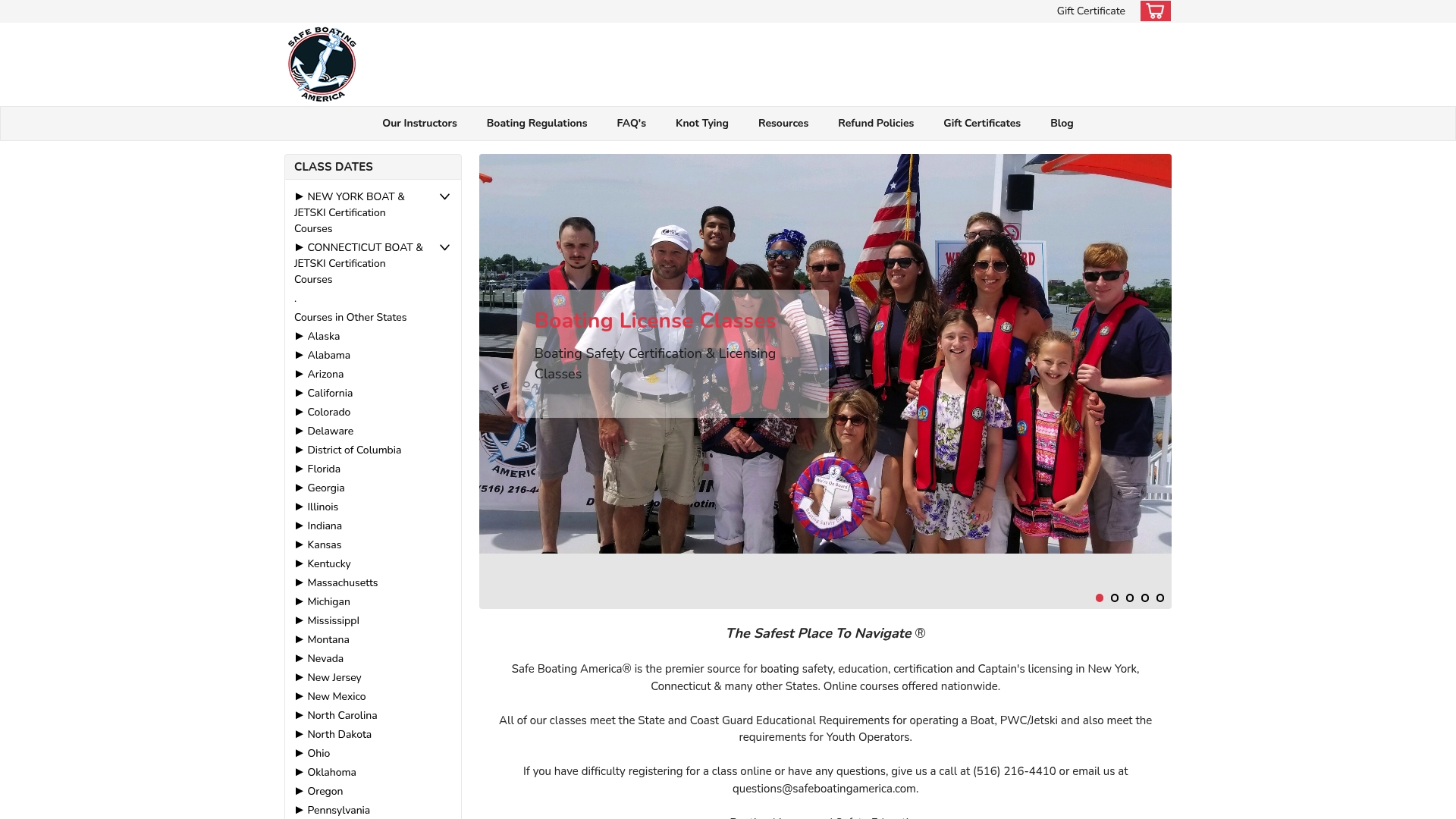
If your family prefers real-time instruction, our live Zoom class puts a certified instructor in front of your teen instead of leaving them alone with a screen. Every course follows NASBLA-approved material, the same standard Kentucky recognizes for its certificate requirement. Register through our online course page, complete the modules, pass the exam, and you’ll have proof in hand before the weekend on the lake even starts.
Where to Verify Kentucky Boating Age Rules Yourself
Official sources beat secondhand summaries every time a legal question comes up on the water.
- Kentucky Department of Fish & Wildlife boating guidance: age and horsepower thresholds straight from the state agency.
- 301 KAR 6:060: the administrative regulation establishing the certificate requirement.
- KDWF Boater Education page: approved courses, card issuance, and replacement procedures.
- Kentucky Boating Safety Manual: the enforcement reference used by conservation officers.
Sources
- Boating - Kentucky Department of Fish & Wildlife
- Boater Education - Kentucky Department of Fish & Wildlife
- 301 KAR 6:060 - Safe boating certification | LII / Legal Information Institute
FAQ
How old do you have to be to get a boating license in Kentucky?
Kentucky doesn’t issue a general boating license, but operators aged 12 to 17 running a motorboat or PWC over 10 horsepower must hold a Kentucky Boater Education Certificate. Kids under 12 cannot operate a vessel that powerful under any circumstance.
Can a 13-year-old operate a boat in Kentucky?
Yes, a person aged between 12 and 17 can legally operate a motorboat or PWC over 10 horsepower in Kentucky, but only after earning the Boater Education Certificate. Without that certificate, operating a vessel above that power threshold isn’t allowed at that age.
Can a 12-year-old drive a jet ski in Kentucky?
A 12-year-old can drive a jet ski (personal watercraft) in Kentucky once they’ve completed an approved boater education course and hold the certificate, since jet skis almost always exceed the 10-horsepower threshold under 301 KAR 6:060. Without the certificate, operation isn’t permitted regardless of supervision.
Can you drink while fishing in Kentucky?
Kentucky treats operating a boat under the influence of alcohol as a serious offense, similar to impaired driving laws, regardless of whether the activity is fishing or general boating. Passengers who aren’t operating the vessel face different rules, but the person controlling the boat carries the legal responsibility for sober operation under KDWF safety guidance.
How much does it cost to get certified in Kentucky?
Kentucky offers a free state-approved online course that satisfies the certificate requirement at no cost. Paid options through providers like Safe Boating America are also available, with current pricing listed on the online course page.