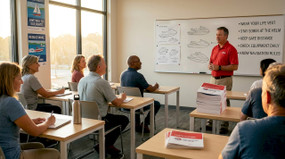
The Role of Jet Ski Certification Class in Safe Operation
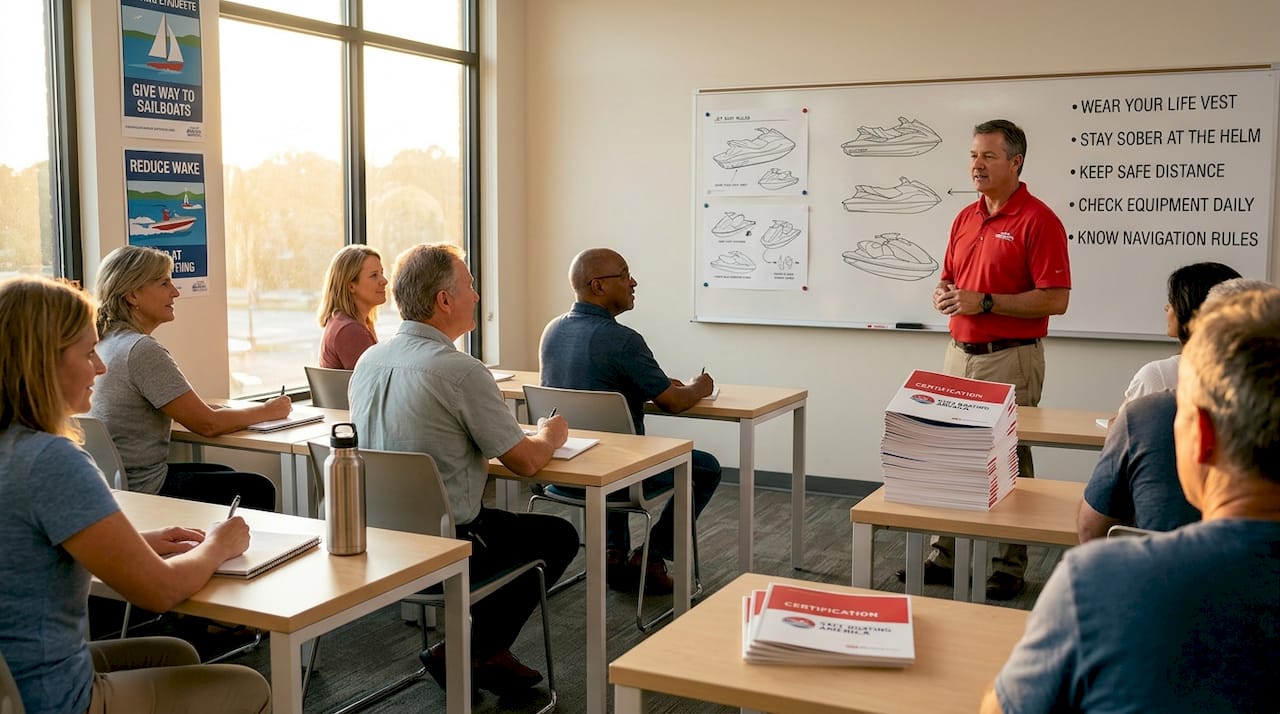
Most new personal watercraft operators assume a quick internet search and some time on the water is enough preparation. It is not. The role of jet ski certification class goes well beyond handing you a card to show a water patrol officer. Formally called a Personal Watercraft (PWC) safety course or boater education course, this training is a state-mandated, nationally standardized program that teaches you the rules, emergency procedures, and operating practices that keep you and everyone around you safe. This article breaks down exactly what that means for you, legally and practically.
Table of Contents
- Key Takeaways
- The role of jet ski certification class explained
- Benefits of completing a PWC safety course
- State certification requirements and how to get certified
- Maintaining compliance and renewing your certification
- My perspective on why certification keeps getting underestimated
- Get certified with Safeboatingamerica
- FAQ
Key Takeaways
| Point | Details |
|---|---|
| Certification is legally required | Most states mandate a NASBLA-approved course before you can legally operate a jet ski or PWC. |
| Curriculum covers real safety skills | Courses teach emergency procedures, navigation rules, and equipment requirements. |
| Physical certificate must stay on board | Many states, including New York, require the original document during operation, not a digital copy. |
| State rules vary significantly | Age limits, course length, and renewal rules differ by state, so always verify local requirements. |
| Certified education reduces accidents | Completing an approved course is directly linked to lower accident rates on the water. |
The role of jet ski certification class explained
The terms “jet ski license” and “boater safety certificate” get used interchangeably, but they refer to the same thing in most state legal frameworks. A PWC boater education certificate is the official document that proves you completed a state-approved or NASBLA-approved course covering the core competencies regulators and law enforcement expect from any operator on the water.
What does that curriculum actually include? You can expect instruction on these core areas:
- Rules of the water, including right-of-way, speed zones, and restricted areas
- Proper use of required safety equipment (life jackets, fire extinguishers, distress signals)
- Emergency procedures including capsize recovery and man-overboard response
- State and federal boating laws, registration requirements, and environmental regulations
- Personal watercraft-specific handling, wake rules, and distance requirements from other vessels
The course format varies. Some states accept fully online courses. Others require a minimum number of classroom or Zoom instruction hours. New York, for example, requires at least 8 hours of classroom instruction for operators of motorized vessels, including PWCs, under Brianna’s Law. Students receive a temporary certificate valid for 90 days while the permanent certificate is processed. That permanent document is yours for life, provided you carry the original when you operate.
One critical distinction worth understanding early: casual online quizzes and informal knowledge checks do not satisfy legal requirements. Certification demands formal evaluation and either state or NASBLA approval. The course you take must appear on your state’s list of accepted programs, or it will not hold up during an enforcement stop.
Pro Tip: Before enrolling in any course, check your state’s official boating authority website to confirm the course is on the approved list. A non-approved course is money and time spent with zero legal protection.
You can review the different PWC certification course types available in 2026 to find the format that works best for your schedule and state requirements.
Benefits of completing a PWC safety course
The practical advantages of completing a jet ski safety course extend well past staying out of legal trouble. Here is what you actually gain.
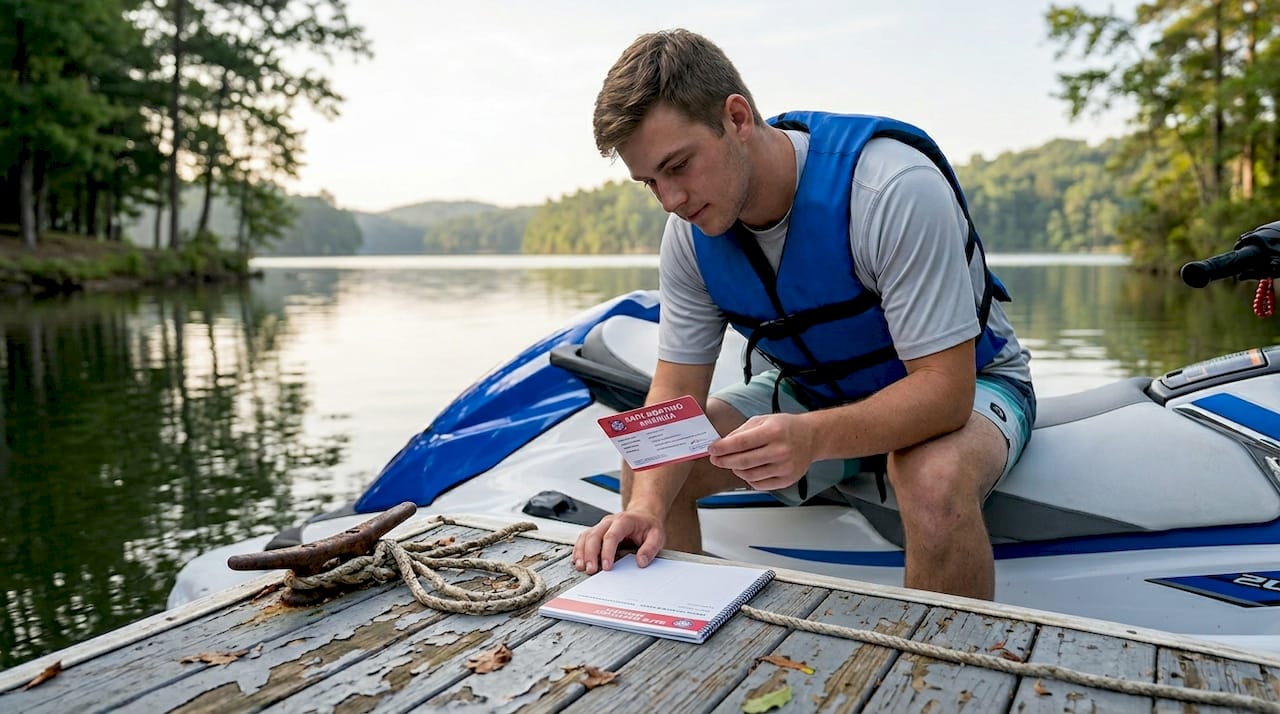
Fewer accidents and lower injury risk. Certified boating education is directly tied to safer operator behavior and decreased accident rates on the water. You learn not just what to do, but what to watch for, including blind spots unique to PWC operation that differ from traditional boating.
Legal protection and no fines. Enforcement patrols regularly check for certification cards and registration numbers on personal watercraft. Operators without documentation face citations on the spot. In many states, certification is required even for jet ski rentals, so this is not a requirement you can delay indefinitely.
Confidence on the water. Operators who complete formal training know how to handle the machine before an emergency forces them to figure it out. Capsize recovery, throttle control in wake zones, and emergency signaling are all covered. That knowledge makes every trip less stressful and more predictable.
Insurance advantages. Many insurance providers offer discounts to operators who hold a valid boating education certificate. The logic is straightforward. A trained operator is a lower liability risk.
Responsibility for others on board. When you carry passengers, their safety depends on your judgment. Certification trains you to think about those responsibilities proactively, not reactively.
“Certification isn’t just a bureaucratic step; it’s the foundation for legal recognition of operator skills and a critical safety measure that law enforcement expects to see.” NASBLA, 2026
State certification requirements and how to get certified
Understanding how to get jet ski certified starts with recognizing that no single national rule governs every detail. NASBLA standardizes the core curriculum, but each state sets its own age minimums, acceptable course formats, and documentation rules. The differences matter.
Here is a quick comparison of how three states handle personal watercraft certification requirements:
| State | Minimum age for solo operation | Course format accepted | Certificate validity |
|---|---|---|---|
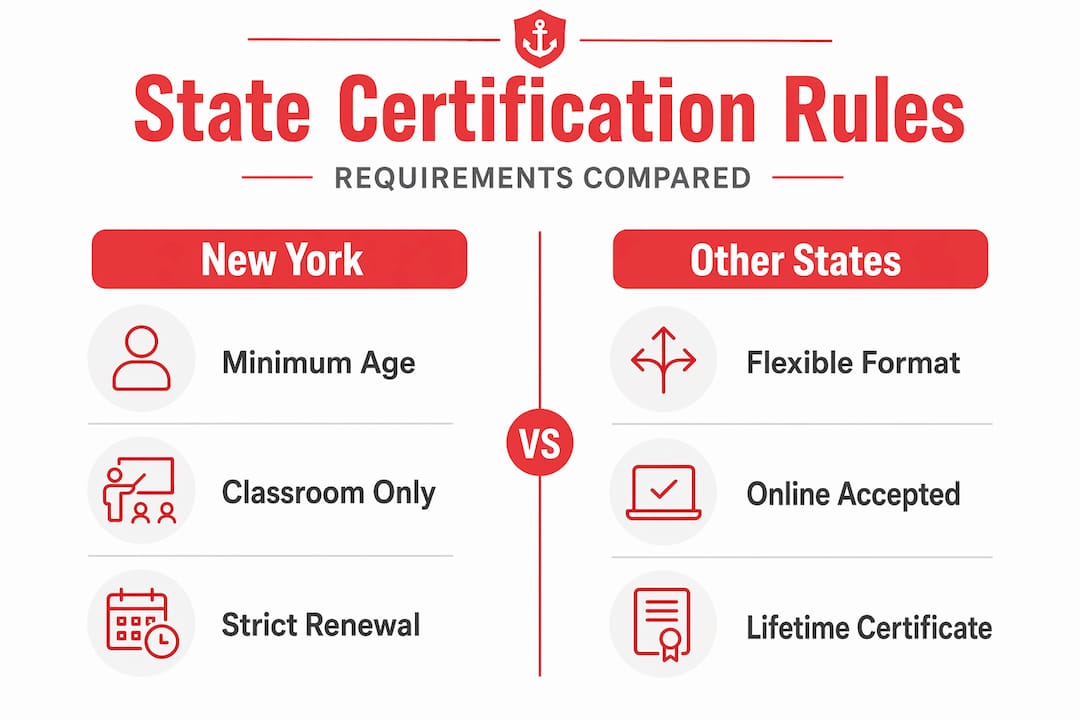
| New York | 10 years old (with adult supervision under 16) | Classroom/Zoom (minimum 8 hours) | Lifetime (original required on board) |
| Florida | 14 years old | Online or classroom | Lifetime |
| Alaska | Varies; registration and documentation required | State-approved programs | Varies; renewal may apply |
New York’s Brianna’s Law requirements are among the stricter frameworks in the country, mandating classroom-based instruction rather than accepting purely self-paced online courses. Florida and many other states accept fully online options, which increases accessibility for operators with work and travel schedules that make in-person attendance difficult.
In Alaska, jet ski registration involves submitting detailed documentation, passing inspections, and paying fees that vary based on vessel type and use. Missing those steps results in fines, not just a warning.
The process to get certified generally follows these steps regardless of state:
- Identify your state’s approved course list through the official state boating authority or parks department website.
- Choose a NASBLA-approved provider that offers your preferred format (online, classroom, or live Zoom).
- Complete the course, pass the written assessment, and submit your registration details.
- Receive a temporary certificate (some states issue these same day) and wait for the permanent version by mail.
- Store the original certificate somewhere accessible before you operate any watercraft.
One common mistake: operators often forget that certification from one state does not always satisfy another state’s patrol officers if it came from a non-approved provider. Stick to providers your destination state recognizes.
Pro Tip: If you are under 18 or helping a minor get certified, check your state’s specific age and supervision rules. Many states have additional restrictions on unsupervised operation that go beyond basic certification.
You can find state-specific guidance for young operators in this resource on jet ski licenses for minors.
Maintaining compliance and renewing your certification
Once you hold your certificate, staying compliant over time takes consistent attention. Here is what to track and do.
-
Know whether your state requires renewal. Many states issue permanent certification that is good for life, including New York and Florida. Others require periodic renewals or supplemental courses to maintain valid status. Verify your state’s rules directly.
-
Keep your original physical certificate accessible. A physical copy must be on board or on your person during operation in many states. A photo on your phone does not satisfy this requirement during a patrol inspection.
-
Store a backup copy at home. If your original certificate is lost or damaged, the replacement process can take weeks. Having a photocopy or digital record of your certificate number speeds that process significantly.
-
Track any state-specific renewal deadlines. If you operate in a state that requires renewal, set a calendar reminder well before the deadline. Operating with an expired certificate carries the same penalties as operating without one.
-
Stay current on regulation changes. Boating laws change. States have added new requirements over the past five years, particularly around age limits and PWC-specific rules. Reviewing your state’s boating authority page annually takes minutes and can prevent a costly citation.
-
Carry your registration separately from your certificate. Registration and certification are two different documents. Enforcement officers will ask for both, and mixing them up on the water creates unnecessary delays.
Understanding the full scope of boating safety education requirements in your state gives you a clearer picture of what ongoing compliance actually looks like beyond the initial certification.
My perspective on why certification keeps getting underestimated
I have seen a consistent pattern over the years. Operators who skip formal certification do not think they are taking a risk. They genuinely believe their experience on the water substitutes for structured training. Then they get cited. Or worse, they find themselves in an emergency situation where they do not know what to do.
What I have learned is that the knowledge gap among novice operators is not about intelligence. It is about exposure. A certification class forces you to confront scenarios you would never think to practice on your own: right-of-way conflicts, emergency signaling, capsize procedures. You do not know what you do not know until the course shows you.
The enforcement trend I have watched develop over the past several years reinforces this. Water patrols are checking certification cards with the same frequency that road patrols check driver’s licenses. The days of a warning and a handshake are largely over in most states.
My honest take: treat certification the way you treat a driver’s license. You would not drive a car on a public road without one. Operating a high-powered personal watercraft in shared waterways without formal certification is no different in terms of legal exposure or actual risk. Complete the course before you operate. That is not cautious advice. It is the minimum standard for responsible operation.
— Richard
Get certified with Safeboatingamerica
Safeboatingamerica offers NASBLA-approved PWC and boating safety certification courses nationwide, including state-specific programs for Florida and Arizona residents. Whether you need to meet New York’s Brianna’s Law requirements or complete an online Florida PWC course from home, the options are designed to match your schedule and satisfy your state’s legal requirements. Arizona operators can access the Arizona PWC certification course entirely online with same-day certificate options available. Courses are taught by State Certified Instructors and USCG-Licensed Captains using approved materials. Visit Safeboatingamerica to find your state’s course and get properly certified before your next time on the water.
FAQ
What is the role of a jet ski certification class?
A jet ski certification class, formally known as a PWC boater education course, teaches operators the rules, safety procedures, and emergency skills required by state law. Completing a NASBLA-approved course is the standard required by enforcement officers and regulators across the country.
Is jet ski certification required in every state?
Most states require a boater education certificate to legally operate a personal watercraft, and requirements have tightened significantly in recent years. Certification may also be required for rentals, not just owned vessels.
Can I use a digital copy of my certification on the water?
No. Many states explicitly require operators to carry the original physical certificate on board or on their person. Digital copies are not accepted as legal substitutes during patrol inspections in states like New York.
Do I need to renew my jet ski certification?
Most states issue lifetime certificates, but some require periodic renewal or supplemental courses to renew jet ski certification per state rules. Always verify your specific state’s current requirements through the official boating authority website.
How long does it take to get jet ski certified?
Course length depends on your state and format. NASBLA-approved courses typically cost $20 to $50 and can be completed in a few hours online or over one to two days in a classroom setting.
Recommended
- Jet Ski Certification Course Types: Your 2026 Guide - Safe Boating America
- What is a jet ski safety course? A complete guide - Safe Boating America
- Jet Ski licenses for minors: safety rules explained - Safe Boating America
- Connecticut Jetski License: How to Get Your CT PWC Certificate - Safe Boating America