PWC Rental Requirements: Age, Licenses and Rules by State
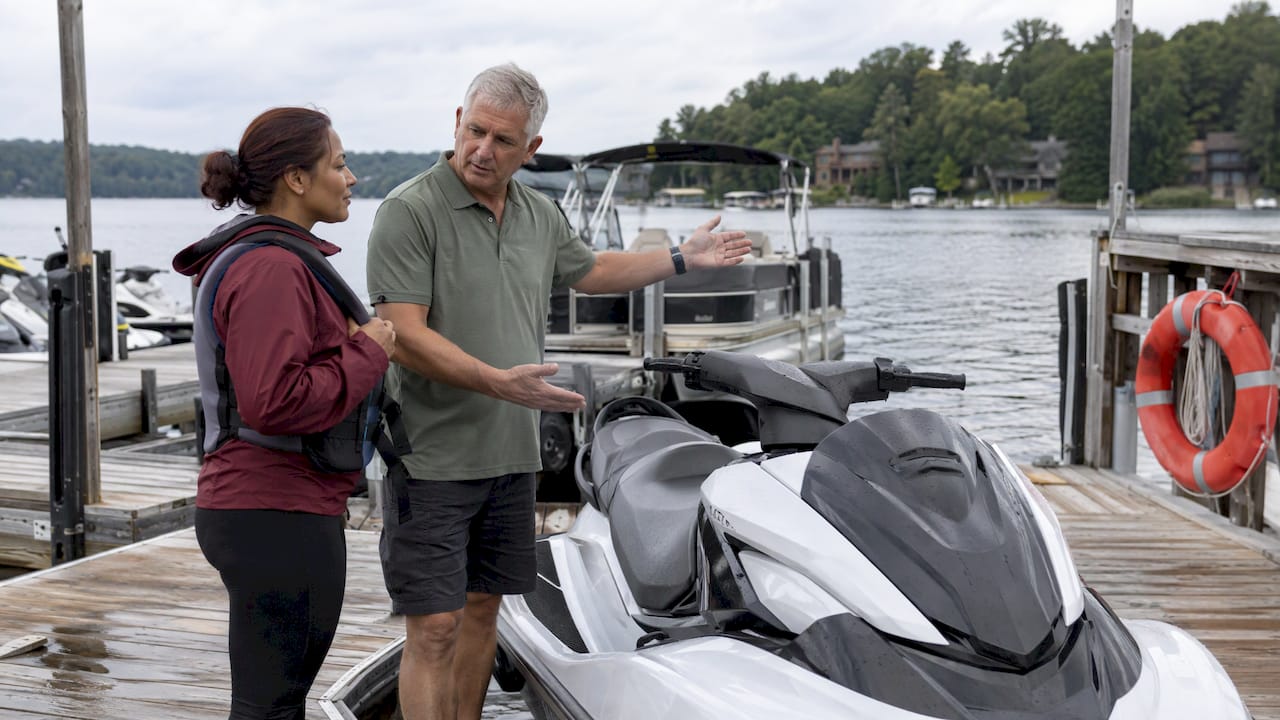
Renting a personal watercraft (PWC, the category that includes Jet Skis and WaveRunners) in the United States is governed by three layers: your state’s boating law, the rental company’s own policy, and the rules of the lake or coast where you ride. No single national rental license exists. The practical answer to “do I need a license?” is that most states require a boating safety certificate, a short rental-counter briefing, or both, and the minimum age is usually 16 to 18. Holding an approved certificate before you arrive is the fastest way to be cleared at the counter.
TL;DR
- There is no federal PWC rental license. Each state sets its own age, education and supervision rules.
- Typical rental minimums run from 16 to 18 years old, and some states set the renter age above the operator age.
- Many states let a rental company give a short safety briefing in place of a certificate. Others require a certificate or a course.
- Everyone on a PWC wears a USCG-approved life jacket, and the operator attaches the engine cutoff lanyard where one is fitted.
- A state-approved boating safety certificate is accepted at many rental counters and does not expire in most states.
Table of Contents
- How PWC Rental Rules Are Layered
- Minimum Age to Rent and to Operate
- Do You Need a License to Rent a Jet Ski?
- What You Need at the Rental Counter
- Gear and Operating Rules for Renters
- Insurance Is the Company’s Job, Not Yours
- Renting With Family
- Get the Certificate Before You Arrive
- Our Perspective
- FAQ
- Sources
How PWC Rental Rules Are Layered
State law sets the legal floor: who may operate, who may rent, what education is required, what gear must be on board and when riding is banned. The U.S. Coast Guard keeps a state-by-state boating law survey that shows PFD requirements in most states and rental-instruction requirements in many.
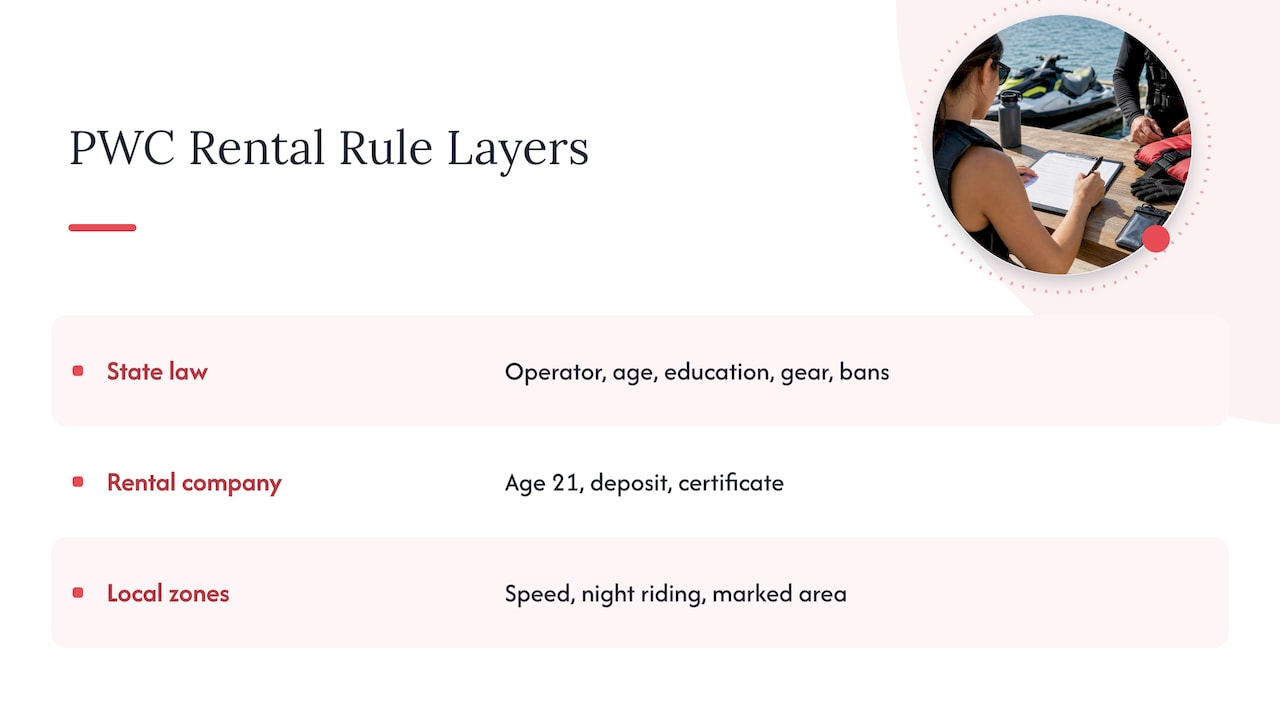
The rental company can be stricter than the state. A company may set its minimum renter age at 21, require a deposit, or refuse anyone who cannot show a certificate, even where state law would allow a briefing instead.
Local zones add more. A lake may limit speed, ban night riding or confine rentals to a marked area. The state rules are the minimum you must meet. The rental agreement tells you the rest.
Two roles also get confused. The renter signs the contract and is responsible for the craft. The operator is whoever drives it. Many states regulate them separately, and the age that lets you drive is not always the age that lets you sign.
Minimum Age to Rent and to Operate
The table shows how much the numbers differ, using state agency rules.
| State | Rental age rule | Operating age rule |
|---|---|---|
| Oregon | No PWC rental to anyone under 18 | Under 16 only with a boater education card holder 18 or older on board |
| North Carolina | No rental to under-16s unless the operating conditions are met | Under 16 barred; 14 and 15 allowed with an adult 18+ on board, or with ID and a NASBLA-approved certification |
| Montana | 18 or older to rent a PWC over 10 hp | 12 and under need someone 18+ on board; 13 and 14 need a certificate or course evidence, or an adult on board |
| Massachusetts | Certificate required for operators | From April 1, 2026, operators must be 16 and certified; a person over 12 without a certificate needs direct supervision by a certified person over 18 |
| Hawaii | Certified operators; uncertified visitors rent after a vendor demonstration | Minimum operator age 15 |
Sources: Oregon State Marine Board, NC Wildlife Resources Commission, Montana FWP 2026 boating laws, Massachusetts Hanson-Milone Boater Safety Act FAQ, Hawaii DOBOR.
Two lessons follow. First, a teenager who may legally ride with a parent may still be turned away as a renter, because the contract must be signed by an adult in many states. Second, the same age can mean different things depending on whether a certified adult is on board.
For the general pattern across states, our guide to boating license age by state covers the typical 12 to 16 range plus PWC and horsepower rules. State-specific detail is in our pages on Oregon boating license age and Washington boating age rules.
Do You Need a License to Rent a Jet Ski?
Strictly, “boating license” is a common name for a boating safety certificate or education card. It is proof you passed an approved course, not a driver’s license. Whether you need one to rent depends on the state, and the rules fall into three patterns.
Certificate required before you ride
Some states require the operator to hold a certificate, with limited exceptions. Massachusetts requires PWC operators to be certified under rules effective April 1, 2026. Hawaii requires two credentials for operating a thrill craft: a NASBLA or state-approved basic boating safety course and a Thrill Craft Operator Certification. Only the operator needs them, not passengers.
Certificate or rental briefing
Many states accept either. Michigan requires livery training before a lease unless the renter already holds a boater safety certificate, and New York requires a video or in-water demonstration plus a demonstration by the renter, according to the Coast Guard survey. Florida liveries must cover PWC operation, right-of-way, alcohol effects, navigation rules and accident prevention. Florida also uses an education card for younger operators; our Florida PWC laws guide explains who needs it.
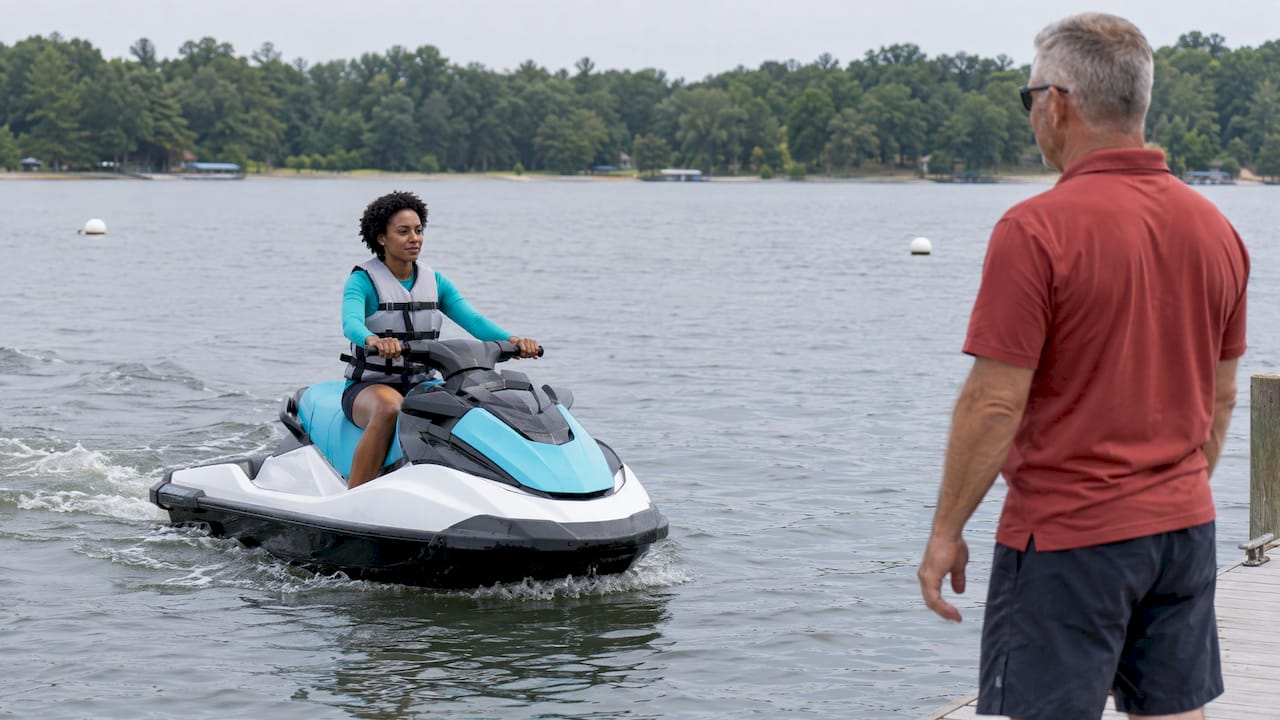
Temporary rental permits
Minnesota’s law, effective July 1, 2025, requires some adults and youth operating motorboats, including PWCs, to hold a watercraft operator’s permit. Residents 18 or older renting from a rental business can instead complete a rental course valid for 180 days. Under-18s cannot rent, but Minnesota residents may operate rental watercraft with a valid permit, per the Minnesota DNR.
Ohio adds a paperwork rule. Under Ohio law, anyone born on or after January 1, 1982 who rents powercraft over 10 hp must be named as an operator on the rental agreement, with the passing score of an approved course or abbreviated exam (90% or higher) shown on or attached to it.
What You Need at the Rental Counter
Plan on this list for most U.S. rentals:
- Government photo ID that proves your age.
- Your boating safety certificate or education card, if your state or the company requires one. Bring the card or a printout of the certificate.
- Every operator named on the contract. In Ohio and similar states, anyone who will drive must be listed.
- A signed rental agreement. Montana requires a copy of the agreement and all required equipment to be on board a rented vessel.
- A deposit or card on file, set by the company, not by state law.
- Attendance at the briefing. Oregon requires liveries to give each renter a signed written copy of the state PWC rules, to place a safe-operation decal on each craft, and to have the renter carry the signed copy.
Hawaii shows how a briefing can substitute for a certificate. Uncertified visitors may rent from a commercial vendor after a mandatory safety demonstration, but rented craft may only be operated inside commercial thrill craft zones: 200-foot radius circles within an Ocean Recreation Management Area.
Gear and Operating Rules for Renters
The rental company supplies equipment, but you are responsible for how it is used. These rules recur in state law.
- Life jackets. Everyone on board wears a USCG-approved jacket. Oregon requires liveries to supply Type I or III inherently buoyant jackets, and Oregon and Texas both state that inflatable jackets are not approved for PWC use. Our PWC safety gear guide lists what to wear and carry.
- Engine cutoff lanyard. Where the craft has one, the operator attaches it to the wrist, clothing or life jacket. Texas, Montana, North Carolina and Ohio all state this.
- Daylight only. North Carolina and Ohio prohibit PWC operation between sunset and sunrise.
- No-wake distances. North Carolina requires no-wake speed within 100 feet of specified vessels, structures, swimmers and other users, or within 50 feet in a narrow channel. Montana sets 200 feet from docks, swimmers, swimming rafts, non-motorized boats and anchored vessels.
- No alcohol or drugs. Operating under the influence is unlawful in Montana and every other state. Rental contracts commonly repeat the ban.
When you are unsure, ride to the strictest standard on the page in front of you. Staying 200 feet from shore structures is never wrong, even where the law says 100.
Insurance Is the Company’s Job, Not Yours
Renters sometimes ask whether they need their own PWC insurance. In states that regulate rentals, the burden usually falls on the business. North Carolina requires every PWC rented to the public to carry at least $300,000 in liability insurance, per the state wildlife agency. Read your contract for damage responsibility and the deductible you owe if the craft is damaged.
Renting With Family
The most common rental problem is a family group where the adult is certified but a teenager is not, or the reverse. Check three things before you book: the minimum age to rent, the minimum age to operate, and whether the certified adult must be on board or may supervise from another craft. Massachusetts, for example, requires direct visual and verbal supervision, and no one under 18 may supervise a motorboat operator.
Water readiness matters as much as paperwork. A two-minute lake safety briefing for parents is a good model for what to tell children before they get near the water: where to stand, what to wear and who watches.
Get the Certificate Before You Arrive
A certificate removes the biggest variable on rental day. Instead of depending on a short counter briefing and the company’s discretion, you arrive with proof that satisfies the state. Most state-approved certificates are issued once and are valid for life, so the same card serves your next rental and your own PWC later. Our PWC license requirements guide walks through how a certificate works in each case.
Safe Boating America offers online computer-based boating safety courses for students in every state. For live instruction, the Zoom Online 1-Day Class costs $75, and the NYS Safe Boating Class is $85. State-specific courses include Oregon, Ohio and North Carolina. Gift certificates for boating education are $75 to $85.
Our Perspective
A rental briefing teaches you how one machine works on one day. A certificate teaches you the rules that apply to every boat you will ever drive: right-of-way, no-wake zones, alcohol laws, how to respond to a swimmer in the water.
Rental rules are tightening. Massachusetts moved to mandatory PWC certification in 2026. Minnesota’s permit law took effect in 2025, and its DNR describes it as a way to make sure operators know the rules and are properly trained. Hawaii says its two-credential system exists to improve safety and reduce conflicts between users. The direction is consistent: operators are expected to arrive trained.
Our courses are taught by State Certified Instructors and USCG-Licensed Captains using NASBLA-approved material, in person, on Zoom or online. We designed them so a first-time renter leaves with a state-recognized certificate and a clear idea of what the rules require on the water.
Richard
FAQ
Do you need a license to rent a jet ski?
Usually you need a boating safety certificate or a rental-counter briefing, depending on your state. Some states, such as Massachusetts, require PWC operators to hold a certificate. Others let a rental company’s instruction stand in for it. A certificate is the safest way to be accepted anywhere.
How old do you have to be to rent a PWC?
It varies. Oregon prohibits PWC rental to anyone under 18, and Montana requires renters of PWCs over 10 hp to be 18 or older. North Carolina bars rental to under-16s unless they meet its operating conditions. Many companies set their own minimum at 18 to 21.
Can a teenager ride a rented jet ski?
Often yes, with conditions. Oregon permits riders under 16 only with a boater education card holder 18 or older on board. Montana allows 13 and 14-year-olds with a certificate or course evidence, or with an adult 18 or older. The adult usually signs the rental contract.
Do passengers need a certificate?
No. In Hawaii, for example, only the operator needs certification, not passengers. Passengers must still wear a USCG-approved life jacket.
Is a rental safety course the same as a boating license?
No. Minnesota’s rental course is valid for 180 days and applies to renting only, while a permit is lifetime. A full state-approved course gives you a certificate you can reuse.
Sources
- Oregon State Marine Board: Statewide and Local Regulations
- NC Wildlife Resources Commission: Personal Watercraft
- Montana Boating Laws 2026
- Massachusetts: Hanson-Milone Boater Safety Act FAQ
- Hawaii DOBOR: Thrill Craft FAQs
- U.S. Coast Guard: State Boating Laws
- Minnesota DNR: New Boater Education Law
- Ohio Boat Operating Laws
- Texas Parks and Wildlife: Personal Watercraft Operation and Regulations