No Wake Zone Rules for U.S. Boaters: 2–3 MPH Is Not a Universal Cap

A no wake zone requires you to operate at idle speed, the slowest speed that allows steerage and produces minimal wake, typically a few miles per hour, depending on local regulations. The rule applies wherever posted markers or local statute establish the zone, regardless of your vessel type. Numeric limits vary by jurisdiction, so always check local signs and statute language before assuming a universal speed cap applies.
TL;DR:
- Idle speed is often about 2 to 3 miles per hour, but hull design, wind, current, and depth affect wake, so follow local limits.
- Michigan requires slow speed within 100 feet of shore in water under 3 feet deep; personal watercraft must stay 150 feet behind other vessels.
- Florida allows local governments to set no wake buffers of 500 feet on waterways wider than 300 feet, or 300 feet on narrower waterways.
- A posted sign is not automatically enforceable: zones require formal adoption and approved markers, while federal channel proposals need Corps review and agency concurrence.
- Throttle down before reaching the boundary and judge your wake visually; if your stern pushes a visible roll, reduce speed while preserving steerage.
Table of Contents
- What idle speed and slow-no-wake actually mean
- How no wake zones are marked and when that marking matters
- State rules vary: Michigan, Florida, North Carolina, Louisiana, and Oregon
- Federal channels and the role of the Coast Guard and Army Corps of Engineers
- Enforcement, penalties, and what happens if you’re stopped
- How to comply: idle speed technique and PWC-specific rules
- How a no wake zone gets created in the first place
- How boating education builds no wake compliance
- A note on respecting the water
- Get certified and confident before your next trip out
- FAQ
- Sources
What idle speed and slow-no-wake actually mean
Regulatory language around no wake zones relies on a few precise terms rather than a single number. Idle speed is the lowest throttle setting that keeps a vessel moving with enough steerage to maintain control. Slow-no-wake describes the broader behavior standard: a speed that avoids producing a wake large enough to affect other vessels, docks, or shorelines. Headway speed sits between idle and cruising speed, used in some statutes to describe the minimum speed needed to maintain directional control in current or wind.
Agencies frequently cite idle speed as roughly 2 to 3 miles per hour, with 5 miles per hour appearing in some jurisdictions as a commonly referenced slow-speed cap. These figures function as guidance rather than a fixed nationwide standard, since the actual legal threshold depends on the statute or local ordinance governing that body of water.
What counts as “no wake” in practice depends on conditions and vessel type:
- A flat-bottom skiff at idle produces a different wake profile than a deep-V hull at the same throttle setting.
- Wind, current, and water depth all change how much wake a given speed generates.
- Heavier boats and wake-sport vessels may need to throttle down further than smaller craft to stay compliant.
How no wake zones are marked and when that marking matters
No wake zones are identified through regulatory markers that follow the Uniform State Waterway Marking System (USATONS) or, on federal channels, through Private Aids to Navigation (PATON) procedures administered by the Coast Guard. Recognizing these markers correctly determines whether you are legally bound by the zone or simply looking at an informal posting.
- Regulatory markers use white buoys or signs with orange geometric shapes and black lettering, typically a circle for “slow, minimum wake” or a crossed diamond for “danger.”
- On approach, read the marker’s text and symbol together. The circle indicates the no wake boundary, and nearby text often states the zone’s extent in feet or by landmark.
- Confirm the marker is an officially adopted aid, not a privately placed sign, since enforceability depends on formal adoption and proper placement.
Enforceable no wake zones must be adopted through rulemaking and marked according to USATONS standards. A sign posted by a homeowner’s association or marina without agency approval may communicate a request, but it does not carry the same legal weight as a conforming regulatory marker. On the Atlantic Intracoastal Waterway specifically, signage installed without U.S. Army Corps of Engineers concurrence is not enforceable, even when it looks official. Checking our guide to common buoys and markers before you head out helps you distinguish a binding regulatory marker from an informal one.
State rules vary: Michigan, Florida, North Carolina, Louisiana, and Oregon
No wake regulations are set primarily at the state and local level, which means the same stretch of water can carry different rules depending on which state or municipality governs it.
- Michigan requires slow-no-wake operation within 100 feet of shore where water depth is less than 3 feet, and personal watercraft must stay at least 150 feet behind other vessels; violations can draw fines up to $500.
- Florida law authorizes local governments to establish idle-speed, no wake restricted areas with buffer distances of 500 feet on waterways wider than 300 feet and 300 feet on narrower waterways, typically around ramps, fueling facilities, and locks.
- North Carolina no wake zones require formal rulemaking through the state wildlife agency, and zones along the Atlantic Intracoastal Waterway need concurrence from the U.S. Army Corps of Engineers before they carry legal force.
- Louisiana grants municipalities authority to set no wake rules near facilities, often applying a 300-foot buffer around docks and public structures.
- Oregon administrative rules establish slow-no-wake zones within 200 feet of certain marinas and launch facilities, reflecting the same municipal-authority pattern seen in other states.
These examples illustrate a consistent theme: distance thresholds, fine amounts, and the agencies responsible for enforcement differ by state. Before heading onto unfamiliar water, confirm the specific code governing that lake, river, or coastal stretch rather than assuming a rule from one state applies elsewhere.
Federal channels and the role of the Coast Guard and Army Corps of Engineers
No wake zones on federally maintained waterways, including the Atlantic Intracoastal Waterway, follow a different approval path than purely state or local zones.
- The U.S. Army Corps of Engineers reviews requests for no wake zones on federal channels and requires maps, documented hazards, and agency concurrence showing that a no wake zone is the only adequate remedy for the problem identified.
- The Coast Guard oversees Private Aids to Navigation applications, which govern who may place navigational buoys and markers on federal waters and ensures they meet consistent standards.
- Federal no wake zones generally apply to all recreational vessels transiting the marked area, though commercial traffic and emergency vessels may operate under separate provisions tied to their mission.
Boaters on federal channels should treat these zones with the same seriousness as state-adopted ones. The USCG Boater’s Guide reminds operators to maintain a proper lookout, travel at safe speed, and consult nautical charts and Notices to Mariners before entering any controlled or restricted area.
Enforcement, penalties, and what happens if you’re stopped
Marine enforcement officers typically document no wake violations through direct observation, pacing (matching your speed alongside your vessel), or by reviewing complaints and damage reports from affected property owners.
- Officers often note the size and height of a wake, the speed logged on their own vessel, and nearby regulatory markers at the time of the stop.
- Fine amounts vary widely by state. Michigan sets penalties for no wake violations at up to $500, and other states set their own schedules under separate statutes.
- A citation tends to hold up better in court when it ties to a properly adopted and marked zone, clear statutory language, and, where relevant, documented property damage.
- Private or informal signage without agency concurrence weakens an enforcement case, since the zone itself may not meet the legal threshold for enforceability.
If you’re stopped, provide your registration and safety equipment calmly and note the location of the nearest regulatory marker, since that detail matters if you choose to contest a citation. Photographing markers and noting GPS coordinates after the fact can support your position if you believe the zone was unmarked or improperly posted.
Pro Tip: Keep a simple log of your course heading and speed on longer trips through regulated waters. It costs nothing and can clarify a dispute later.
How to comply: idle speed technique and PWC-specific rules
Staying compliant starts with knowing how your specific vessel behaves at low throttle, since idle speed looks different on every hull.
- Throttle down well before the marked boundary, since wake from your approach speed can still roll into the zone.
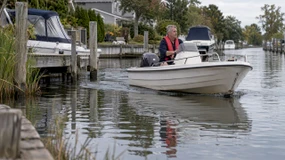
- Watch your wake, not just your speedometer. If your stern is pushing water into a visible roll, you’re still above no wake speed regardless of the number on the gauge.
- Maintain just enough throttle for steerage, since dropping too low can cost you directional control in wind or current.
- Keep a lookout for swimmers, paddlers, and other vessels, since no wake zones concentrate traffic in close quarters; for more detailed safety tips, consult the Ocean Safety Checklist.
Personal watercraft carry additional responsibilities. Michigan’s rule requiring 150 feet of separation behind other vessels reflects a pattern seen in other states, where PWCs face tighter following-distance rules than conventional boats. Shallow water near shorelines also demands extra caution, since a PWC’s jet intake can draw in sediment or vegetation at low clearance.
Operating at idle speed near shorelines and shallow flats also protects seagrass beds, docks, and nesting wildlife from prop wash and wake erosion. Our guide to protecting the shoreline covers these stewardship practices in more detail.
Pro Tip: When passing docked boats or swim platforms, cut your wake to a minimum well before you reach them, not as you pass.
How a no wake zone gets created in the first place
No wake zones don’t appear by default. Marinas, homeowner associations, municipalities, and state agencies can all apply to establish one, but the process requires documentation beyond a simple request.
- Applicants typically submit maps with coordinates, evidence of hazards such as prior accidents or property damage, and records supporting the need for a restricted zone.
- Requests on federal channels go through U.S. Army Corps of Engineers review and require concurrence from local law enforcement and other agencies.
- State-level zones, such as those in North Carolina, go through formal rulemaking with public notice before taking legal effect.
- Once adopted, maintaining the physical markers, keeping them visible, properly lit, and correctly positioned, usually falls to the agency or municipality that requested the zone.
A request that lacks documented hazard evidence or proper agency concurrence often stalls before it becomes an enforceable zone, which explains why some informally posted “no wake” signs never carry legal weight.
How boating education builds no wake compliance
Our courses cover the navigation rules, aids to navigation, and personal watercraft handling that make no wake compliance second nature rather than guesswork. Students learn to read regulatory markers, interpret local statute language, and hold idle speed across different hull types. With online, live Zoom, and in-person formats, our NASBLA-approved training gives you state-specific certification and the confidence to recognize a zone before you’re issued a citation for missing one.

A note on respecting the water
Following no wake rules protects swimmers, docks, and the habitats that make a day on the water worth having. Respecting local markers and statute language isn’t just about avoiding a fine, it’s a shared responsibility every operator carries for the waterways we all use.
— Richard
Get certified and confident before your next trip out
Reading a chart or spotting a regulatory buoy is only part of staying legal on the water. Our state-approved courses walk you through navigation rules, aids to navigation, and local regulation reading so no wake zones stop being a guessing game.
Depending on your schedule and state requirements, a few paths fit different boaters:
- The NYS Safe Boating Class covers New York’s Brianna’s Law requirements with same-day certification options.
- Our Zoom Online 1-Day Class offers live instructor interaction for boaters who want real-time Q&A without an in-person commitment.
- Online computer-based courses deliver nationwide, state-specific certification you can complete on your own schedule.
Check our course schedules to find the format and state certification that fits your boating plans, and get the credential that keeps you confident around every marked zone you encounter.
FAQ
How fast can you go in a no wake zone?
A no wake zone requires idle speed, generally 2 to 3 miles per hour, the minimum needed to maintain steerage without producing a measurable wake. Exact thresholds depend on the statute governing that water body, so always check posted markers for local specifics.
What is the no wake law in Michigan?
Michigan requires slow-no-wake speed within 100 feet of shore in water less than 3 feet deep, and personal watercraft must stay 150 feet behind other vessels. Violations can bring fines up to $500.
What is the number one unspoken rule on a boat?
Maintaining a proper lookout and operating at a safe speed for conditions is the foundational expectation behind nearly every boating rule, no wake zones included. The Coast Guard’s boater guidance ties this responsibility directly to avoiding collisions and respecting other vessels and swimmers nearby.
Why are wake boats being banned?
Some jurisdictions restrict wake-enhanced boats in certain zones due to concerns about shoreline erosion, submerged hazards, and the larger wake these vessels produce even at modest speeds. Local and state agencies review this on a case-by-case basis, so restrictions vary by waterway rather than applying universally.
Sources
- No Wake Zones | NC Wildlife
- MCL - Section 324.80146 - Michigan Legislature
- Florida Statutes § 327.46
- No Wake Zones | Wilmington District USACE
- What You Need to Know About the Markers on the Water (USCG/Boater guidance PDF)