Marine VHF Frequencies: The Complete Channel Chart
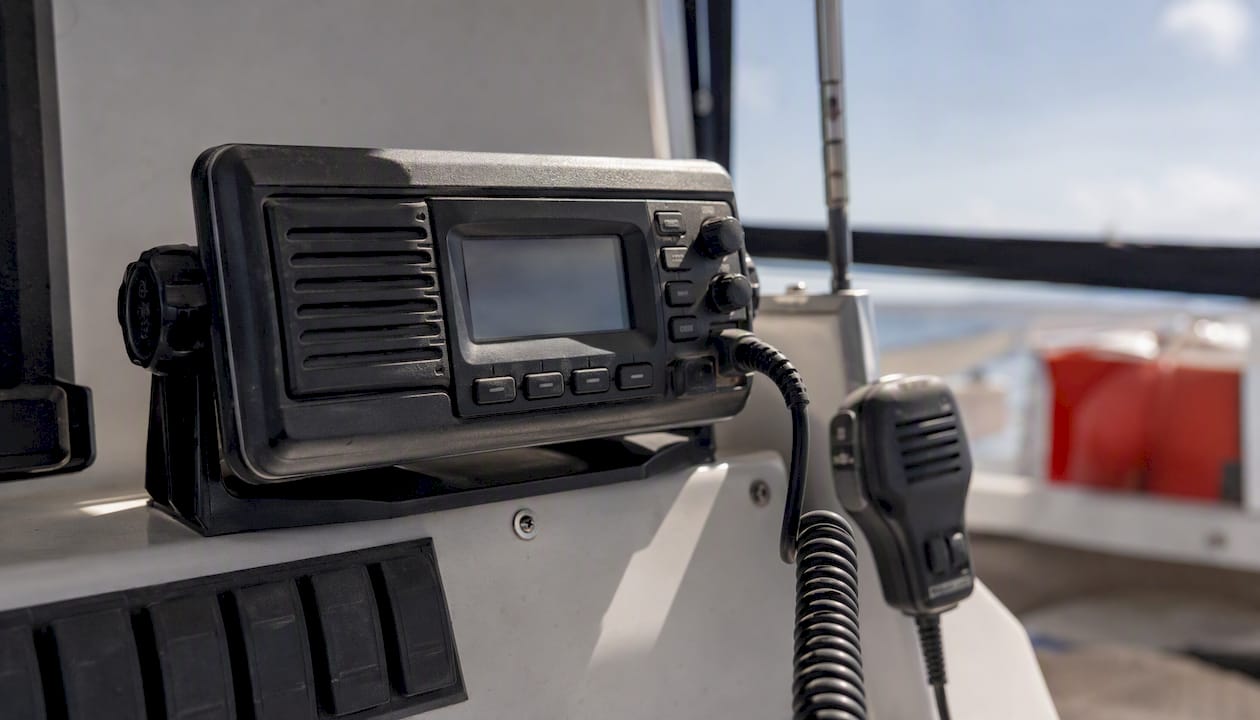
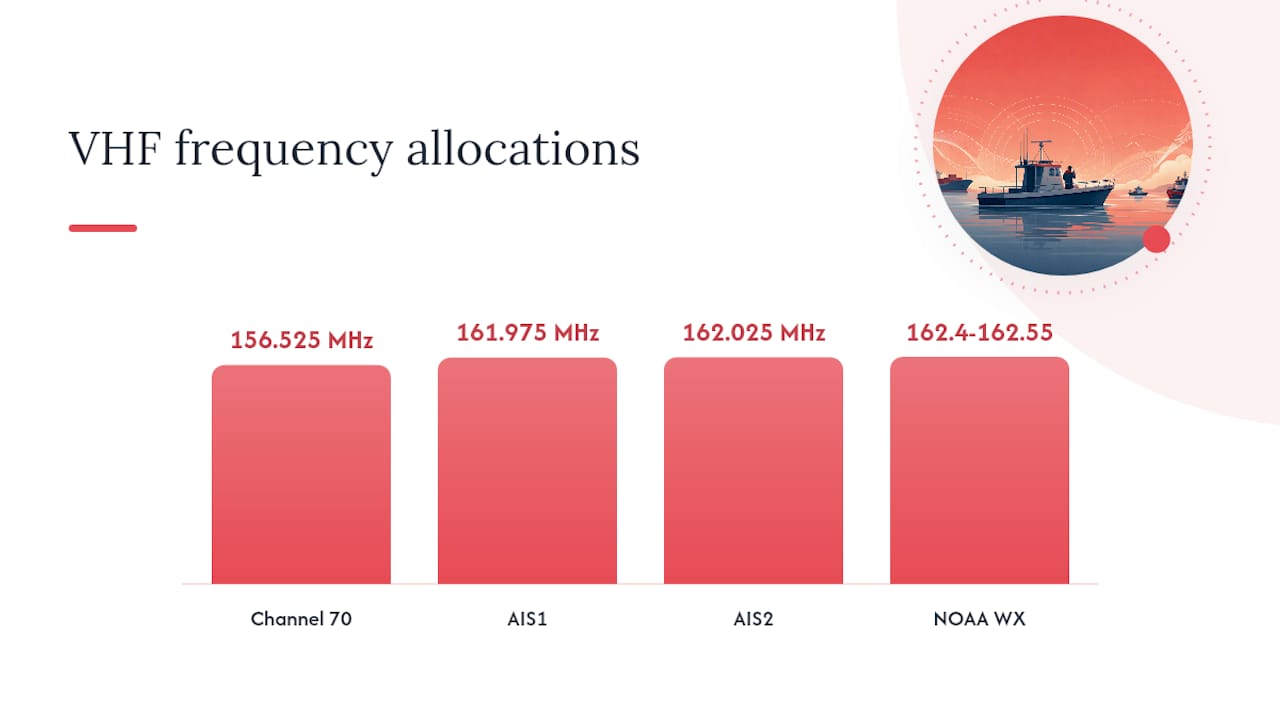
Channel 16 (156.800 MHz) is the frequency every U.S. boater must monitor while underway. It handles distress, safety, and initial calling. Channel 09 (156.450 MHz) is where recreational boaters should hail each other instead of clogging up 16. Channel 70 (156.525 MHz) exists exclusively for Digital Selective Calling, so no voice traffic belongs there, ever. NOAA weather broadcasts run on a set of dedicated frequencies within the 162.400 to 162.550 MHz band, and AIS data occupies its own separate frequencies entirely apart from voice channels.
Here’s what to do with that information right now, before you leave the dock:
- Monitor Channel 16 continuously while underway; it’s your lifeline and your obligation.
- Use Channel 09 to hail another recreational vessel, then move to a working channel.
- Never transmit voice on Channel 70. It’s reserved for DSC distress and safety signaling only.
- Tune into NOAA Weather (WX) channels before you leave and periodically during longer trips.
- Check the official NAVCEN channel table for the authoritative, regularly updated list of every U.S. marine VHF channel and its assigned use.
Everything below expands on that foundation. Consider it the reference chart you’ll want to screenshot before your next trip out.
Key Takeaways
Correct VHF channel use depends on monitoring Channel 16 continuously, hailing on 09 or 16 before switching to a working channel, and never voicing on Channel 70.
| Point | Details |
|---|---|
| Monitor Channel 16 | Keep it on continuously while underway; it’s the distress and calling channel. |
| Hail on 09, not 16 | Use Channel 09 for routine recreational calls to keep 16 clear. |
| Never voice on 70 | Channel 70 is reserved exclusively for Digital Selective Calling signals. |
| Check NOAA WX channels | Confirm the clearest local frequency between 162.400 and 162.550 MHz before departure. |
| Program working channels | Preset 68, 69, 71, and 72 so you can switch instantly after a hail. |
Table of Contents
- What Are the Official Marine VHF Frequencies?
- What Do Channels 16, 09, 13, and 70 Actually Do?
- Which Channels Should Recreational Boaters Monitor?
- How Do DSC, AIS, and NOAA Weather Channels Work?
- What Are the FCC Rules for Marine VHF Radios?
- What Working Channels Should You Program Into Your Radio?
- Why Radio Discipline Separates Confident Boaters From Everyone Else
- Where to Find Official Marine VHF Information
- Sources
- FAQ
What Are the Official Marine VHF Frequencies?
The full U.S. marine VHF channel plan runs from roughly 156.000 MHz to 162.050 MHz, a narrow slice of the VHF band that the Federal Communications Commission and the U.S. Coast Guard Navigation Center (NAVCEN) jointly manage for maritime use. Each channel number corresponds to a specific frequency pair, and some channels are simplex (one frequency, everyone transmits and receives on it) while others are duplex, meaning ships and shore stations use two different frequencies to talk without stepping on each other.
The table below reflects the core channels most recreational and commercial boaters will actually use. It’s adapted from NAVCEN’s official listings, which remain the definitive source and should be your reference for any local exceptions.
A few regional notes worth flagging: some port areas designate specific working channels for pilotage or Vessel Traffic Service (VTS) that may not apply outside those jurisdictions, and certain channels near the Great Lakes or U.S. territorial waters can have additional restrictions. NAVCEN’s maritime VHF narrowband channel page documents these exceptions and periodic updates, including newer channel additions tied to VHF Data Exchange System (VDES) and Application Specific Message (ASM) allocations.
Pro Tip: Download and print the NAVCEN channel table before a long trip. Cell service disappears fast offshore, but a laminated card in the helm doesn’t.
What Do Channels 16, 09, 13, and 70 Actually Do?
Channel 16 is the international calling and distress frequency, and the Navigation Center requires any vessel carrying a VHF radio to keep it monitored whenever the boat is underway. If you’re in trouble, this is where you call “Mayday, Mayday, Mayday.” If you’re hailing another boat with a quick, non-emergency question, you also start here, but you move off it immediately once contact is made.
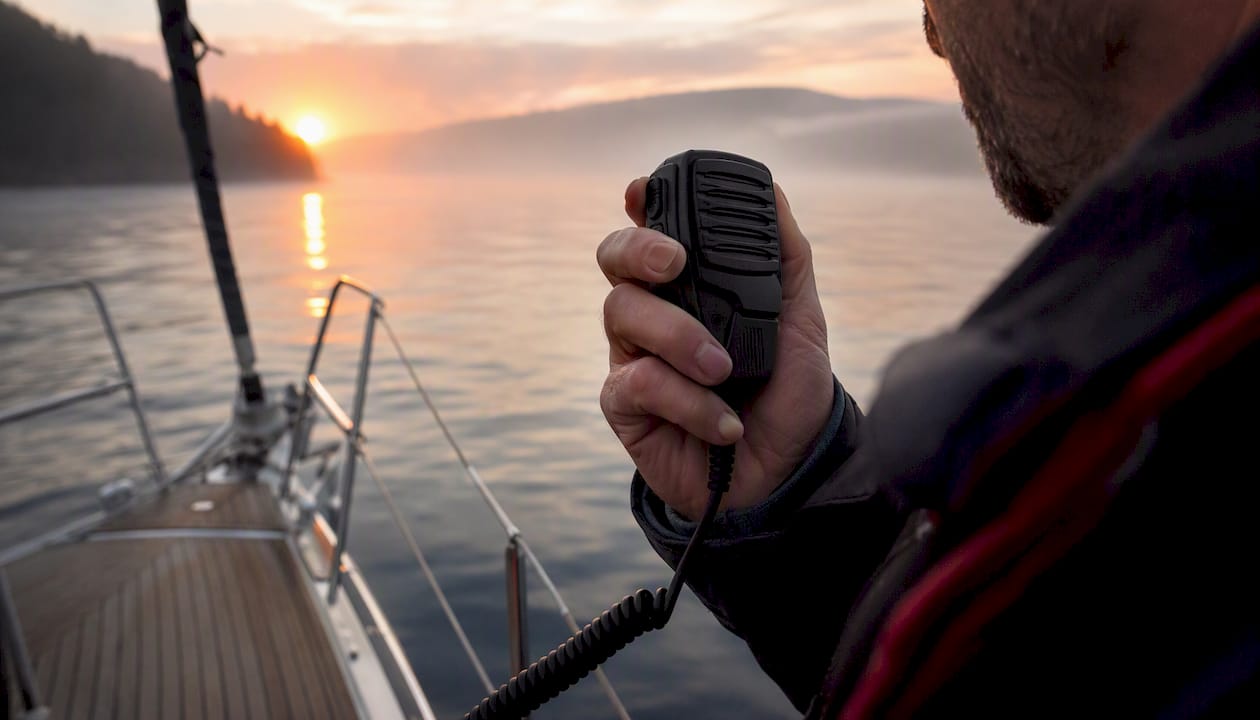
Channel 09 exists specifically so recreational boaters have somewhere to hail each other without adding to Channel 16 traffic. The Navigation Center’s radio guidance designates 09 as the boater-calling channel, and using it instead of 16 for routine contact keeps the distress frequency clear for actual emergencies.
Channel 13 serves a different purpose: bridge-to-bridge navigation safety, mainly for larger vessels and commercial traffic maneuvering in tight channels, at locks, or near bridges. If you’re boating near a shipping channel, a harbor entrance, or anywhere tugs and barges operate, monitoring 13 gives you situational awareness you won’t get anywhere else.
Channel 70 is not a voice channel at all. It’s reserved for Digital Selective Calling, the automated distress and calling protocol built into modern VHF sets. Transmitting voice on 70 interferes with DSC alerts across the area, and it’s one of the more common mistakes new boaters make when they haven’t set up their radio correctly.
AIS channels operate independently of all of this. They carry automated vessel-tracking data, not voice, so you’ll never hear anything on them, but your radio and chartplotter use them constantly in the background to display nearby traffic.
The pattern that ties these together is what veteran boaters call hail-and-switch:
- Hail on 16 (or 09 for routine recreational contact).
- Confirm the other station heard you.
- Agree on a working channel (68, 69, 71, or 72 are common).
- Move there immediately and finish your conversation off the calling channel.
Which Channels Should Recreational Boaters Monitor?
The honest answer depends on where you are and what you’re doing. Underway in open water, Channel 16 alone covers most situations. Once you’re near a marina, a bridge, or commercial traffic, add Channel 13 and whatever local working channel your harbor uses. At anchor overnight, many boaters also scan 09 in case a nearby vessel is trying to reach them.
Weather changes the calculus. When conditions turn, checking a NOAA WX channel before departure and again mid-trip is far more reliable than trusting a forecast from that morning. A Boat Navigation guide covers how radio monitoring fits into a broader situational-awareness routine if you want the fuller picture.
If you ever need to make an actual distress call, structure matters more than most people expect under stress. The standard format is short and ordered:
- Say “Mayday, Mayday, Mayday” three times.
- State your vessel name and call sign.
- Give your position (GPS coordinates or a landmark bearing).
- Describe the nature of the emergency.
- State the number of people aboard and the assistance you need.
- Repeat your vessel name and wait for a response.
For a non-distress hail, it’s much simpler: “Coast Guard Station [X], Coast Guard Station [X], this is [vessel name], over.” Once you’re acknowledged, state your business briefly or propose switching to a working channel.
Pro Tip: Keep every transmission under fifteen seconds when possible. Say your vessel name, state your point, and release the mic. Long-winded radio chatter is the fastest way to annoy everyone listening on a shared channel.
How Do DSC, AIS, and NOAA Weather Channels Work?
Digital Selective Calling changed how distress calls work on modern VHF radios. Instead of relying purely on voice, a DSC-enabled radio connected to GPS can transmit your exact position and vessel identity at the push of a dedicated distress button, broadcasting on Channel 70. That’s the entire reason voice is banned there: DSC needs the channel clear to function as designed. Once a DSC alert goes out, you typically follow up with a voice Mayday on Channel 16 to give responders details the digital alert can’t convey.
AIS operates on its own dedicated frequencies, AIS1 at 161.975 MHz and AIS2 at 162.025 MHz, and it functions completely differently from voice communication. Every AIS-equipped vessel broadcasts its position, speed, and heading automatically, and other AIS receivers display that data on a chartplotter or app. You never “tune in” to AIS the way you would a voice channel. It’s running constantly in the background, feeding traffic data to anyone with the right receiver.
Newer digital allocations, sometimes labeled channels 1024 through 1028 or ASM 1 and ASM 2, support the VHF Data Exchange System, an emerging framework for transmitting richer maritime data beyond basic AIS. Most recreational boaters won’t interact with VDES directly yet, but it’s worth knowing the terminology exists as marine electronics continue adding data capability.
NOAA weather broadcasts are transmitted on frequencies assigned to WX1 through WX5 within the 162.400 to 162.550 MHz range, and the National Weather Service recommends checking which frequency delivers the clearest signal in your specific area, since reception varies with terrain and antenna height. Most fixed and handheld VHF radios include a dedicated “WX” button that scans these automatically.
| Frequency Designation | MHz | Purpose |
|---|---|---|
| Channel 70 | 156.525 | DSC distress and safety signaling (no voice) |
| AIS1 | 161.975 | Automated vessel tracking data |
| AIS2 | 162.025 | Automated vessel tracking data |
| NOAA WX (typical range) | 162.400–162.550 | Continuous marine weather broadcasts |
What Are the FCC Rules for Marine VHF Radios?
Most recreational boaters operating domestically in U.S. waters generally do not require a separate FCC ship station license to use a marine VHF radio, according to guidance summarized by the Oregon State Marine Board. That said, “no license required” doesn’t mean “no rules apply.” FCC regulations still govern how you use the airwaves, and violations carry real consequences.
Title 47 CFR Part 80 lays out the specific prohibitions: no false distress calls, no obscene or indecent language, no intentional interference with another station’s transmissions. The e-CFR text governing station operations spells out exactly what’s prohibited and gives the FCC authority to enforce it.
Enforcement isn’t theoretical. The FCC has taken action against operators who tie up Channel 16 with extended, non-emergency chatter, since doing so can delay someone else’s real distress call from getting through. A documented enforcement notice from the agency illustrates that interference with distress monitoring gets treated seriously, not as a minor courtesy violation.
Duplex channels add another layer worth understanding. On a duplex assignment, your boat transmits on one frequency while a shore station transmits back on a different one, which lets both sides talk without their signals colliding on air. Most working channels between boats are simplex, but certain port operations and Coast Guard liaison channels use duplex pairs, and NAVCEN’s tables note which is which.
If you’re setting up a DSC radio, you’ll also need a Maritime Mobile Service Identity (MMSI) number, which functions like a digital fingerprint for your vessel during distress alerts. Registering one is free and takes a few minutes online, and it’s a step a lot of boaters skip until it’s too late to matter. A guide on essential boating electronics walks through the setup process in more detail.
What Working Channels Should You Program Into Your Radio?
Beyond the emergency and calling channels, a handful of working frequencies come up constantly once you’re actually out on the water. Programming these into your radio’s memory presets saves you from fumbling through a channel list mid-conversation.
- Channel 68: Common non-commercial working channel, often used at marinas.
- Channel 69: General recreational working channel.
- Channel 71: Another standard recreational working channel.
- Channel 72: Simplex intership channel, popular for casual boat-to-boat chatter.
- Channel 06: Intership safety communications, sometimes used by search-and-rescue coordination.
- Channel 13: Bridge-to-bridge, worth monitoring near locks and shipping lanes.
Local variation is real. Some harbors assign a specific working channel for hailing the marina office, and some ports run Vessel Traffic Service on a channel that’s unused elsewhere. Always cross-check with the NAVCEN table if you’re boating somewhere unfamiliar, particularly near commercial ports.
Most fixed and handheld VHF units let you store 10 to 20 channels as quick-access memory presets, and setting your radio to “USA” mode (rather than “International”) ensures the transmit and receive pairs match NAVCEN’s U.S. assignments so you can actually reach U.S. shore stations. Take five minutes before your first trip of the season to confirm your mode setting and preset list. It’s a small task that prevents a frustrating moment when you actually need to reach someone fast.
Why Radio Discipline Separates Confident Boaters From Everyone Else
The technical facts matter, but they’re not where most boaters actually fail. Knowing that Channel 16 sits at 156.800 MHz doesn’t help you if you’ve never practiced saying “Mayday” out loud, or if you freeze for ten seconds trying to remember your own boat’s position format under stress. Radio competence is a physical skill, closer to swimming than to memorization, and it degrades fast if you never rehearse it.
The single most avoidable failure on the water is treating Channel 16 as a conversation channel. It happens constantly, usually from boaters who don’t realize that every second they spend chatting is a second someone else’s real emergency call might not get through. The fix isn’t complicated: hail, confirm, switch. That three-step habit, repeated until it’s automatic, does more for collective safety on the water than any equipment upgrade.
DSC and MMSI setup gets skipped even more often, usually because it feels like a one-time chore rather than a safety essential. But a correctly registered MMSI paired with a DSC-enabled radio turns a panicked voice call into an instant, GPS-tagged distress signal that responders can act on before you’ve said a word. That’s not a minor convenience. It’s the difference between rescuers searching a general area and rescuers heading straight to your coordinates.
Safe Boating America’s certification courses build these habits into the curriculum rather than treating radio use as an afterthought, because a certificate that doesn’t translate into confident, correct behavior on the water isn’t doing its job. If you haven’t run a distress-call drill with your own crew, or checked whether your radio is even in USA mode, that’s worth fixing before your next trip, not after an incident forces the issue. Consider a certification course if you want structured practice instead of guesswork.
Where to Find Official Marine VHF Information
- NAVCEN U.S. VHF Channel Information: the primary official channel table and authoritative source for every assignment.
- NAVCEN International VHF Channels page: covers DSC, AIS, and duplex/simplex notes in more technical depth.
- FCC Maritime Mobile Service: the regulatory body overseeing station operation and enforcement.
- e-CFR Title 47, Part 80: the actual legal text governing prohibited transmissions and station rules.
- NOAA/NWS Marine Broadcasts: current weather channel listings and broadcast schedules by region.
Sources
- U.S. VHF Channel Information | Navigation Center
- International VHF Marine Radio Channels and Frequencies | Navigation Center
- Marine broadcasts and weather information | National Weather Service
- Communication devices for boaters | Oregon State Marine Board
- Maritime Mobile Service | FCC
- e-CFR: Title 47, Part 80 — Station license and operations (example section)
FAQ
What channel should I keep my marine radio on?
Keep your radio monitoring Channel 16 (156.800 MHz) continuously while underway. It’s the international distress, safety, and calling channel that the Navigation Center requires vessels with VHF radios to watch.
What VHF frequencies can I use without a license?
Most recreational boaters operating domestically don’t need a separate FCC ship station license to use standard marine VHF channels, though FCC rules on proper use and prohibited transmissions still apply, per guidance summarized by the Oregon State Marine Board.
What VHF channel do mariners use most for calling?
Channel 16 is used to initiate distress or safety calls, while Channel 09 is the designated channel for routine recreational boater-to-boater calling, keeping non-emergency traffic off 16.
What is the difference between VHF and marine VHF?
General VHF radio covers a broad frequency range used for many purposes, from aviation to amateur radio, while marine VHF is a specific, narrower band (roughly 156.000 to 162.050 MHz) reserved for ship-to-ship, ship-to-shore, and safety communications at sea.
Why can’t I talk on Channel 70?
Channel 70 (156.525 MHz) is reserved exclusively for Digital Selective Calling, the automated distress and signaling protocol; voice transmissions there interfere with DSC alerts across the area.
Recommended
- Water Chart for Boaters: How to Read Nautical Charts - Safe Boating America
- Ship Horns: Types, Signals, and Top Models for 2026 - Safe Boating America
- Best Marine Insurance Companies for U.S. Boat Owners - Safe Boating America
- Maritime Flags for Recreational Boaters: What to Know - Safe Boating America