Jet Ski Test: What First-Time Riders Must Know
A jet ski test is a systematic evaluation of a personal watercraft’s (PWC) performance, safety features, and overall condition before you ride or buy. Skipping this process is one of the most common mistakes first-time buyers make. Models like the Sea-Doo GTI SE 170 and the Sea-Doo RXP-X 325 perform very differently on the water, and only a structured test reveals which one actually fits your riding style. This guide covers every phase of the process, from pre-ride checklists to state licensing requirements, so you can make a confident, informed decision.
What do you need before a jet ski test?
A successful PWC evaluation starts before you ever touch the water. Missing any item on this checklist can cut your test short or create a legal problem.
Required equipment:
- Personal flotation device (PFD) rated for your weight
- Whistle or sound-producing device (USCG-required)
- Full fuel tank and a fire extinguisher on board
- Emergency shut-off lanyard clipped to your wrist or life jacket
Required documents:
- Jet ski registration certificate (must be on board)
- Proof of insurance
- Boating safety certificate or PWC endorsement card
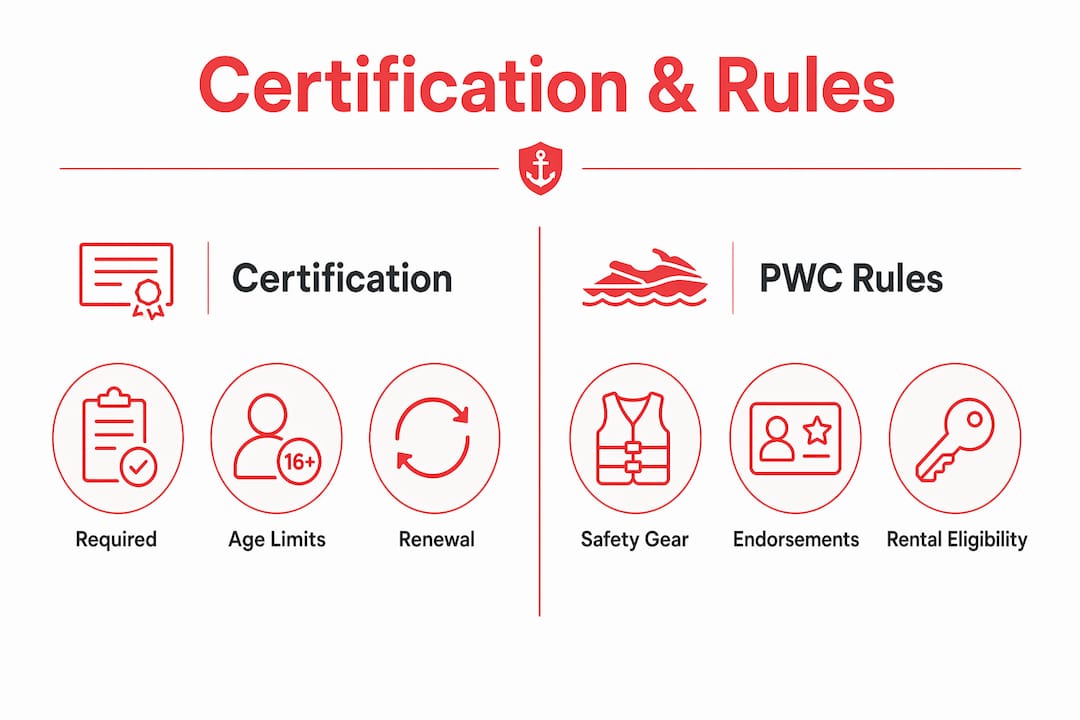
The documentation requirement is where many first-timers get caught off guard. There is no federal jet ski license; instead, most states require a NASBLA-approved boating education card, which is typically valid for life. That card is your legal permission to operate a PWC in most of the country. Rental platforms also require proof of certification before allowing you to operate, which means you need your card before you can even test-ride a rental unit.
Boater education requirements vary by state, but most require a certificate for anyone operating a motorized vessel. Typical courses run 4–8 hours and cost $20–$50. That is a small investment compared to the liability of operating without one.
Pro Tip: Complete a NASBLA-approved online course before scheduling any test ride. Many states accept same-day digital certificates, so you can be legally covered within hours.
| State | Certification Required | PWC-Specific Rules |
|---|---|---|
| Florida | Yes, for operators born after Jan 1, 1988 | Must carry card on board |
| California | Yes, for all ages | Certificate required for all PWC operators |
| New Jersey | Yes, for operators born after Jan 1, 1979 | PWC endorsement required |
| New York | Yes, under Brianna’s Law (phased in) | Boating endorsement available on driver’s license |
How to perform a thorough jet ski performance test
A complete PWC inspection follows a clear sequence. Rushing any phase produces incomplete results.
-
Pre-start visual inspection. Check the hull for cracks, stress marks, or impact damage. Look under the engine cover for oil leaks, corroded wiring, or loose hose connections. A single loose clamp can cause a flooded engine compartment within minutes on the water.
-
Engine start-up check. Start the engine at the dock and let it idle for 60–90 seconds. Listen for rough idling, misfires, or unusual knocking. A healthy engine idles smoothly and reaches operating temperature without stalling.
-
Emergency lanyard test. Attach the kill switch lanyard, then deliberately remove it while the engine is running. The engine must stop immediately. If it does not, do not take the unit on the water.
-
Low-speed handling. At slow speed, test steering response in both directions. PWCs steer by directing thrust, not by a rudder, so steering response disappears when you release the throttle. Knowing this before open-water riding prevents panic turns.
-
Acceleration and top-speed run. Gradually increase throttle to full. Note how quickly the unit reaches planing speed and whether it tracks straight under hard acceleration.
-
Stability and turning test. Execute tight turns at moderate speed. A recreational model like the Sea-Doo GTI SE 170 should feel planted and predictable. A performance model like the RXP-X 325 will feel sharper and more reactive, which is appropriate for its design but demanding for beginners.
-
Braking and deceleration. Release the throttle and observe stopping distance. Some modern PWCs include assisted braking systems. Verify the system activates as expected.
Pro Tip: Test the unit under different throttle conditions, not just full speed. Most real-world riding happens at partial throttle, and that is where handling differences between models are most obvious.
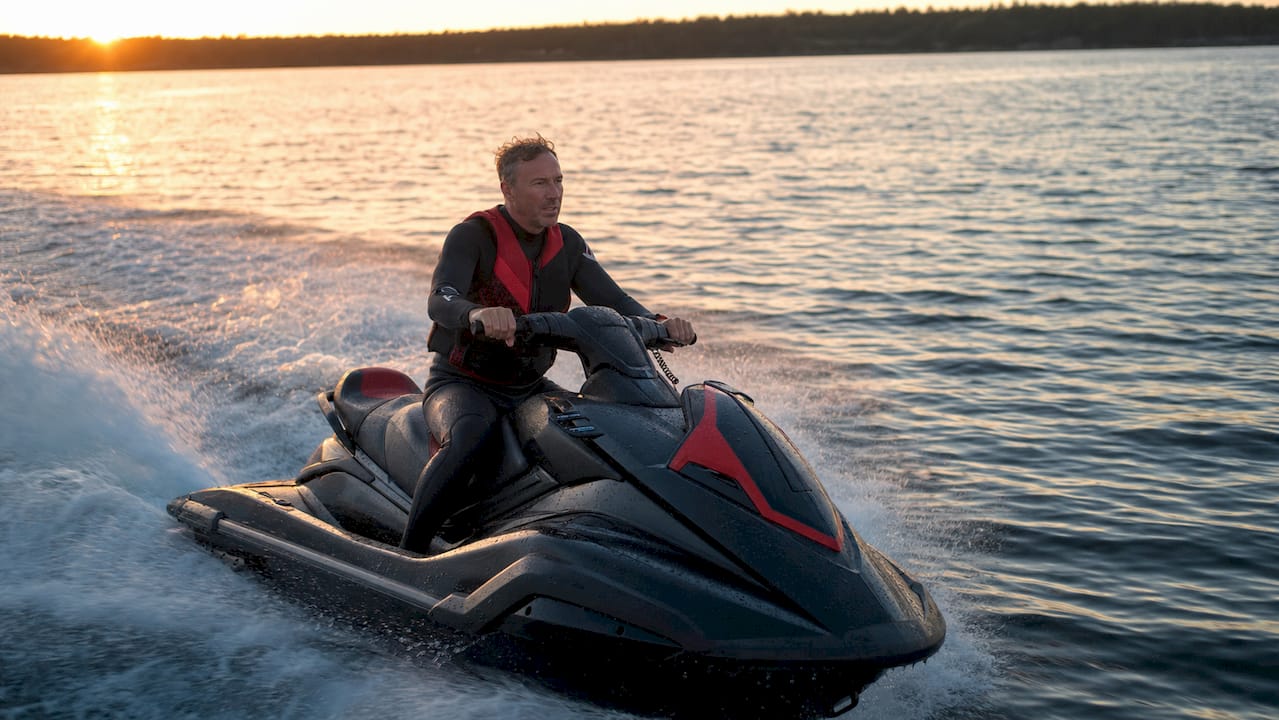
The performance gap between entry-level and high-performance models is significant. The GTI SE 170 starts at approximately $13,899 and delivers 170 hp with over 40 gallons of storage, making it well-suited for family outings and towing. The RXP-X 325 starts at $20,099 with a supercharged 325-hp engine built for racing performance. That power difference shows up immediately during a test ride, and it matters when matching a machine to your actual skill level.
| Test Priority | Recreational (GTI SE 170) | High-Performance (RXP-X 325) |
|---|---|---|
| Stability | High priority | Secondary to agility |
| Storage capacity | 40+ gallons | Minimal |
| Acceleration feel | Smooth, gradual | Aggressive, immediate |
| Beginner suitability | Strong | Not recommended |
| Price point | ~$13,899 | ~$20,099 |
What mistakes do first-time testers make?
First-time testers consistently make the same errors. Knowing them in advance saves time and prevents false conclusions about a unit’s condition.
Common mistakes to avoid:
- Ignoring the break-in period. New jet skis have a manufacturer-specified break-in period. Full engine performance does not unlock until after 5 or more hours of operation. Testing a brand-new unit at hour 0.1 and concluding it is underpowered is a common and costly misread.
- Overlooking the electronic speed limiter. Most modern PWCs sold in the US have a factory electronic speed limiter set around 69 mph to meet Coast Guard standards. Reaching that cap during a test does not mean the engine is maxed out. It means the limiter is working as designed.
- Testing only in calm conditions. Flat water hides handling problems. A unit that tracks perfectly on a glassy lake may feel unstable in light chop. Test under at least two different water conditions before forming a final opinion.
- Skipping the post-ride inspection. After the test ride, check the engine compartment again for new leaks, overheating signs, or water intrusion. Problems that do not appear at start-up often show up after sustained operation.
Warning signs that require immediate attention:
- Engine warning lights that stay on after start-up
- Unusual vibration at any throttle level
- Steering that feels loose or unresponsive
- Water in the engine compartment after the ride
- Exhaust smoke that is black or excessive
Pro Tip: If you identify a performance issue during testing, resolve it and retest before drawing conclusions. One test under suboptimal conditions is not a verdict on a unit’s quality.
How do jet ski license laws by state affect your test?
Your legal right to operate a PWC during a test ride depends entirely on your state’s boating certification rules. This is not a minor detail. Operating without the required certification exposes you to fines and invalidates your insurance coverage in most states.
The jet ski license laws by state vary considerably. Florida requires certification for anyone born after January 1, 1988. California requires it for all ages. New Jersey requires it for operators born after January 1, 1979, and also mandates a PWC-specific endorsement. New York is phasing in mandatory certification under Brianna’s Law, and New York residents can add a boating endorsement to their driver’s license directly.
The key distinction most riders miss is that the NASBLA-approved boating safety certificate is the core credential in the US. It is typically valid for life and accepted across state lines. Some states layer additional PWC-specific endorsements on top of that base certificate. Knowing which category your state falls into determines exactly what you need in hand before a test ride.
| State | Age Requirement | Renewal Required | PWC Endorsement |
|---|---|---|---|
| Florida | Born after Jan 1, 1988 | No (lifetime) | No |
| California | All ages | No (lifetime) | No |
| New Jersey | Born after Jan 1, 1979 | No (lifetime) | Yes |
| New York | Phased in, all ages by 2025 | No (lifetime) | Optional endorsement |
| Connecticut | All ages | No (lifetime) | No |
Rental eligibility follows the same rules. Rental operators are legally required to verify certification before handing over a unit. If you plan to test-ride a rental before buying, your certification card must be current and on your person.
Key takeaways
A proper jet ski test requires legal certification, a structured inspection sequence, and at least two test rides under different conditions before you can trust your conclusions.
| Point | Details |
|---|---|
| Certification comes first | You need a NASBLA-approved boating safety card before any legal test ride or rental. |
| Break-in period affects results | New PWC engines do not reach full performance until after 5+ hours of operation. |
| Match model to use case | The GTI SE 170 suits families and beginners; the RXP-X 325 suits experienced performance riders. |
| Speed limiters cap real-world speed | US PWCs are factory-limited to approximately 69 mph by Coast Guard standards. |
| State laws vary significantly | Florida, California, New Jersey, and New York each have different age and endorsement requirements. |
What testing high-performance pwcs actually taught me
Most first-time buyers focus entirely on top speed during a test ride. That is the wrong metric. After evaluating both recreational and high-performance machines, the most revealing tests happen at mid-throttle, not full throttle. That is where you feel how a hull handles real-world chop, how quickly the unit responds to steering input, and whether the ergonomics actually fit your body.
The Sea-Doo GTI SE 170’s Intelligent Debris-Free system is one feature that genuinely changes the test experience in shallow or weedy water. It prevents impeller clogging without any rider input. That kind of reliability matters far more on a family day out than an extra 150 hp you will never safely use.
The licensing piece surprises people. Many riders assume they can just show up and ride. The reality is that state boating certification is the entry ticket to legal operation, and skipping it creates real financial and legal exposure. Getting certified before you test is not bureaucratic overhead. It is the foundation of riding with confidence.
— Richard
Get certified before you ride or buy
Completing your certification before a test ride is the single step that protects your investment and your safety.
Safeboatingamerica offers state-approved PWC and boating safety courses online, with same-day certification options available in most states. Whether you need a Florida PWC certification or an Arizona boating course, courses are taught by USCG-Licensed Captains using NASBLA-approved materials. Most courses take 4–8 hours and cost $20–$50. You can complete the course, receive your certificate, and be legally ready to test-ride the same day. Visit Safeboatingamerica to find your state’s approved course and get started today.
FAQ
What is a jet ski test?
A jet ski test is a structured evaluation of a PWC’s engine, hull, controls, and safety systems before riding or purchasing. It covers pre-start inspection, on-water handling, and post-ride checks.
Do you need a license to test-ride a jet ski?
Yes. Most states require a NASBLA-approved boating safety certificate to legally operate any PWC, including during a test ride. Rental operators are required to verify certification before allowing operation.
How do jet ski license laws by state differ?
Florida requires certification for operators born after January 1, 1988, while California requires it for all ages. New Jersey adds a PWC-specific endorsement requirement. Most state certificates are valid for life with no renewal needed.
Why does a new jet ski feel slower during a test?
New PWC engines have a manufacturer break-in period. Full engine performance does not unlock until after 5 or more hours of operation, so early test results will not reflect the unit’s true top-speed capability.
What is the difference between a recreational and performance jet ski test?
A recreational test prioritizes stability, storage access, and low-speed handling. A performance test focuses on acceleration response, high-speed tracking, and agility. The Sea-Doo GTI SE 170 suits the first category; the RXP-X 325 suits the second.
Recommended
- Jet Ski licenses for minors: safety rules explained - Safe Boating America
- Jet Ski Certification Course Types: Your 2026 Guide - Safe Boating America
- License for a Jet Ski: State Requirements and How to Get Certified - Safe Boating America
- Jet Ski Course Zoom Class: Your 2026 Licensing Guide - Safe Boating America