
How Much Is Boat Insurance? 2026 Cost Guide

Boat insurance for most U.S. recreational boats generally costs a moderate amount per year, with premiums for typical mid-value vessels being relatively affordable. Higher-value boats, coastal locations, and broader coverage can significantly increase premiums. Luxury yachts typically have substantially higher annual costs. As a working benchmark, premiums run as a percentage of boat value per year, depending on coverage level and risk profile.
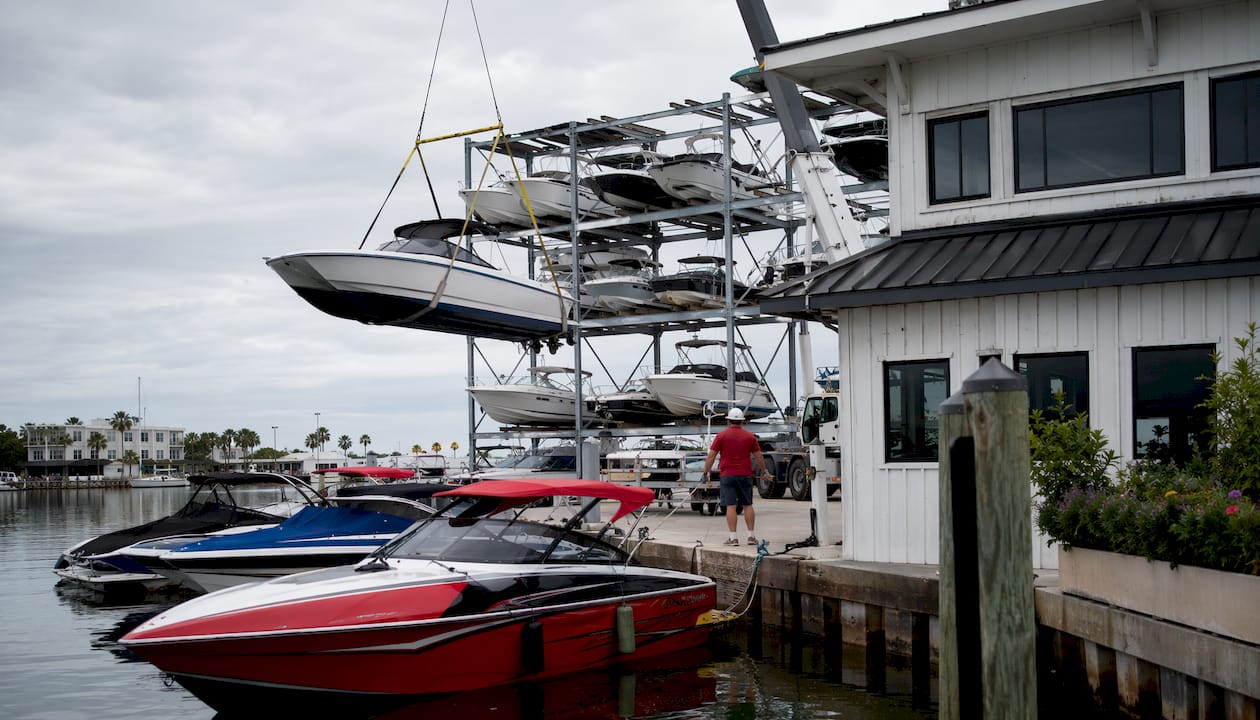
Common cost ranges vary by boat category, with smaller and simpler boats generally costing less to insure, while larger and luxury vessels have much higher premiums.
Table of Contents
- How much is boat insurance affected by these key factors?
- What does boat insurance actually cover?
- How to choose the right coverage for your boat
- Practical ways to manage boat insurance costs
- What fees and additional costs appear in a boat insurance policy?
- How boat size, type, and usage drive your premium
- How do insurance costs compare across recreational boat types?
- Key Takeaways
- FAQ
How much is boat insurance affected by these key factors?
Several variables drive the final premium. Understanding them helps you anticipate costs before requesting quotes.
- Boat type and value. Fishing boats carry lower risk profiles than yachts or ski boats, so premiums differ substantially across vessel categories.
- Storage method. Dry stack or garage storage lowers premiums versus wet slip docking, which exposes boats to storm surge, theft, and corrosion.
- Navigation territory. Dynamic pricing algorithms raise premiums for boats in riskier areas such as busy coastal inlets compared to calm inland lakes.
- Policy type. “Agreed Value” policies cost more upfront but pay the stated amount at total loss. “Actual Cash Value” policies depreciate the vessel, which can leave owners underinsured.
- Deductibles and add-ons. Higher deductibles reduce premiums; add-ons like towing coverage or personal effects protection increase them.
- State regulations. State mandates shape minimum coverage requirements and, by extension, base premium levels.
- Boating experience and certification. Completing an approved safety course demonstrates lower risk to insurers and can qualify you for premium discounts.
Pro Tip: Switching from a wet slip to dry-stack storage is one of the fastest ways to reduce your annual premium. If marina convenience is not a daily necessity, the savings often outweigh the trade-off.
What does boat insurance actually cover?
Coverage categories vary by policy, but most standard boat insurance packages include the following:
- Liability coverage. Pays for bodily injury and property damage you cause to others on the water.
- Hull coverage. Covers physical damage to the boat from collision, weather, fire, and sinking.
- Personal property / personal effects. Protects gear, electronics, and belongings stored onboard, typically up to a stated sublimit.
- Uninsured boater coverage. Covers your injuries when the at-fault boater carries no insurance.
- Towing and assistance. Reimburses on-water towing, fuel delivery, and emergency services.
- Named-storm deductibles. Coastal boaters often face deductibles calculated as a percentage of the boat’s value rather than a fixed dollar amount, which can produce significant out-of-pocket costs after a hurricane.
The choice between Agreed Value and Actual Cash Value directly affects total-loss recovery. Agreed Value pays the full insured amount; Actual Cash Value subtracts depreciation, sometimes leaving a meaningful gap between the payout and replacement cost.
How to choose the right coverage for your boat
Boat insurance is not one-size-fits-all; the right policy depends on your vessel, where you operate, and your financial exposure.
- Match coverage to boat value. Higher-value or coastal vessels benefit most from Agreed Value policies.
- Check navigation limits. Policies often restrict coverage to specific geographic zones; operating outside those limits can void a claim.
- Review personal effects sublimits. Standard policies cap personal property coverage; boaters who carry expensive electronics should verify those limits.
- Confirm state minimums. Arkansas requires $50,000 liability for boats over 50 HP; Hawaii mandates $100,000 liability plus $500,000 wreckage removal for vessels over 26 feet. State requirements vary significantly.
- Set a deductible you can absorb. A higher deductible lowers your premium but increases out-of-pocket exposure after a claim.
- Complete a boating safety course. Many insurers discount premiums for certified boaters. Safeboatingamerica offers state-approved boating safety courses that satisfy requirements across all 50 states.
Pro Tip: Review your policy’s navigation territory clause before each season. If you plan to cruise outside your usual waters, contact your insurer to adjust coverage before departure, not after an incident.
Practical ways to manage boat insurance costs
- Store smart. Dry-stack or garage storage reduces premium risk compared to wet slips; the savings compound year over year.
- Get certified. Boating education lowers accident rates and signals lower risk to underwriters, often translating directly to discounts.
- Audit named-storm deductibles. In hurricane-prone states, a percentage-based deductible on a $100,000 boat means $10,000+ out of pocket at a 10% rate. Know your exposure before storm season.
- Bundle policies. Some insurers discount boat policies when bundled with home or auto coverage.
- Maintain accurate records. Receipts, photos, and appraisals support faster, fuller claims settlements.
- Watch for exclusions. Wreckage removal, personal effects, and fuel-spill liability are commonly excluded or sublimited; verify each before signing.
Pro Tip: Completing a NASBLA-approved course through Safeboatingamerica can qualify you for insurer discounts while satisfying your state’s legal certification requirement simultaneously.
What fees and additional costs appear in a boat insurance policy?
Beyond the base annual premium, several line items affect total cost:
| Cost Component | Typical Range / Notes |
|---|---|
| Annual premium | Varies depending on boat type and coverage |
| Deductible (fixed) | Varies by policy |
| Named-storm deductible | Often calculated as a percentage of the insured boat value |
| Towing/assistance rider | Additional cost depending on coverage selected |
| Personal effects rider | Varies by sublimit selected |
| Agreed Value surcharge | Typically higher than Actual Cash Value baseline |
| Wreckage removal coverage | Often a separate add-on; not standard |
Lenders, marinas, and boat clubs effectively mandate insurance even when state law does not, making these costs unavoidable for most owners.
How boat size, type, and usage drive your premium
Size, vessel category, and how you use the boat each feed directly into the underwriter’s risk model. A 14-foot aluminum fishing boat used on a freshwater lake presents minimal liability exposure. A 28-foot center console running offshore in the Gulf of Mexico carries storm, navigation, and mechanical risks that push premiums sharply higher.
Usage frequency matters too. Boats operated year-round in coastal waters accumulate more exposure hours than seasonal freshwater vessels, and insurers price accordingly. High-performance engines, racing use, and charter activity all trigger surcharges or may require specialized policies entirely. Reviewing your boating license requirements by state is a useful starting point for understanding how usage classifications affect both legal compliance and insurance eligibility.
How do insurance costs compare across recreational boat types?
Different vessel categories carry distinct risk profiles, and premiums reflect that directly.
| Boat Type | Estimated Annual Premium | Key Risk Drivers |
|---|---|---|
| Small fishing / jon boat | — | Low value, inland use |
| Pontoon boat | — | Moderate value, family use |
| Bass / ski boat | — | Higher speed, sport use |
| Personal watercraft | — | High accident rate, operator age |
| Cabin cruiser / center console | — | Higher value, offshore exposure |
| Sailboat | — | Rigging complexity, coastal use |
| Luxury yacht | — | High value, crew, extended navigation |
Sailboats generally fall between pontoons and cruisers in cost. Their lower engine risk is offset by rigging complexity and the tendency toward coastal or offshore navigation. Motorboats with high-horsepower engines, particularly ski boats and performance vessels, often cost more to insure than equivalently priced sailboats because speed correlates directly with accident severity in underwriting models. You can explore boat rental and insurance factors across vessel types for additional context on how navigation specifics affect pricing.
Key Takeaways
Boat insurance costs a moderate annual amount for most recreational vessels, with premiums increasing substantially for luxury yachts based on factors like value, storage, location, and coverage type.
| Point | Details |
|---|---|
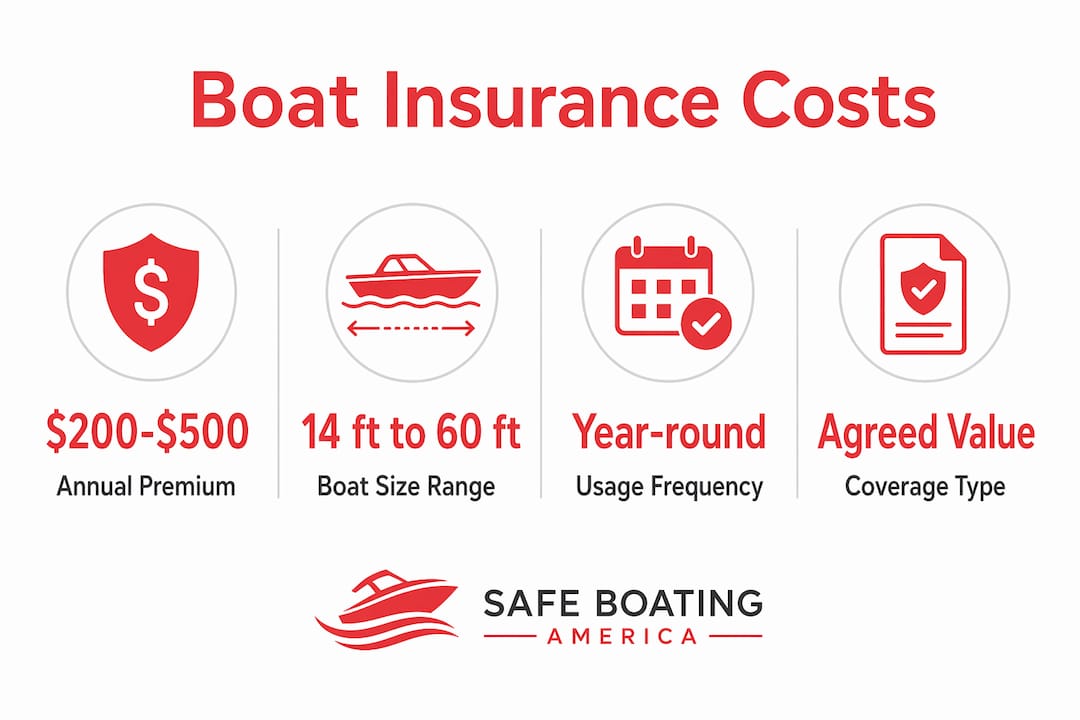
| Average annual cost | Most recreational boats average about $200 to $500 annually, with a typical $300 for a $25,000 boat; yachts can exceed $5,000. |
| Premium-to-value ratio | Premiums generally reflect a small percentage of boat value annually depending on coverage and risk. |
| Storage impact | Dry-stack or garage storage reduces premiums versus wet slip docking. |
| Policy type matters | Agreed Value pays full insured amount at total loss; Actual Cash Value depreciates the boat. |
| Certification discounts | Completing a state-approved boating safety course can reduce premiums. |
FAQ
Is boat insurance required by law in the U.S.?
Most states do not mandate boat insurance, but Arkansas, Hawaii, and Utah impose minimum liability requirements for certain vessels. Lenders and marinas typically require coverage regardless of state law.
How much does boat insurance cost per year on average?
Most recreational boat owners pay annual premiums ranging from about $200 to $500, with the typical figure around $300 for a $25,000 boat. Costs vary with boat value, location, and coverage, and luxury yachts often exceed $5,000 annually.
Does boat insurance cover engine damage?
Engine damage from a covered peril such as collision or fire is generally included, but mechanical breakdown and wear-and-tear are standard exclusions in most policies.
Can a boating safety course lower my insurance premium?
Yes. Completing a NASBLA-approved course through a provider like Safeboatingamerica demonstrates lower risk to insurers and qualifies many boaters for premium discounts.
Do you have to have insurance on a boat if you have a loan?
Yes. Lenders almost universally require comprehensive boat insurance as a condition of financing, regardless of whether your state mandates it by law.
Recommended
- Top Boat Manufacturers: 2026 Buyer’s Guide by Category - Safe Boating America
- Boat Requirements: What Every U.S. Boater Must Know - Safe Boating America
- Fire Extinguisher Requirements for Boats: 2026 Guide - Safe Boating America
- How to Perform a Boat Safety Inspection Step by Step - Safe Boating America