Fire Extinguisher Requirements for Boats: 2026 Guide
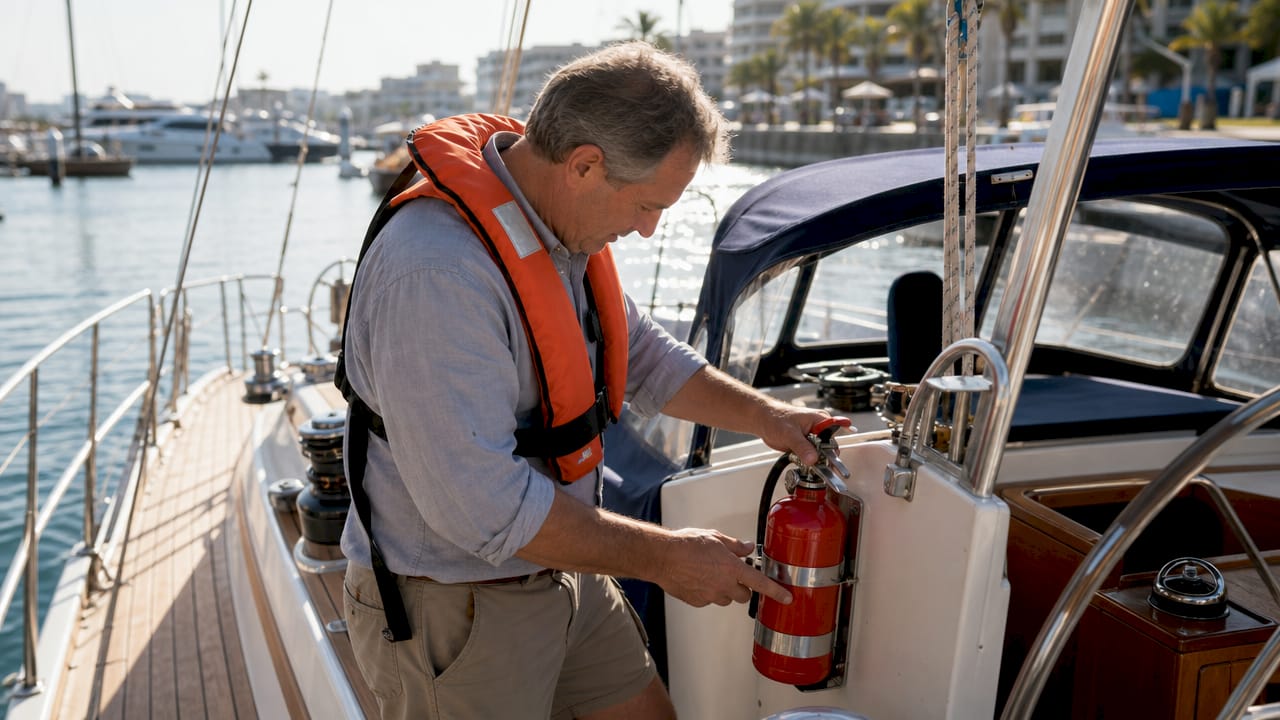
The core requirement for fire extinguishers on a boat is federal law: the U.S. Coast Guard (USCG) mandates that most recreational vessels carry at least one USCG-approved, marine-type fire extinguisher rated at 5-B or higher. The exact number and rating depend on your boat’s length and whether it has enclosed compartments, permanently installed fuel tanks, or a fixed fire suppression system. A 2022 regulatory update replaced the old B-I and B-II classification system with the UL numerical ratings of 5-B and 20-B, harmonizing standards across the industry. Knowing these rules before you leave the dock is not optional. Violations under 33 CFR Part 175 and 46 CFR Part 25 carry civil penalties and can result in your voyage being terminated on the water.
What is a requirement for fire extinguishers on a boat by vessel size?
The USCG divides recreational vessels into three size categories, and each category carries a different minimum extinguisher count. The table below shows the current requirements.
| Vessel length | No fixed suppression system | With USCG-approved fixed suppression system |
|---|---|---|
| Under 26 feet | One 5-B extinguisher | Exempt from portable requirement |
| 26 to under 40 feet | Two 5-B, or one 20-B extinguisher | One 5-B extinguisher |
| 40 to 65 feet | Three 5-B, or one 20-B plus one 5-B extinguisher | Two 5-B, or one 20-B extinguisher |
Vessels under 26 feet with permanently installed fuel tanks or enclosed compartments require at least one 5-B extinguisher. The exception applies only to outboard-powered boats with no enclosed spaces and no permanent fuel tanks. If your boat has a cuddy cabin, a built-in fuel tank, or any enclosed area where fumes can accumulate, the exemption does not apply to you.
Fixed fire suppression systems in machinery spaces reduce the portable extinguisher count by one unit per category. That credit only applies when the fixed system carries USCG approval and meets strict installation and certification standards. A system installed without proper certification does not qualify for the reduction.
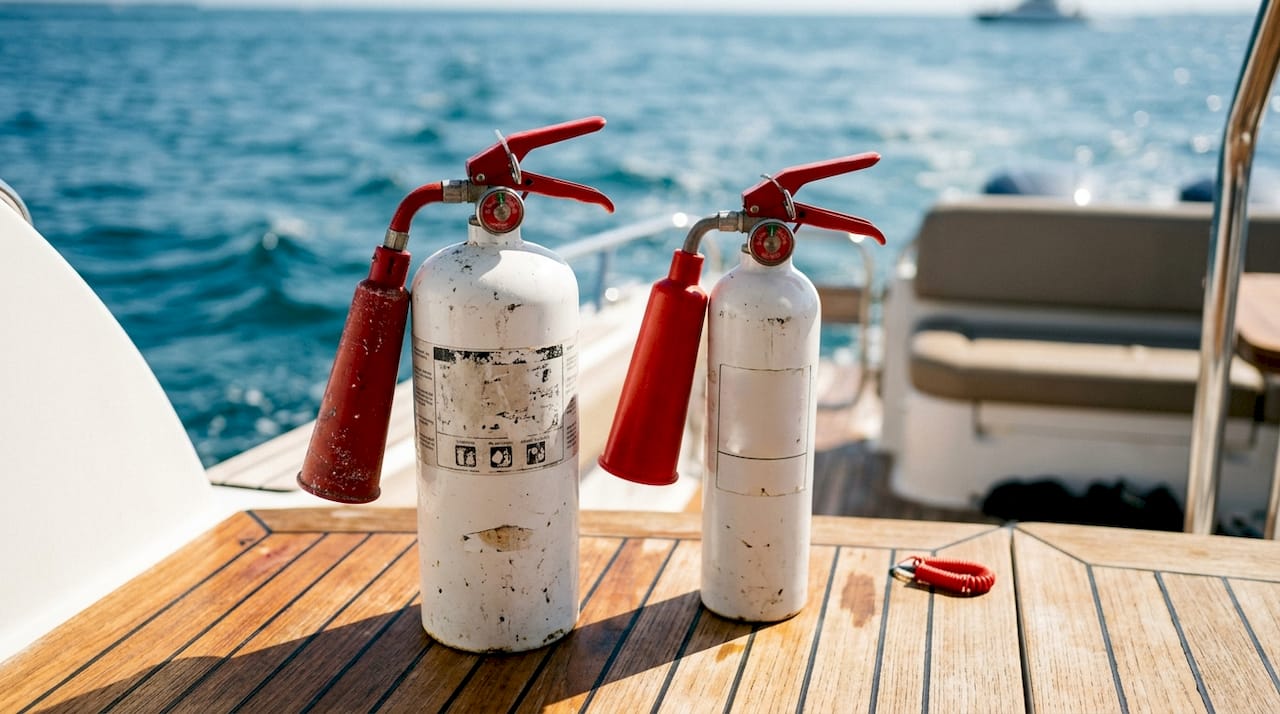
Every extinguisher you carry must display a marine-type USCG label. Standard household extinguishers are tested for residential environments, not for the vibration, humidity, and salt air of a marine environment. A household unit will fail a Coast Guard inspection even if its gauge reads full and its seal is intact. Always verify the label before purchase.
Pro Tip: Check the boat safety equipment your vessel legally requires beyond fire extinguishers by reviewing the full required safety equipment list before your next trip.
How do you maintain and inspect marine fire extinguishers?
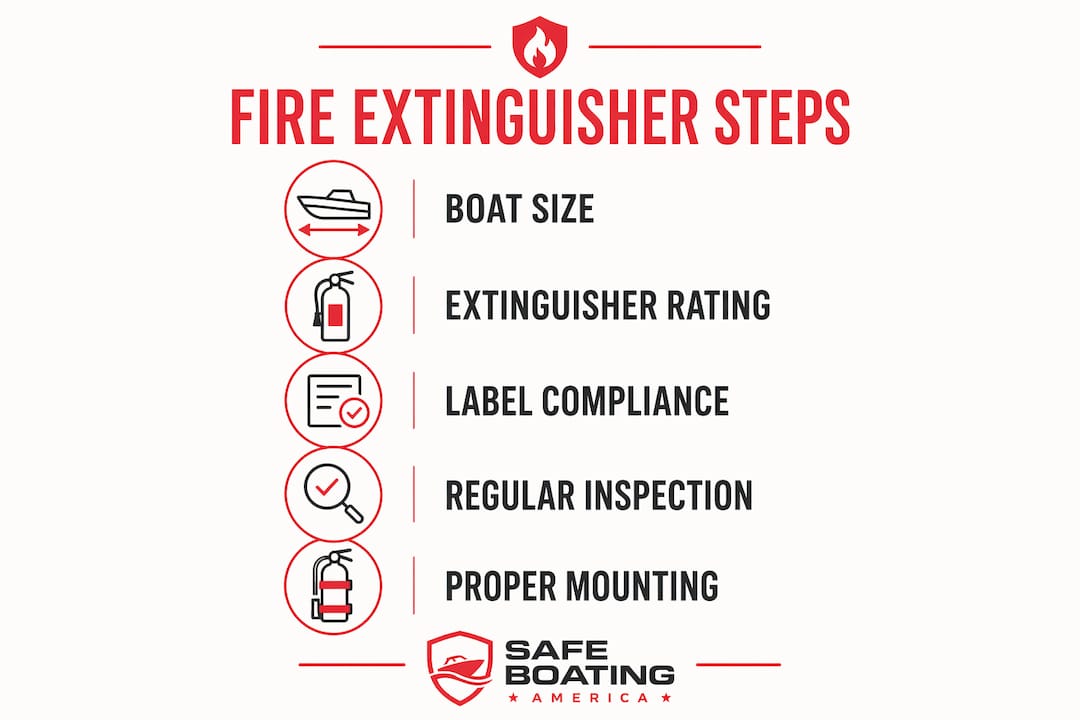
Carrying the right extinguisher is only half the requirement. The USCG also requires that every unit be in good and serviceable condition at all times.
- Pressure gauge: The needle must sit in the green zone. A gauge reading in the red means the unit is either overpressurized or has lost pressure and must be replaced or recharged.
- Tamper seal: The pull pin must have an unbroken seal. A broken or missing seal indicates the unit may have been discharged, even partially.
- Corrosion and physical damage: Check the cylinder body, handle, and nozzle for rust, dents, or cracks. Salt air accelerates corrosion on boats faster than in any other environment.
- Mounting bracket: The extinguisher must be secured in its bracket. A loose unit becomes a projectile in rough seas.
- Expiration date: The manufacture date is stamped on the cylinder bottom. Disposable extinguishers expire 12 years from that date, not from the date of purchase.
The distinction between disposable and rechargeable units matters significantly for long-term compliance. Rechargeable extinguishers require annual service by a certified technician and can remain valid well beyond 12 years with proper documentation. Disposable units cannot be recharged and must be discarded at the 12-year mark regardless of how they look or how the gauge reads.
Failure to maintain these conditions can result in civil penalties and voyage termination under federal regulations. A Coast Guard boarding officer checks every item on that list. One expired or corroded unit is enough to end your day on the water.
Pro Tip: Log your inspection dates on a waterproof card stored with each extinguisher. A dated record shows a boarding officer you take maintenance seriously and can prevent disputes about serviceability.
Where should fire extinguishers be placed on a boat?
No federal regulation specifies exact mounting locations for portable fire extinguishers on recreational vessels. Strong expert guidance exists, however, and following it can mean the difference between containing a fire and losing the boat.
- Engine compartment access point: Mount one extinguisher near the engine hatch, not inside it. You need to reach the extinguisher before opening the hatch, since opening the hatch feeds oxygen to the fire.
- Galley area: Any boat with a cooking area should have an extinguisher within arm’s reach of the stove. Cooking fires are among the most common onboard ignition sources.
- Fuel storage and fill areas: Position an extinguisher near the fuel fill deck plate and any portable fuel tank storage area.
- Exits and companionways: Placing extinguishers near exits gives anyone on board access regardless of where the fire starts. A unit stored in a locked forward berth is useless during a cockpit fire.
- Helm station: Larger vessels benefit from a unit at the helm, where the operator spends most of their time and can respond immediately.
Secure mounting is not just a best practice. An unsecured extinguisher sliding across a deck in a beam sea can injure crew and damage the unit. Use a marine-grade bracket rated for the extinguisher’s weight and inspect the bracket fasteners at the start of each season.
Common mistakes that lead to failed inspections and penalties
Treating fire extinguisher compliance as a checkbox rather than a genuine safety measure is the most common mistake boaters make. Experts consistently advise that all boaters carry extinguishers and maintain them well, even those whose vessels technically qualify for an exemption. Fire spreads rapidly on boats, often leaving less than a minute to act. An exemption does not slow the fire down.
- Relying on the pressure gauge alone. An extinguisher with a green gauge but an expired manufacture date is non-compliant. Expiration dates and labeling carry equal legal weight to the gauge reading.
- Using a non-marine household extinguisher. It will fail inspection. The USCG marine-type label is a legal requirement, not a suggestion.
- Ignoring the 12-year rule on disposable units. A new-looking extinguisher purchased years ago may already be past its legal service life. Always check the stamp on the cylinder bottom.
- Failing to account for boat configuration changes. Adding an enclosed cabin or a permanently installed fuel tank to a previously exempt vessel creates a new legal obligation to carry an extinguisher.
“Fire extinguisher requirements exist because fire at sea is one of the most dangerous emergencies a boater can face. Compliance is the floor, not the ceiling.”
Review the full scope of federal boating safety regulations to make sure your vessel meets every requirement, not just the extinguisher rules.
Key Takeaways
Boat fire extinguisher compliance requires the right quantity, the right rating, a valid marine-type USCG label, and documented maintenance within the 12-year expiration window.
| Point | Details |
|---|---|
| Vessel size determines count | Boats under 26 feet need one 5-B unit; 26–40 feet need two 5-B or one 20-B. |
| Marine-type label is mandatory | Household extinguishers fail inspection regardless of gauge or condition. |
| Disposable units expire at 12 years | Check the manufacture date stamped on the cylinder bottom, not the purchase date. |
| Fixed suppression reduces portable count | A USCG-approved fixed system in machinery spaces reduces the portable requirement by one. |
| Placement affects real-world safety | Mount extinguishers near the engine access point, galley, fuel areas, and exits. |
Fire extinguisher compliance: what I’ve learned from years on the water
Most boaters I’ve encountered pass their Coast Guard inspection and consider the job done. That mindset concerns me more than outright non-compliance, because it creates a false sense of security.
The 12-year expiration rule catches people off guard more than any other requirement. I’ve seen boaters pull out an extinguisher that looks brand new, only to find a manufacture stamp showing it was made 14 years ago. It reads full on the gauge. The seal is intact. It would fail inspection and, more importantly, it may not work when you need it most.
My personal routine is simple. At the start of every season, I physically remove each extinguisher from its bracket, check the stamp on the bottom, verify the gauge, inspect the seal, and look for any corrosion on the cylinder or nozzle. It takes about three minutes per unit. I also carry one more extinguisher than the minimum requirement on any boat I operate. The regulation sets a floor. My safety standard is higher than the floor.
The placement question is where I see the most practical errors. Boaters mount their single required extinguisher in a storage compartment because it stays cleaner there. In a real fire, you will not have time to open a compartment, dig past gear, and retrieve it. Mount every extinguisher where you can grab it in the dark, with one hand, in under five seconds. That standard is more useful than any regulation.
A step-by-step boat safety inspection covering all required gear is worth doing at least twice a season. Regulations are the starting point. Preparedness is the goal.
— Richard
Safeboatingamerica: boating safety education and certification
Safeboatingamerica offers USCG-compliant boating safety courses taught by State Certified Instructors and USCG-Licensed Captains across every U.S. state. Courses cover required fire safety equipment, federal regulations, emergency procedures, and practical vessel operation skills.
Whether you need a state-approved boating license, a Jet Ski certification, or a refresher on boat fire safety requirements and compliance, Safeboatingamerica provides online, Zoom, and in-person options with same-day certification available. Thousands of boaters nationwide have used these programs to meet legal requirements and operate with confidence. Visit Safeboatingamerica to find a course that fits your schedule and state requirements.
FAQ
What types of fire extinguishers are required on a boat?
Boats must carry USCG-approved, marine-type fire extinguishers rated at 5-B or 20-B. Standard household extinguishers do not meet the marine-type label requirement and will fail a Coast Guard inspection.
How many fire extinguishers does a boat need?
Boats under 26 feet need one 5-B extinguisher; boats 26 to under 40 feet need two 5-B or one 20-B; boats 40 to 65 feet need three 5-B or one 20-B plus one 5-B. A USCG-approved fixed suppression system reduces each category’s count by one unit.
When does a marine fire extinguisher expire?
Disposable marine fire extinguishers expire 12 years from the manufacture date stamped on the cylinder bottom. Rechargeable units can remain valid beyond 12 years with annual service by a certified technician.
Do outboard boats need a fire extinguisher?
Outboard-powered boats under 26 feet with no enclosed spaces and no permanently installed fuel tanks are exempt from the portable extinguisher requirement. Any enclosed compartment or built-in fuel tank eliminates that exemption.
What happens if your fire extinguisher fails a Coast Guard inspection?
A non-compliant extinguisher, whether expired, corroded, or lacking a marine-type USCG label, can result in civil penalties and voyage termination under 33 CFR Part 175 and 46 CFR Part 25.