BoatUS Foundation: Your Guide to Boating Safety Certification
What is the BoatUS Foundation and why does it matter for certification?

The BoatUS Foundation delivers boating safety courses approved by the National Association of State Boating Law Administrators (NASBLA) and meets U.S. Coast Guard (USCG) compliance standards. That combination matters because states use NASBLA approval as their primary benchmark when deciding which education providers to accept. A course without it may not satisfy your state’s legal requirement, regardless of how thorough the content appears.
Key facts about BoatUS Foundation courses:
- Approved by NASBLA, the national body that sets boating education standards across all 50 states
- Compliant with USCG safety standards for recreational boater education
- Meets New York’s Brianna’s Law requirements for mandatory boating safety education
- Qualifies boaters for insurance discounts with many major marine insurers
- Fulfills legal boating education mandates in multiple states
How U.S. boating safety education and certification requirements work
Boating safety education in the United States is governed by a combination of NASBLA standards and individual state laws. There is no single federal boating license. Instead, each state sets its own age thresholds, vessel types, and horsepower limits that trigger mandatory education requirements.
Two state examples illustrate how specific these rules get:
- Florida: Anyone born on or after January 1, 1988 must carry a Boating Safety Education Identification Card to legally operate a motorboat. Florida also issues temporary certificates valid for up to 90 days while the permanent card is processed.
- Texas: Operators born on or after September 1, 1993 must complete a Boater Education Certification Course before operating a personal watercraft, a motorboat above 15 horsepower, or a sailboat over 14 feet.
Approved courses typically cover navigation rules, emergency procedures, required safety equipment, accident prevention, and applicable state and federal boating laws. Completion results in either a state-issued boating safety education card, a certificate of completion, or in New York, an endorsement on the operator’s driver’s license.
Why state approval of boating courses is more complicated than it looks
Boating education is decentralized across the U.S. Not all online boating safety courses are accepted by every state, and NASBLA itself flags this as one of the most common misconceptions among new boaters. A course that satisfies Florida’s requirements may not be on New York’s approved list.
What boaters need to verify before enrolling:
- Whether the provider appears on your specific state’s approved course list
- Whether the course format (online, in-person, or live Zoom) is accepted in your state
- Whether the certificate issued will be recognized for insurance discount purposes
- Whether the course meets any age-specific or vessel-specific requirements your state imposes
Taking an unapproved course has real consequences. You will not receive a valid certification card, your state may still treat you as non-compliant, and your insurer may deny a discount claim. Checking your state’s approved provider list before you pay for any course is the single most important step in the process.
Pro Tip: Visit your state boating agency’s website directly, not just the course provider’s site, to confirm the course you are considering appears on the official approved list.
How to obtain a state-approved boating safety certificate or license
Getting certified follows a clear sequence regardless of which approved provider you use.
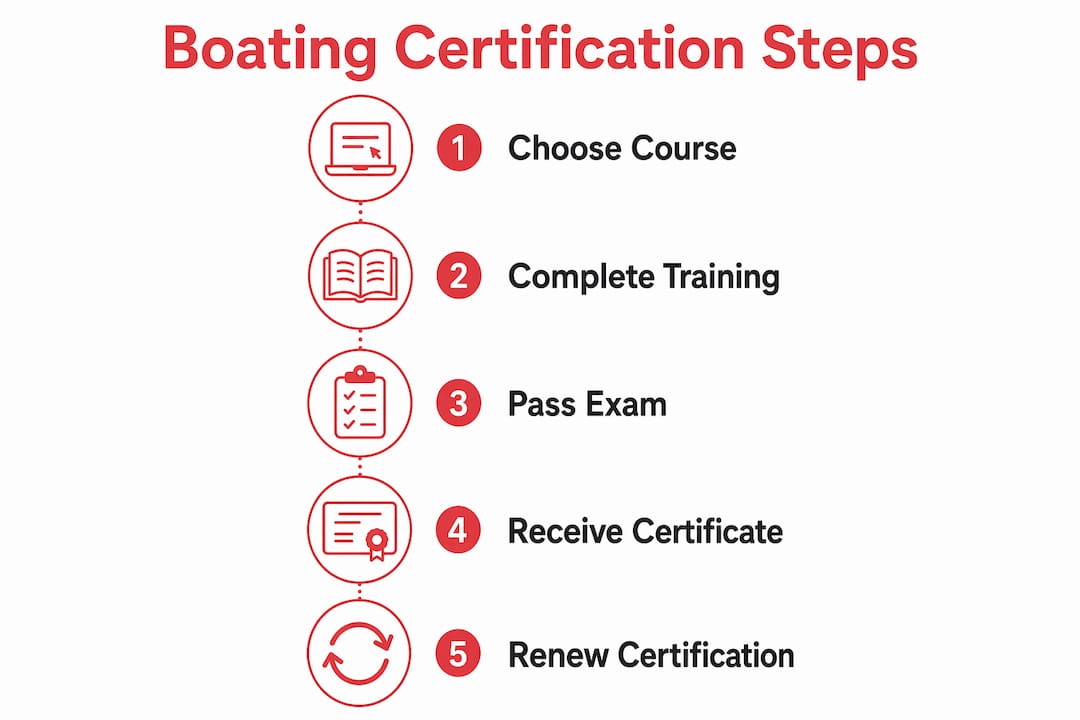
- Step 1: Identify your state’s mandatory education requirements based on your birth year, vessel type, and intended use.
- Step 2: Find a provider on your state’s official approved list. NASBLA’s website links directly to each state’s boating education page.
- Step 3: Choose your format. Options typically include self-paced online courses, live Zoom classes with a certified instructor, and in-person classroom sessions.
- Step 4: Complete the course and pass the final exam. Most states require a minimum passing score.
- Step 5: Receive your certificate of completion. In Florida, this serves as a temporary compliance document for up to 90 days while your permanent ID card is issued.
- Step 6: Apply for your permanent state-issued boating safety education card through your state agency, if required.
Renewal requirements vary by state. Some states issue lifetime certifications; others require periodic refresher courses. Confirm your state’s renewal policy at the time of initial certification.
Pro Tip: If you boat in multiple states, check each state’s reciprocity rules. Most states accept NASBLA-approved certifications from other states, but a few have additional requirements.
Safe Boating America: state-approved courses nationwide
Safeboatingamerica is a nationally recognized provider of state-approved boating safety education, offering courses that satisfy requirements across all 50 states. Courses are taught by State Certified Instructors and USCG-Licensed Captains using NASBLA-approved materials.
What Safeboatingamerica offers:
- Boating license courses for every state, including California, Florida, New Jersey, Massachusetts, Rhode Island, and Texas
- Jet Ski and PWC certification classes
- Brianna’s Law-compliant New York boating safety courses, with the option to add a boating endorsement to a NYS driver’s license
- Online self-paced courses, live Zoom classes, and in-person sessions
- Same-day certification options for qualifying students
- Curriculum covering navigation rules, emergency procedures, docking, trailering, marine environmental awareness, and required safety equipment
Safeboatingamerica is particularly well known for its New York and Connecticut programs, with strong coverage across Long Island, Nassau County, Suffolk County, New York City, and Buffalo.
How the BoatUS Foundation partners with state agencies and boating organizations
The BoatUS Foundation works alongside state boating agencies and national organizations to expand access to boating safety education. Its NASBLA-approved course materials are built to align with state regulatory frameworks, which is why state agencies across the country accept its certifications. The foundation also collaborates with marine insurers, which is how course completion translates directly into insurance discounts for boaters.
These partnerships give the BoatUS Foundation’s courses a level of institutional credibility that standalone or unaffiliated providers cannot match. When a state agency lists a provider on its approved roster, it has already verified that the curriculum meets local legal standards. The BoatUS Foundation’s consistent NASBLA alignment makes that verification straightforward for state regulators.
Common misconceptions about online boating courses and approval
The biggest misconception is that any online boating course counts everywhere. It does not. NASBLA explicitly notes that universal acceptance of online courses is a myth, and boaters who rely on that assumption risk taking a course their state will not recognize.
A few other widely held but inaccurate beliefs:
- “Free means approved.” Course cost has no bearing on state approval status. A free course may or may not be on your state’s list.
- “I passed the exam, so I’m certified.” Passing a final exam only certifies you through that specific provider. The state must also recognize that provider.
- “My out-of-state certificate works everywhere.” Most states honor NASBLA-approved certifications from other states, but reciprocity is not guaranteed. Always verify before operating in a new state.
- “Online courses are less valid than classroom courses.” Many states accept both formats equally, provided the provider is on the approved list.
How BoatUS Foundation courses compare to other boating safety education providers
The boating safety education market includes a range of provider types: free online courses, paid self-paced platforms, live instructor-led Zoom sessions, and traditional classroom programs. The BoatUS Foundation sits at the free end of the online spectrum, which makes it one of the most accessible entry points for new boaters.
Where providers differ most is in format flexibility, instructor access, and state-specific compliance depth. Live Zoom and in-person courses taught by State Certified Instructors give boaters direct access to answers on state-specific rules, something a self-paced online course cannot replicate. For boaters in states with layered requirements like New York’s Brianna’s Law, that direct instruction often makes the difference between a certificate that works and one that falls short.
Providers using NASBLA-approved materials and USCG-compliant curricula, whether free or paid, meet the same baseline standard. The practical differences come down to learning format, instructor availability, and how well the course addresses your specific state’s requirements.
How BoatUS Foundation courses accommodate different learning styles
The BoatUS Foundation’s online format is self-paced, which suits boaters who prefer to study on their own schedule. Chapter quizzes, interactive tools, and visual aids support different learning approaches within the course structure. Boaters who struggle with self-directed study or who want real-time answers to state-specific questions may find that a live Zoom class or in-person session fits better.
Accessibility is another factor. Online courses remove geographic barriers for boaters in rural areas or states with limited classroom availability. For boaters who need accommodations, self-paced formats allow more time per section than a fixed-schedule classroom course. The key is matching the format to how you actually retain information, not just choosing the most convenient option.
Safeboatingamerica makes state-approved certification straightforward
Getting certified should not require sorting through conflicting state rules on your own. Safeboatingamerica removes that friction by offering state-approved boating courses that are already verified for compliance in your state, taught by instructors who know the local requirements.
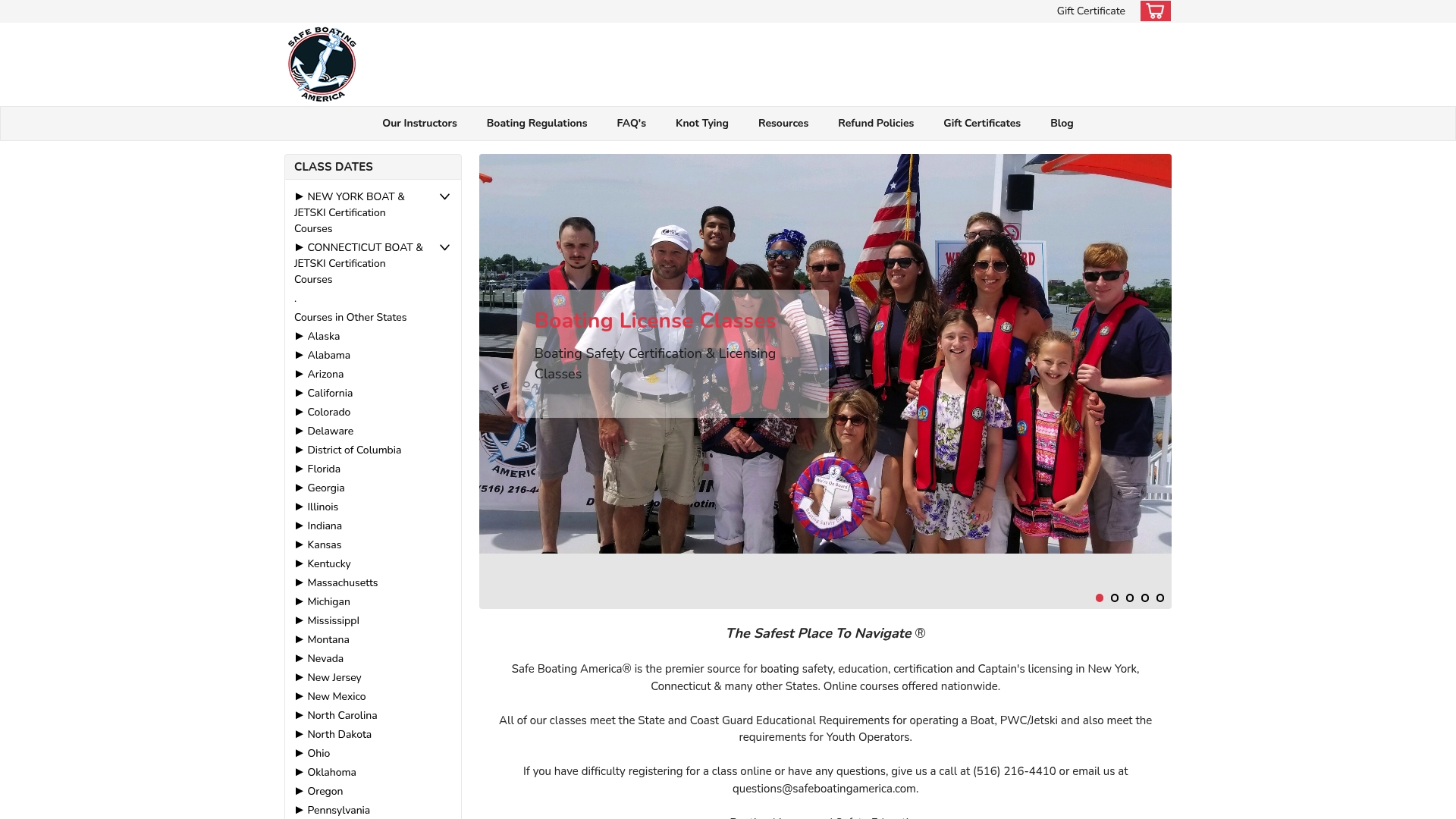
Whether you need a Brianna’s Law-compliant New York boating course, a Florida boating safety certificate, or certification in any other state, Safeboatingamerica offers online, live Zoom, and in-person options with same-day certification available. Visit safeboatingamerica.com to find the course for your state and get certified with confidence.
Key Takeaways
NASBLA-approved courses from recognized providers like the BoatUS Foundation and Safeboatingamerica are the most reliable path to legally valid boating safety certification in any U.S. state.
| Point | Details |
|---|---|
| NASBLA approval is the standard | States use NASBLA approval to determine which boating education providers they will accept. |
| State requirements vary significantly | Florida requires certification for anyone born on or after January 1, 1988; Texas sets its cutoff at September 1, 1993. |
| Not all online courses are accepted everywhere | NASBLA flags universal online course acceptance as a common misconception; always verify your state’s approved list. |
| Certification unlocks insurance discounts | Completing an approved course often qualifies boaters for discounts with major marine insurers. |
| Safeboatingamerica covers all 50 states | Courses are taught by State Certified Instructors using NASBLA-approved materials, with online, Zoom, and in-person options. |
FAQ
What is the BoatUS Foundation?
The BoatUS Foundation is a nonprofit boating safety education provider offering NASBLA-approved, USCG-compliant courses that satisfy state boating certification requirements across the United States.
Are BoatUS Foundation courses accepted in every state?
Most states accept BoatUS Foundation courses because they meet NASBLA standards, but boaters should verify their specific state’s approved course list before enrolling.
Does completing a boating safety course qualify me for an insurance discount?
Completing an approved boating safety course often qualifies boaters for discounts with major marine insurers, though discount availability depends on the specific insurer and policy.
What is Brianna’s Law and who does it affect?
Brianna’s Law is a New York state mandate requiring boat operators to complete an approved boating safety course. Safeboatingamerica offers Brianna’s Law-compliant courses for New York boaters.
How long does it take to get certified?
Completion time varies by format and state requirements. Safeboatingamerica offers same-day certification options for qualifying students through its online and live Zoom course formats.
Recommended
- What is boating safety education: your guide to certification - Safe Boating America
- Learn How to Boat: A Beginner’s Safety Guide - Safe Boating America
- Boat Requirements: What Every U.S. Boater Must Know - Safe Boating America
- Boat Safety Equipment: What Every Boater Must Carry - Safe Boating America