Boat Boarding Ladders: Safety, Types, and Installation
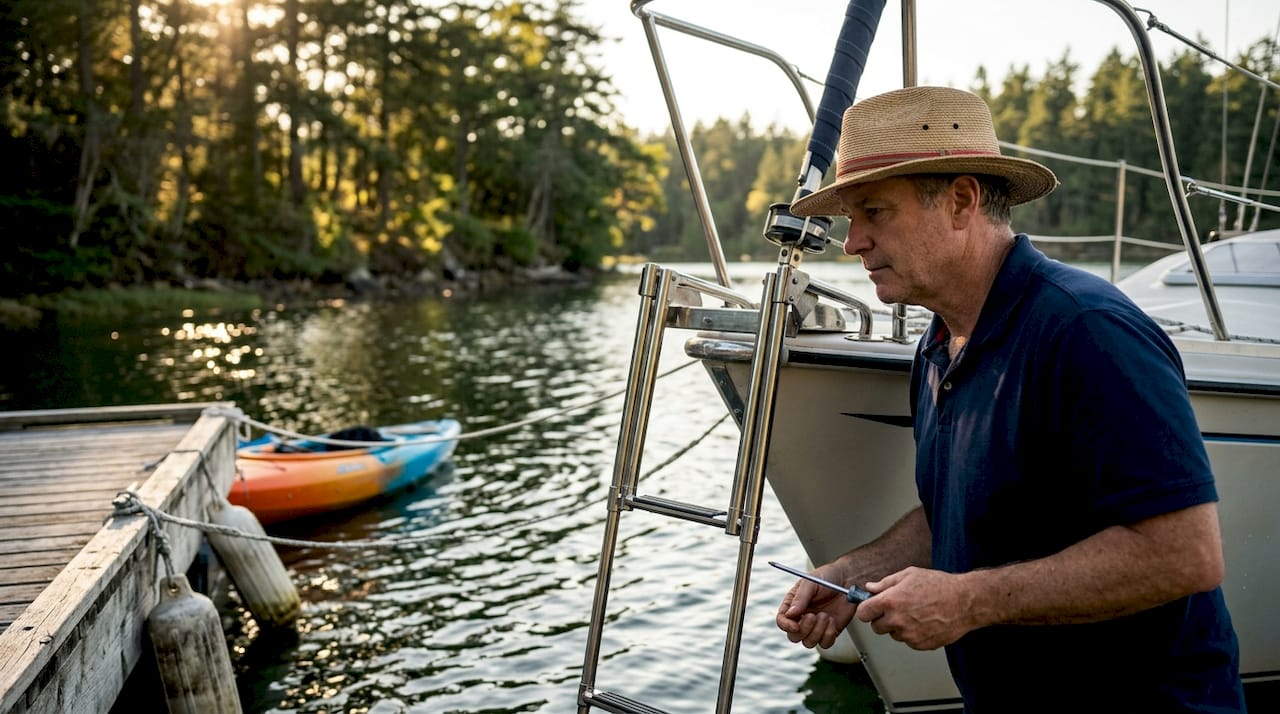
Boat boarding ladders are defined as fixed or deployable access devices that allow a person to climb from the water onto a vessel, and they serve as a primary safety tool in man-overboard situations. The 2026 ABYC boarding ladder standards require rungs spaced 12 inches apart and the lowest step extending at least 22 inches below the waterline. Selecting the wrong ladder, or mounting it in the wrong location, can turn a routine swim stop into a life-threatening situation. This guide covers the top ladder types, critical safety features, installation techniques, and placement decisions every boat owner needs to make before leaving the dock.
1. Top types of boat boarding ladders
The six most common boarding ladder types each suit a different vessel and use case. Knowing which one fits your boat prevents costly mistakes and keeps you compliant with ABYC standards.
Transom ladders mount directly to the stern and fold flat when not in use. They work well on powerboats and runabouts with low freeboard. Most models use marine-grade stainless steel and include two to four rungs.
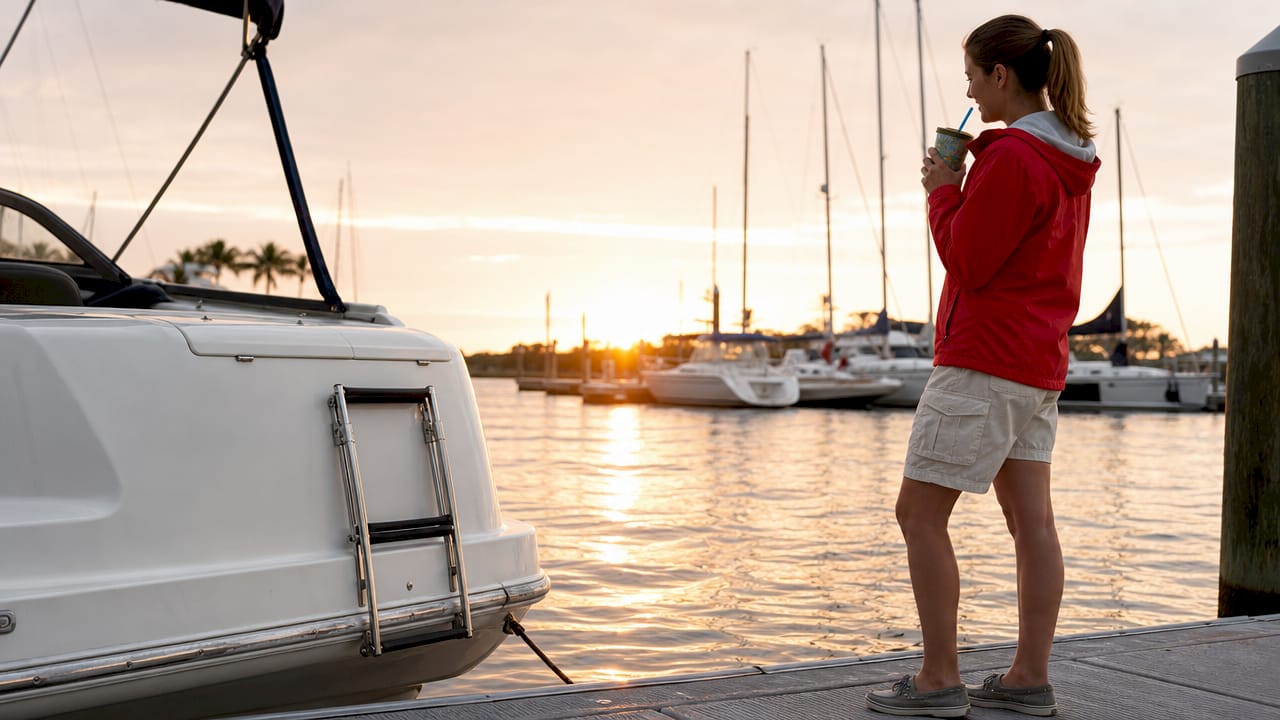
Gunwale or side-mount ladders attach along the hull rather than the stern. They give sailboat owners a better boarding angle and reduce exposure to boat wake at the transom.
Telescoping ladders extend downward on demand and retract into a compact housing. They are common on cruisers and yachts where deck space is limited.
Pontoon boat stairs are wider, step-style units designed for the flat, open decks of pontoon boats. They typically include handrails and non-skid treads, making them the most user-friendly option for families and older boaters.
Swimming platform ladders attach to a dedicated swim platform at the stern. They provide the most stable boarding surface because the platform itself absorbs motion before the climber reaches the ladder.
Rope ladders are lightweight and easy to store, but rigid ladders with standoffs are significantly safer and easier to use. Rope ladders swing, collapse under load, and offer no standoff from the hull. Reserve them for emergency backup use only.
Key features to look for across all types:
- Standoffs: Keep the ladder away from the hull to prevent pinched fingers and toes
- Non-skid treads: Reduce slip risk on wet rungs
- Foldability: Allows safe storage when underway
- Stainless steel construction: Resists corrosion in saltwater
- Locking mechanism: Prevents accidental deployment or collapse
Pro Tip: If your boat has a deep-V hull with high freeboard, a telescoping ladder is the most reliable choice. Flat-bottom and pontoon hulls work best with wide-step stair units that include handrails on both sides.
2. Critical safety features and dimensions to check
The most overlooked ladder failures come from poor dimensions, not poor materials. ABYC standards require rungs spaced exactly 12 inches apart and the lowest step reaching at least 22 inches below the waterline. Those numbers exist because a person treading water needs leverage to lift their body weight. A ladder that stops at the waterline provides almost none.
Experts recommend 2 to 3 rungs submerged below the water surface for practical boarding. That depth gives a swimmer enough footing to push upward without exhausting themselves before they clear the hull.
“Accessibility for deployment from the water is more critical than ladder type alone, especially in man-overboard scenarios.”
Beyond dimensions, these safety features are non-negotiable:
- Standoffs: Standoffs prevent pinching of hands and feet against the hull, a detail most buyers skip until they experience the problem firsthand
- Broad, non-skid treads: Wide steps distribute weight and reduce the chance of a foot slipping off a wet rung
- Handrails or grab handles: Give the climber something to grip at the top of the ladder where the transition to the deck is most awkward
- Positive locking deployment: The ladder must lock open and stay open; a ladder that folds mid-climb is a serious injury risk
Rope ladders fail on nearly every one of these criteria. They have no standoffs, no rigid treads, and no locking mechanism. Weighting the lowest rung of a rope ladder helps it hang straight and fully extend, which reduces climbing difficulty. That is a useful workaround, but it does not make a rope ladder a safe primary boarding solution.
3. How to install boat boarding ladders securely
Correct installation protects both the ladder and the hull. A poorly mounted ladder can pull free under load, and a poorly drilled hull can admit water for years before the damage becomes visible.
Follow these steps for a reliable, watertight installation:
- Mark and center-punch the mounting holes. Use a template or the ladder’s base plate to mark exact hole positions. A center punch prevents the drill bit from wandering across the gelcoat.
- Drill with care to protect the gelcoat. Proper drilling technique starts with a small indentation, then a pilot hole, then reverse drilling through the gelcoat before switching to forward drilling. This prevents the gelcoat from cracking and chipping around the hole edge.
- Seal exposed core with epoxy. Fiberglass decks have a foam or balsa core between layers of glass. Drilling exposes that core to water. Sealing with epoxy after drilling is the single most important step to prevent rot and long-term hull damage.
- Use marine-grade stainless steel hardware with backing plates. Backing plates spread the load across a larger area of the deck. Without them, the mounting bolts can pull through the fiberglass under the stress of a person climbing aboard.
- Apply marine sealant around each fastener. Sealant fills any gap between the hardware and the deck surface, adding a second barrier against water intrusion.
- Torque fasteners to specification. Over-tightening crushes the core and cracks the gelcoat. Under-tightening allows movement that works the sealant loose over time.
- Test deployment before first use. Testing in calm water confirms the ladder clears the hull, sits at the correct angle, and reaches the required depth. Do this at the dock, not offshore.
Pro Tip: After installation, run a full boat safety inspection that includes pulling on the ladder with your full body weight from a kneeling position on the dock. If the mounting flexes or creaks, add backing plates before using the ladder in open water.
4. Ladder placement and deployment by boat type
Where you mount a ladder matters as much as which ladder you choose. Ladder mounting location greatly affects usability. Side-mounted ladders near cockpit gates often outperform stern ladders because of reduced motion.
The table below compares placement options across common boat types.
| Boat type | Recommended placement | Key advantage | Main drawback |
|---|---|---|---|
| Powerboat / runabout | Transom center | Easy access from swim area | Exposed to wake and prop wash |
| Pontoon boat | Side gate or stern corner | Wide platform, stable boarding | Limited reach in choppy water |
| Sailboat | Near cockpit gate or pushpit | Less motion than stern | Requires longer ladder for freeboard |
| Cruiser / yacht | Swim platform or transom | Stable platform absorbs motion | Platform adds weight and cost |
| Fishing boat | Gunwale side mount | Keeps stern clear for fishing | Narrower boarding angle |
Placement near cockpit gates on sailboats offers better accessibility than stern ladders, which are more subject to boat motion. On a sailboat at anchor, the stern swings with wind and current. A person in the water trying to grab a stern ladder faces a moving target. A side-mounted ladder near the cockpit stays more stable and is easier to reach.
Hull shape and freeboard height also determine whether a ladder will meet the 22-inch submerged step requirement. Confirming ladder reach and angle relative to your specific hull is vital before purchase. A ladder that works perfectly on a low-freeboard runabout may fall short on a deep-keeled cruiser.
Key takeaways
The most effective boat boarding ladder combines ABYC-compliant dimensions, rigid construction with standoffs, and a mounting location that remains accessible from the water in any sea state.
| Point | Details |
|---|---|
| ABYC dimensions are mandatory | Rungs must be 12 inches apart; the lowest step must reach 22 inches below the waterline. |
| Rigid ladders outperform rope ladders | Standoffs, non-skid treads, and locking mechanisms make rigid ladders the only safe primary option. |
| Installation requires epoxy sealing | Exposed hull core must be sealed with epoxy after drilling to prevent rot and water intrusion. |
| Placement affects safety as much as type | Side-mounted ladders near cockpit gates reduce motion risk compared to stern-only placement. |
| Test before open water use | Deploy the ladder in calm water at the dock to confirm reach, angle, and hull clearance. |
What I’ve learned from watching boaters get ladder selection wrong
Most boaters I’ve observed make the same two mistakes. They buy a ladder based on price and fold-flat convenience, and they mount it wherever the stern has an open bracket. Neither decision accounts for what happens when someone actually needs to use that ladder from the water.
The standoff issue is the one that surprises people most. A ladder without standoffs sits flush against the hull. When you climb it, your knuckles and toes press directly into fiberglass. In calm water, that is uncomfortable. In any chop, it is a real injury risk. Standoffs cost almost nothing extra, but they rarely appear on budget ladders. Check for them before you buy.
The rope ladder problem is just as common. Boat owners keep a rope ladder in a locker and call it their boarding solution. A weighted rope ladder bottom helps it hang straight, but it still swings, still collapses under load, and still offers no standoff. Use it as a backup. Never as a primary ladder.
The detail I push hardest on is deployment testing. Mount the ladder, get in the water, and climb it. Do this once at the dock in calm conditions before you ever anchor offshore. You will immediately discover if the angle is wrong, if the lowest rung is too high, or if the locking mechanism fails under body weight. Fix those problems at the dock, not in open water.
Formal boating safety education covers man-overboard procedures and equipment requirements in detail. If you have not completed a certified course, the ladder conversation is a good reason to start.
— Richard
Boating safety training from Safeboatingamerica
Safeboatingamerica offers state-approved boating safety certification courses that cover required safety equipment, USCG compliance, and man-overboard procedures. Courses are available online, via live Zoom sessions, and in person across the United States, taught by NASBLA-approved instructors and USCG-Licensed Captains.
Understanding boarding ladder requirements is one part of a broader set of boat safety requirements every operator must know. Safeboatingamerica’s programs cover those requirements in full, with same-day certification options available in most states. Whether you need a New York, Connecticut, Florida, or Massachusetts boating certificate, Safeboatingamerica delivers the training to get you legally certified and on the water with confidence.
FAQ
What are the ABYC requirements for boat boarding ladders?
ABYC standards require rungs spaced 12 inches apart and the lowest step extending at least 22 inches below the waterline. The ladder must also be deployable by a person already in the water.
How many rungs should be submerged on a boarding ladder?
Experts recommend 2 to 3 rungs submerged below the water surface. That depth gives a swimmer enough leverage to lift their body weight without exhausting themselves.
Are rope ladders safe as primary boat boarding ladders?
Rope ladders are not safe as primary boarding solutions. Rigid ladders with standoffs and non-skid treads are significantly safer. Use rope ladders as emergency backups only.
Where is the best place to mount a boarding ladder on a sailboat?
Near cockpit gates is the recommended placement on sailboats. Stern ladders experience more motion from wind and current, making them harder to reach from the water.
What is the most important step when installing a boarding ladder?
Sealing the exposed hull core with epoxy after drilling is the most critical installation step. Skipping it allows water into the core, which causes rot and long-term structural damage to the hull.