Avoid a Boating Citation in Florida With Equipment for All 4 Vessel Classes
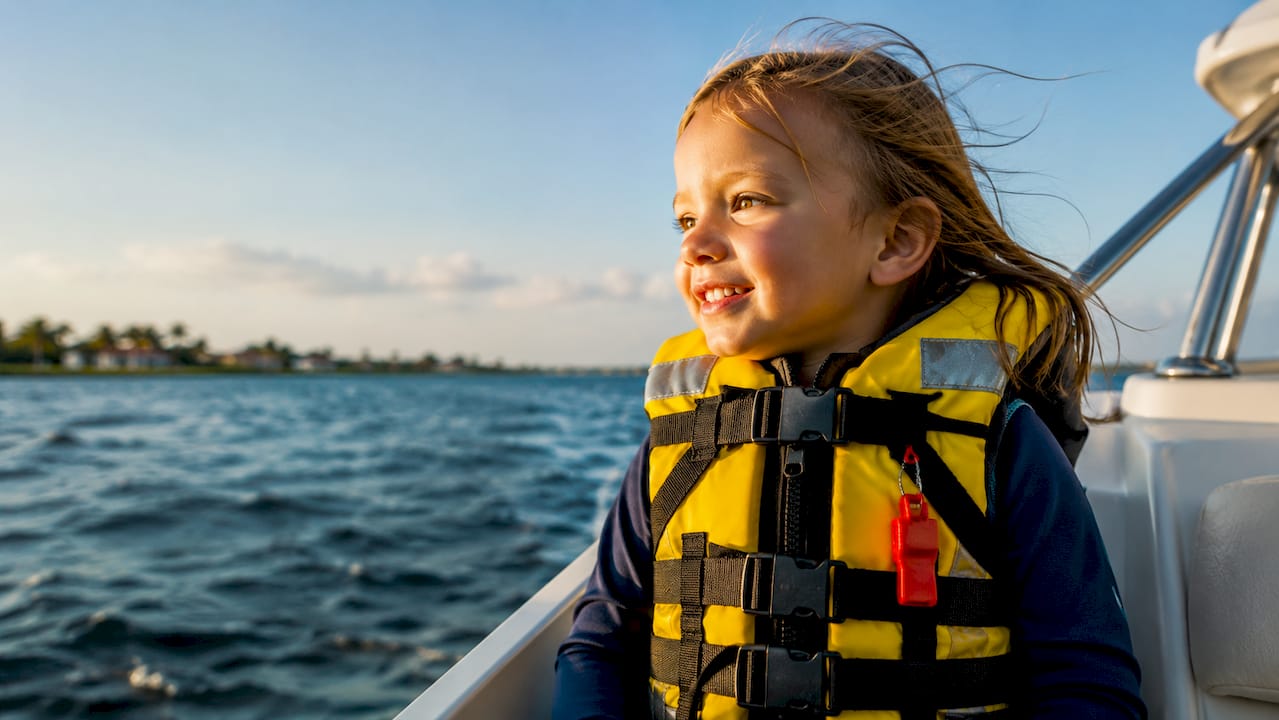
Florida law requires every recreational boat to carry a USCG-approved wearable personal flotation device for each occupant, a throwable Type IV device on vessels 16 feet and longer, a fire extinguisher when the engine or fuel setup calls for one, visual distress signals on coastal waters, a sound-producing device, and navigation lights for low-visibility operation. The exact combination shifts with vessel length and class, and the Florida Fish and Wildlife Conservation Commission (FWC) enforces these minimums alongside federal Coast Guard standards. Match your boat to its class below to see precisely what you’re required to carry.
TL;DR:
- Boats 16 feet and longer must carry a throwable Type IV device, while boats under 16 feet are exempt unless they have enclosed engine compartments or fuel tanks.
- A fire extinguisher is required on vessels with enclosed engine spaces, but many open outboard boats under 26 feet are exempt unless their design includes enclosed compartments.
- Visual distress signals are mandatory for boats 16 feet and longer when operating on coastal waters during day and night, with expiration dates to consider.
- Every vessel must have functioning sound-producing devices and navigation lights for operation after sunset or in poor visibility, with specific requirements based on vessel size.
- Florida law enforces strict PFD regulations, requiring proper fit, an approval label, and accessible storage, along with additional safety gear like radios, anchors, and first-aid kits for prepared boaters.
Table of Contents
- Required Boat Safety Equipment in Florida by Vessel Class
- Understanding PFD Rules, Labels, and Fit
- When Florida Boats Need a Fire Extinguisher
- Visual Distress Signals: What Florida Waters Require
- Sound Signals and Navigation Lights You’re Required to Carry
- Other Equipment Requirements and Recommended Extras
- Who’s Legally Responsible for Boat Safety Equipment
- A Pre-Departure Safety Equipment Checklist
- How a Certified Course Simplifies Compliance
- The Legal Floor Isn’t the Safety Ceiling
- Get Florida-Compliant Before You Launch This Season
- Sources
- FAQ
Required Boat Safety Equipment in Florida by Vessel Class
Florida groups recreational vessels into length-based classes, and each class carries its own equipment load. The Florida Fish and Wildlife Conservation Commission uses these bands, borrowed from federal Coast Guard classifications, to determine exactly what inspectors check during a safety boarding. Knowing your class removes the guesswork before it becomes a citation.
Class A covers vessels under 16 feet. Class 1 runs from 16 feet to less than 26 feet. Class 2 spans 26 feet to less than 40 feet. Class 3 covers 40 feet to 65 feet. Most recreational boats registered in Florida fall into the smaller length classes, which is exactly why those bands generate the most confusion and the most citations.
Here’s how the requirements break down by class:
- Class A (under 16 ft): One wearable USCG-approved PFD per person aboard; no throwable device required; fire extinguisher required if the boat has an enclosed engine compartment, built-in fuel tank, or double-bottom hull not sealed to the hull sides; visual distress signals required only at night when operating on coastal waters; whistle or horn capable of a four-second blast audible at half a mile.
- Class 1 (16 ft to less than 26 ft): One wearable PFD per person plus one throwable Type IV device; at least one B-I fire extinguisher unless the boat is outboard-powered and built to prevent fume accumulation; day and night visual distress signals required on coastal waters; sound-producing device and navigation lights for operation after sunset or in reduced visibility.
- Class 2 (26 ft to less than 40 ft): Same PFD and throwable requirements as Class 1; two B-I extinguishers or one B-II, depending on fixed fire-suppression systems; day and night VDS on coastal waters; bell or whistle audible at one mile, plus full navigation lighting.
- Class 3 (40 ft to 65 ft): One wearable PFD per person, throwable Type IV accessible on deck; three B-I extinguishers or a combination approved by USCG tables; VDS, bell, whistle, and navigation lights per federal Navigation Rules.
Personal watercraft, or PWCs, follow a simplified version of the Class A rules: one wearable PFD per rider (inflatables are prohibited on PWCs), no fire extinguisher requirement in most configurations, and a functioning engine cut-off lanyard. Canoes and kayaks under manual propulsion only need a wearable PFD per occupant and a whistle or other sound device; they’re exempt from fire extinguisher and navigation-light rules unless operated after dark, at which point a white light becomes mandatory.
Rental boats carry the same equipment obligations as privately owned vessels of the same class. The rental operator, not the renter, typically bears responsibility for stocking required gear, but as the operator underway, you’re still the one who gets cited if something’s missing or inaccessible.
The one rule that cuts across every class without exception: any child under 6 years old must wear a USCG-approved PFD at all times while the vessel is underway on a boat under 26 feet, per Florida Statute 327.50. This isn’t a “stow it nearby” requirement. The PFD has to be on the child’s body.
Understanding PFD Rules, Labels, and Fit
A “USCG-approved” personal flotation device carries an approval label sewn into the interior seam, listing the type number, size range, and a statement that it meets Coast Guard specifications. If that label is missing, faded past legibility, or the device shows torn seams, waterlogged foam, or a broken buckle, it no longer counts as compliant, even if it once carried an approval stamp.
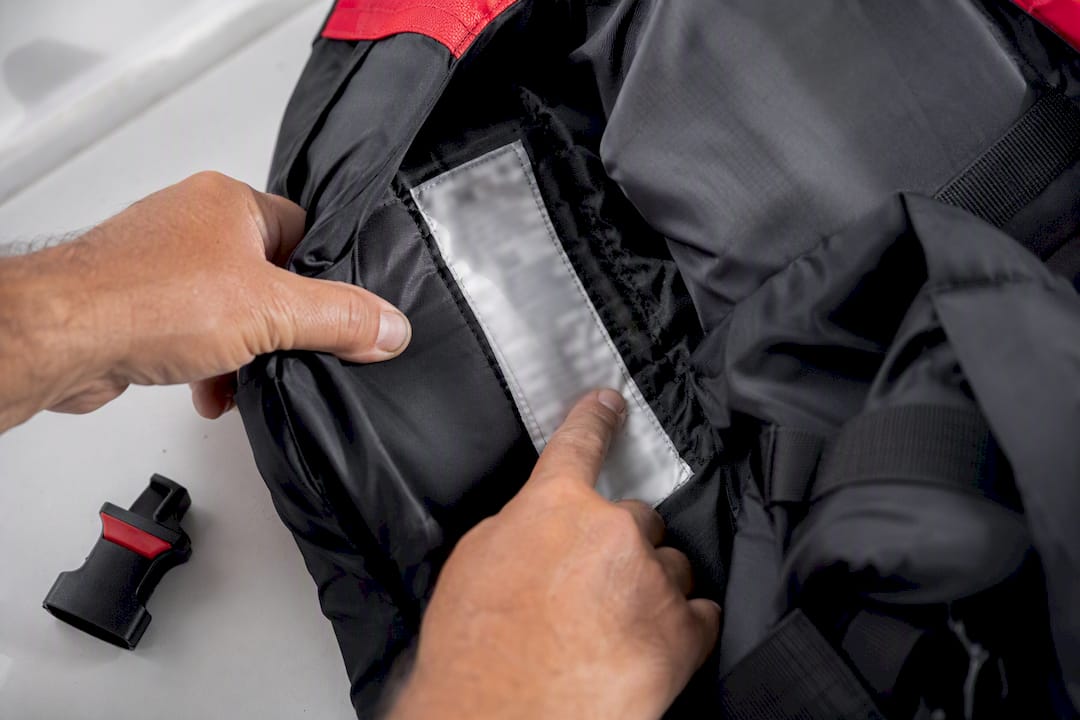
“Serviceable condition” means the device still performs the way it was designed to. FWC guidance is specific here: a PFD stuffed under a cushion, buried in a dry hatch, or sealed in factory shrink wrap does not meet the “readily accessible” standard, regardless of whether it’s technically aboard the boat.
The FWC’s equipment page breaks PFDs into performance types rather than just numbers, and knowing the difference matters:
- Type I offshore life jackets provide the most buoyancy and turn most unconscious wearers face up; best for open water and rough conditions.
- Type II near-shore vests are less bulky but offer less turning force.
- Type III flotation aids are the standard choice for water sports and general recreational boating.
- Type IV throwable devices (ring buoys, cushions) supplement, but never replace, wearable PFDs.
- Type V special-use devices, including many inflatable models, count toward the requirement only when worn according to the label’s specific conditions.
Inflatable PFDs deserve a callout of their own. They’re comfortable and popular, but Florida and federal rules prohibit inflatable Type V devices on personal watercraft. If you’re riding a Jet Ski or WaveRunner, you need a standard inherently buoyant vest, not an inflatable belt pack.
Fit matters more than most boaters assume. A PFD sized for an adult will not hold a child’s head above water, and a loose adult vest can slip off during a fall. Test fit by having each passenger raise their arms overhead; if the vest rides up past the chin, it’s too big.
Pro Tip: Carry one or two extra PFDs beyond your headcount. Guests forget theirs, kids grow out of last year’s size, and a spare adult vest doubles as a second throwable in a pinch.
When Florida Boats Need a Fire Extinguisher
The basic rule sounds simple but trips up more boaters than any other requirement: any vessel with an enclosed engine compartment, a permanently installed fuel tank, or closed compartments where fuel vapors could pool needs a USCG-approved fire extinguisher aboard. The exception that catches people off guard is that many small outboard-powered boats under 26 feet, built with open construction that lets fumes dissipate naturally, are exempt.
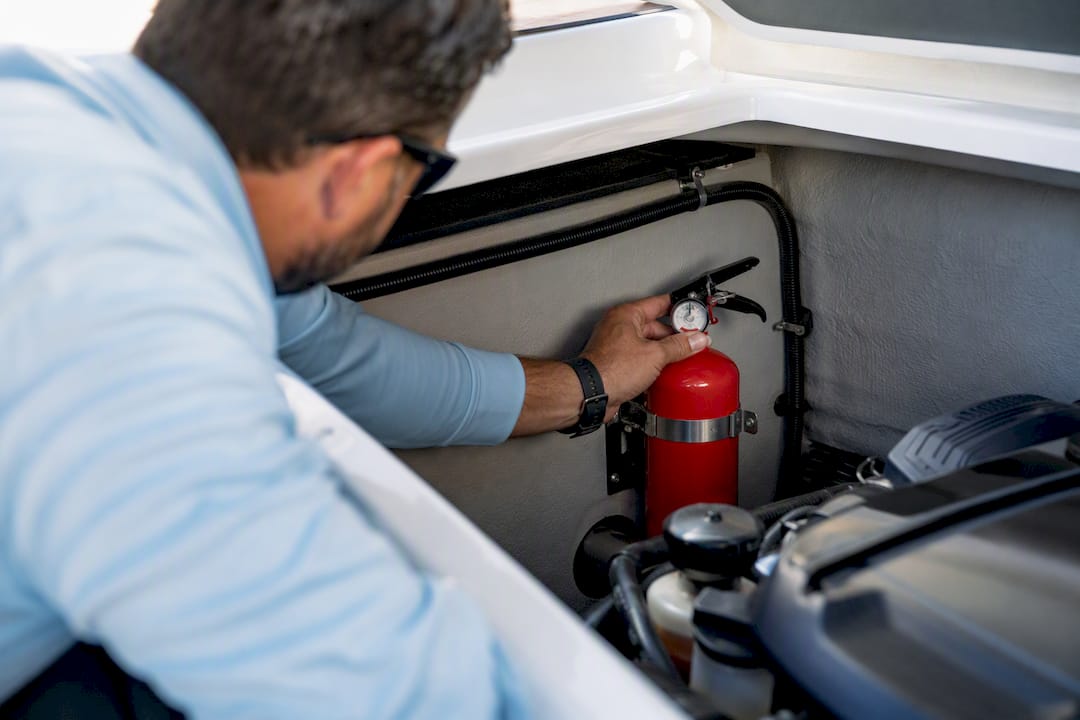
That exemption is narrower than it sounds. A center console with a step-down livewell compartment, a below-deck battery box, or an enclosed bilge can void the exemption even on an otherwise open outboard boat. If you’re unsure whether your hull design qualifies, FWC’s vessel-specific equipment guidance for boats 16 to 25.9 feet spells out the construction details that determine it.
Where an extinguisher is required, the count and classification scale with vessel length:
- Under 26 feet: At least one B-I (5-B) extinguisher, unless a fixed fire-extinguishing system in the engine compartment reduces the requirement.
- 26 to 40 feet: Two B-I extinguishers, or one B-II, adjusted downward if a fixed system is installed.
- 40 to 65 feet: Three B-I extinguishers, or a mix of B-I and B-II units per Coast Guard equivalency tables.
Inspectors check three things beyond the count: the gauge needle sits in the green charge zone, the inspection tag is current (most manufacturers recommend annual servicing), and the mounting bracket holds the unit securely rather than letting it roll around in a locker. An expired or undercharged extinguisher is treated the same as having none at all during a boarding.
Visual Distress Signals: What Florida Waters Require
Whether you need a flare kit depends almost entirely on where you’re boating and the size of your boat. Vessels under 16 feet only need distress signals for nighttime operation on coastal waters; daytime trips on those same waters carry no VDS requirement for the smallest class. Vessels 16 feet and longer must carry both day and night signals whenever operating on coastal or high-seas waters, per FWC’s Class A equipment guidance.
Inland lakes and rivers with no direct access to coastal waters generally fall outside the VDS mandate, though carrying signals anyway is smart practice given how quickly weather changes on Florida’s interior waterways.
Qualifying devices include:
- Aerial pyrotechnic flares (handheld or meteor-type) rated for day and night use.
- Orange distress flags for daytime signaling.
- Electric distress lights approved for nighttime use only.
- Combination kits packaging both day and night signals in one case.
Pyrotechnic devices carry expiration dates, typically 42 months from manufacture, printed directly on the casing. An expired flare doesn’t satisfy the requirement even if it’s physically present in the boat, so check dates each season rather than assuming last year’s kit still counts. Store signals in a watertight container within reach of the helm, not buried under gear where retrieving them during an actual emergency would cost precious minutes.
Sound Signals and Navigation Lights You’re Required to Carry
Every vessel needs some means of making an efficient sound signal, and the size of your boat determines what qualifies. Boats under 12 meters (about 39 feet) can satisfy this with anything capable of a four-second blast: a mouth whistle, an air horn, or an electric horn all work. Vessels over 12 meters need a whistle audible at half a mile plus a bell, per the USCG Navigation Rules.
Navigation lights become mandatory the moment the sun sets and stay mandatory until sunrise, along with any period of restricted visibility such as fog or heavy rain. The federal Navigation Rules specify exact placement and color: red on port, green on starboard, a white stern light, and a masthead light on powered vessels. A boat without functioning lights after dark isn’t just risking a citation. It’s invisible to every other vessel on the water.
PWCs are legally restricted from operating between sunset and sunrise in Florida regardless of lighting equipment, which sidesteps the navigation-light question entirely for most personal watercraft riders. Smaller vessels under sail or oar power still need at least a white light to display if caught out after dark, even without a full navigation light set.
Local ordinances can add wrinkles here too. Some Florida counties impose additional noise or speed restrictions in designated boating zones, layered on top of the state’s baseline sound and lighting rules, under authority granted by Florida Statute 327.46.
Other Equipment Requirements and Recommended Extras
A few requirements fall outside the core safety-gear checklist but still show up during inspections. Vessels with installed toilets need a marine sanitation device (MSD) that meets one of three federal classifications: Type I and II process and disinfect waste before discharge, while Type III holds waste in a tank for pump-out ashore. Discharging untreated sewage within Florida’s waters is a separate violation from equipment noncompliance, so if your boat has a head, confirm the MSD is properly certified.
PWC operators must use an engine cut-off switch (ECOS) lanyard whenever the vessel is underway, a rule the Coast Guard extended nationally in 2021 and Florida enforces on personal watercraft as standard practice. Gasoline-powered boats with enclosed engine compartments need functioning ventilation systems and, on carbureted engines, a backfire flame arrestor to prevent an ignition source from reaching built-up vapors.
Beyond what the law strictly requires, a few additions consistently separate boaters who handle an emergency well from those who don’t:
- An anchor with adequate rode length for your typical depth.
- A manual or electric bilge pump for dewatering.
- A VHF marine radio, since cell coverage drops fast a few miles offshore.
- A waterproof flashlight, stored separately from your VDS kit.
- A basic marine first-aid kit rated for cuts, burns, and sun exposure.
None of these five appear on FWC’s mandatory list, but each one shows up repeatedly in Discover Boating’s practical safety checklists as gear experienced boaters won’t leave the dock without.
Who’s Legally Responsible for Boat Safety Equipment
Florida places the compliance burden squarely on the vessel’s owner and operator, not on passengers or crew. Under Florida Statute 327.50, you’re required to carry, store, maintain, and actually use safety equipment in accordance with current Coast Guard standards, and that duty doesn’t pause just because you delegated the pre-trip check to someone else aboard.
“Serviceable” and “readily accessible” aren’t abstract legal phrases. FWC officers routinely flag PFDs sealed in factory packaging, stuffed under cushions, or locked in a compartment with no key aboard as noncompliant, even when the correct number and type are technically present on the boat.
That distinction between owning the gear and having it truly accessible explains a large share of citations written each boating season. An officer conducting a safety boarding isn’t just counting life jackets. They’re checking whether you could actually reach and don one in the time it would take to matter.
The under 6 PFD rule carries its own enforcement weight: a child spotted without a properly worn, USCG-approved PFD on a vessel under 26 feet while underway is a straightforward violation, independent of whether an adult PFD is nearby. Penalties for equipment violations vary by the specific infraction, typically resulting in a civil citation and fine, and officers may require you to correct the deficiency before continuing your trip. If you’re cited, address the specific deficiency immediately. Repeat violations tend to draw closer scrutiny on future stops.
A Pre-Departure Safety Equipment Checklist
Run this sequence at the dock, out loud if you’re the operator, before anyone casts off:
- Count wearable PFDs against the number of people aboard, including the correct sizes for any children.
- Check each PFD’s approval label and confirm no torn seams or waterlogged foam.
- Confirm the throwable Type IV device is on deck and not sealed under a hatch, if your vessel is 16 feet or longer.
- Check the fire extinguisher gauge and inspection tag date.
- Verify visual distress signals are inside their expiration window and stored in reach of the helm.
- Test the horn or whistle for a clear, audible blast.
- Confirm navigation lights power on before you need them after dark.
- Check engine compartment ventilation is functioning if running a gasoline inboard.
Store gear where you can name its location without thinking. A PFD locker labeled clearly, with the lid unlocked, beats a technically-compliant stash that takes 90 seconds to open.
Pro Tip: Give every passenger a 30-second brief before leaving the dock: point to where PFDs are stored, show how to don one, and explain where the engine cut-off switch is. It takes less time than backing off the trailer and it’s the single habit that separates a close call from a real emergency.
How a Certified Course Simplifies Compliance
Reading statute language is one thing. Knowing how it applies to your specific hull, engine, and cruising area is another. Safe Boating America’s state-approved Florida courses walk operators through exactly this: which equipment your vessel class needs, how to read a PFD approval label, and what a pre-departure check actually needs to cover before an officer ever boards your boat.
Courses run online, live via Zoom, or in-person, and completion satisfies Florida’s boater-education requirement for operators born on or after January 1, 1988. Beyond the legal box it checks, certification clears up the exceptions that trip people up most, like which outboard configurations skip the fire extinguisher rule, so you’re not guessing during a safety boarding.
The Legal Floor Isn’t the Safety Ceiling
Florida’s equipment statutes set a minimum, and treating that minimum as sufficient is where a lot of boaters get it wrong. The law says one throwable device for a 20-foot boat with eight people aboard; common sense says carry two. The law says a single fire extinguisher; a boater who’s actually seen an engine compartment fire knows reaching a bracket-mounted unit under load is harder than it looks on a checklist.
The gap between “technically compliant” and “actually prepared” usually comes down to a handful of cheap additions: a spare PFD, a second VDS kit that hasn’t expired, a VHF radio when your cell phone shows one bar three miles offshore. None of that is mandated. All of it matters when the legal minimum turns out to be exactly enough to survive an inspection but not enough for the situation you didn’t plan for.
If there’s one habit worth building before this comes up in an actual emergency, it’s running the pre-departure equipment check the same way every single time you leave the dock. Consistency, not equipment count, is what turns a checklist into muscle memory. Getting certified before peak season starts is the fastest way to build that habit correctly the first time.
— Richard
Get Florida-Compliant Before You Launch This Season
Safe Boating America is the direct path to Florida’s state-approved boater certification, without guessing which equipment rules apply to your hull or scheduling around a single classroom date. The course covers exactly what this guide walks through: PFD types, fire extinguisher exceptions, and how to pass a safety boarding without a citation.
Courses run online at your own pace, live over Zoom with an instructor, or in-person, so you pick the format that fits your schedule instead of rearranging your week around one. Instruction comes from state-certified instructors and USCG-licensed captains covering required equipment, navigation rules, and emergency procedures specific to Florida waters. If you were born on or after January 1, 1988, this certification satisfies the state’s boater-education requirement outright. Start your Florida boating certification course today and have your safety ID in hand before your next trip to the dock.
Sources
- Equipment | Florida Fish and Wildlife Conservation Commission
- Florida Statutes §327.50 — Vessel safety regulations; equipment and lighting requirements
- Navigation Rules — U.S. Coast Guard Navigation Center
- Boat safety checklist & safety equipment | Discover Boating
FAQ
What are the safety requirements for boating in Florida?
Florida requires a wearable USCG-approved PFD per person, a throwable device on boats 16 feet and longer, a fire extinguisher where fuel or engine configuration calls for one, visual distress signals on coastal waters, sound signals, and navigation lights after dark, all outlined by FWC’s equipment rules.
What all safety equipment is required for boats?
Requirements scale by vessel class and length, but the core list includes wearable PFDs, a throwable Type IV device, a fire extinguisher, visual distress signals, a sound-producing device, and navigation lights, detailed by class in the section above.
What paperwork do I need to carry on my boat?
Florida requires your vessel registration certificate aboard whenever the boat is underway, and operators born on or after January 1, 1988 must carry proof of a boater-education certificate, which Safe Boating America’s certification course provides upon completion.
Does a 15-foot boat need a fire extinguisher?
Only if it has an enclosed engine compartment, a built-in fuel tank, or closed compartments where fumes could accumulate; many open outboard boats under 26 feet are exempt under FWC’s construction-based exception.
Is a throwable flotation device required on every boat?
No. Throwable Type IV devices are only required on vessels 16 feet or longer; boats under 16 feet, including most canoes and kayaks, only need wearable PFDs for each occupant.