ODNR Watercraft: Ohio Registration and Safety Guide
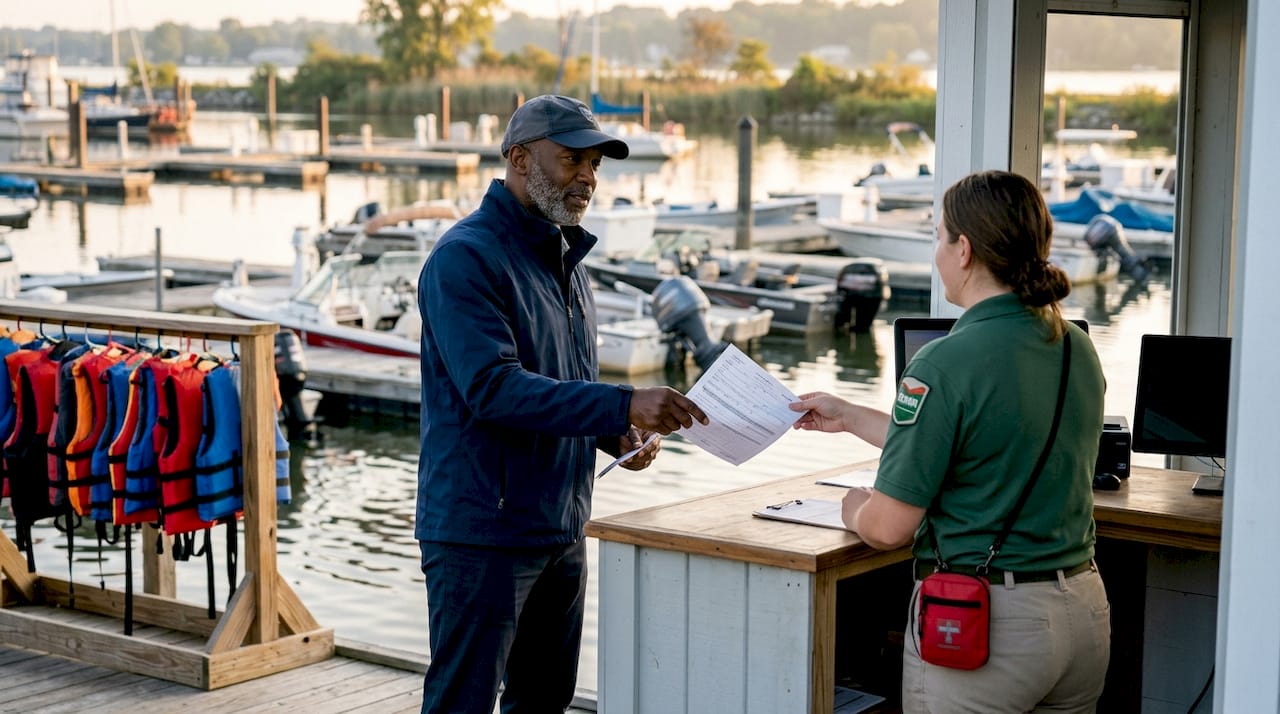
The Ohio Department of Natural Resources (ODNR) defines watercraft regulation as the legal framework governing every recreational boat on Ohio waters. Every boat owner in Ohio must register their vessel, carry required safety equipment, and meet boater education standards set by ODNR. These rules apply to motorized boats, sailboats, canoes, kayaks, pedal boats, and inflatable vessels. Skipping any step puts you at risk of fines, penalties, and unsafe conditions on the water. This guide covers registration requirements, ownership documentation, safety laws, and the step-by-step process to stay fully compliant.
What are the ODNR watercraft registration and titling requirements?
Ohio requires registration for every recreational boat, including motorized boats, sailboats, canoes, kayaks, pedal boats, and inflatable boats. That means even a kayak you use twice a year needs a valid registration number displayed on its hull.
Registration fees are based on vessel length and propulsion type, and they range from $33 to $93. Registrations are valid for three years and expire on March 1. Ohio uses a flat triennial fee structure that also includes a waterways conservation assessment for sailboats and non-motorized boats, which simplifies the payment calculation.
Titling requirements by vessel type
Titling rules differ by vessel type. All motorized watercraft and sailboats registered in Ohio must also be titled. Smaller non-motorized vessels like canoes and kayaks do not require a title. The title fee is $15 and titles can be obtained at ODNR offices or county clerk of courts title offices.
| Vessel Type | Registration Required | Title Required |
|---|---|---|
| Motorized boat | Yes | Yes |
| Sailboat | Yes | Yes |
| Canoe or kayak | Yes | No |
| Pedal boat | Yes | No |
| Inflatable boat | Yes | No |
Pro Tip: If you recently purchased a motorized boat, apply for both registration and title at the same time. Submitting them together at an ODNR office avoids a second trip and speeds up processing.
What documentation proves ownership for Ohio watercraft registration?
Ownership documentation is the most commonly misunderstood part of the registration process. The paperwork you need depends on whether your vessel is titled or non-titled.
For titled boats, you need the existing title signed over to you by the previous owner, along with a bill of sale showing the purchase price and date. Both documents must be submitted in person at an ODNR watercraft office or a county clerk of courts title office.
Non-titled vessels like canoes and kayaks require a different approach. Proof of ownership can be established using the notarized Section 3 of the Certified Watercraft Registration Application (form DNR 8460R), a bill of sale, or a signed-over prior registration. The notarized affidavit on form DNR 8460R is especially useful when no formal bill of sale exists, such as when a vessel was gifted or inherited.
Required vessel details on all applications
Every registration application must include accurate vessel details. Required information includes:
- Hull identification number (HIN)
- Vessel length
- Make and model year
- Hull material (fiberglass, aluminum, wood, etc.)
- Propulsion type (outboard, inboard, paddle, sail)
- Engine type, if applicable
Errors or missing fields on the application delay approval. Double-check every field before submitting.
Pro Tip: Photograph your HIN plate before heading to the ODNR office. The number is often located on the starboard side of the transom and can be hard to read in low light.
What Ohio boating safety laws apply to watercraft operators?
Ohio boating safety law covers three core areas: mandatory education, required equipment, and operating restrictions. Understanding all three keeps you legal and safe.
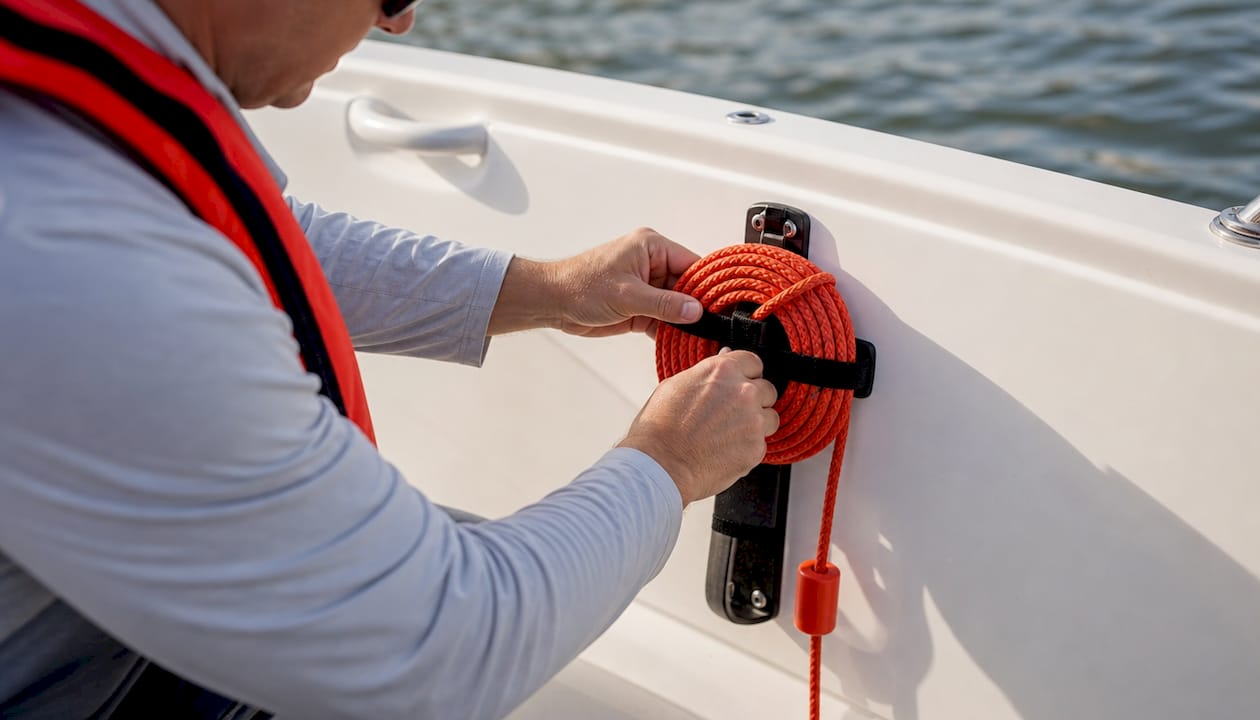
Mandatory boater education
Boater education is mandatory in Ohio for certain operators, and certification can be completed through approved online courses that meet ODNR standards. Younger operators and personal watercraft (PWC) riders face the strictest requirements. Completing a NASBLA-approved course satisfies Ohio’s education mandate and provides a certification card you must carry while on the water. Understanding why boating safety education is mandatory helps operators take the requirement seriously rather than treating it as a formality.
Required safety equipment
Watercraft laws in Ohio require operators to carry specific safety equipment on every trip. The core requirements include:
- A Coast Guard-approved life jacket for every person on board
- A throwable flotation device on boats 16 feet or longer
- A sound-producing device (whistle or horn)
- Navigation lights for operating between sunset and sunrise
- A fire extinguisher on boats with enclosed engine compartments
Failing a watercraft inspection in Ohio for missing equipment results in fines and can lead to being ordered off the water immediately.
Boating under the influence (BUI) laws
Ohio law prohibits operating a boat with a blood alcohol content (BAC) of 0.08% or higher or while under the influence of marijuana. Penalties mirror land DUI laws and can include criminal charges, fines, and loss of boating privileges.
BUI penalties in Ohio are frequently underestimated by recreational boaters. Many operators assume alcohol enforcement is less strict on the water. It is not. ODNR enforcement officers conduct sobriety checks on Ohio waterways, and a BUI conviction carries the same weight as a DUI on your record.
Pro Tip: Designate a sober operator before every outing, just as you would for a road trip. Alcohol affects balance and reaction time more severely on water due to sun exposure, motion, and wind.
How do you register a boat in Ohio and stay compliant?
The registration process follows a clear sequence. Knowing each step prevents delays and avoids common mistakes.
Steps to register a new or used boat
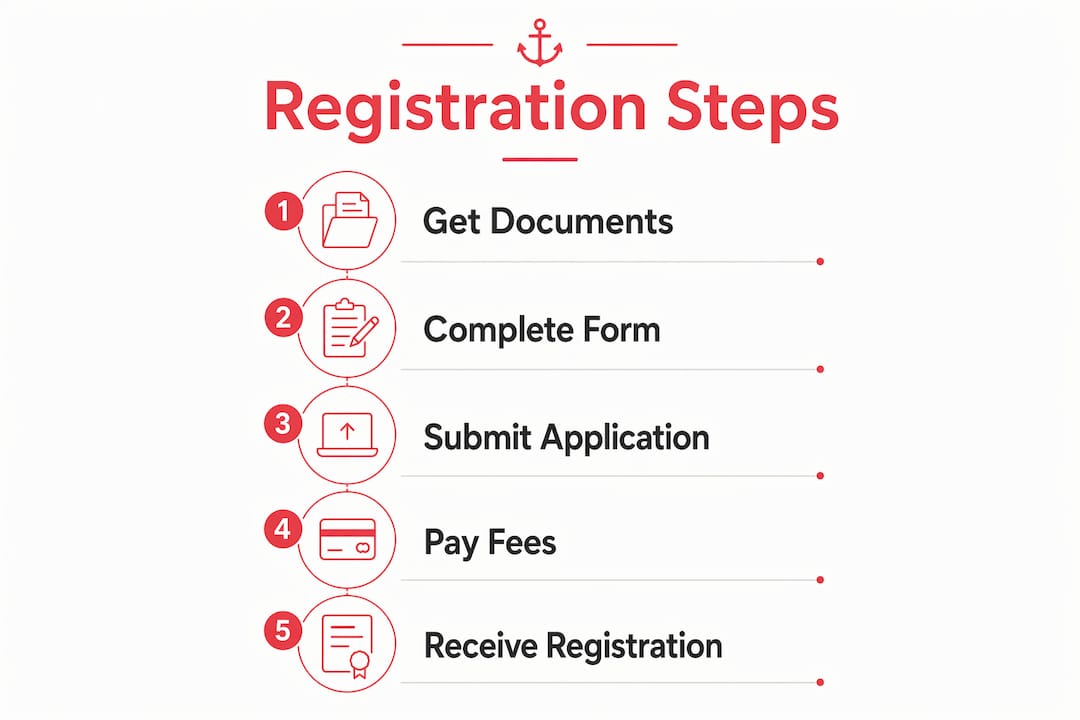
- Gather all ownership documents (title, bill of sale, or notarized DNR 8460R affidavit).
- Complete the Certified Watercraft Registration Application (form DNR 8460R) with full vessel details.
- Visit an ODNR watercraft office or authorized registration agent in person for first-time registrations and ownership transfers.
- Pay the applicable registration fee ($33–$93 based on vessel length and type) plus the $15 title fee if titling is required.
- Receive your registration card and decals. Display decals on the hull as directed.
First-time registrations and ownership transfers must be completed in person. Online options do not apply to new registrations. That surprises many new boat owners who assume the process works like a vehicle registration renewal.
Renewing your Ohio boat registration
Online registration renewals open in january and close on September 30 each year. Renewals are the only transaction ODNR currently allows online. The three-year registration cycle means most owners renew once every three years, so it is easy to lose track of the expiration date.
- Set a calendar reminder for the january renewal window each year your registration is due.
- Check your registration card for the exact expiration date (March 1 of the expiration year).
- Pay renewal fees online through the ODNR portal or in person at a watercraft office.
- Update your address with ODNR if you have moved since your last registration.
Pro Tip: Keep a digital copy of your registration card in your phone’s photo library. Paper cards fade and get damaged on the water. ODNR officers accept digital copies during routine checks.
Ohio watercraft compliance: what I’ve learned from experience
Ohio’s registration system is more thorough than most boaters expect. The part that catches people off guard is not the fee structure or the paperwork. It is the in-person requirement for first-time registrations and transfers. I have seen experienced boaters show up at a county clerk’s office without their notarized affidavit or a signed-over title, then lose days waiting to reschedule.
The titling nuance for non-motorized vessels is another area where confusion runs high. Canoe and kayak owners often assume their vessel is exempt from all paperwork. Registration is still required, even without a title. That distinction matters when you are stopped by an ODNR officer on a busy summer weekend.
BUI enforcement is the area I find most underestimated. Boaters who would never drink and drive often rationalize a few beers on the lake as harmless. Ohio law does not make that distinction. The 0.08% BAC limit applies on the water exactly as it does on the road, and enforcement has increased on popular Ohio waterways in recent years.
My strongest advice: complete your boater education before your first trip, not after your first citation. A NASBLA-approved course covers U.S. boating requirements in a way that makes Ohio-specific rules easier to understand and follow. Registration paperwork becomes less confusing once you understand the regulatory framework behind it.
— Richard
Ohio boating certification with Safeboatingamerica
Ohio boaters who need to meet ODNR’s mandatory education requirements have a direct path through Safeboatingamerica.
Safeboatingamerica offers an Ohio boating and PWC certification course that meets ODNR standards and can be completed online at your own pace. The course covers navigation rules, required safety equipment, Ohio-specific boating laws, and BUI regulations. Certification is issued upon completion and satisfies the state’s mandatory education requirement. Whether you are registering your first boat or adding a PWC to your fleet, Safeboatingamerica provides the education you need to get on the water legally and confidently. Visit Safeboatingamerica to enroll and get certified before your next trip.
Key takeaways
Ohio watercraft compliance requires registration for every recreational boat, proper ownership documentation, mandatory safety equipment, and boater education certification before operating on state waters.
| Point | Details |
|---|---|
| Registration covers all vessels | Canoes, kayaks, and inflatables must be registered, not just motorized boats. |
| Fees and validity | Registration fees range from $33 to $93 and are valid for three years, expiring March 1. |
| Titling by vessel type | Motorized boats and sailboats require a title; non-motorized vessels do not. |
| BUI laws mirror DUI laws | Ohio enforces a 0.08% BAC limit on the water with the same criminal penalties as land DUI. |
| In-person for new registrations | First-time registrations and ownership transfers cannot be completed online. |
FAQ
What boats must be registered with ODNR in Ohio?
Every recreational boat in Ohio requires registration, including motorized boats, sailboats, canoes, kayaks, pedal boats, and inflatable vessels. There are no size or use exemptions for recreational watercraft.
How much does Ohio boat registration cost?
Registration fees range from $33 to $93 based on vessel length and propulsion type, and registrations are valid for three years. A separate $15 title fee applies to motorized boats and sailboats.
Can I register my boat online in Ohio?
Online registration is available only for renewals, which open in january and close on September 30 each year. First-time registrations and ownership transfers must be completed in person at an ODNR watercraft office or authorized agent.
What proof of ownership do I need for a canoe or kayak?
Non-titled vessels like canoes and kayaks can use the notarized Section 3 of form DNR 8460R, a bill of sale, or a signed-over prior registration as proof of ownership. The notarized affidavit is the most practical option when no bill of sale exists.
Is boater education required in Ohio?
Boater education is mandatory in Ohio for certain operators, including younger boaters and PWC operators. Approved online courses that meet ODNR standards satisfy the requirement and result in a certification card you must carry while on the water.