Born After 1982? Nevada’s Boating Age Rule for Motors Over 15 HP

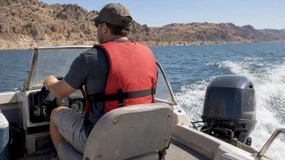
In Nevada, you must be at least 14 to operate a personal watercraft. Anyone born on or after January 1, 1983 who operates a motorboat with a motor over 15 horsepower on interstate waters must complete an NDOW-approved boater education course or pass a proficiency exam. Towing a skier or rider behind a vessel requires an operator who is at least 16, or 14 with an adult supervisor on board.
TL;DR:
- Operators born on or after January 1, 1983 need an approved course or exam for motorboats over 15 horsepower on interstate waters, including Lake Tahoe.
- Operators must be at least 14 to use a personal watercraft; those aged 14 or 15 may tow only with someone 18 or older aboard.
- Rental companies cannot rent personal watercraft to anyone under 18, and they must brief each renter and record the actual operator’s name and age.
- Either certification route requires an 80% score; the card never expires, and covered operators must carry it aboard and show it on request.
- Passing the exam does not replace helm experience; families should arrange supervised practice, especially before teens operate personal watercraft or tow riders.
Table of Contents
- Who Must Have a Nevada Boater Education Card
- Minimum Ages for PWCs and Towing
- Rental, Visitor, and Reciprocity Rules
- Getting Your Nevada Boater Education Card
- Enforcement and Everyday Obligations on the Water
- A Training Provider’s Take on Preparing Teen Operators
- What the Birth-Year Rule Actually Gets Right
- Getting Certified Through Safe Boating America
- FAQ
- Sources
Who Must Have a Nevada Boater Education Card
Nevada ties its boater education requirement to a birth date, not a blanket age rule. Anyone born on or after January 1, 1983 who operates a motorboat with a motor rated over 15 horsepower on interstate waters must complete an approved course or pass a proficiency exam before operating. Interstate waters are bodies that cross state lines or border another state, which in Nevada mostly means the large reservoirs and river stretches boaters actually use.
- Lake Tahoe, shared with California
- Lake Mead and Lake Mohave, shared with Arizona
- The Colorado River near Laughlin, bordering Arizona
Once issued, the boater education card is a lifetime certification. It does not expire or require renewal, and Nevada generally recognizes NASBLA-approved cards earned in other states, which matters for transplants and frequent travelers. NDOW recommends the course for every boater regardless of birth year, since the exam covers navigation rules, emergency procedures, and required safety equipment that apply no matter how old you are.
Minimum Ages for PWCs and Towing
Nevada sets separate age floors depending on what you are operating and what you are doing with it.
- A personal watercraft operator must be at least 14 years old, with no exceptions for supervision.
- Towing a person on water skis, a surfboard, or a similar device requires an operator who is at least 16.
- A 14 or 15 year old may tow a skier only if a person at least 18 years old is on board in a supervisory position.
Boat liveries face their own restriction: they cannot rent a PWC to anyone under 18, regardless of whether a younger teen could legally operate one elsewhere. For families, this means a 14 year old can run a PWC the family owns, but a rental counter will not hand one to that same teen.
Pro Tip: If your teen plans to tow a sibling on a tube this season, put the 18+ supervisor in the boat, not just nearby on the dock. The law requires them on board.

Rental, Visitor, and Reciprocity Rules
Renting a boat or PWC in Nevada comes with its own documentation chain. Rental operators must brief every renter on basic safety before the vessel leaves their control and must record the name and age of the actual operator, not just the person who signed the agreement. This closes the loophole where an adult rents equipment and then hands control to a minor.
- Rental PWCs cannot go to anyone under 18, even with an adult present
- Expect a mandatory safety briefing before launch
- Bring government ID and, if applicable, your boater education card
Visitors from other states can generally rely on their home state’s NASBLA-approved card for short trips, though checking your home state’s specific visitor and reciprocity terms before you arrive avoids surprises at the rental counter. At Lake Mead and Lake Mohave, park passes and aquatic invasive species decals add another layer, so confirming those requirements ahead of a launch saves time.
Getting Your Nevada Boater Education Card
Nevada offers two paths to certification. You can complete the NDOW-approved Boat Nevada course and self-test, or you can skip the course and go straight to a proficiency exam if you already know the material.
A passing score of 80% on either the course self-test or the standalone proficiency exam is required before the Nevada Department of Wildlife will issue a boater education card. This threshold applies regardless of which path you take.
Course formats vary by provider and generally include:
- Online, self-paced correspondence courses you complete on your own schedule
- Proctored exams for those who want to test out without the full course
- In-person, instructor-led sessions for hands-on learners
Most online courses take a few hours to complete, and the exam itself is short once you reach it. Before registering anywhere, confirm the provider is NASBLA-approved and accepted by NDOW. Once issued, your card is your proof of compliance, and Nevada expects you to carry it whenever you operate a vessel that falls under the birth-year and horsepower rule.
Enforcement and Everyday Obligations on the Water
Nevada requires operators subject to the boater education rule to carry their card and present it to a game warden or law enforcement officer on request. Operating without it when the law requires one can bring a fine, separate from any other citation for the trip.
- Carry your boater education card on board at all times
- Keep registration current and display required decals
- Confirm AIS decal and park pass requirements before launching at Lake Mead or Lake Mohave
- Verify that every young passenger has a properly fitted life jacket before leaving the dock
A Training Provider’s Take on Preparing Teen Operators
We work with families across the country preparing teens for exactly this kind of certification, and the pattern holds in Nevada: passing the exam proves knowledge, but it does not replace time at the helm. We recommend pairing an approved course with a supervised on-water session before a teen operates independently, particularly for PWCs and towing, where reaction time matters more than test scores.
Before any rental or inspection, bring a government ID, your boater education card if the birth-year rule applies to you, and the required onboard safety gear.
Pro Tip: Practice docking and quick-stop maneuvers in calm water first. Most close calls happen during low-speed moments, not open-throttle runs.

What the Birth-Year Rule Actually Gets Right
Nevada’s approach deserves more credit than it gets. Tying the education mandate to a birth year instead of a blanket age requirement was a practical way to phase in training without forcing every existing boater back into a classroom overnight, and it has aged well as a policy.
Where conventional advice falls short is treating the rule as the finish line. Families often stop at certification because that is what the law technically requires.
Prioritize the course first, since it is mandatory for anyone the birth-year rule covers and it is the fastest way to legal compliance. Then treat the first few outings as training, not just recreation. Nevada’s lakes and the Colorado River corridor are forgiving most days, but the operators who get into trouble are rarely the ones who skipped the exam. They are the ones who never practiced after passing it.
— Richard
Getting Certified Through Safe Boating America
We offer courses built to satisfy NDOW’s education requirements, and we keep the format choice with you rather than locking you into one path. If you need flexibility, online computer-based boating safety courses let you work through the material and self-test on your own schedule from anywhere in Nevada or wherever you’re traveling from.
Prefer live instruction or need a faster turnaround before a trip to Lake Mead or Lake Tahoe. Zoom Online 1-Day Class and private session options put a certified instructor in front of you the same day, which works well for teens who benefit from asking questions in real time.
- Self-paced online courses for flexible scheduling
- Zoom-based one-day classes for faster certification
- Private sessions for families or teens needing extra guidance
Start your course today through Safe Boating America and get certified before your next trip on Nevada water.
FAQ
Do you need a boater’s license to drive a boat in Nevada?
Nevada does not issue a traditional “boat license,” but anyone born on or after January 1, 1983 who operates a motorboat over 15 horsepower on interstate waters must hold a boater education card. PWC operators must be at least 14 regardless of birth year.
How old do you have to be to operate a personal watercraft in Nevada?
You must be at least 14 years old to legally operate a personal watercraft in Nevada. Rental companies, however, cannot rent a PWC to anyone under 18, even if a younger teen is technically allowed to operate one.
What is the minimum age to tow a water skier in Nevada?
The towing operator must be at least 16 years old, or 14 to 15 if an adult at least 18 is on board supervising. This applies to water skis, surfboards, and similar towed devices.
Does Nevada recognize boating certifications from other states?
Nevada generally recognizes NASBLA-approved boater education cards issued by other states, which helps visitors and new residents avoid retaking a course. Checking your home state’s specific reciprocity terms before you arrive is still worth doing.
What score do you need to pass Nevada’s boater education exam?
You need a minimum score of 80% on either the Boat Nevada course self-test or the standalone proficiency exam to receive your card from NDOW. The requirement is the same whichever path you choose.
Sources
- Apply & Buy Boat Titling, Registration And More (NDOW)
- NAC: Chapter 488 - Watercraft (Nevada Administrative Code)
- Motorized Boating - Lake Mead National Recreation Area (NPS)