
Born on or after Jan 1, 1998? Georgia Boating Age Rules, Same Day Card

Separately, anyone born on or after January 1, 1998 must complete a DNR-approved boater education course before operating any motorized vessel, regardless of age, as required by state law. If that birthdate rule applies to you, enroll in an approved course before you head to the water.
TL;DR:
- Boaters born on or after January 1, 1998, must complete a DNR-approved course before operating any motorized vessel in Georgia, regardless of age.
- Operators aged 12 to 15 can only drive vessels under 16 feet or PWC if they have completed a course or are supervised by a competent adult.
- A boater education card is issued after course completion and must be kept accessible until it appears as an endorsement on your license in the Georgia system.
- Exemptions include U.S. Coast Guard licensed masters, private lake operators on fully enclosed waters, and nonresidents with valid out-of-state certificates.
- Carrying proof of course completion and proper ID on board is required for safety checks, and repairs to licensing records can take time after course completion.
Table of Contents
- Age Requirements for Operating a Boat in Georgia
- Who Needs Boater Education in Georgia (the 1998 Cutoff)
- How to Get Your Georgia Boater Education Card
- Exemptions From Georgia’s Boater Education Rule
- What to Carry on Board as Proof of Compliance
- What NASBLA-Aligned Courses Actually Teach
- Getting Your Family Ready for Georgia’s Boating Rules
- Get Certified Through Safe Boating America
- Sources
- FAQ
Age Requirements for Operating a Boat in Georgia
Georgia’s age rules and its education mandate work as two separate filters, and both apply at once. Age determines whether you can legally be at the helm unsupervised; the birthdate rule determines whether you need a course certificate in hand regardless of how old you are.
Here’s how the age tiers break down:
- Under 12: Cannot operate a motorized vessel unless a competent adult (18 or older) is on board and able to take immediate control. This applies to boats and PWC alike, with no exception for horsepower or length.
- Ages 12 to 15: May operate a vessel under 16 feet, including a personal watercraft, but only after passing an approved boater education course or while accompanied by a competent adult. Operators in this bracket cannot run any vessel 16 feet or longer under any circumstance.
- 16 and older: Can operate most recreational vessels without supervision, provided they carry valid photo ID. If born on or after January 1, 1998, the boater education requirement still applies no matter the operator’s current age.
PWC operation follows the same framework, but Georgia and most course providers stress it harder because personal watercraft account for a disproportionate share of collisions and injuries. A 14-year-old on a WaveRunner needs the same certification or supervision as a 14-year-old at the wheel of a bowrider under 16 feet. There’s no separate, looser standard for Jet Skis.
Who Needs Boater Education in Georgia (the 1998 Cutoff)
Georgia’s mandatory boater education law hinges on birthdate, not current age. Since July 1, 2014, anyone born on or after January 1, 1998 who operates a motorized vessel must complete a DNR-approved boating education course before getting behind the wheel. That means a 28-year-old born in 1999 needs the same certificate as a 14-year-old born in 2012. Age alone doesn’t exempt anyone from this rule; only the birthdate does.
An “approved course” means one recognized by the Georgia Department of Natural Resources and aligned with National Association of State Boating Law Administrators (NASBLA) standards. That covers:
- Classroom instruction through DNR, the U.S. Coast Guard Auxiliary, or the United States Power Squadrons.
- Approved online courses from NASBLA-listed providers, completed at your own pace.
- Live, instructor-led virtual sessions that satisfy the same curriculum standard as in-person classes.
The cutoff exists because boating fatalities and injuries skew heavily toward operators with no formal training, and the birthdate approach let Georgia phase in the requirement without retroactively forcing older, already-experienced boaters through a class. It’s a competency standard, not a paperwork formality.
How to Get Your Georgia Boater Education Card
Getting certified is straightforward, but the sequence matters if you want your paperwork to hold up during an on-water check.
- Pick an approved course format. Online, self-paced courses work for most adults and older teens. Live Zoom classes suit people who want instructor access without driving to a classroom. In-person sessions through DNR or USCG Auxiliary chapters remain available for those who prefer face-to-face instruction.
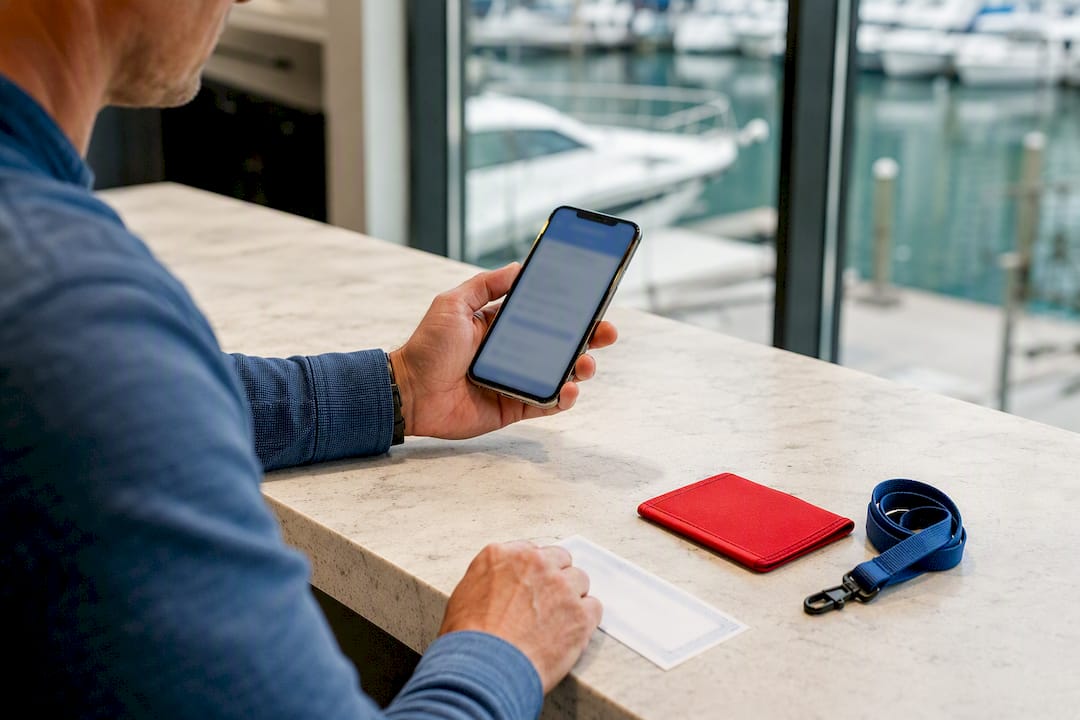
- Complete the instruction and pass the final exam. Most NASBLA-aligned online courses let you print a temporary certificate immediately after passing, which is valid to use on the water while your permanent card processes.
- Receive your printed or digital boater education card. This is your primary proof of completion until Georgia’s systems catch up.
- DNR transmits your completion record to the Department of Driver Services. DDS then adds a boater endorsement indicator to your license or ID the next time you renew or update it.
Processing between course completion and DDS reflecting the endorsement isn’t instant. Keep your printed or digital certificate accessible until you’ve confirmed the indicator shows up on your license.
For minors, parents typically need to provide proof of age (a birth certificate or existing ID) during course registration, and some providers require a parent’s name on file for enrollment.
Pro Tip: Don’t discard your temporary certificate after your course. Keep a photo of it on your phone even after your driver’s license shows the boater endorsement, since some officers and rental operators still ask for the original card.
Exemptions From Georgia’s Boater Education Rule
Not everyone falls under the mandatory course requirement. Georgia carves out specific exemptions, and they matter if you fall into one of these categories:
- U.S. Coast Guard licensed masters are exempt from the state course requirement, since their federal credential already covers navigation and safety competency.
- Private lake or pond operators may be exempt when the water body is fully enclosed and privately owned, though this doesn’t extend to public waterways connected to those private waters.
- Nonresidents who hold a NASBLA-approved boater education certificate from another state can use it in Georgia without retaking a course, as long as they can produce proof of completion on request.
If you’re unsure which category applies to your situation, verifying directly with DNR or DDS beats guessing. Misjudging an exemption on the water can turn into a citation, not just an inconvenience.
What to Carry on Board as Proof of Compliance
Officers conducting a safety check expect to see two things: identification and proof of course completion. Keep both accessible, not buried in a dry bag at the bottom of the boat.
- A valid driver’s license or government-issued photo ID.
- Your boater education card, printed or saved digitally, if your birthdate falls on or after January 1, 1998.
- A temporary certificate from an online provider, if you completed a course recently and your permanent card hasn’t arrived yet.
Once DDS adds the boater endorsement to your license, that indicator can reduce how often you need to produce a separate card. Until you’ve confirmed the endorsement appears, carry the physical or digital certificate anyway. Relying on “it should be updated by now” is a bad bet during an enforcement stop.
What NASBLA-Aligned Courses Actually Teach
A NASBLA-approved course isn’t a rubber stamp. The curriculum consistently covers navigation rules and right-of-way, PWC-specific handling and safety, emergency procedures like man-overboard response, and required onboard safety equipment.
- Online, self-paced courses work well for busy adults and teens comfortable studying independently.
- Live Zoom instruction adds real-time Q&A without the drive to a classroom.
- In-person classroom sessions suit hands-on learners who want direct instructor feedback.
- On-water training, where offered, builds practical skill that a written exam alone can’t test.
Georgia’s DNR and DDS accept NASBLA alignment specifically because it standardizes what “competent” means across providers, so a course taken online in one state satisfies requirements in another. That consistency is why the certificate travels with you, not just the class.
Pro Tip: If you’re getting certified for a family trip involving a rented PWC, confirm the rental company accepts your specific course provider’s certificate before you show up. Most do, but a five-minute phone call beats a wasted reservation.
Getting Your Family Ready for Georgia’s Boating Rules
Scheduling a course for a minor takes more lead time than most families expect. Book it a few weeks before your trip, not the night before. Keep the printed certificate on hand until the DDS endorsement shows up on file, and pair the certification with actual time at the helm under supervision. A card proves knowledge; practice builds judgment, and Georgia’s water deserves both.
— Richard
Get Certified Through Safe Boating America
You can get legally certified faster than piecing together a course on your own, with same-day certification options that fit around your schedule instead of the other way around. The Georgia Boating & PWC Certification Course Online is built specifically to satisfy Georgia’s DNR requirements, and it’s available online, through live Zoom sessions, or in person depending on how you learn best.
Registration takes a few minutes: pick your format, complete the instruction, pass the final exam, and print your temporary certificate immediately. Bring a government-issued ID and, for minors, a parent’s information at signup. Once DNR transmits your completion to DDS, your license or ID will reflect the boater endorsement at your next renewal. If you’d rather explore national options first, the online computer-based boating safety courses page covers formats available outside Georgia too. Start your registration on the Georgia course page today and get your card before your next trip on the water.
Sources
- Who Can Operate a Boat | Department Of Natural Resources Division
- Boater Endorsement - Georgia Department of Driver Services
FAQ
Can a 13-Year-Old Drive a Jet Ski in Georgia?
Yes, if they’ve completed an approved boater education course or are accompanied by a competent adult, since operators aged 12 through 15 may operate a vessel less than 16 feet in length (including a PWC) under those conditions.
Do You Need a Boater’s License to Drive a Boat in Georgia?
Georgia doesn’t issue a traditional boating “license,” but anyone born on or after January 1, 1998 must complete a DNR-approved boater education course and carry proof of completion before operating a motorized vessel.
What Is the Minimum Age to Drive a Boat in Georgia?
There’s no strict minimum age, but operators under 12 must have a competent adult on board at all times, and those 12 to 15 need certification or adult supervision to run a vessel under 16 feet.
Can You Drink a Beer While Driving a Boat in Georgia?
Georgia treats boating under the influence like driving under the influence, and operating a vessel while impaired carries the same legal risk as operating a car while impaired, so drinking and operating a boat isn’t advisable regardless of the amount.
How Do I Prove I Completed My Georgia Boater Education Course?
Carry your printed or digital boater education card until your Department of Driver Services record shows the boater endorsement on your license or ID, which happens after DNR transmits your completion and you renew or update your credential.