U.S. Boaters: Verify NASBLA Reciprocity Before You Launch

Many states honor a NASBLA-approved boating certificate when you operate a boat outside your home state, but several states attach conditions such as residency time limits, proctored-exam requirements, or extra documentation for personal watercraft. Reciprocity covers education only; local equipment rules, age minimums, and boating-under-the-influence laws still apply wherever you launch. Carry your certificate and confirm the destination state’s current policy before you go.
TL;DR:
- Some states reject self paced certificates unless the course included a proctored exam, while others require state issued cards or instructor led training.
- New Jersey requires a state certificate after 90 days on its waters; instructors from out of state courses sometimes provide temporary paperwork.
- Colorado recognizes out of state boating certificates only when the course included a proctored exam, excluding some fully self paced online programs.
- Hawaiʻi requires NASBLA and state approved education plus registry enrollment, and some craft require state specific instruction even when visitors hold valid certificates.
- Before travel, confirm rules with the destination state agency, carry your certificate, and remember reciprocity does not cover local equipment, age, or impairment laws.
Table of Contents
- What NASBLA reciprocity actually means
- How states vary on accepting out-of-state certificates
- State examples worth knowing before you launch
- What to carry, and how to replace a lost card
- When a short visit turns into something reciprocity won’t cover
- How to verify your certificate before you travel
- Why Safe Boating America is a dependable source for certification
- A practical view on avoiding reciprocity surprises
- Get a NASBLA-approved certificate without the guesswork
- FAQ
- Sources
What NASBLA reciprocity actually means
NASBLA, the National Association of State Boating Law Administrators, does not issue boating licenses. We rely on its national education standards as the baseline that course providers must meet to earn NASBLA approval, built on ANSI/NASBLA criteria covering navigation rules, safety equipment, and emergency procedures. Approval signals that a course meets a recognized minimum, nothing more.
Acceptance across state lines is a separate decision, made by each state’s boating agency, not by NASBLA. A course can carry full NASBLA approval and still face added conditions in a specific state. For the clearest, most current picture of which states recognize which certificates under what terms, the NASBLA reciprocity page is the starting point, followed by the destination state’s own boating agency site. Treat NASBLA’s resources as the standards reference and the state agency as the final word on acceptance.

How states vary on accepting out-of-state certificates
States build their own conditions on top of the NASBLA baseline, and those conditions determine whether your card gets a quick nod from a marine patrol officer or a longer conversation.
- Some states require the original course to have included a proctored exam, which affects purely self-paced online courses unless the provider offers a supervised final.
- A handful of states only recognize certificates issued directly by a state boating agency, rather than a third-party provider card, even when the underlying course was NASBLA-approved.
- Several states draw a line between instructor-led courses (in-person or live online) and fully self-paced formats, honoring the former more consistently.
- A few states apply a residency or visit-length limit, after which an out-of-state certificate no longer satisfies local requirements.
Online and self-paced certificates face the most scrutiny since they are the easiest format for a state to flag as incomplete under its own rules. Before you travel, check your card for the issuing authority’s name, the NASBLA approval marker, and the course completion date: those three details are what most officers and rental counters look for first.
Pro Tip: Keep a digital photo of your certificate on your phone in addition to the physical card, since a lost card mid-trip should never cost you a day on the water.
State examples worth knowing before you launch
A handful of states illustrate how reciprocity plays out in practice rather than in theory.
- New Jersey requires a New Jersey Boat Safety Certificate for anyone operating in state waters for more than 90 days, according to the New Jersey State Police, and instructors from approved out-of-state courses sometimes issue temporary New Jersey paperwork to bridge the gap for longer stays.
- Hawaiʻi requires NASBLA and state-approved education and maintains a Certified Boater Registry through its Division of Boating and Ocean Recreation; certain craft require Hawaiʻi-specific content even when a visitor’s out-of-state certificate is otherwise valid.
- Colorado accepts out-of-state certificates tied to courses that included a proctored exam, according to a USCG summary of state boating laws, which rules out some fully self-paced online options.
- Connecticut generally accepts NASBLA-approved certificates from out-of-state boaters, but a Connecticut legislative report notes that personal watercraft documentation and reciprocal arrangements can be limited to specific jurisdictions, so PWC operators should double-check before renting or launching.
What to carry, and how to replace a lost card
A valid certificate only helps if you have it on hand, so pack smart before you leave your driveway.
- Carry the physical card or certificate, showing the NASBLA approval mark, the issuing authority’s name, your completion date, and a course identification number.
- Request a replacement immediately from your original course provider if your card is lost, since most providers can reissue a digital copy the same day.
- Check whether your destination state accepts temporary proof, such as a printed receipt or an emailed confirmation, while a physical replacement is in transit.
- Boat renters should present their certificate at check-in and ask the rental operator directly if they are unsure whether it satisfies local rules, keeping the relevant state agency’s phone number handy just in case.
Our guide to replacing a lost boating certificate walks through the process in more detail for anyone who needs a same-day reissue before a trip.
When a short visit turns into something reciprocity won’t cover
Reciprocity is built for temporary operation, not for permanent relocation. A weekend trip or a two-week vacation almost always falls under a state’s visitor allowance, but moving to a new state and establishing residency is a different situation entirely.
Many states set a specific threshold, like New Jersey’s 90-day rule, after which an out-of-state certificate no longer satisfies the requirement and a local certificate or supplementary test becomes necessary. If you are relocating rather than visiting, check the new state’s residency threshold as soon as you arrive rather than assuming your existing card will keep covering you indefinitely.

Enforcement adds another layer: some states link boating violations to driver’s license privileges, and a reciprocal suspension tied to a boating-under-the-influence offense can follow you across state lines in ways a simple certificate check won’t reveal.
How to verify your certificate before you travel
A few minutes of checking before you launch saves a conversation with a marine patrol officer later.
- Start with the NASBLA reciprocity page for a general sense of how states treat out-of-state certificates.
- Visit the destination state’s own boating agency website, whether that’s a state police marine unit, a department of environmental protection, or a division of boating and ocean recreation, since state pages carry the most current and binding rules.
- When the state’s page leaves any ambiguity, call the agency directly or reach out to your original course provider for clarification.
- Keep a screenshot or printed copy of the relevant state guidance alongside your certificate so you have something concrete to show if a question comes up on the water.
Readers planning a New Jersey trip can also check our detailed New Jersey boating license guide and our deeper look at 60 to 90 day reciprocity rules for the specifics that matter most to that state’s boaters.
Why Safe Boating America is a dependable source for certification
We build every course on NASBLA-approved materials and teach them through state-certified instructors and USCG-licensed captains, which keeps the certificate you earn aligned with the standards state agencies check against. Online, live Zoom, and in-person formats give boaters a way to complete instructor-led or self-paced training depending on what a particular state requires, and some courses offer same-day certification once finished.
When a student needs state-specific paperwork, such as a New York boating safety certificate or a Connecticut-specific course completion record, instructors are familiar with the documentation each state’s agency expects. That familiarity matters most when a boater is trying to show proof of a NASBLA-approved certificate to satisfy a reciprocity requirement in an unfamiliar state.
A practical view on avoiding reciprocity surprises
Carry your certificate, confirm the destination state’s rules before you launch, and never assume a NASBLA approval marker alone settles the question. Do learn the local boating-under-the-influence and equipment rules wherever you travel, since reciprocity never extends to those. Don’t rely on memory of a state’s policy from a prior trip, since agencies update their requirements. A five-minute check against the state’s own page beats an awkward conversation with a marine patrol officer.
— Richard
Get a NASBLA-approved certificate without the guesswork
If your certificate has lapsed, never existed, or needs an upgrade before a trip, we offer a direct path to a compliant card without the back-and-forth of piecing together state rules on your own.
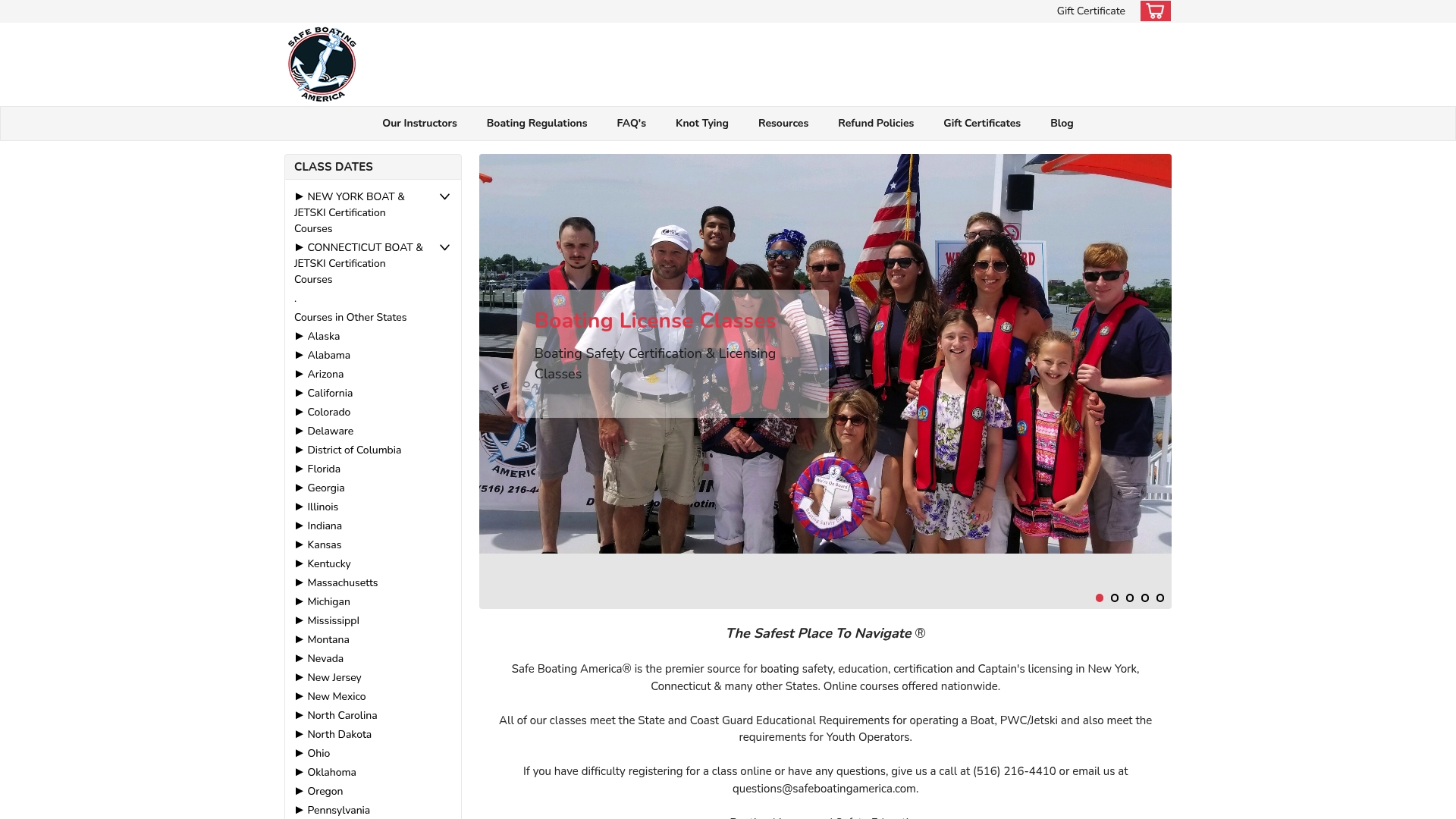
- Our nationwide online course satisfies NASBLA-approved education requirements in every state we serve.
- Our Zoom Online 1-Day Class covers states that require instructor-led or proctored instruction.
- State-specific options, including our NYS Safe Boating Class and PRIVATE Connecticut Boating Course, handle the paperwork particular to those states.
Browse our full course lineup at Safe Boating America and get certified before your next trip on the water.
FAQ
Does Florida accept NASBLA certification?
Florida honors boating safety education certificates from other states when the underlying course carries NASBLA approval, consistent with the general reciprocity framework NASBLA outlines on its reciprocity page. Always confirm current details directly with Florida’s boating agency before relying on an out-of-state card for an extended stay.
Is my Massachusetts boating license reciprocal with other states?
A Massachusetts boating certificate built on NASBLA-approved coursework is generally recognized by other states for temporary operation, though some states add conditions like proctored exams or residency limits. Check the specific destination state’s boating agency page for any added requirements before you travel.
What states have boating license reciprocity?
Most states accept out-of-state NASBLA-approved certificates for temporary boaters, but the terms differ: New Jersey sets a 90-day limit, Hawaiʻi requires registration through its Certified Boater Registry, and Colorado ties acceptance to courses with a proctored exam. The NASBLA reciprocity page and each state’s own boating agency site are the most reliable places to confirm current rules.
Can I register my boat in two different states?
Boat registration and boating education certificates are separate matters, and registration rules are generally tied to where the vessel is primarily used or stored rather than to reciprocity for safety certificates. Check with the relevant state’s boating or motor vehicle agency directly, since registration requirements vary by state and are not governed by NASBLA’s education reciprocity standards.
Sources
- National Education Standards - NASBLA
- Boating Safety Certificate | Frequently Asked Questions | New Jersey State Police
- Boating – Motorized Vessels – Division of Boating and Ocean Recreation
- Carrying Proof of Boating Education by Out-of-State Boaters (Connecticut report)