What Marine Flares You Need and How to Choose the Right Kit
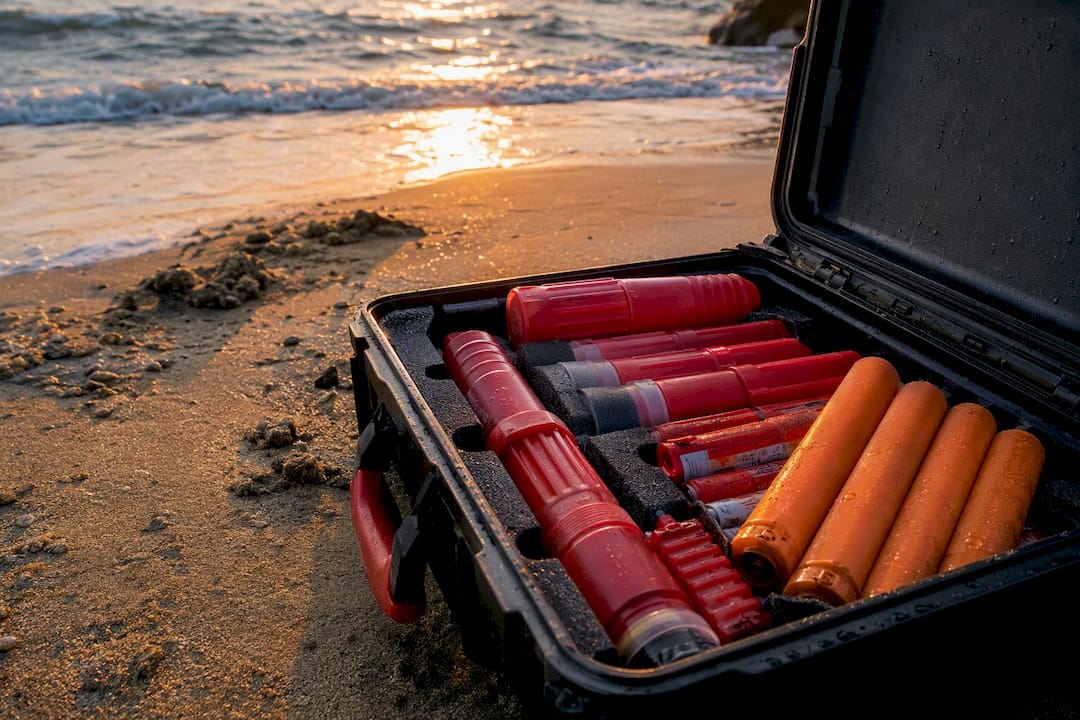
Most recreational boats need at least three USCG-approved pyrotechnic flares or an accepted electronic visual distress signal, plus a daytime option like orange smoke, before you leave the dock. The core choice comes down to two paths: traditional marine flares (handheld, aerial, or smoke) or a USCG-accepted electronic distress light like the Ocean Signal EDF2, which can replace pyrotechnics under specific conditions. Whichever you carry, check the printed expiration date now, store the kit in a waterproof container, and replace anything expired before your next trip.
Key Takeaways
Most recreational boats need three USCG-approved pyrotechnic flares or an accepted electronic device, plus a daytime smoke signal, with everything stored unexpired in a waterproof container.
| Point | Details |
|---|---|
| Carry day and night coverage | Most boats need both a night signal (flare or electronic light) and a daytime option like orange smoke. |
| Check expiry before every season | Pyrotechnic flares expire and expired devices don’t satisfy carriage rules. |
| Electronic flares skip disposal hassle | Devices like the Ocean Signal EDF2 never expire and avoid hazardous-waste disposal entirely. |
| Store flares in a dedicated waterproof case | Keep the kit away from engine heat, fuel lines, and children’s reach. |
| Practice before you need it | Safe Boating America’s courses teach flare handling and carriage rules alongside required safety equipment. |
Table of Contents
- What Types of Marine Flares Exist and Which Should You Buy?
- What Does the Coast Guard Require You to Carry?
- How Do You Use a Flare Safely, Store It, and Dispose of It?
- When Should You Choose Electronic Flares Over Pyrotechnics?
- What Should You Check Before Buying a Flare Kit?
- Sources
- FAQ
What Types of Marine Flares Exist and Which Should You Buy?
Marine distress signals fall into four working categories, and knowing which one fits your boating pattern matters more than brand loyalty. Handheld red flares work at close range and are the baseline night signal almost every boat carries. Aerial or parachute rockets fire higher and farther, useful when you need to be seen from several miles out or over open water. Orange smoke signals handle daytime distress since a red flare is nearly invisible in sunlight. Electronic visual distress signal devices (eVDSDs) skip pyrotechnics entirely, using a flashing LED pattern that meets RTCM 13200.0 and 46 CFR 161.013 certification.
Here’s how the leading US-available options stack up on the dimensions that actually affect a buying decision.
A few buying notes worth flagging before you check out:
- Sirius Signal’s A-1001 and C-1003/C-1004 models round out that electronic lineup with different mounting and brightness tiers.
- Cyalume Technologies chemical light sticks are common backup markers but are not a substitute for a certified night signal.
- Never substitute a highway road flare for a marine flare. Road flares burn differently, aren’t waterproof, and carry no USCG or SOLAS recognition for water rescue.
- Greatland’s Rescue Laser Flare (red and green versions) supplements a kit well but doesn’t replace a primary VDS on its own.
What Does the Coast Guard Require You to Carry?
Federal regulation treats a rocket parachute flare and a hand flare showing a red light as core recognized distress signals, both under international guidance and under 33 CFR § 87.01, which defines signals for a vessel “in need of assistance.” For broader context on recognized distress methods, see this detailed marine distress signals comparison. The Navcen Annex IV reference confirms the same standard internationally, so a flare that satisfies U.S. rules generally reads as a recognized distress signal to any vessel nearby.
In practice, most recreational boats operating in coastal waters need day and night signaling capability aboard at all times underway. That typically means:
- At least three USCG-approved pyrotechnic devices, or a combination covering both day and night use.
- An orange smoke signal or flag for daytime distress if your night flares don’t double as day signals.
- One USCG-accepted electronic distress light (with the accompanying distress flag) may replace pyrotechnic flares for many recreational vessels under the manufacturer’s stated conditions.
- Everything in the kit unexpired, since an expired pyrotechnic flare does not satisfy the carriage requirement even if it’s still on board.
USCG boater safety materials outline these carriage basics in plain language, and they’re worth a five-minute read before your next haul-out. Vessels operating on the Great Lakes or within a certain distance from shore sometimes qualify for reduced requirements, but don’t assume an exemption applies to you. Confirm it against the actual regulatory text or your state boating authority.
How Do You Use a Flare Safely, Store It, and Dispose of It?
Firing a flare wrong can hurt you or someone standing near you, so the sequence matters. Point handheld flares downwind and away from your body and the boat, holding them at arm’s length over the water. Aerial flares fire straight up, away from rigging, sails, or overhead lines. Wait until you can see a responding vessel or aircraft if you have flares to spare. Fire your best signal first only if you’re in immediate danger; otherwise, hold a reserve back. After firing, mark your position, and back up the flare with a VHF DSC distress call or an EPIRB activation if you carry one.
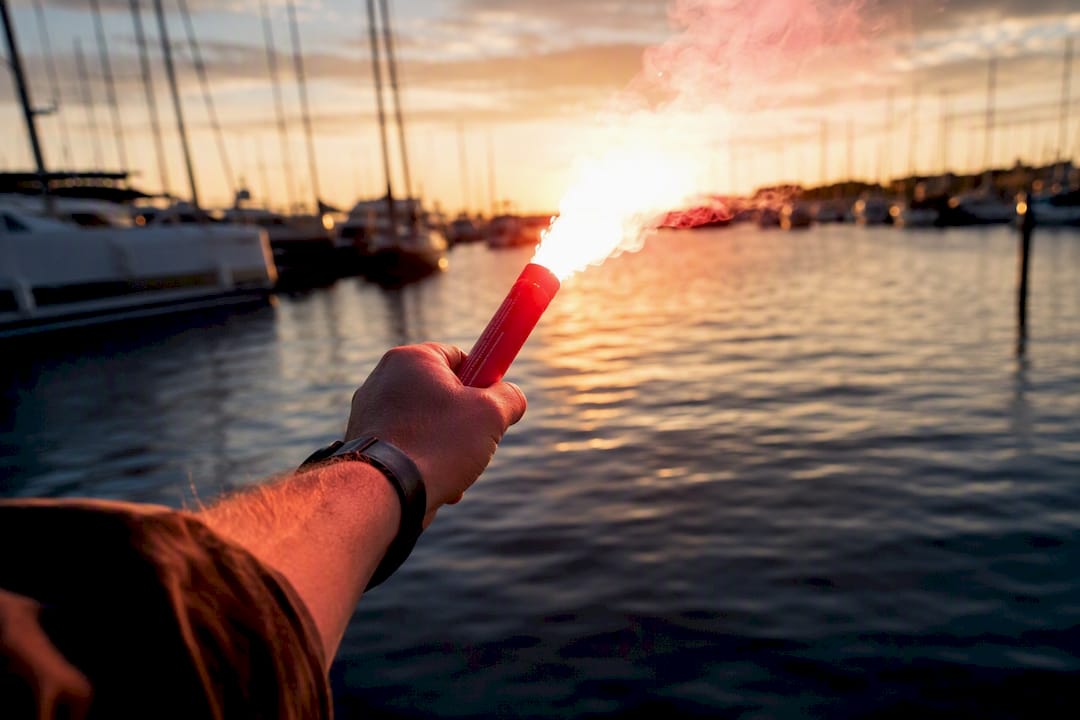
Storage matters as much as the flare itself. Keep your kit in a dedicated waterproof container, out of reach of kids, and away from engine heat or direct sun. Testing cited by the Coast Guard shows pyrotechnic flares burn hot enough to damage fiberglass and metal on contact, which is why loose storage near fuel lines or upholstery is a real fire risk, not a theoretical one.
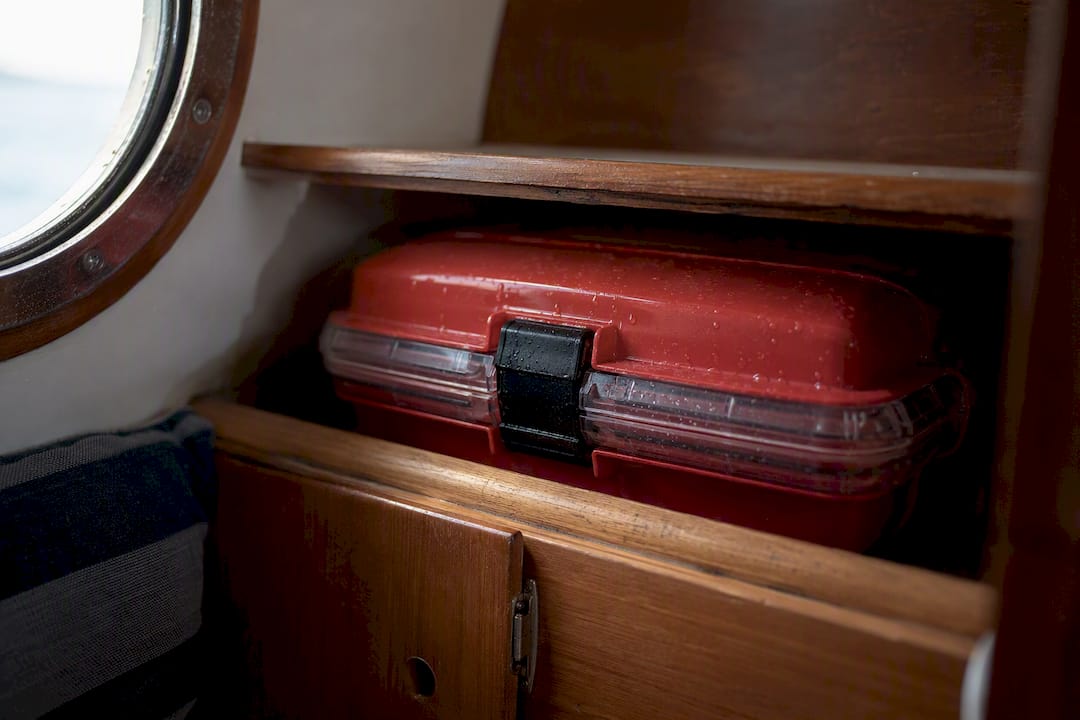
Pro Tip: Keep expired flares in their original waterproof case until disposal day. A cracked or leaking flare casing left loose in a locker is more dangerous than one properly stored, expired or not.
Expired flares count as hazardous waste in most states because of the chemical propellants involved. The FDA notes that perchlorate, a compound found in some pyrotechnic formulations, carries environmental and health concerns significant enough that it’s regulated in food and water testing. Never throw expired flares in household trash. Check your state environmental agency’s hazardous waste program or a local marina collection event. Some fire departments and marine retailers run periodic flare take-back days too.
When Should You Choose Electronic Flares Over Pyrotechnics?
Electronic visual distress signal devices solve the two biggest headaches with pyrotechnics: expiration and disposal. A device like the Ocean Signal EDF2 or the ACR ResQFlare and ResQFlare PRO never expires, runs on rechargeable or replaceable batteries, and can be fired repeatedly during a drill without using up your only distress signal. This reusability makes them ideal for family boats and PWC operators who want to actually practice with the device before an emergency happens.
Pyrotechnics still hold an edge for extended offshore trips where higher altitude and brighter output matter, and where regulatory redundancy (having both types aboard) gives rescuers more than one way to spot you. A few practical differences to weigh:
- Electronic lights offer unlimited use and no wasted single-shot signals, but pyrotechnic aerials generally reach greater visible distance offshore.
- Electronics need occasional battery checks; pyrotechnics need expiry tracking and eventual hazardous-waste disposal.
- VHF DSC and AIS/SART devices don’t replace visual signals but back them up by alerting other vessels electronically, which is worth pairing with either flare type.
- EPIRBs and PLBs solve a different problem (satellite alerting to rescue authorities) and aren’t a substitute for the visual signal requirement.
What Should You Check Before Buying a Flare Kit?
Run through this list before you swipe your card, whether you’re buying in a marine store or online.
- Confirm USCG approval markings or, for electronic units, RTCM/46 CFR 161.013 certification printed on the packaging.
- Check the expiration date on every pyrotechnic device. A “close-dated” kit sold at a discount often expires within months.
- Compare burn time and visible range against your typical operating distance from shore.
- Make sure your kit includes a daytime option, since a night-only flare doesn’t satisfy day signaling needs.
- Look for buoyant, waterproof-rated devices if you’re on an open boat with limited dry storage.
- Check whether the kit includes mounting hardware or a distress flag, since some electronic models bundle both.
- Note the seller’s shipping restrictions. Pyrotechnics ship as hazardous material, and legitimate retailers disclose that upfront rather than burying it in fine print.
Pro Tip: Calculate your real cost of ownership, not just the sticker price. A $40 pyrotechnic kit that expires every three years costs more over a decade than a $150 electronic flare that never needs replacing, once you factor in disposal fees and re-purchase frequency.
Walk away from listings with vague visibility claims, no printed approval language, or sellers who dodge questions about storage conditions. Those are the same red flags that show up before a warranty dispute.
A Note From Instructors on What Actually Saves You
Redundancy beats gear quality every time. Carry more than one signal type, run a firing drill before the season starts, and check expiry dates before you leave the dock, not after you need them. For most family boats, an electronic flare like the ResQFlare makes practice realistic; keep pyrotechnics aboard too for offshore range and backup.
Take a Course That Covers Flare Use, Not Just the Rules
Reading about carriage requirements only gets you halfway there. Safe Boating America’s certification courses walk you through the actual mechanics: how to identify required visual distress signals for your boat, how to fire a flare correctly, and what a Coast Guard officer checks during an on-water inspection.
Courses run online, live over Zoom, or in person depending on your state, and every format covers required safety equipment alongside navigation rules and emergency procedures. That combination matters because knowing the CFR citation for flare carriage doesn’t help much if you’ve never actually held one. Start with Safe Boating America’s boating safety certification to find the course format that fits your schedule, or check the nationwide online course catalog if you want to study at your own pace before your next trip out.
Sources
- ANNEX IV: International Distress Signals | Navigation Center
- 33 CFR § 87.01 - Need of assistance. | Electronic Code of Federal Regulations (e-CFR) | US Law | LII / Legal Information Institute
- Perchlorate questions and answers | FDA
FAQ
What Kind of Flares Do You Need on a Boat?
Most recreational boats need night signal capability (a handheld or aerial red flare, or a USCG-accepted electronic light) plus a daytime option like orange smoke, kept unexpired and stored in a waterproof container.
What Can You Use Instead of Marine Flares?
A USCG-accepted electronic visual distress signal device, like the Ocean Signal EDF2 or ACR ResQFlare, can replace pyrotechnic flares for many recreational vessels when paired with the required distress flag.
Is There a Difference Between Road Flares and Marine Flares?
Yes. Road flares aren’t waterproof, aren’t rated for marine visibility distances, and carry no USCG or SOLAS recognition, so they don’t satisfy boat carriage requirements.
What Are the Best Marine Flares for Emergencies?
The strongest kits pair a proven pyrotechnic option, like the Orion Red Parachute Signal Rocket for offshore range, with a reusable electronic device such as the ACR ResQFlare PRO for practice and redundancy.
Recommended
- Marine VHF Frequencies: The Complete Channel Chart - Safe Boating America
- Best Marine Insurance Companies for U.S. Boat Owners - Safe Boating America
- Maritime Flags for Recreational Boaters: What to Know - Safe Boating America
- Fire Extinguisher Requirements for Boats: 2026 Guide - Safe Boating America