Helm of a Boat: What It Is and How It Works
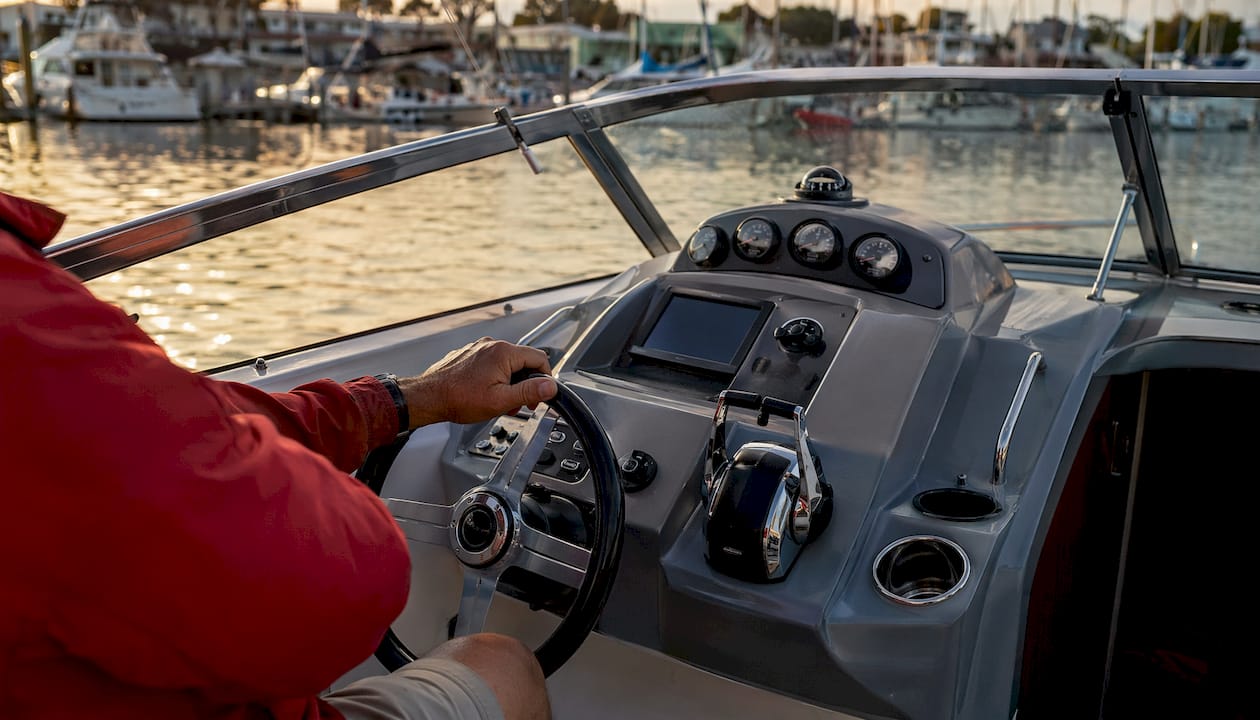
The helm of a boat is defined as the complete steering and control station where the operator directs the vessel’s movement, speed, and course. Most boaters picture a steering wheel when they hear “helm,” but the helm encompasses the entire steering apparatus, including the wheel or tiller, mechanical or hydraulic linkages, throttle controls, and navigation instruments. On larger vessels, this station is called the bridge. On recreational boats, it remains the helm. Understanding the full scope of what the nautical helm includes is the foundation for safe, confident boat operation.
What are the key components of a boat helm?
The helm is the operator’s workplace, and its components work together to give the captain complete control over the vessel. Each part has a specific function, and a failure in any one of them affects the whole system.
The primary input devices are the steering wheel and the tiller. The steering wheel is standard on most powerboats and larger sailboats. The tiller is a direct lever connected to the rudder, common on small sailboats and dinghies. Both translate the operator’s physical input into directional change.
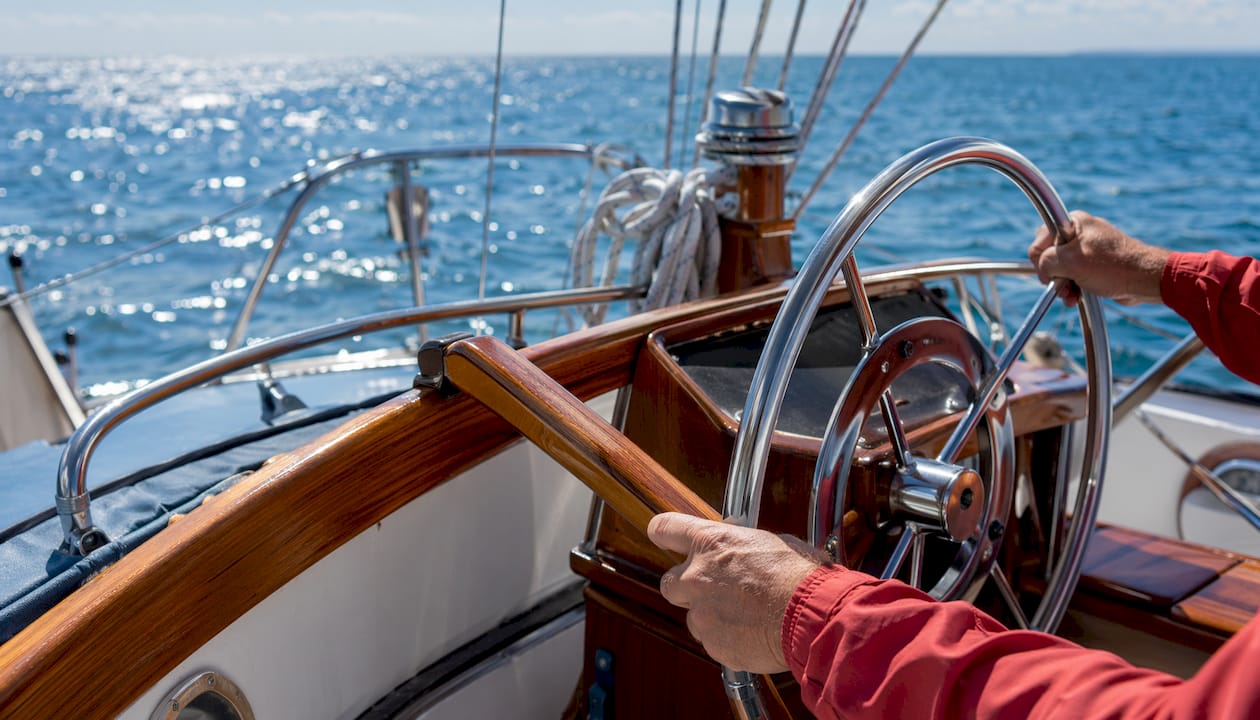
Behind the wheel, a system of mechanical cables, hydraulic lines, or electronic signals carries that input to the rudder. The rudder then deflects water flow to turn the boat. Throttle controls sit at the helm station as well, letting the operator manage engine speed without leaving the command position.
Navigation instruments are also grouped at the helm. These typically include a compass, GPS chartplotter, depth sounder, and VHF radio. Grouping them at the helm keeps critical information in the operator’s direct line of sight. You can learn more about these tools in Safeboatingamerica’s guide to essential boating electronics.
- Steering wheel or tiller: Primary directional input device
- Rudder linkage: Cables, hydraulic lines, or electronic actuators that transfer input to the rudder
- Throttle controls: Engine speed management integrated at the helm
- Navigation instruments: GPS, compass, depth sounder, and VHF radio
- Seating and ergonomics: Helm chair or bolster seat positioned for visibility and comfort
Pro Tip: Sit at the helm before buying a boat. Reach for the throttle and wheel simultaneously. If the position feels awkward, fatigue will set in fast on longer trips.
Where is the helm located on a boat?
Helm placement directly affects how well you see the water around you and how quickly you can react to hazards. Helm positioning is designed to provide a clear line of sight to the bow and surrounding waters, which is the primary safety requirement for any helm location.
The most common positions vary by boat type and size. Here is how they break down:
- Center console: The helm sits in the middle of the boat, giving the operator 360-degree visibility. This layout is standard on fishing boats and offshore vessels where all-around awareness matters most.
- Starboard side forward: The helm is mounted on the right side, roughly two-thirds toward the bow. This positioning accommodates the majority of right-handed operators, making throttle and wheel control more intuitive during critical maneuvers.
- Flybridge: Found on larger cruisers and sport fishers, the flybridge places the helm on an elevated upper deck. The height gives superior visibility over the bow and surrounding traffic.
- Cabin or pilothouse: On cruisers and trawlers, the helm is enclosed inside the cabin. This protects the operator from weather but requires good window placement to maintain sightlines.
- Stern or aft helm: Less common, but used on some European-style canal boats and certain workboats where rear visibility is the priority.
Ergonomics play a significant role in helm design beyond just visibility. The operator needs to reach the wheel, throttle, and key instruments without stretching or twisting. Poor ergonomics cause fatigue, and fatigue causes errors. A well-designed helm keeps everything within arm’s reach and positions the operator’s eyes level with the horizon.
What are the different types of boat helms and steering systems?
Boat helms fall into three broad categories based on how steering input reaches the rudder: mechanical, hydraulic, and electronic. Each system has a different feel, cost profile, and maintenance requirement.
Mechanical cable steering
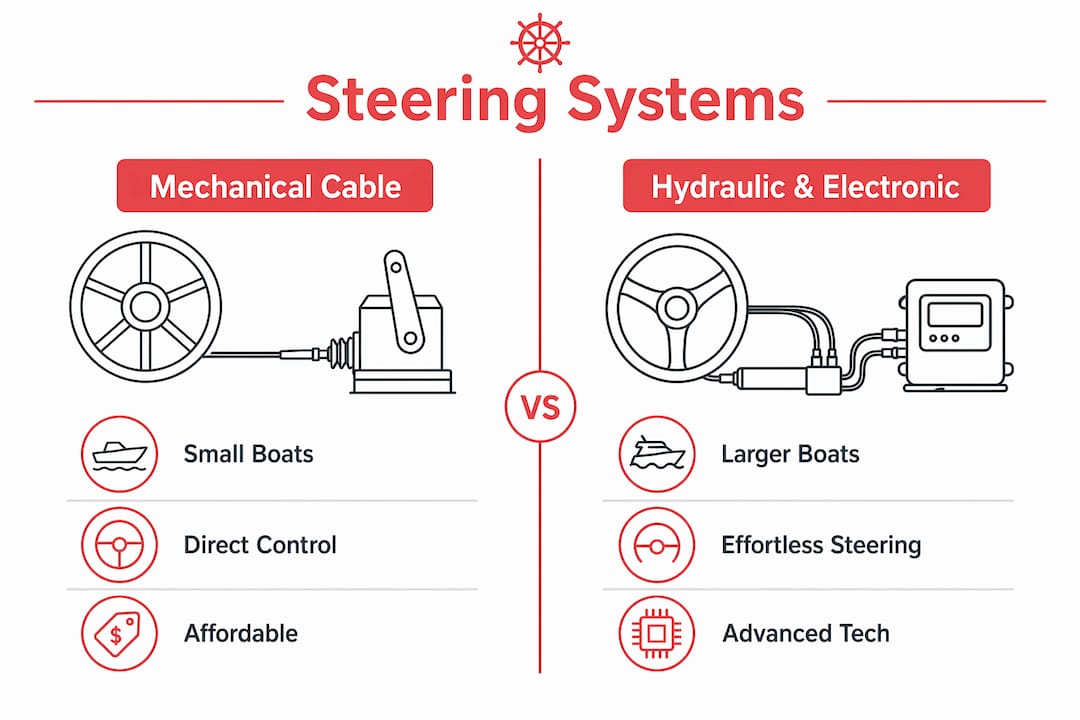
Mechanical cable steering is the most common system on small to mid-size powerboats. A cable runs from the steering wheel through the boat to a rack-and-pinion or rotary mechanism at the outboard or stern drive. The system is simple, affordable, and easy to service. The trade-off is physical effort. On larger boats or at high speeds, cable steering can feel stiff and tiring.
Hydraulic steering
Modern hydraulic systems use a pump at the helm and fluid-filled lines to transfer steering force to the rudder. The result is significantly less physical effort and greater precision. Hydraulic steering is the standard choice for boats over 25 feet and for any vessel with twin engines. The system requires periodic fluid checks and line inspections, but it delivers a noticeably smoother feel.
Electronic and joystick steering
Electronic power steering and joystick docking systems represent the current frontier in helm technology. These systems use sensors, actuators, and software to translate input into rudder movement. Joystick controls are especially useful for docking, allowing the operator to move the boat sideways or rotate it in place. They are found on high-end cruisers and increasingly on mid-range vessels as costs come down.
| Steering type | Best suited for | Key advantage | Main limitation |
|---|---|---|---|
| Mechanical cable | Small powerboats under 25 ft | Low cost, simple service | Physical effort at speed |
| Hydraulic | Mid to large powerboats | Reduced effort, high precision | Fluid maintenance required |
| Electronic/joystick | Large cruisers, twin-engine vessels | Maximum control, docking ease | Higher cost, complex repair |
Steering wheel styles also vary. Destroyer-style wheels have open spokes and a classic look. PU foam grip wheels offer comfort on long runs. Stainless steel wheels resist corrosion in saltwater environments. Wood wheels appear on traditional and classic vessels. The right choice depends on your boat’s environment and how long you spend at the helm.
Pro Tip: If you run in saltwater, stainless steel or high-grade polymer wheels outlast wood and standard aluminum by years. Budget for the material upgrade upfront rather than replacing the wheel repeatedly.
How do you select and maintain a boat steering wheel?
Replacing or upgrading a steering wheel is one of the most common helm modifications. Getting it wrong creates a safety hazard. Getting it right improves comfort and control on every trip.
The first step is identifying your steering shaft type. Most steering shafts use a 3/4-inch tapered design, but straight shafts exist on some older and European-built boats. Installing a wheel designed for a tapered shaft onto a straight shaft will result in a loose, dangerous fit. Measure before you order.
- Shaft type: Confirm tapered or straight before purchasing any replacement wheel
- Hub diameter: Match the hub bore exactly to your shaft diameter for a secure fit
- Wheel diameter: Most small yachts and powerboats use wheels between 12.5 and 15.5 inches in diameter
- Console clearance: Instrument table clearance behind the hub is often overlooked; a wheel that sits too deep will interfere with switches and levers
- Material: Stainless steel for saltwater, PU foam for comfort, wood for aesthetics on classic boats
Maintenance keeps the helm system safe between seasons. Inspect steering cables annually for fraying, kinking, or corrosion at the connection points. Flush hydraulic systems and check fluid levels each spring. Rinse the wheel and hub with fresh water after every saltwater outing. Tighten the hub nut to the manufacturer’s specification after any wheel removal. A loose wheel is not just uncomfortable. It is dangerous.
For a full pre-season review, Safeboatingamerica’s boat safety inspection guide covers the helm system alongside all other critical components.
Key Takeaways
The helm of a boat is the complete steering and control station, not just the wheel, and understanding its components, location, and maintenance is the foundation of safe vessel operation.
| Point | Details |
|---|---|
| Helm scope | The helm includes the wheel or tiller, linkage system, throttle, and navigation instruments. |
| Helm location | Placement is designed for maximum visibility and operator ergonomics, most often starboard or center console. |
| Steering system types | Mechanical cable, hydraulic, and electronic systems each suit different boat sizes and budgets. |
| Wheel selection | Match shaft type, hub diameter, wheel size, and console clearance before replacing any steering wheel. |
| Maintenance priority | Annual cable and hydraulic inspections, plus fresh-water rinsing after saltwater use, prevent most helm failures. |
Why the helm deserves more attention than most boaters give it
Most new boaters spend time learning the rules of the water and almost no time studying the physical station they will operate from. That gap shows up fast the first time conditions get rough.
I have watched boaters struggle at the helm not because they lacked knowledge of navigation rules, but because they were physically uncomfortable. The seat was wrong, the wheel was too large for the console, or the throttle required a reach that pulled them off balance. Ergonomics at the helm are not a luxury. They are a safety factor.
The shift from mechanical cable steering to hydraulic systems is one of the most underappreciated improvements in recreational boating. Operators who have only used cable systems often do not realize how much physical effort they are expending until they try hydraulic steering. The reduction in fatigue on a four-hour run is substantial. If you are buying a used boat with cable steering and plan to run it regularly, budgeting for a hydraulic upgrade is worth the cost.
One more thing that rarely gets discussed: the helm station visibility check. Before leaving the dock, sit at the helm and confirm you can see the bow, both sides, and the water immediately ahead. If a cooler, a passenger, or gear blocks your sightline, move it. Collision avoidance starts with what you can see from the helm, not with how fast you can react after you spot a hazard.
Spend time at the helm before you need to perform under pressure. Familiarity with your specific station, its feel, its reach distances, and its instrument layout, is what separates a confident operator from a reactive one.
— Richard
Safeboatingamerica’s boating safety courses cover helm operation and navigation
Knowing what the helm is and how it works is the first step. Operating it safely under real conditions requires structured training from certified instructors.
Safeboatingamerica offers state-approved boating certification courses taught by USCG-Licensed Captains and NASBLA-approved instructors across all 50 states. Courses cover helm operation, navigation rules, emergency procedures, and legal compliance requirements for your specific state. Online computer-based options are available for boaters who need flexibility, and same-day certification is offered in many locations. Whether you are a first-time boat owner or an experienced boater refreshing your credentials, Safeboatingamerica’s online boating courses give you the knowledge to operate your vessel’s helm with confidence and legal compliance.
FAQ
What is the helm of a boat?
The helm is the complete steering and control station on a boat, including the steering wheel or tiller, throttle controls, navigation instruments, and the mechanical or hydraulic systems connected to the rudder. It is where the captain or helmsman operates the vessel.
Is the helm the same as the steering wheel?
No. The steering wheel is one component of the helm. The full helm system includes the wheel or tiller, the linkage to the rudder, throttle controls, and navigation instruments grouped at the operator’s station.
Why is the helm usually on the starboard side?
The helm is positioned on the starboard (right) side to suit the majority of right-handed operators, making throttle and wheel control more natural and reducing error during critical maneuvers.
What steering system is best for a recreational powerboat?
Hydraulic steering is the best choice for most recreational powerboats over 25 feet because it reduces physical effort and improves precision. Mechanical cable steering works well on smaller boats where cost and simplicity are the priority.
What should I check before replacing a boat steering wheel?
Verify the shaft type (tapered or straight), hub diameter, wheel diameter, and console clearance behind the hub. Matching these four measurements prevents fit problems and safety hazards after installation.