Eagle Mountain Lake Marina: A Boater’s Access Guide
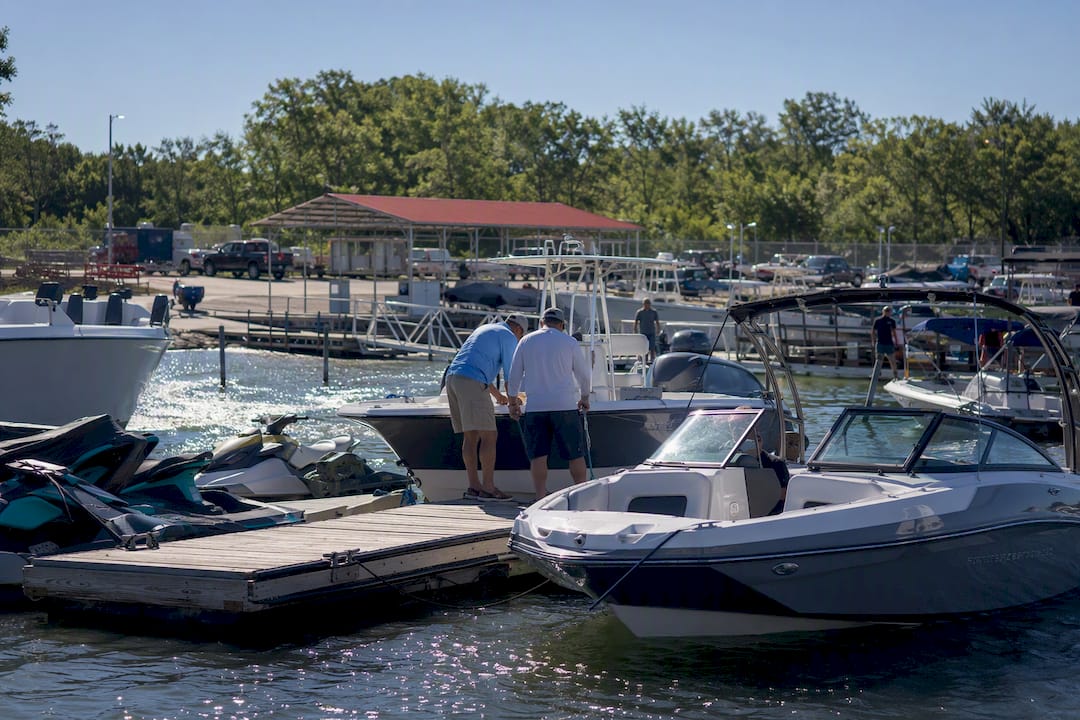
Eagle Mountain Marina, Lakeview Marina, West Bay Marina, and Lake Country/Harbor One handle most slip rentals and boat rentals on Eagle Mountain Lake, while Twin Points Park, Pelican Bay Ramp, and Shady Grove Park serve as the primary public launch points. Your next move depends on what you need: a slip or dry storage, a rental for the afternoon, or a free public ramp to drop your own trailer.
- Need a long-term slip or dry storage? Eagle Mountain Marina and Lake Country/Harbor One offer wet slips, covered storage, and on-site service departments.
- Want a rental for the day? Lakeview Marina and West Bay Marina both run pontoon and tritoon rental fleets built for casual outings.
- Launching your own boat for free? Twin Points Park has the deepest ramp on the lake and stays usable even when water levels drop.
Before you head out, check the TPWD access listings or call your chosen marina directly. Hours, fuel availability, and rental rates shift with the season, and a two-minute phone call beats showing up to a locked gate.
Key Takeaways
Eagle Mountain Lake pairs five marinas for slips, storage, and rentals with three public ramps for free trailer launching, all governed by TRWD rules and mandatory invasive-species protocols.
| Point | Details |
|---|---|
| Pick by boat type | Store long-term at Eagle Mountain Marina, Lake Country, or Harbor One; launch your own trailer at Twin Points, Pelican Bay, or Shady Grove. |
| Twin Points wins low-water launches | Its ramp stays usable even when the lake drops several feet below normal pool. |
| Confirm pricing by phone | Slip, storage, and rental rates shift seasonally, so call the marina directly before you commit. |
| Clean, Drain, Dry is mandatory | Texas law requires draining all water from your boat and trailer before leaving any ramp. |
| Get certified first | Safe Boating America offers online, Zoom, and in-person courses to meet state boating education requirements before your trip. |
Table of Contents
- What Marinas Serve Eagle Mountain Lake?
- Where Are the Public Boat Ramps?
- What Services and Fees Should You Expect?
- What Rules and Safety Requirements Apply?
- How Do You Choose the Right Marina or Ramp?
- Do You Need Boating Certification Before You Go?
- Get Certified Before Your Next Trip to the Lake
- Sources
- FAQ
What Marinas Serve Eagle Mountain Lake?
Five marina operations cover most of the commercial activity on the lake, and each one leans toward a different kind of boater. Eagle Mountain Marina, on the south end, runs the most complete operation with wet slips, dry storage, a fuel dock, pump-out, a ship store, and a service department for repairs. It’s built to handle everything from a weekend pontoon to a serious ski boat.
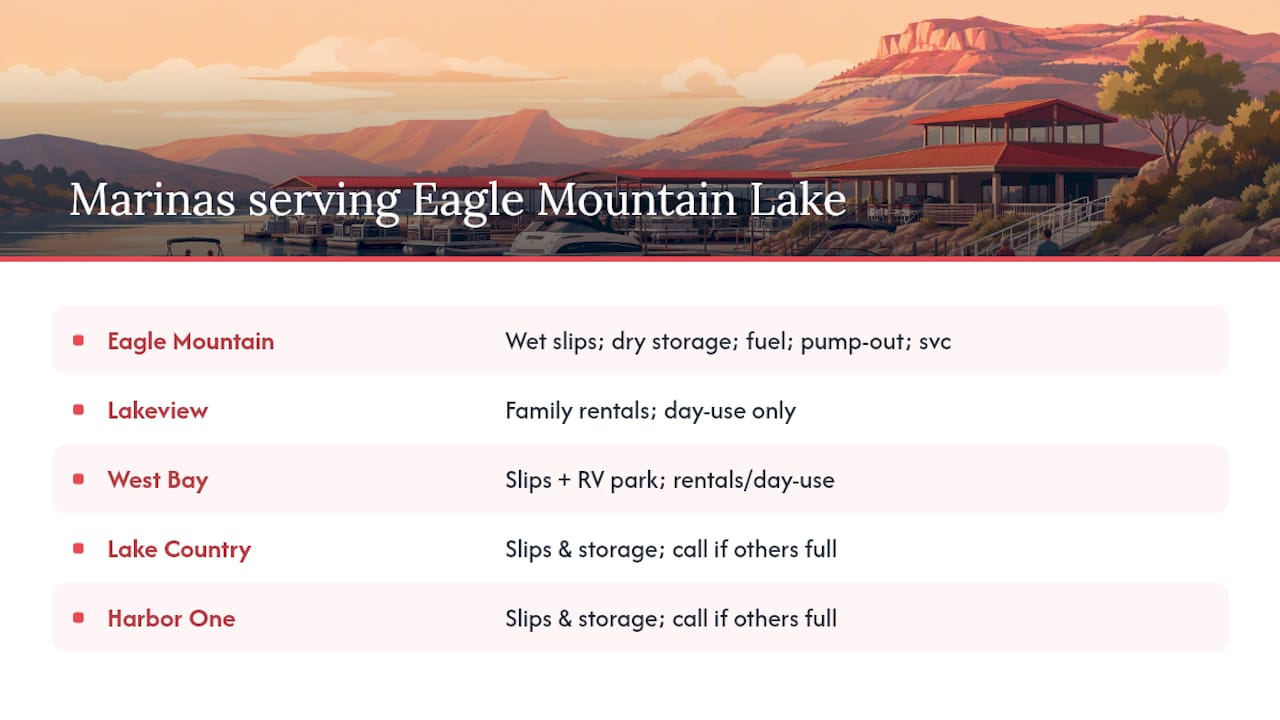
Lakeview Marina, on the northeast side, is the one most families call first for rentals. West Bay Marina pairs slip access with an RV park, so it works for boaters who want to camp overnight without towing a trailer home. Lake Country Marina and Harbor One Marina round out the lake’s marina network under the broader Eagle Mountain Lake Marinas umbrella, each covering slip and storage needs for their side of the lake.
Eagle Mountain Marina fits boaters who want fuel, repairs, and a slip in one place. Lakeview and West Bay suit anyone renting for a day rather than storing a boat long-term. Lake Country and Harbor One are worth a call if the bigger marinas are full, since slip availability tightens up fast between May and September. None of these listed rates are fixed. Call ahead, especially on weekends, since seasonal specials and boat-club memberships change what you’ll actually pay.
Where Are the Public Boat Ramps?
Three public access points cover most of the free launching on Eagle Mountain Lake, and TPWD lists all of them alongside the commercial marinas as recreational access sites. Twin Points Park, operated by the Tarrant Regional Water District, sits on the lake’s west side and has the deepest ramp on the reservoir. It stays launchable even when the lake drops well below normal pool, which makes it the ramp locals trust during dry summers.
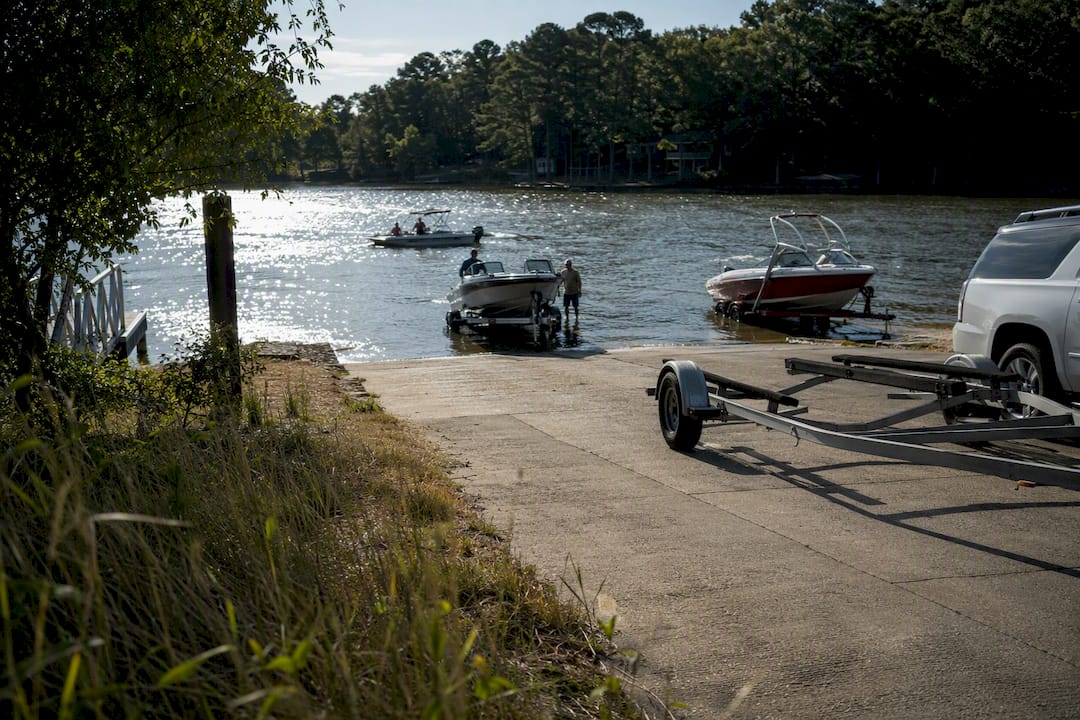
Pelican Bay Ramp serves the central-east shoreline and works well for anglers heading to nearby fishing coves. Shady Grove Park rounds out the public access list on the eastern side of the lake.
| Ramp | Notes | Parking | Nearest Facility |
|---|---|---|---|
| Twin Points Park | Deepest ramp on the lake, multiple lanes | Ample, beach lot | West side, near West Bay |
| Pelican Bay Ramp | Single-lane, local access | Limited | Central-east shoreline |
| Shady Grove Park | Trailer-friendly, family use | Moderate | East side |
- Twin Points is your best bet for trailered boats when the lake level runs low.
- Pelican Bay and Shady Grove work fine for smaller boats and PWCs but expect tighter parking on busy weekends.
What Services and Fees Should You Expect?
Wet slips, dry storage, fuel docks, pump-out stations, ship stores, and rental fleets make up the standard service list across Eagle Mountain Lake’s marinas. Not every marina offers every service. Eagle Mountain Marina covers the full list, including a service department for repairs, while smaller operations like Lake Country and Harbor One focus mainly on slips and storage.
Pricing follows a familiar pattern across the lake:
- Wet slips run monthly, with rates tied to boat length and slip covering.
- Dry storage tends to be cheaper than a wet slip but requires a lift or trailer pull for launch.
- Rentals are usually priced hourly or half-day, with pontoons and tritoons as the most common option.
- Ramp fees at public access points are typically free or low-cost, while private marina ramps may charge a launch fee for non-tenants.
Treat any number you hear as an estimate until the marina confirms it. Rates shift with fuel costs and season.
Pro Tip: Ask specifically about boat-club membership and off-peak dry storage discounts. Marinas rarely advertise these, but they’ll often knock a meaningful amount off a summer-long storage bill if you ask before signing a contract.
What Rules and Safety Requirements Apply?
The Tarrant Regional Water District governs Eagle Mountain Lake, and its ordinances apply to every boater on the water, alongside the Texas Safe Boating Act’s rules for lighting and nighttime operation. A 175-horsepower limit applies to reduce wake and noise near the lake’s residential shorelines and swim beaches, a rule that keeps things calmer for families anchored near Twin Points.
Texas law also requires the Clean, Drain, Dry protocol before leaving any ramp on the lake. Zebra mussels have spread through many North Texas reservoirs, and draining all water from your hull, livewell, and trailer bunks before you tow away is not optional. It’s state law, with real fines for skipping it.
Before you launch, run through this:
- Life jackets for every passenger, sized correctly
- Working navigation lights if you’ll be out near dusk
- A fire extinguisher on board
- A float plan shared with someone on shore
How Do You Choose the Right Marina or Ramp?
Match the facility to your trip, not the other way around. Work through this order:
- Decide your boat’s home base needs. A boat you’re storing all season belongs in a wet slip or dry storage at Eagle Mountain Marina, Lake Country, or Harbor One. A boat you’re trailering in for the day belongs at Twin Points, Pelican Bay, or Shady Grove.
- Check for fuel and pump-out. If you need either, Eagle Mountain Marina is your most reliable stop on the lake.
- Weigh access type. Private marina ramps are usually less crowded but may charge non-tenants a launch fee; public ramps are free but busier on weekends.
- Consider proximity. West Bay and Twin Points sit close together on the west side; Pelican Bay and Shady Grove cover the east side.
When you call a marina, ask about slip dimensions, guest dock policy, reservation procedures, and whether they require proof of insurance. Treat a “no on-site fuel,” vague hourly rental terms, or a marina that can’t answer basic parking questions as a reason to call the next one on your list.
Do You Need Boating Certification Before You Go?
Eagle Mountain Lake gets crowded fast on summer weekends, and busy water is exactly where boating-safety training pays off. Certified operators tend to handle close-quarters docking, right-of-way situations near ramps, and sudden weather shifts with a lot less guesswork, and certification is what keeps you legally compliant if Texas requires it for your age group or boat class.
- Lower risk of a collision near crowded ramps like Twin Points on a holiday weekend
- Compliance with state boating education requirements
- More confidence handling a rental boat or PWC you haven’t driven before
Check your state’s specific requirement, then look at same-day and scheduled certification options before your next trip to the lake.
A Boating Safety Educator’s Take
As an instructor with Safe Boating America, I tell students to arrive at Twin Points before 9 a.m. on summer weekends. The ramp lanes back up fast once the lake fills with weekend traffic. Before you go, glance at the TRWD page for any posted alerts. A five-minute check beats an hour stuck in a ramp line.
Get Certified Before Your Next Trip to the Lake
Booking a marina slip or launching at Twin Points is only half the equation. Texas requires boating education for many operators, and Safe Boating America gets you certified without a weekend-long classroom commitment. Courses run online, live via Zoom, or in person, and several states offer same-day certification once you finish the material.
Whether you’re renting a pontoon from Lakeview Marina or trailering your own boat to Pelican Bay, a valid certificate keeps you compliant and confident once you’re on the water. Review the boat safety equipment checklist so you know what to carry, then register for a course that fits your schedule before your next trip to Eagle Mountain Lake.
Sources
- Eagle Mountain Lake Access - Texas Parks and Wildlife
- Eagle Mountain Lake – Tarrant Regional Water District
- Eagle Mountain Marina – Eagle Mountain Lake
- Water Data for Texas
FAQ
How much is a boat slip at Eagle Mountain Lake?
Slip rates vary by marina, boat length, and whether the slip is covered, so pricing is best confirmed directly with Eagle Mountain Marina, Lake Country, or Harbor One rather than assumed from general estimates.
Are there alligators in Eagle Mountain Lake?
Alligators aren’t a common concern on Eagle Mountain Lake; it sits well north of the state’s typical alligator range, though boaters should still avoid handling any wildlife they encounter near the shoreline.
Can you swim in Eagle Mountain Lake?
Yes, swimming is allowed at designated areas like the Twin Points Park beach, though TRWD’s horsepower limit and boating rules exist partly to keep wake and traffic manageable near those swim zones.
Can I rent a boat at Eagle Mountain Lake?
Yes, Lakeview Marina and West Bay Marina both operate pontoon and tritoon rental fleets, and calling ahead for peak summer weekends is recommended since rental slots fill quickly.
Do I need a boating license to rent or operate a boat here?
Many states require a boating safety certificate for certain age groups or boat classes, and Safe Boating America’s certification courses help you meet that requirement before you rent or launch.
Recommended
- Folsom Lake Marina: Location, Hours, and Launch Guide - Safe Boating America
- Ohio Lakes Guide for Visitors and Boaters - Safe Boating America
- Recommended Docking Techniques: Safe Boat Mooring Guide - Safe Boating America
- 50-State Boating License & Jet Ski Certification Guide (2026) - Safe Boating America