Ohio Lakes Guide for Visitors and Boaters
Ohio holds roughly 50,000 lakes and ponds, with about 2,200 measuring five acres or larger. Six names belong on every visitor’s short list:
- Lake Erie — Ohio’s Great Lake shoreline, the largest body of water in the state by far
- Buckeye Lake — 3,100 acres, unlimited horsepower, central Ohio
- Indian Lake — year-round recreation, Logan County
- Caesar Creek Lake — Warren/Clinton counties, top fishing and camping
- Guilford Lake — Columbiana County, quiet and family-friendly
- Geneva State Park — Lake Erie access with a marina and 600-foot sand beach
For current conditions, public access details, and campground reservations, the Ohio Department of Natural Resources (ODNR) is the primary official source.
Key Takeaways
Ohio has several hundred public lakes of five acres or more covering a large acreage — check ODNR resources and Ohio EPA advisories before every visit to fish, boat, or swim safely.
| Point | Details |
|---|---|
| Public lake count | 446 public lakes ≥ 5 acres; use the ODNR fishing GIS map to locate ramps and access points. |
| Natural vs. reservoir lakes | Only 110 of Ohio’s lakes are natural (glacial); the rest are reservoirs, many built as 19th-century canal feeders. |
| Water quality checks | Verify Ohio EPA beach advisories before swimming — cyanobacteria advisories are common at inland reservoirs in late summer. |
| Boating education requirement | Ohio requires a safety certificate for operators born on or after January 1, 1982; NASBLA-approved courses satisfy the rule. |
| Safeboatingamerica | Offers Ohio-accepted online, Zoom, and in-person boating and PWC certification courses with same-day certificate options. |
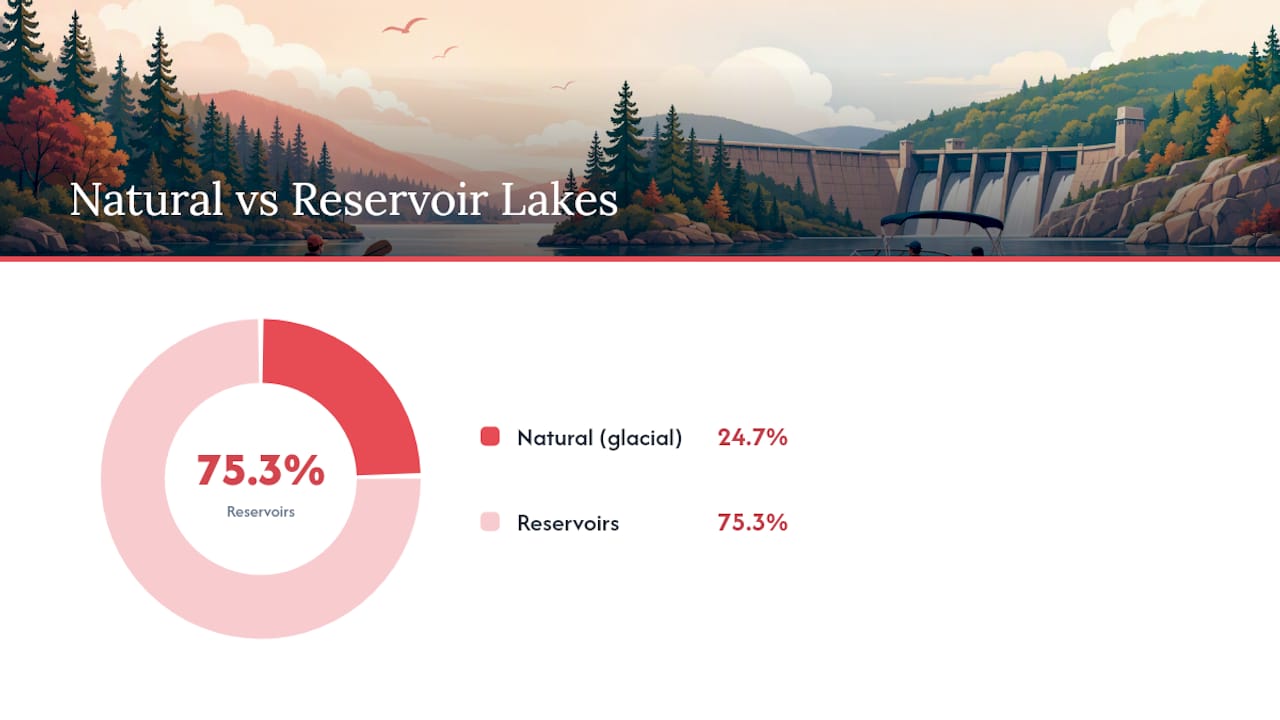
Table of Contents
- How many lakes are in Ohio, and what types exist?
- What are the 10 largest lakes in Ohio?
- Which Ohio lakes are best for boating, fishing, swimming, and camping?
- How do you find and access Ohio’s public lakes?
- What licenses, permits, and water-quality checks do you need?
- Why does boating safety education matter on Ohio lakes?
- Where can you find maps and plan a lake trip in Ohio?
- Why Ohio’s mix of natural and reservoir lakes matters
- State-approved boating certification for Ohio lakes
- Sources
- FAQ
How many lakes are in Ohio, and what types exist?
Ohio’s lake count depends entirely on which threshold you apply. Wikipedia’s summary of ODNR and EPA data shows three commonly cited figures that reflect different mapping resolutions:
Key figure for visitors: Ohio has 446 public lakes of five acres or more, covering roughly 119,000 acres — the pool you can actually access for boating, fishing, and swimming.
Why do the totals vary so widely? Two reasons:
- Small farm ponds below the resolution of EPA’s 1:100,000 mapping scale are excluded from coarser counts but included in finer ODNR inventories.
- “Lake” and “pond” have no universal legal size cutoff in Ohio, so different agencies draw the line differently.
Three practical categories to know:
- Lake Erie (Great Lake). Ohio’s northern border runs along Lake Erie’s southern shore. It is the shallowest and warmest of the five Great Lakes, making it the most productive for sport fishing and the most prone to algal blooms.
- Natural inland lakes (kettle lakes). ODNR’s Natural Lakes inventory counts 110 natural lakes larger than five acres, totaling 4,658 acres. Most are glacial kettle lakes concentrated in northeastern Ohio; Summit County alone holds 34 of them.
- Artificial lakes and reservoirs (impoundments). These far outnumber natural lakes and cover roughly 30 times more surface area. Many began as 19th-century canal feeder reservoirs — Buckeye Lake and Indian Lake are the most visited examples — and were later converted into state parks.
What are the 10 largest lakes in Ohio?
The list below ranks by surface acreage using ODNR and widely reported figures. Lakes marked (artificial) are reservoirs or impoundments; those marked (natural) are glacial in origin.
- Lake Erie — Ohio shoreline portion, hundreds of thousands of acres (natural Great Lake); Erie County / northern border
- Grand Lake St. Marys — approximately 13,500 acres (artificial); Auglaize/Mercer counties; once the largest man-made lake in the U.S.
- Pymatuning Reservoir — approximately 14,650 acres total, Ohio portion roughly 7,000 acres (artificial); Ashtabula County; shared with Pennsylvania
- Mosquito Lake — approximately 7,850 acres (artificial); Trumbull County; popular for walleye
- Tappan Lake — approximately 2,350 acres (artificial); Harrison County; Muskingum Watershed Conservancy District
- Leesville Lake — approximately 1,000 acres (artificial); Carroll County; electric motors only
- Buckeye Lake — 3,100 acres (artificial); Licking County; unlimited horsepower
- Indian Lake — approximately 5,800 acres (artificial); Logan County; year-round access
- Caesar Creek Lake — approximately 2,830 acres (artificial); Warren/Clinton counties; U.S. Army Corps of Engineers
- Alum Creek Lake — approximately 3,387 acres (artificial); Delaware County; large beach area
Note: Acreages for Army Corps and MWCD reservoirs fluctuate with pool levels. Winter drawdowns at several lakes, including Caesar Creek and Tappan, reduce navigable water and limit ramp access from November through March.
Which Ohio lakes are best for boating, fishing, swimming, and camping?
Boating
Buckeye Lake is the go-to for powerboaters in central Ohio. At 3,100 acres with an unlimited horsepower designation, it supports water skiing, wakeboarding, and high-speed cruising alongside a 4.1-mile paved shoreline path for non-motorized users. Multiple public ramps and seasonal marina services make launching straightforward.
Indian Lake offers a similar experience in west-central Ohio. Originally built as a canal feeder in the mid-1800s, it now draws boaters year-round, with ice fishing adding a winter dimension that few Ohio lakes match for accessibility.
Grand Lake St. Marys at roughly 13,500 acres gives boaters the most open water of any inland Ohio lake, though algal bloom advisories are common in late summer and should be checked before any water contact.
Fishing
Lake Erie is the walleye capital of the world by most sport-fishing measures. The western basin, accessible from ports in Ottawa and Erie counties, produces the heaviest walleye harvests. Perch, steelhead, and smallmouth bass round out the species list.
Caesar Creek Lake ranks among the best inland options for largemouth bass, crappie, and saugeye. The U.S. Army Corps of Engineers manages the lake and surrounding public land, providing multiple ramps and a fish attractor program that concentrates fish near marked structures.
Mosquito Lake in Trumbull County is the top inland walleye fishery, with ODNR stocking programs that consistently produce keeper-size fish.
Swimming and beaches
Geneva State Park on Lake Erie’s shore offers a 600-foot sand beach, a marina, and campground facilities across 698 acres. The beach is lifeguarded during summer season, and freshwater marshes adjacent to the park add ecological interest.
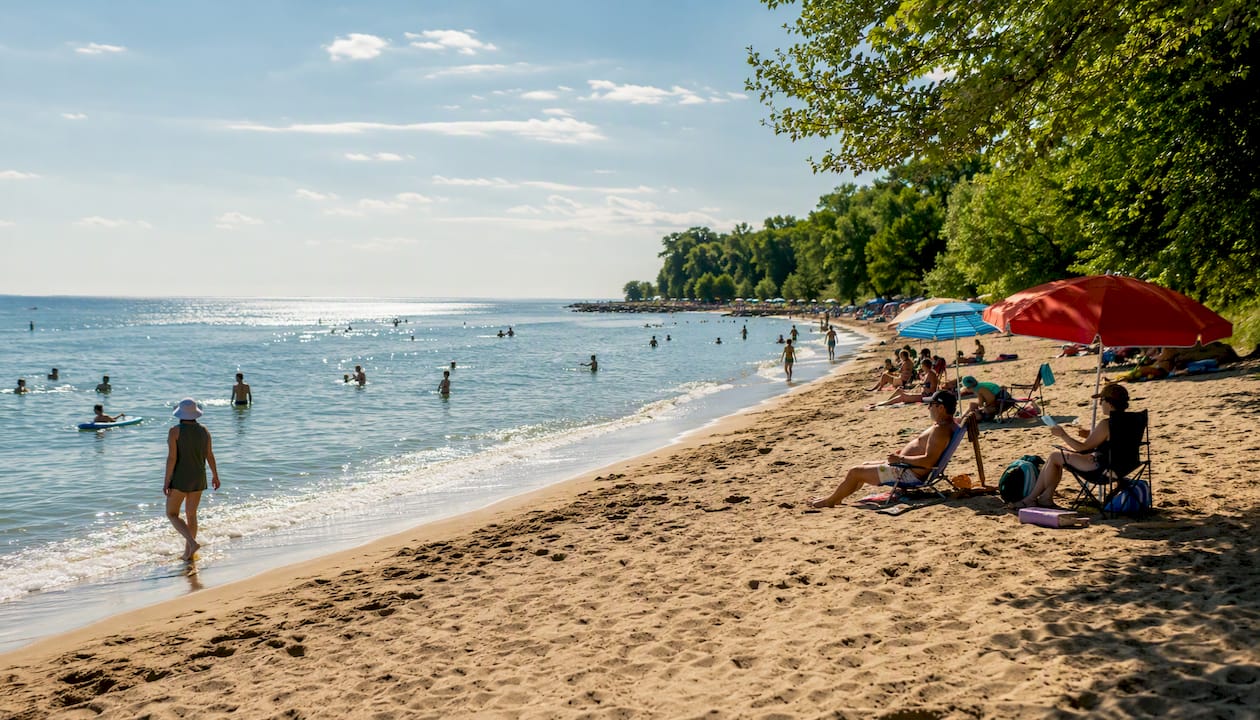
Alum Creek State Park has one of the largest inland beaches in Ohio, drawing families from Columbus throughout the summer. Water quality advisories are posted by the Ohio EPA when cyanobacteria levels rise.
Winton Woods Park (Hamilton County) provides a smaller, family-oriented lake experience near Cincinnati with paddleboat rentals, fishing piers, and picnic shelters — a practical choice for a half-day outing without a long drive.
Camping and hiking
Paint Creek State Park (Ross County) combines a 1,190-acre lake with over 200 campsites and access to the Buckeye Trail. Hikers get varied terrain along Paint Creek’s wooded ridges, and the campground fills quickly on summer weekends.
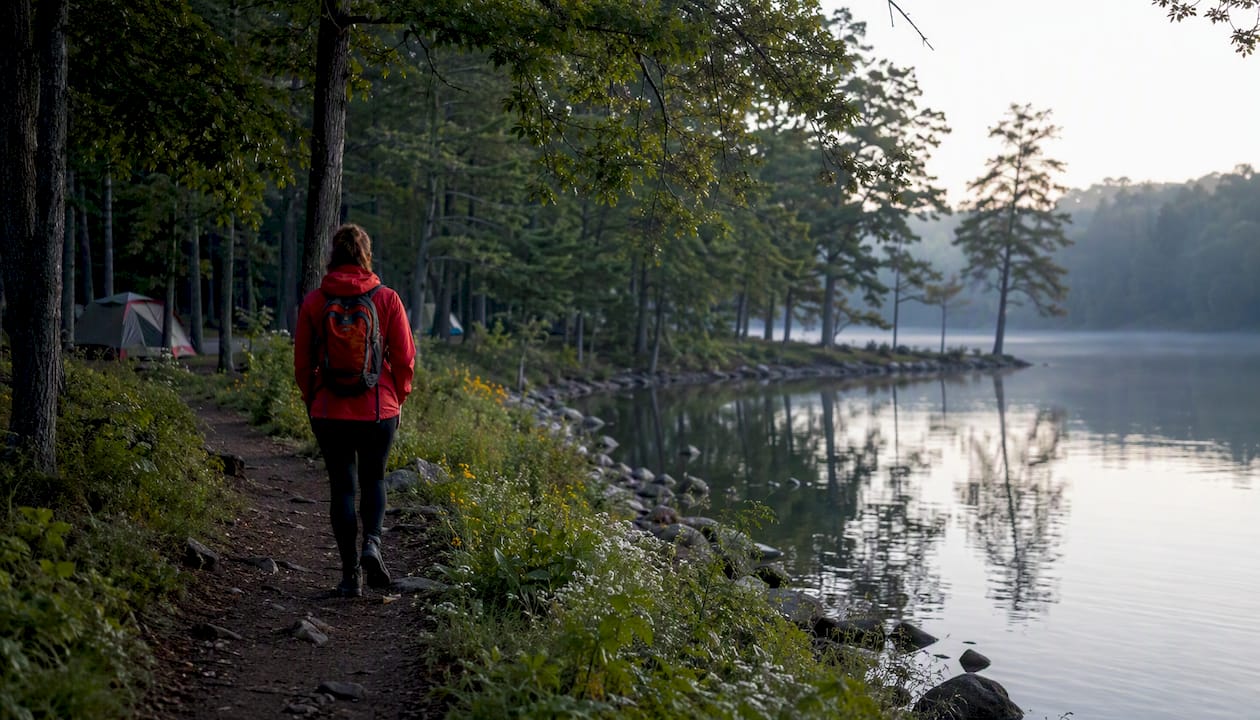
Caesar Creek State Park adds 8 miles of equestrian trails and a fossil-hunting area along the spillway — a detail that makes it stand out among family-friendly lakes in Ohio beyond the standard swim-and-boat itinerary.
Guilford Lake in Columbiana County is a quieter pick: a small state park with a campground, a boat ramp, and a no-wake zone that keeps the water calm for kayakers and canoeists.
Pro Tip: For the best experience at popular lakes like Buckeye Lake and Caesar Creek, arrive before 9 AM on summer weekends. Parking lots at primary ramps fill by mid-morning, and campsite check-in queues can add 30–45 minutes to your arrival.
How do you find and access Ohio’s public lakes?
State parks managed by ODNR control the majority of public lake access. Each park page on the ODNR website lists current amenity status, including:
- Boat ramps (number of lanes, seasonal closure dates)
- Marina services (fuel, pump-out, transient docks, rental boats)
- Beach areas (lifeguard hours, water-quality posting locations)
- Campgrounds (electric vs. non-electric sites, reservation windows)
- Picnic areas and shelter reservations
How to check availability before you go:
- Visit the individual ODNR state park page for the lake you plan to visit.
- Use the Ohio State Parks online reservation system for campsites and shelter rentals.
- Call the park office directly for dock lottery details, seasonal ramp closures, and special-use permits (waterfowl hunting blinds, for example, require separate applications at several lakes).
Seasonal access notes:
- Most boat ramps remain open year-round, but winter drawdowns at Army Corps lakes (Caesar Creek, Alum Creek) reduce water depth near ramps and can strand trailers.
- Marina fuel and pump-out services typically run Memorial Day through Labor Day. Off-season boaters should carry extra fuel and plan accordingly.
- Buckeye Lake State Park operates seasonal docks with a lottery system; applications open in late winter each year.
What licenses, permits, and water-quality checks do you need?
Fishing licenses
Any Ohio resident age 16 or older and any non-resident age 16 or older must carry a valid Ohio fishing license to fish public waters. Licenses are available through the ODNR Wildlife License system online, at license agents statewide, and at many sporting goods retailers. Annual, one-day, and three-day options exist for non-residents.
Boating registration and horsepower rules
All motorized watercraft operated on Ohio waters must be registered with ODNR. Registration is renewed every three years. Key points:
- Horsepower limits vary by lake. Some lakes (Leesville, Guilford) restrict motors to electric only or low horsepower. Others, like Buckeye Lake, carry an unlimited horsepower designation. Check the specific lake’s rules before trailering a high-powered boat.
- No-wake zones apply near swim areas, marinas, and launch ramps at virtually every Ohio lake, regardless of the lake’s overall horsepower classification.
- Ohio requires boating safety education for operators born on or after January 1, 1982. Details on the ODNR watercraft registration and safety requirements are worth reviewing before your first trip.
Water quality and beach advisories
The Ohio EPA monitors public beaches and posts advisories when cyanobacteria (blue-green algae) or bacterial levels exceed safe thresholds. Before swimming:
- Check the Ohio EPA beach advisory page for the specific lake.
- Check local county health department postings, which sometimes update faster than state-level pages.
- Avoid water contact when advisories are active. Cyanotoxins can cause skin irritation, gastrointestinal illness, and in severe cases, more serious health effects.
Common regulatory questions:
- Do I need a fishing license for Lake Erie? Yes — Ohio fishing license required for all anglers 16 and older.
- Can I use a jet ski on any Ohio lake? No — PWC operation is prohibited on lakes with electric-motor-only or low-horsepower restrictions.
- Where do I check if a beach is open? Ohio EPA’s BeachGuard database is the primary source for current advisory status.
Why does boating safety education matter on Ohio lakes?
State-approved boating education reduces on-water accidents and is legally required for Ohio operators born on or after January 1, 1982. That requirement covers a large share of active boaters on Ohio lakes today, and formal boating education has a documented effect on lowering accident rates.
Pre-departure safety checklist for Ohio lakes:
- U.S. Coast Guard-approved life jackets for every person aboard (one wearable PFD per person, plus a throwable Type IV)
- Fire extinguisher (required on any motorized vessel with an enclosed compartment)
- Navigation lights (required for operation between sunset and sunrise)
- Sound-producing device (horn or whistle)
- VHF marine radio or fully charged cell phone
- Float plan left with a shore contact
Ohio lakes range from small, calm impoundments to the open waters of Lake Erie’s western basin, where conditions can deteriorate quickly. The safety gear requirements that feel optional on a small pond become genuinely critical on Lake Erie.
Getting certified:
Ohio accepts boating safety certificates from NASBLA-approved courses. Course formats include online self-study, live Zoom sessions, and in-person classes. Completion typically takes one day, and many providers offer same-day certificate issuance. The certificate is permanent — no renewal required once earned.
Pro Tip: On your first open-water trip, bring a bow anchor with at least 50 feet of rode, two dock lines, and a basic tool kit. Most Ohio lake marinas sell fuel, but not all carry spare parts or tow services on short notice.
Where can you find maps and plan a lake trip in Ohio?
The ODNR interactive lake fishing GIS map is the most practical starting point. It locates lakes statewide, identifies ramp positions, and layers fishing data — species, stocking records, and access notes — onto a single interactive interface.
For official lake names and precise GPS coordinates, the USGS Geographic Names Information System (GNIS) provides authoritative records for every named Ohio water body.
Quick trip-planning sequence:
- Choose your primary activity (boating, fishing, swimming, camping) and match it to a lake from the activity guide above.
- Open the ODNR fishing GIS map to confirm ramp locations and access status.
- Check the Ohio EPA beach advisory database if swimming is planned.
- Reserve campsites or shelter rentals through the Ohio State Parks reservation system.
- Confirm marina hours and fuel availability by calling the park office directly.
Key map and planning resources:
- ODNR Fishing GIS Mapping Service — ramp locations, lake data, stocking records
- ODNR State Park pages — amenity status, seasonal hours, permit requirements
- USGS GNIS — official lake names and coordinates
- Ohio EPA BeachGuard — real-time beach advisory status
- County health department websites — local water-quality postings
Why Ohio’s mix of natural and reservoir lakes matters
Ohio’s lake system is unusual among Midwestern states. The 110 glacial kettle lakes documented in the ODNR natural lakes inventory represent a relatively small but ecologically distinct resource — clear, spring-fed, and concentrated in the northeast. The far larger reservoir system, built largely to support 19th-century canal commerce and later repurposed for recreation, now anchors the state’s outdoor economy. That dual character matters: natural lakes tend to support different fish communities and clearer water, while the large impoundments deliver the acreage and infrastructure that high-volume recreation requires. ODNR manages both categories under the same regulatory framework, but the practical experience at a Summit County kettle lake and at Buckeye Lake on a July weekend could not be more different. Visitors who understand that distinction plan better trips and put less pressure on the smaller, more fragile natural systems.
State-approved boating certification for Ohio lakes
Ohio boaters who need a state-accepted safety certificate have a direct path through Safeboatingamerica. The Ohio Boating and PWC Certification Course is built on NASBLA-approved materials and taught by State Certified Instructors and USCG-Licensed Captains — the two credentials Ohio recognizes for course acceptance.
Course formats available:
- Online self-study — complete at your own pace, certificate issued upon passing the proctored exam
- Live Zoom — scheduled sessions with a certified instructor, same-day certificate options
- In-person — classroom format for those who prefer direct instruction
The certificate is permanent and satisfies Ohio’s boating education requirement for operators born on or after January 1, 1982. PWC operators (Jet Ski, WaveRunner) can complete a combined boating and PWC course in a single session. Register at Safeboatingamerica to select a format and date that fits your schedule before your next Ohio lake trip.
Sources
- List of lakes of Ohio
FAQ
What is the prettiest lake in Ohio?
Geneva State Park on Lake Erie’s shore is frequently cited for scenic quality, with a 600-foot sand beach, freshwater marshes, and lake views. Among inland lakes, Guilford Lake in Columbiana County draws consistent praise for its clear water and quiet setting.
What are the 10 biggest lakes in Ohio?
By surface area, the largest Ohio lakes are Lake Erie (Great Lake), Grand Lake St. Marys (~13,500 acres), Pymatuning Reservoir (Ohio portion ~7,000 acres), Mosquito Lake (~7,850 acres), Indian Lake (~5,800 acres), Alum Creek Lake (~3,387 acres), Buckeye Lake (3,100 acres), Caesar Creek Lake (~2,830 acres), Tappan Lake (~2,350 acres), and Leesville Lake (~1,000 acres).
What is the cleanest lake in Ohio?
Natural glacial kettle lakes in northeastern Ohio, particularly those in Summit County, tend to have the clearest water because they are spring-fed and receive less agricultural runoff than large reservoirs. Check Ohio EPA advisories for current water-quality status at any specific lake before swimming.
Do I need a boating license to operate a boat on Ohio lakes?
Ohio requires a boating safety certificate for operators born on or after January 1, 1982. Safeboatingamerica offers Ohio-accepted online and in-person certification courses that satisfy this requirement, with same-day certificate options available.
Where can I check beach advisories for Ohio lakes?
The Ohio EPA BeachGuard database is the primary source for current cyanobacteria and bacterial advisories at public beaches. Local county health department websites sometimes post updates faster, so checking both before a swimming trip is the most reliable approach.