16 Is the Minimum: California Jet Ski Rules After Jan 1, 2026

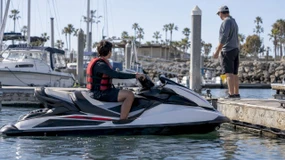
You must be at least 16 to operate a jet ski independently in California. Operators ages 12 to 15 may run a personal watercraft only with an adult at least 18 years old on board who holds a valid California Boater Card. As of January 1, 2025, the Boater Card requirement applies to operators of every age, with no phase-in exceptions remaining.
TL;DR:
- Minors aged 12 to 15 may operate a PWC only if a qualified adult over 18 holds a Boater Card and is onboard; children under 12 cannot operate PWCs.
- Starting January 1, 2025, all PWC operators of any age must have a Boater Card, which requires completing a safety course and passing an exam.
- Rental companies cannot waive age or supervision rules for minors, and renters should verify adult supervision and safety equipment before riding.
- Violations of age, supervision, or safety gear requirements can result in fines up to $250 or misdemeanor charges for repeat offenses.
- Safety equipment like life jackets and engine cutoff lanyards are mandatory, with operation prohibited from sunset to sunrise and reckless maneuvers banned.
Table of Contents
- Age and supervision rules for personal watercraft
- How the California Boater Card rule works
- Required safety equipment and PWC operating rules
- Rental exceptions and what renters should actually check
- Penalties and enforcement for age and safety violations
- Why formal boating education matters for California operators
- What experienced instructors wish parents knew sooner
- Get California boating certified through our courses
- FAQ
- Sources
Age and supervision rules for personal watercraft
California’s Harbors and Navigation Code sets 16 as the minimum age to operate a personal watercraft or any motorized vessel over 15 horsepower without supervision. Operators between 12 and 15 may run a PWC, but only when a qualified adult rides along. Children under 12 cannot operate these vessels under any circumstance, supervised or not.
A qualifying supervisor must meet three conditions at once:
- Be at least 18 years old.
- Be physically present on board the PWC, not nearby on another craft.
- Hold a valid California Boater Card at the time of operation.
Personal watercraft fall under the same statutory definition as other motorboats of comparable size, so the age and supervision rules apply to Jet Skis, WaveRunners, and Sea-Doos alike. Non-motorized sailboats and simple dinghies are treated differently under the code, since they carry no engine and fall outside the horsepower threshold that triggers these operator age rules. Families planning a PWC outing with a young teen should confirm the supervising adult’s card status before leaving the dock, since enforcement officers check this on the water, not after an incident. For a closer look at how these thresholds apply to younger riders, see our guide on jet ski licenses for minors.
How the California Boater Card rule works
The California Boater Card rolled out in stages starting in 2018, expanding each year by age group until it covered every operator of a motorized vessel over 15 horsepower on January 1, 2025. There is no age ceiling or exemption left: a 70-year-old renting a pontoon boat needs the card just as much as a 16-year-old on a Jet Ski.
Rental exemptions exist, but they are narrower than many assume. A rental company may let an uncertified adult operate under direct, on-site instruction for that single outing, but this exemption does not override the independent operator age of 16, and it does not let a 12 to 15-year-old operate without a card-holding adult on board.
Getting certified follows a predictable path:
- Complete a state-approved boating safety course covering navigation rules, PWC handling, and California-specific law.
- Pass the course exam and receive proof of completion.
- Apply for your California Boater Card through the state’s approved process.
- Carry the physical or digital card whenever you operate a PWC or motorboat.
Pro Tip: Finish your Boater Card course before buying or renting rather than after, since some rental companies now ask for it at check-in.
Our Boater Card certification guide walks through each step for the 2026 boating season.
Required safety equipment and PWC operating rules

Every person on a personal watercraft in California must wear a Coast Guard approved wearable personal flotation device, not simply have one stowed on board. When the PWC is equipped with a lanyard-style engine cutoff switch, state law requires the operator to attach it before starting the engine, since this stops the engine the moment the rider is thrown off.
Beyond gear, operating rules restrict when and how PWCs can run:
- No PWC operation is allowed from sunset to sunrise, regardless of lighting equipment.
- Reckless maneuvers, including spray-turning near other vessels or swimmers, are prohibited.
- Operators must maintain a safe speed and distance around other boats, docks, and people in the water.
Personal watercraft account for a disproportionate share of reportable injuries among recreational vessels when vessel type is known, according to the U.S. Coast Guard’s 2024 recreational boating statistics report. That pattern is a major reason state law treats PWC equipment and operating violations as enforceable infractions rather than suggestions.
Rental exceptions and what renters should actually check
Rental counters often create confusion because exemptions sound broader than they are. Renting a Jet Ski never waives the 16 and up independent operator age, and it never lets a 12 to 15 year old run the craft without a Boater Card holding adult physically on board.
Before signing a rental agreement, work through this checklist:
- Confirm the supervising adult’s Boater Card is valid and matches state requirements.
- Verify a properly fitted PFD is provided for every rider, not just available at the counter.
- Ask whether the rental unit has a working lanyard cutoff switch and how it attaches.
- Review the rental company’s age policy and insurance coverage for minors on board.
Parents weighing supervised water activities for younger kids may find useful parallels in guidance on age requirements for children’s surf lessons, which covers similar supervision questions for a different sport. For PWCs specifically, getting certified ahead of time removes the guesswork that rental exemptions leave behind.
Penalties and enforcement for age and safety violations
Violating the independent operator age or supervision requirement is an infraction that can carry fines up to $100 per the Harbors and Navigation Code. Missing or improperly worn safety equipment, including PFDs and lanyard cutoffs, can draw fines up to $250. An adult who knowingly allows an unqualified minor to operate a PWC can also be cited directly, separate from any citation issued to the minor. Serious or repeated violations can escalate to misdemeanor charges. The exact statutory language and penalty tiers are set out in HNC Section 678.11 for anyone who wants to verify the current text.

Why formal boating education matters for California operators
California’s Division of Boating and Waterways treats the Boater Card as a practical accident-reduction tool, not paperwork for its own sake, and backs this with youth outreach programs like AquaSmart aimed at introducing water safety basics in schools. That framing lines up with national patterns: personal watercraft show up often in injury counts among younger operators, which is part of why the state closed every age exemption by 2025.
Our course lineup focuses on practical, verifiable competence. Options include:
- Online courses covering navigation rules and PWC-specific handling.
- Live Zoom classes for households that prefer scheduled, instructor-led sessions.
- In-person classes taught by experienced instructors using comprehensive materials.
Each format is built to get an operator from zero to a documented, card-eligible certification without guessing at what the exam covers.
What experienced instructors wish parents knew sooner
The most common mistakes we see from new teen operators are throttle control and right-of-way judgment, not recklessness. A PWC loses steering the instant the throttle releases, so a startled rider who lets go often drifts straight into the hazard they were trying to avoid. Before handing a teen the key, confirm they understand slow-speed zones, know who yields at a crossing, and have practiced in open water away from docks and swimmers. Certification teaches the rules; supervised practice is what makes those rules automatic under pressure.
— Richard
Get California boating certified through our courses
Meeting California’s age, supervision, and Boater Card requirements starts with a course that actually covers what the state tests. Our California Boating & PWC Certification Course covers current PWC and motorboat rules, so you finish with a certificate aligned with state standards.
- Choose the fully online, self-paced format for same-day completion.
- Join a live Zoom class if you want direct instructor access while you work through the material.
- Browse our nationwide online boating courses if you also need certification in another state.
Classes run on a rolling schedule, so you can register today and typically finish before your next trip to the water.
FAQ
What is a PWC?
A PWC, or personal watercraft, is a small motorized vessel like a Jet Ski, WaveRunner, or Sea-Doo designed for one or more riders who sit or stand rather than sit inside a hull. California law treats PWCs as vessels subject to the same age, licensing, and equipment rules as comparably sized motorboats.
What percentage of boating accident injuries are caused by personal watercraft use?
The U.S. Coast Guard’s recreational boating statistics show that personal watercraft account for a disproportionate share of reportable injuries among vessel types where the type is known. The reports break these figures out by age group and vessel type rather than as a single nationwide percentage.
What is the 1/3 rule in boating?
The 1/3 rule is not part of California’s Harbors and Navigation Code age or PWC requirements, and no state source in this article defines it as an official standard. If you have seen it referenced elsewhere, treat it as informal guidance rather than a legal requirement and rely on the Boater Card course material for California’s actual rules.
What is a PWC watercraft?
A PWC watercraft is any motorized vessel steered with handlebars rather than a wheel, built for a rider to sit, kneel, or stand on top of rather than inside. Under California law, PWCs are classified as vessels and fall under the same operator age, supervision, and equipment rules as other motorboats over 15 horsepower.
Do I need a Boater Card to operate a jet ski I rent in California?
Yes, the person operating the PWC still needs to meet the age and Boater Card requirements even when the watercraft is rented rather than owned. Rental companies may offer brief on-site instruction for a single outing, but this does not replace the independent operator age of 16 or the supervision rule for ages 12 to 15.
Sources
- California Harbors and Navigation Code - HNC § 678.11
- U.S. Coast Guard Recreational Boating Statistics 2024