California Boating License Requirements: Boater Card Guide

California does not issue a “boating license” by that name. It issues the California Boater Card. Since January 1, 2025, every person who operates a motorized vessel on California state waters needs one, regardless of age. You earn it by completing a boating safety course approved by the state and by NASBLA (the National Association of State Boating Law Administrators), then applying to the state for the card.
This guide covers who must carry the card, the exemptions, the steps to get it, the fees, the age rules for operators, and the equipment your boat must carry.
TL;DR
- The California Boater Card is required for all operators of engine-powered vessels on state waters, at any age, as of January 1, 2025.
- It covers powerboats, personal watercraft (Jet Skis, WaveRunners) and sailboats with an engine.
- You need an approved boating safety course, then an application to the state. The card fee is $10 one-time, plus a $1 service fee.
- The card is valid for life. A lost card costs $5 to replace.
- Temporary visitors, rental operators and some other groups are exempt under state law.
Table of Contents
- Do you need a boating license in California?
- How the phase-in worked, and why it no longer matters
- Age rules for operators
- Who is exempt from the Boater Card?
- How to get a California Boater Card
- Cost of a California Boater Card
- Does the card expire?
- Required safety equipment on a California boat
- Alcohol on the water
- Common questions about who needs the card
- Perspective
- Take the course with Safe Boating America
- FAQ
- Sources
Do you need a boating license in California?
Yes, in the form of the Boater Card. California State Parks states that, as of January 1, 2025, the card is required for all motorized vessel operators regardless of age. The law behind it is Harbors and Navigation Code Section 678.11. It says you may not operate a vessel propelled by an engine on state waters unless you have a vessel operator card issued by the Division of Boating and Waterways (DBW) in your possession.
Two details matter in practice:
- “Engine” means any engine. The statute applies whether or not the engine is the principal source of propulsion. A sailboat with an auxiliary motor is covered.
- You must have it with you. The law says “in his or her possession.” A card left at home does not satisfy it.
The card is separate from boat registration. DBW notes that a motorized boat of any size, and a sailboat over eight feet, must be registered with the DMV. Registering the boat and carding the operator are two different requirements.
How the phase-in worked, and why it no longer matters
California did not start with everyone. The law brought in operators by age, year by year. Search results from 2022 to 2024 still show those older age cutoffs, which is why many guides contradict each other. This is the schedule in HNC 678.11(b):
| Date | Operators required to hold the card |
|---|---|
| January 1, 2018 | 20 or younger |
| January 1, 2019 | 25 or younger |
| January 1, 2020 | 35 or younger |
| January 1, 2021 | 40 or younger |
| January 1, 2022 | 45 or younger |
| January 1, 2023 | 50 or younger |
| January 1, 2024 | 60 or younger |
| January 1, 2025 | All persons, regardless of age |
The final step has taken effect, so no age group is left out. If a page tells you that only boaters under a certain age need the card, it is out of date.
Age rules for operators
The card requirement sits alongside minimum-age rules. Under California State Parks’ boating laws page:
- 16 and older: you may operate a vessel with a motor of 15 horsepower or more, including a personal watercraft, if you hold a Boater Card.
- 12 to 15: you may operate a vessel with a motor of 15 hp or more, including a PWC, only when a person at least 18 years old supervises on board and holds a Boater Card.
So a parent who wants to supervise a young rider needs a card too. For a closer look at Jet Ski rules, see our guide to California PWC laws, age limits and the Boater Card and our note on the California Jet Ski age rules.
Who is exempt from the Boater Card?
HNC 678.11© lists the exemptions. The list is specific, so read it against your own situation:
- Residents of another state or country who use California waters temporarily, for no more than 60 days (state residents) or 90 days (foreign residents), and who meet their home jurisdiction’s boating requirements.
- People under the direct supervision of a person 18 or older who holds a card.
- Participants in organized regattas, vessel races or water ski races.
- Operators of a rental vessel.
- People with a current commercial fishing license.
- Holders of a valid USCG marine operator license or an STCW certificate.
- People who completed a POST-approved boating course.
If you live in California and own your own boat or Jet Ski, none of these usually applies. The 60-day and 90-day limits are counted for temporary visits, so a new California resident should plan to get the card.
How to get a California Boater Card
The process has two parts: education, then the application.
Step 1: Take an approved course
Courses must be approved by NASBLA and DBW. According to the California Boater Card FAQ, they may be classroom, home study or online. A Spanish-language course is offered by the U.S. Power Squadrons.
DBW’s own home-study course is approved by California State Parks and NASBLA. Its 60-question exam is free, and certificates are mailed within two to four weeks to students who score at least 80%. If you want to finish faster and on your schedule, a provider’s online course lets you finish the education part at your own pace. Ours is the California boating and PWC certification course online. It is built to meet the state’s course requirement and covers both boats and personal watercraft.
Step 2: Apply for the card
Once DBW receives your application, your proof of education and payment, you get a 90-day temporary boater card by email. The official card should arrive by mail within 30 days of approval. The temporary card lets you start boating while you wait.

Watch the deadline: an application must be completed within one year of submission. Otherwise it is canceled with no refund, and you must reapply.
Step 3: Carry the card on the water
Keep the card, or the temporary version, on you whenever you operate. Many boaters keep a photo on their phone and a copy in a dry bag. Check with DBW on what format the state accepts.
For a walk-through of the same process with screenshots of the typical flow, see our guide on how to get your California Boater Card online and the general Boater Card certification guide for 2026.
Cost of a California Boater Card
There are two kinds of cost: the course and the card.
| Item | Cost |
|---|---|
| California Boater Card (one-time, lifetime) | $10, plus a $1 service fee |
| Lost card replacement | $5 |
| DBW home-study exam | Free |
| Approved course from a private provider | Set by the provider |
The card fee is set by law to cover the cost of the program. DBW cannot generate any profit from it. Course prices from private providers vary. For a national view of what boating education costs, see our boating license costs by state guide.
Does the card expire?
No. The National Park Service notes that the card shows its holder passed a NASBLA and state-approved boater education exam and stays valid for the operator’s lifetime. You pay once. If the card is lost or damaged, request a replacement for $5.
Required safety equipment on a California boat
The card covers the operator. The boat has its own list. These items come from California State Parks:
- Life jackets: one Coast Guard-approved life jacket for each person on board. If stored, they must be readily available.
- Throwable device: boats 16 feet or longer need an immediately accessible Type IV throwable device.
- Sound signal: powered vessels need a whistle or other sound-producing device.
- Navigation lights: required from sunset to sunrise, or in limited visibility.
- Muffler: an adequate muffler on the engine.
- Fire extinguisher: a USCG-approved extinguisher is required on powered vessels.
- Children under 13: they must wear a life jacket on a moving vessel. Exceptions are a harness on a sailboat, an enclosed cabin, or emergency rescue.
- PWC and towing: everyone on a PWC and anyone being towed must wear a Coast Guard-approved life jacket.
For fire extinguishers, DBW’s equipment sheet says motorboats under 16 feet carry one Type B-I extinguisher when no fixed system is installed. Open outboard motorboats under 26 feet are not required to carry one. The same sheet says boats 16 feet or longer must carry visual distress signals at all times in coastal waters.
A life jacket should be the right size and fit snugly. California requires jackets suited to the activity, so a PWC rider and a wakeboard rider need jackets rated for those uses.

Alcohol on the water
Boat operators face a 0.08 BAC limit. DBW’s alcohol and boating sheet states that operating a boat or water skiing at 0.08% or more is against the law. You can also be arrested below 0.08% if conditions are judged unsafe. A conviction can carry up to 6 months in jail and fines up to $1,000. Sun, wind and motion add to the effects of alcohol, and DBW recommends that neither operators nor passengers drink while boating.
Common questions about who needs the card
Sailboats and kayaks
A sailboat with an auxiliary engine is covered, because the law applies to any engine-propelled vessel. A boat with no engine, such as a paddle kayak or a purely wind-powered sailboat, does not fall under the engine-based wording of the statute. Boat registration is a separate matter.
Jet Skis and WaveRunners
Personal watercraft are motorized, so the card is required. Operators must also meet the age and supervision rules above, and everyone aboard wears a life jacket.
Renting a boat
The statute exempts operators of rental vessels. The rental company may still give you an instruction briefing and set its own rules. If you plan to buy a boat later, get the card first so you are ready.
Visiting from another state
Temporary visitors are exempt for up to 60 days (state residents) or 90 days (foreign residents) if they meet their home jurisdiction’s requirements. Many states have their own course rules, for example Oregon and Ohio, so check what your home state requires before you travel.
Perspective
We teach boaters in every state, and California is a good example of why a course matters beyond the card. The card is proof that you completed an approved course. The course itself is where you learn right-of-way, navigation lights, how to handle a PWC around swimmers and how to read the conditions before you leave the dock.
In our experience, first-time boat owners and new Jet Ski riders get the most from a course that is taught by State Certified Instructors and USCG-licensed Captains using NASBLA-approved material. That is how we run our classes, and it is why we offer online, live Zoom and in-person formats. You pick the format that fits your week.
Our advice: finish the course before the season starts. Apply for the card right away so the 90-day temporary card covers you while the official card is in the mail. Keep your equipment checked. A boater who has the card, a fitted life jacket for each person and a working sound signal is ready for most of what a day on the water brings.
Richard
Take the course with Safe Boating America
Safe Boating America provides state-approved boating safety education in every state, taught by State Certified Instructors and USCG-Licensed Captains. For California operators, the online course covers boats and personal watercraft and prepares you for the Boater Card application. Start with our online boating safety courses.
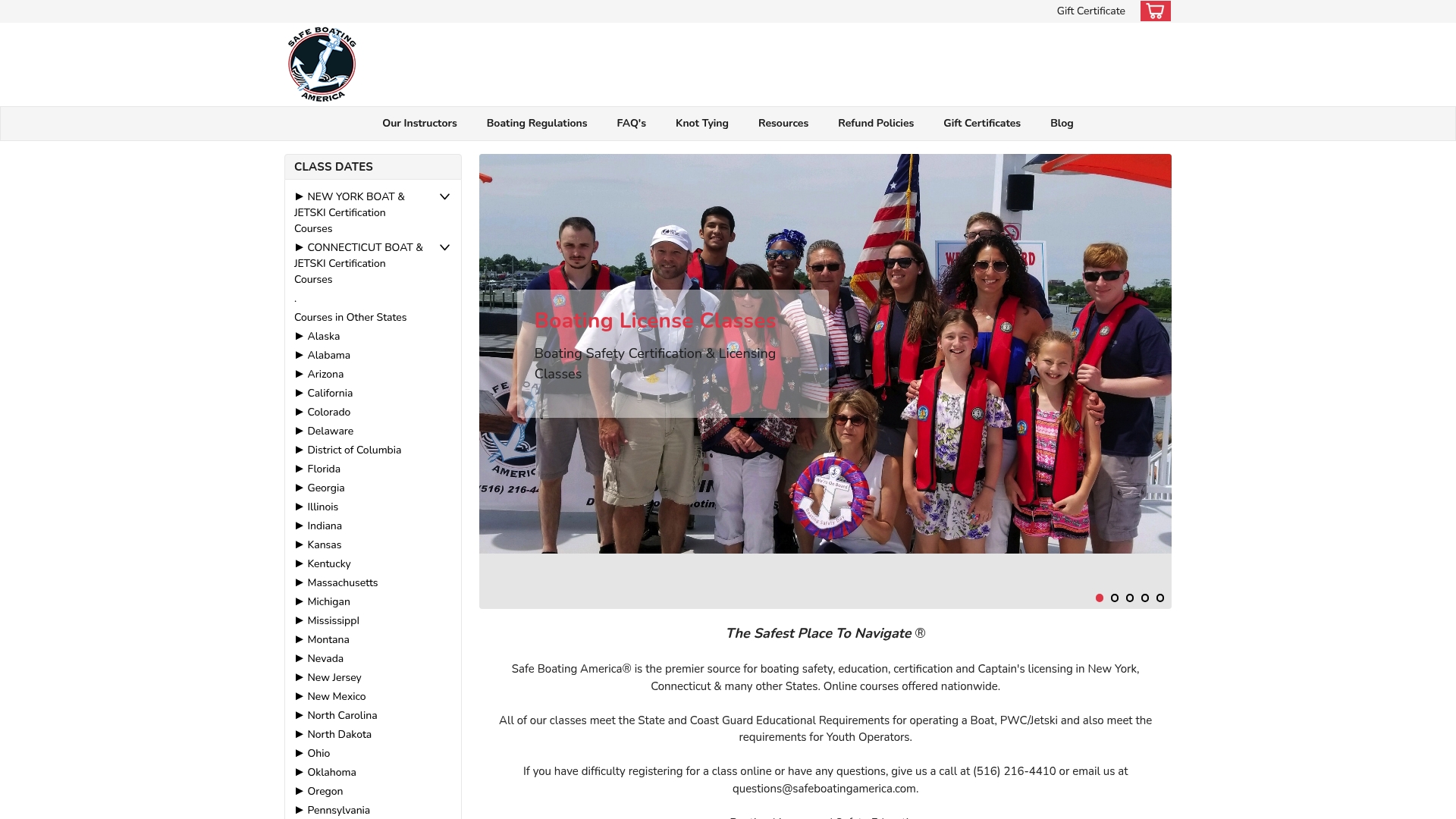
If you prefer a live instructor, we also run a Zoom online one-day class priced at $75. Gift certificates are available too, from $75 to $85, for a family member who is about to buy a boat or a Jet Ski. See our gift certificates.
FAQ
Do you need a boating license in California?
Yes. California requires the Boater Card for anyone operating an engine-powered vessel on state waters, at any age, since January 1, 2025. Temporary visitors, rental operators and the other exempt groups named in state law are the main exceptions.
How long does it take to get the Boater Card?
The course timing depends on the format you choose. After DBW receives your application, proof of education and payment, you get a 90-day temporary card by email. The official card should arrive by mail within 30 days of approval.
Does the California Boater Card expire?
No. It is valid for the operator’s lifetime, and the fee is a one-time $10 plus a $1 service fee. If you lose the card, a replacement costs $5.
Can a 14-year-old drive a Jet Ski in California?
A person 12 to 15 may operate a vessel with a motor of 15 hp or more, including a PWC, only with a supervisor on board who is at least 18 and holds a Boater Card. At 16 and older, an operator with the card may run one alone.
Sources
- Boating | California State Parks
- California Harbors and Navigation Code, Section 678.11
- Boating laws, rules and license requirements | California State Parks
- Division of Boating and Waterways
- California Course for Safe Boating Online | DBW
- FAQs | California Boater Card
- Apply Now | California Boater Card
- California Boater Card FAQ sheet
- Water Safety | Whiskeytown National Recreation Area
- Required Equipment | DBW
- Alcohol and Boating Don’t Mix | DBW