
Boating Under the Influence: Laws, Penalties, and Prevention

Boating under the influence (BUI) is defined as operating any watercraft while impaired by alcohol or drugs, and it is prohibited by law in all 50 U.S. states. The formal legal term is “boating while intoxicated” (BWI) in some jurisdictions, though BUI is the most widely used designation by the U.S. Coast Guard and the National Safe Boating Council. Alcohol is the leading factor in 20% of recreational boating deaths annually, making impaired boating one of the most preventable causes of fatal water accidents. Understanding the legal framework, enforcement methods, and prevention strategies is the first step toward protecting yourself and others on the water.
What laws and penalties apply to boating under the influence?
BUI is treated as a misdemeanor in most states, carrying jail time ranging from 30 days to 1 year and fines from a few hundred to several thousand dollars. The specific penalties, definitions, and watercraft types covered vary significantly from state to state. Every boater should know the rules that apply in their home state and any state where they plan to operate a vessel.
How BAC thresholds and impairment standards work
Most states set a blood alcohol concentration (BAC) limit of 0.08% for boating, mirroring the standard for driving. However, BUI charges can rest on BAC evidence or observed impairment, which means you can face charges even if your BAC is below the legal limit. If an officer documents unsafe vessel operation, that observation alone can support a charge.
State-by-state penalty comparison
The table below shows how three states approach BUI penalties:
| State | Base charge | Jail time | Fine | Notes |
|---|---|---|---|---|
| Georgia | Misdemeanor | Up to 1 year | Varies by court | Implied consent for blood, breath, or urine testing |
| Texas | Class B misdemeanor | Up to 180 days | Up to $2,000 | Escalates with prior offenses |
| Maryland | Criminal offense | Up to 1 year | Up to $1,000 | Permanent criminal record possible |
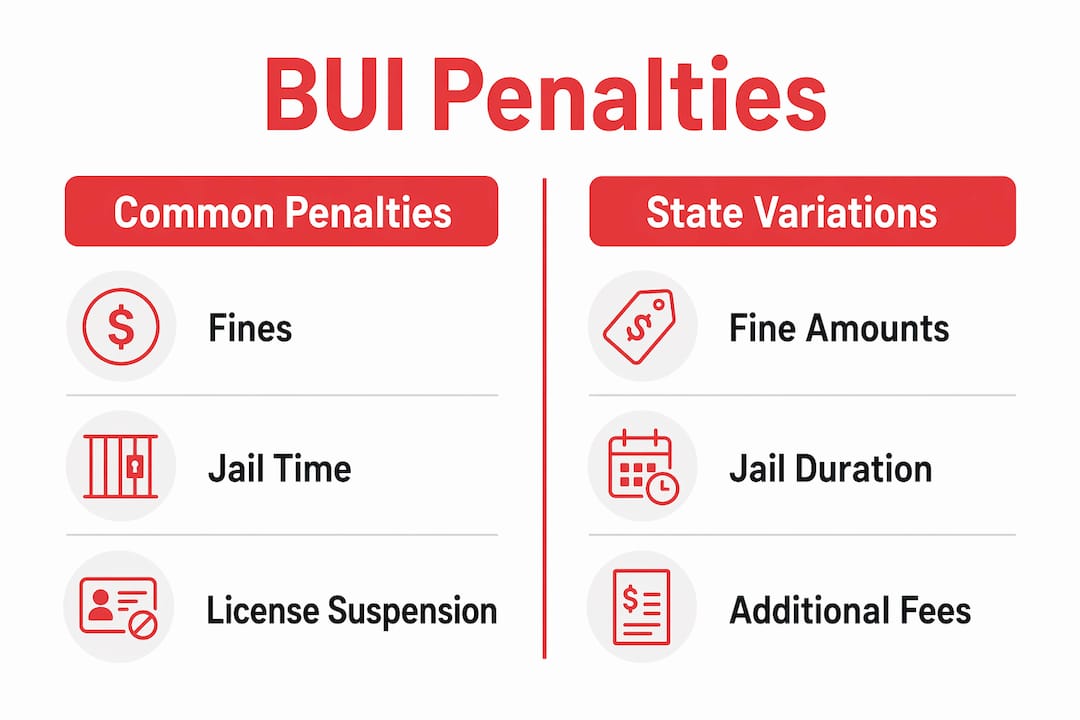
Penalties escalate sharply for repeat offenses or when a BUI incident results in injury or death. In those cases, charges can rise to felony level, with multi-year prison sentences and fines exceeding $10,000. A conviction also creates a permanent criminal record that affects employment, professional licenses, and insurance rates.
- First offense: Misdemeanor charge, fines, possible short jail term, mandatory boating safety course in some states
- Second offense: Higher fines, longer jail time, possible vessel seizure, license suspension
- Third offense or injury/fatality involved: Felony charges, extended imprisonment, civil liability
Pro Tip: Check your specific state’s boating statutes before heading out. Many states extend BUI laws to sailboats, personal watercraft, and even kayaks, not just motorized vessels.
How is BUI enforced and proven by authorities?
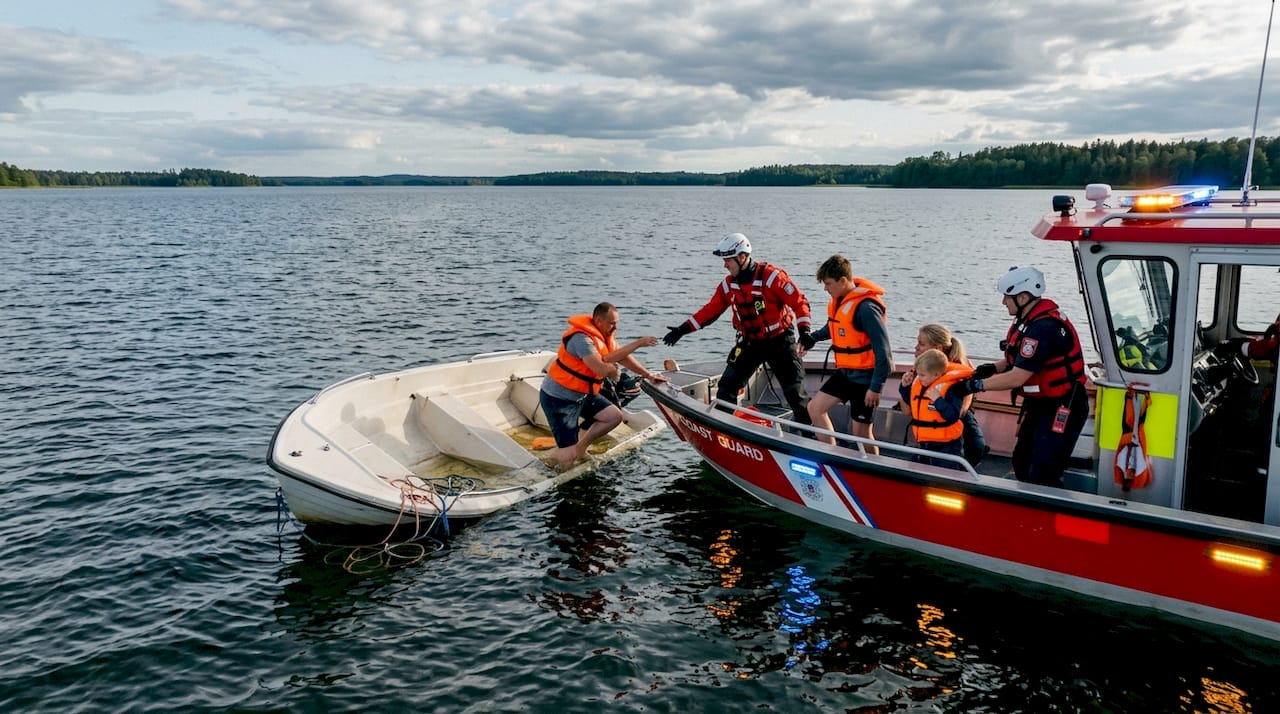
Law enforcement officers from the U.S. Coast Guard, state marine patrols, and local agencies conduct routine safety checks and targeted patrols on waterways. These stops do not require probable cause in most states, which means officers can board your vessel to inspect safety equipment and observe your condition at any time.
The four primary methods officers use to establish impairment
- Chemical testing. Blood, breath, and urine tests measure BAC directly. Georgia’s implied consent law requires arrested boaters to submit to the test type designated by the officer.
- Field sobriety observations. Officers assess coordination, balance, speech clarity, and the odor of alcohol. Environmental factors like sunlight and wave motion can affect these observations, which is why officers document multiple signs rather than relying on a single indicator.
- Vessel operation evidence. Erratic steering, excessive speed near other boats, or failure to follow navigation rules all serve as documented evidence of impaired operation.
- Witness statements. Passengers, nearby boaters, or marina staff can provide testimony about a vessel operator’s behavior before or during a stop.
A critical legal issue in BUI cases is proving who actually operated the vessel. Determining who operated the vessel requires reconstructing actions and officer interpretations, since proximity to the helm alone is not sufficient to establish operation under the law.
Pro Tip: Refusing a chemical test after a BUI arrest does not protect you. Refusing chemical testing can trigger additional administrative penalties on top of the underlying BUI charge, depending on your state’s implied consent laws.
What are the real-world risks of boating while intoxicated?
Alcohol impairs judgment, slows reaction time, and reduces coordination. On the water, those effects are amplified by sun exposure, wind, engine vibration, and the physical demands of maintaining balance on a moving vessel. The result is a risk profile significantly higher than impaired driving on land.
“The National Safe Boating Council urges boaters to designate a sober skipper rather than hoping for safe outcomes despite alcohol use. Prevention is the only reliable strategy.”
The consequences of a BUI incident extend well beyond the immediate accident:
- Physical injury or death. Impaired operators are more likely to collide with other vessels, strike submerged objects, or fall overboard without the coordination to self-rescue.
- Criminal record. A BUI conviction in Maryland, for example, creates a permanent criminal record that follows you into job applications, professional licensing reviews, and background checks.
- Insurance consequences. A BUI conviction typically triggers higher premiums or policy cancellation for both boat and auto insurance.
- Civil liability. If your impaired operation injures another person, you face personal injury lawsuits in addition to criminal charges. Settlements and judgments can reach hundreds of thousands of dollars.
- Vessel seizure. Some states authorize law enforcement to seize the vessel involved in a BUI incident, particularly for repeat offenders.
The U.S. Coast Guard consistently identifies alcohol as the top contributing factor in fatal recreational boating accidents. That statistic reflects a preventable pattern, not an unavoidable risk.
What practical strategies prevent boating under the influence incidents?
The most effective prevention strategy is the designated sober skipper model, which the National Safe Boating Council promotes as the standard for responsible group boating. One person commits to operating the vessel without consuming alcohol for the entire trip. That commitment is made before departure, not after the first drink.
Here are the core prevention practices every boater should follow:
- Designate a sober skipper before leaving the dock. Rotate the role across trips so the same person is not always excluded from social drinking.
- Set clear boating alcohol limits for passengers. Intoxicated passengers create safety risks even when the operator is sober. Impaired passengers are more likely to fall overboard or interfere with vessel operation.
- Abstain completely while at the helm. Even one or two drinks can impair judgment enough to affect safe operation, particularly in challenging conditions like heavy traffic or rough water.
- Plan your trip to separate boating from drinking. Anchor at your destination, enjoy food and drinks, then wait the appropriate time before operating the vessel on the return trip.
- Complete a certified boating safety course. Boating safety education reduces accident rates and builds the knowledge base needed to recognize and avoid BUI situations before they develop.
Understanding your state’s specific boating license requirements is also part of responsible preparation. Many states now mandate safety certification for all operators, and those courses cover BUI laws in detail.
Pro Tip: If you plan to visit a popular boating destination like Crab Island in Florida, consider a chartered boat option where a licensed captain handles operation. You enjoy the day without any BUI exposure.
My take on BUI: the gap between awareness and behavior
The most common misconception I encounter is that BUI is a technicality, something that only applies to visibly drunk boaters weaving across a channel. That framing is wrong and dangerous. Officers can charge you based on observed unsafe operation even when your BAC is below 0.08%. The law does not require you to be falling-down drunk. It requires only that impairment contributed to unsafe vessel operation.
The second misconception is that the water is more forgiving than the road. The opposite is true. Sun, heat, and wave motion accelerate alcohol’s effects on the body. A person who feels fine after two drinks at a backyard party will feel those drinks much more intensely after two hours on the water.
What I find most useful is treating the sober skipper role the same way pilots treat the sterile cockpit rule: no exceptions, no negotiations, no “just this once.” That standard removes the social pressure that leads to bad decisions. The legal consequences of a BUI conviction, including a permanent record in states like Maryland and felony exposure in injury cases, are severe enough to justify a firm personal policy.
Boating safety education is the most underused tool in this space. Completing a NASBLA-approved course gives you the legal knowledge and practical framework to make better decisions before you ever leave the dock.
— Richard
Get certified and stay on the right side of BUI laws
Safeboatingamerica is a nationally recognized provider of state-approved boating safety certification courses, and BUI law is a core part of every curriculum. Whether you need a New York Brianna’s Law course, a Connecticut Safe Boating Certificate, or a state-approved license in any of the 50 states, Safeboatingamerica offers online, Zoom, and in-person options taught by USCG-Licensed Captains and NASBLA-certified instructors.
Courses cover BUI laws, implied consent rules, navigation regulations, and emergency procedures. Students who complete the program receive their official boating safety certificate and gain the legal knowledge to operate confidently and responsibly. Visit Safeboatingamerica to find the right online boating course for your state and get certified today.
Key takeaways
Boating under the influence is a criminal offense in every U.S. state, and the legal, financial, and personal consequences of a conviction are severe enough to justify a zero-tolerance personal policy on alcohol while operating any vessel.
| Point | Details |
|---|---|
| BUI is illegal nationwide | All 50 states prohibit operating a vessel while impaired by alcohol or drugs. |
| Charges go beyond BAC limits | Officers can charge you based on observed unsafe operation even below the 0.08% threshold. |
| Penalties escalate fast | Repeat offenses or injury-involved incidents can trigger felony charges and multi-year sentences. |
| Refusal adds penalties | Refusing a chemical test after arrest triggers additional administrative penalties under implied consent laws. |
| Education reduces risk | Completing a certified boating safety course builds the legal knowledge needed to avoid BUI situations entirely. |
FAQ
What is the legal BAC limit for boating in the U.S.?
Most states set a BAC limit of 0.08% for boating, matching the standard for driving. However, you can face BUI charges below that limit if an officer documents unsafe vessel operation.
Does a BUI conviction affect your driver’s license?
In many states, a BUI conviction can result in suspension of your driver’s license in addition to boating privileges. The specific impact depends on state law, so check your state’s statutes for exact consequences.
What watercraft does BUI law cover?
BUI laws in most states cover all motorized watercraft, including personal watercraft like Jet Skis and WaveRunners. Some states extend coverage to sailboats, kayaks, and canoes.
Can you refuse a sobriety test on the water?
You can refuse, but implied consent laws in most states impose additional administrative penalties for refusal on top of any criminal BUI charge.
How does boating safety certification help with BUI prevention?
Certified boating safety courses cover BUI laws, BAC thresholds, and enforcement procedures in detail. Boating education lowers accident rates and gives operators the legal knowledge to make responsible decisions before and during any trip.
Recommended
- How Boating Education Lowers Accident Rates and Saves Lives - Safe Boating America
- What Is Brianna’s Law? New York Boating Rules Explained - Safe Boating America
- Boat Requirements: What Every U.S. Boater Must Know - Safe Boating America
- Boat Safety Equipment: What Every Boater Must Carry - Safe Boating America