
Boat Helm Guide: Function, Design, and Maintenance

The boat helm is defined as the complete steering and control station on a vessel, not just the steering wheel. The helm encompasses the steering wheel, throttle controls, navigation instruments, and communication equipment in one centralized console. Modern helms integrate electronic navigation, joystick controls, and power-assisted steering as standard features. Understanding every component at your helm makes you a safer, more confident operator on the water.
What is a boat helm and how does it work?
The helm is the command center of any vessel. Technically, the helm defines the entire control station area, though most boaters use the word to mean the steering wheel alone. That distinction matters because the helm also houses throttle levers, gauges, GPS displays, VHF radio mounts, and engine kill switches.
Turning the boat steering wheel adjusts the rudder or outboard motor angle, which changes the vessel’s direction. Cables or hydraulic lines transfer that rotational motion from the wheel to the motor or rudder efficiently. The helm control system is what converts your physical input into actual directional change on the water.
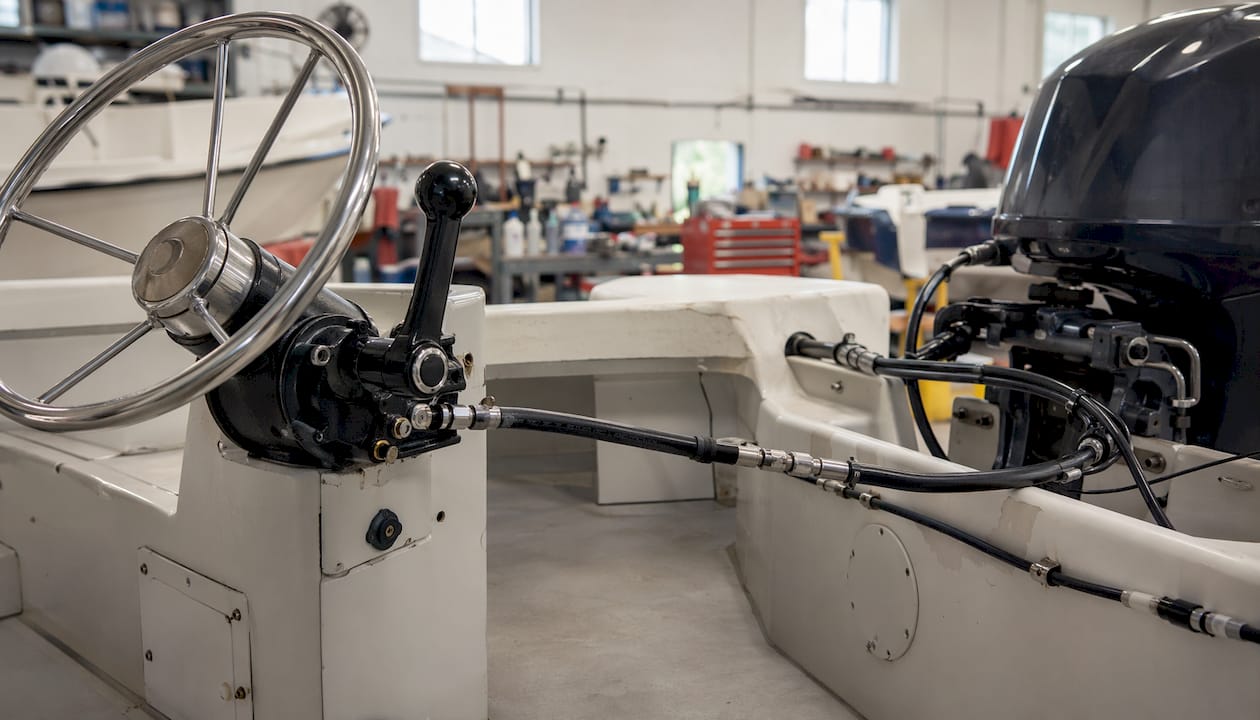
Modern helm control systems go well beyond mechanical linkage. Many current consoles include chartplotters, depth finders, autopilot interfaces, and digital switching panels. Boaters who understand integrated helm electronics get more from their time on the water and respond faster in emergencies.
How do mechanical and hydraulic steering systems work at the helm?
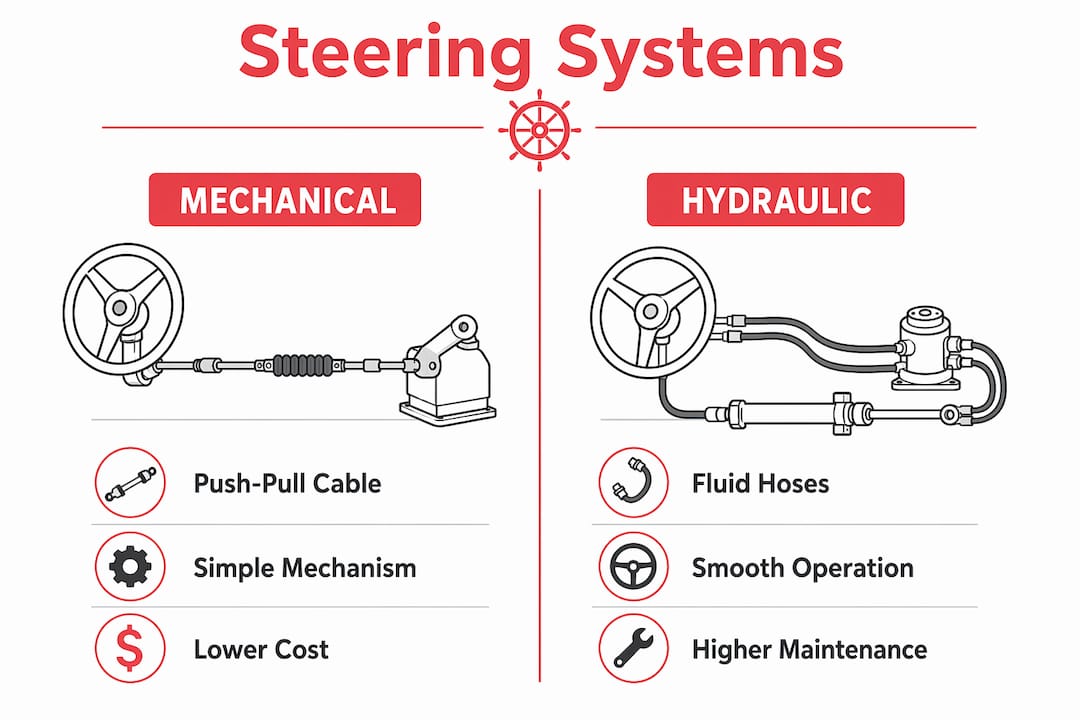
The two primary marine steering system types are mechanical and hydraulic. Each works differently, suits different boat sizes, and carries its own maintenance demands.
Mechanical steering
Mechanical steering uses a push-pull cable that runs from the helm pump directly to the outboard motor or rudder. Turning the wheel moves the cable, which physically pivots the motor. This system is simple, affordable, and reliable on smaller boats with engines up to roughly 115 horsepower. The trade-off is steering effort. Mechanical systems can develop noticeable torque feedback from propeller forces, making the wheel feel heavy at speed or in rough water.
Hydraulic steering
Hydraulic steering replaces the cable with fluid-filled hoses connecting a helm pump to a steering cylinder at the motor. Turning the wheel pressurizes the fluid, which moves the cylinder and pivots the motor. Hydraulic systems absorb propeller torque to keep steering light and consistent, regardless of engine size or sea conditions. This makes hydraulic the standard choice for boats with engines above 115 horsepower and for any vessel where operator fatigue is a concern.
| Feature | Mechanical steering | Hydraulic steering |
|---|---|---|
| Mechanism | Push-pull cable | Fluid-filled hoses and cylinder |
| Best suited for | Small boats, engines under 115 HP | Larger boats, high-horsepower engines |
| Steering effort | Higher, especially at speed | Light and consistent |
| Maintenance complexity | Low | Moderate to high |
| Common failure point | Cable corrosion or seizure | Air in lines, fluid leaks |
Pro Tip: Hydraulic systems require periodic bleeding to remove air from the lines. Air in the system creates a spongy, inconsistent steering feel. Bleed the system with an assistant: one person turns the wheel lock to lock while the other monitors the fluid reservoir and bleeds the fittings at the cylinder.
What design and ergonomic features enhance the helm experience?
A well-designed helm station reduces fatigue and keeps critical controls within easy reach. Boat cockpit accessories have evolved significantly, and the best upgrades add function without requiring permanent modifications to your console.
Key features and accessories worth considering:
- Modular cockpit tables: Folding teak or composite tables mount to pedestals or railings. A standard folding cockpit table measures approximately 16 x 24 inches when closed and expands for use at anchor. Built-in cupholders keep drinks secure underway.
- Suction-cup and clamp mounts: These mounting options attach phones, tablets, and GPS units to the console without drilling. They preserve the structural integrity of fiberglass panels and are easy to reposition.
- Storage caddies: Rail-mounted or console-mounted caddies organize sunscreen, tools, and safety gear so they are accessible without searching.
- Adjustable seating: Helm chairs with adjustable height and lumbar support reduce back strain on long runs. Pedestal seats that swivel also improve visibility when docking.
- Organized console panels: Labeling switches and grouping controls by function (navigation, lighting, bilge) reduces errors and speeds up response time in urgent situations.
Pro Tip: Choose accessories made from UV-stabilized materials and 316-grade stainless steel hardware. Marine environments are corrosive. A cupholder that looks good at the dealer can rust or crack within one season if it is not rated for saltwater exposure.
Ergonomic helm accessories that avoid drilling are especially valuable on newer boats where warranty coverage may be affected by hull modifications. The best boat helm features combine durability, convenience, and clean installation.
Where is the helm located, and why is starboard placement standard?
Helm placement on boats shifted from the stern to forward positions as technology advanced. Modern helm placement moved forward because flexible cable and hydraulic hose routing made it possible to locate the control station anywhere on the vessel. Larger vessels place the bridge higher to maximize visibility over the bow and surrounding water.
The starboard helm position is the global standard, and it traces back to the traditional placement of the steering oar on the right side of early vessels. International maritime rules reinforced this convention because it improves visibility during passing situations. When two boats approach each other, both operators are positioned on the same side, giving each a clear sightline to the other vessel.
Standardizing the helm on the starboard side also reduces human error when operators move between different boats. Muscle memory built on one vessel transfers directly to another. That consistency matters most during docking and close-quarters maneuvering, where reaction time is short.
| Boat type | Typical helm location | Reason |
|---|---|---|
| Runabout / bowrider | Forward, starboard offset | Visibility, passenger access |
| Center console | Center forward | 360-degree visibility |
| Cabin cruiser | Flybridge or lower helm | Weather protection options |
| Personal watercraft | Center, handlebar style | Rider straddles the craft |
| Large sportfisher | Elevated bridge | Long-range visibility |
Understanding helm placement helps you read a vessel’s layout before you board and anticipate where controls will be located.
What are key maintenance tips for reliable helm performance?
Helm maintenance prevents the most common and dangerous failure: losing steering control on the water. A systematic inspection routine catches problems before they become emergencies.
- Inspect steering cables annually. Cables seize due to corrosion or lack of lubrication, especially after winter storage. Check the full cable run for cracked housing, kinks, or stiff spots. Replace any cable that shows visible corrosion at the end fittings.
- Check hydraulic fluid levels before each season. Low fluid indicates a leak somewhere in the system. Trace the hose runs from the helm pump to the steering cylinder and look for wet spots or residue.
- Test steering response at the dock. Turn the wheel lock to lock with the engine running. Stiff or uneven resistance signals a problem. Stiff steering after winter is a reliable early indicator of cable failure.
- Lubricate all pivot points. Use a marine-grade grease on the tilt tube, steering arm, and cable end fittings. Do this at the start of each season and after any extended period of inactivity.
- Bleed hydraulic lines when needed. Bleeding air from hydraulic lines is a multi-step process that requires correct fittings and torque specifications. Improper bleeding risks pump damage and unpredictable steering response.
- Tighten all hardware on the console. Vibration loosens bolts, connectors, and mounting brackets over time. A loose steering wheel hub or throttle cable bracket creates slop in the controls.
Pro Tip: Never mix hydraulic fluid types in your steering system. Different fluid formulations are chemically incompatible and can degrade seals rapidly. If you are unsure what fluid is in your system, flush it completely before refilling with the manufacturer-specified fluid.
Learning how to maintain your helm is as important as knowing how to steer. Preventive care costs far less than emergency repairs or towing fees.
Key Takeaways
The boat helm is the complete control station of a vessel, and understanding its steering systems, placement, and maintenance requirements directly determines how safely and confidently you operate on the water.
| Point | Details |
|---|---|
| Helm definition | The helm is the full control station, not just the steering wheel. |
| Steering system choice | Hydraulic steering suits larger engines; mechanical works well for smaller boats under 115 HP. |
| Starboard placement | The standard starboard helm position improves visibility and reduces error when moving between vessels. |
| Ergonomic upgrades | Drill-free mounts and UV-rated accessories add function without damaging the console. |
| Maintenance priority | Inspect cables and hydraulic fluid annually; stiff steering is the first warning sign of failure. |
Why helm knowledge separates good boaters from great ones
I have spent years watching boaters focus entirely on horsepower and hull design while treating the helm as an afterthought. That is a mistake. The helm is where every decision gets executed. A poorly maintained steering system or a cluttered, disorganized console slows your reaction time exactly when you need it most.
The shift to hydraulic steering changed recreational boating more than most people realize. Before hydraulic systems became affordable for mid-size boats, steering a 200-horsepower outboard at speed was genuinely tiring. Hydraulic steering made longer runs comfortable and gave average boaters the control precision that used to require significant physical strength.
What I find most overlooked is helm ergonomics. Boaters spend money on electronics and engines but sit in an uncomfortable chair with controls they have to reach awkwardly. A well-organized helm with properly positioned instruments and comfortable seating reduces fatigue on a four-hour run more than any engine upgrade will.
My honest recommendation: before you add any new electronics or accessories, spend one full trip paying attention to what frustrates you at the helm. Is the chart plotter too far right? Is the throttle awkward to hold at cruise? Those friction points are where targeted upgrades pay off. Understanding your helm layout is the first step toward fixing what actually matters.
— Richard
Certified helm operators make safer decisions on the water
Knowing your helm’s mechanics is one part of safe boating. Knowing the rules, navigation standards, and emergency procedures that govern how you use those controls is the other part.
Safeboatingamerica offers state-approved boating safety courses taught by USCG-Licensed Captains and NASBLA-certified instructors. Courses cover helm operation, navigation rules, emergency procedures, and legal requirements for every state. Whether you are a first-time boater or an experienced operator renewing your certification, Safeboatingamerica provides online, Zoom, and in-person options that fit your schedule. Get your boating safety certification and operate your vessel with the knowledge and credentials the water demands.
FAQ
What is the difference between a helm and a steering wheel?
The helm refers to the entire control station on a boat, including the steering wheel, throttle, gauges, and navigation instruments. The steering wheel is just one component of the helm.
Why is the helm on the starboard side of most boats?
The starboard helm position traces back to traditional steering oar placement and is reinforced by international maritime rules. It standardizes operator positioning to improve visibility and reduce errors during passing maneuvers.
How do I know if my boat’s steering needs maintenance?
Stiff or uneven resistance when turning the wheel is the most reliable early warning sign. Post-winter inspections should include a full lock-to-lock steering test with the engine running.
What is the best steering system for a high-horsepower outboard?
Hydraulic steering is the standard choice for engines above 115 horsepower. It absorbs propeller torque and keeps steering effort light regardless of speed or sea conditions.
What helm accessories are worth adding to a boat?
Folding cockpit tables, suction-cup or clamp-mounted device holders, rail-mounted storage caddies, and adjustable helm seating are the most practical upgrades. Choose UV-stabilized materials and 316-grade stainless hardware for saltwater durability.