Illinois Boating License Age: Who Needs a Certificate

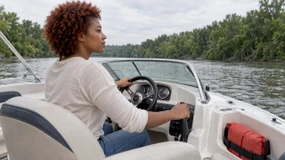
In Illinois, no one under 10 may operate a motorboat, and anyone born on or after January 1, 1998 needs a Boating Safety Certificate to run a motorboat over 10 horsepower. Ages 10 to 11 may operate larger boats only under direct on-board adult supervision. Ages 12 to 17 may operate them with a certificate or with that same supervision. Illinois calls the document a certificate, though most boaters call it a boating license. The sections below set out each age band, the personal watercraft (PWC) rules, and how a young or first-time operator gets certified. Boaters who want to finish the course online can use our Illinois boating course.
TL;DR
- Minimum age to operate any motorboat, including a PWC: 10 years old.
- Born on or after January 1, 1998: a valid Boating Safety Certificate is required for motorboats over 10 horsepower.
- Ages 10 to 11: boats over 10 hp only with direct on-board supervision by a qualifying adult.
- Ages 12 to 17: a certificate, or direct supervision by a parent, guardian or designated adult 18 or older.
- Course: at least 8 hours of instruction and a final exam; students 11 and older can take it.
Table of Contents
- The Illinois boating license age rules at a glance
- The birth-date cutoff: January 1, 1998
- Ages 10 to 17: what each year allows
- Can a 13-year-old ride a Jet Ski alone in Illinois?
- Life jacket rules that depend on age
- What the Illinois boating course involves
- How to get certified: step by step
- Common age questions from parents
- Where we come in
- Our perspective
- FAQ
- Sources
The Illinois boating license age rules at a glance
Illinois does not issue a photo license like a driver’s license. The state issues a Boating Safety Certificate after a course and exam. The law behind it is 625 ILCS 45/5-18, and the Illinois Department of Natural Resources (IDNR) explains it on its Boating Safety Education page.
Two tests decide whether you need the certificate: how old you are, and when you were born.
| Operator | Motorboat over 10 hp, including PWC | What is required |
|---|---|---|
| Under 10 | Not allowed | Cannot operate a motorboat |
| 10 to 11 | Allowed only with supervision | Direct on-board supervision by a qualifying adult |
| 12 to 17 | Allowed | Valid certificate, or direct on-board supervision by a parent, guardian or designated adult 18 or older |
| 18 and older, born on or after Jan. 1, 1998 | Allowed | Valid certificate |
| 18 and older, born before Jan. 1, 1998 | Allowed | No certificate required by the state |
The supervisor matters too. Per the IDNR, a supervising adult born on or after January 1, 1998 must hold a valid certificate. A parent born in 1999 who has never taken a course cannot legally supervise a 10-year-old on a 90 hp boat.
The birth-date cutoff: January 1, 1998
The certificate requirement for adults is tied to a birth date, not an age. The statute says that beginning January 1, 2016, no person born on or after January 1, 1998 may operate a motorboat over 10 horsepower without a certificate, as the enrolled text of SB2019 shows. Results from older search listings, such as cutoffs of 1984 or 2007, describe earlier versions of the law or other states.
In practice, in 2026 every adult up to roughly age 28 falls under the requirement. Anyone born earlier is exempt from the course requirement. That exemption does not remove the other rules: life jackets, lights, alcohol limits and the rest still apply to everyone.
The law also reaches owners. Section 5-18(e) prohibits an owner, or anyone with supervisory authority over a boat, from permitting someone who does not meet the certificate requirement to operate a boat over 10 hp. If you lend your boat to a nephew or a friend, check their age and certificate first.

Ages 10 to 17: what each year allows
Under 10
The statute says a person under 10 may not operate a motorboat. This applies to PWCs as well. A child this age can ride as a passenger, with the life jacket rules below.
Ages 10 and 11
The IDNR allows 10- and 11-year-olds to operate a boat over 10 hp only under direct on-board supervision. That means the qualifying adult is in the boat, not watching from the dock or from another vessel. The child cannot get a certificate yet through an exam, because students under 11 may not take the certification exam. Students who are 11 can take an approved course, and the IDNR’s 2025 boating report states that 11-year-olds receive their certificate upon their 12th birthday.
Ages 12 to 17
This is the age group the law was written around. A 12-year-old may operate a motorboat over 10 hp, including a PWC, with a valid DNR-accepted certificate. Without one, a parent, guardian or designated adult 18 or older must supervise directly on board. For a teenager who wants to run a boat alone, the certificate is what makes that possible.
Age 18 and older
At 18, the supervision option for minors no longer applies. If you were born on or after January 1, 1998, you need the certificate yourself.
Can a 13-year-old ride a Jet Ski alone in Illinois?
Yes, with the certificate. PWCs fall under the same “who may operate a vessel” rules as other motorboats. A 13-year-old holding a valid DNR-accepted certificate may operate one without an adult aboard. Without the certificate, a qualifying adult must be supervising directly on board.
The IDNR Handbook of Illinois Boating Laws and Responsibilities adds PWC rules that apply at every age:
- Every person on a PWC wears a USCG-approved life jacket.
- PWCs may not be operated between sunset and sunrise.
- If the PWC has an engine cut-off system, the lanyard must be attached to the operator’s person, clothing or life jacket, or the wireless system must be activated.
- Operators may not weave through traffic or jump wakes unreasonably close to other vessels.
Waverunner and Jet Ski are brand names for the same class of vessel, so the rules above cover them. For a parent buying a first PWC for a teenager, the certificate comes before the first ride. Our guide to Illinois boating and Jet Ski certification covers the PWC side in more detail.
Life jacket rules that depend on age
A life jacket must be available for each person aboard. According to the IDNR’s 2026 Boater Safety Week release, people under 13 on deck or in an open watercraft must wear an approved, appropriately sized wearable life jacket while underway, subject to the stated exceptions. Everyone on a PWC wears one, regardless of age.
For families, the practical rule is simple: size the jacket to the child’s weight, fasten it before leaving the dock, and keep it on until the boat is tied up.
What the Illinois boating course involves
The course is built for young operators. The IDNR’s 2025 report states that it requires a minimum of 8 hours of instruction and is primarily designed for people 12 or older. The curriculum is written at a sixth-grade reading level. Students who complete the hours and pass the final exam receive a State of Illinois certificate, as the IDNR safety education brochure describes.
Topics typically cover:
- Navigation rules and right of way
- Required equipment and life jackets
- Operating a PWC
- Alcohol and boating
- Emergency procedures and accident reporting
An operator who learns these rules before the first season is better prepared for the situations where collisions happen. The IDNR notes that most boating accidents involve operators aged 20 to 40 with more than 100 hours of experience but little or no classroom instruction. Hours on the water do not replace the rules of the road.
How to get certified: step by step
- Check the birth date. Born on or after January 1, 1998, or under 18 and planning to operate alone? You need the certificate. Born before 1998 and an adult? The state does not require it.
- Check the age floor. The student must be at least 11 to sit the exam, and 11-year-olds receive the certificate on their 12th birthday. Younger children cannot operate a motorboat at all.
- Choose a course format. Options are online self-paced, live Zoom, or in person. Pick the one that fits a school or work schedule. Our online boating courses are computer-based and available nationwide.
- Complete the instruction hours. Plan on the 8-hour minimum, spread over days if the format allows.
- Pass the final exam. Study the navigation rules and PWC sections, since those are what young operators meet first.
- Keep the certificate with you. Carry it when operating, and make sure any adult who supervises a minor holds one too if born on or after January 1, 1998.
The course must be accepted by the IDNR. Confirm that on the IDNR page before registering for any provider’s class.
Common age questions from parents
My 15-year-old has a certificate. Can a friend of mine with none ride along as the adult? The certificate lets the 15-year-old operate alone. The friend is a passenger. If the friend is the one supervising instead, that friend needs a certificate if born on or after January 1, 1998.
My 11-year-old finished a course. Can they drive the boat this summer? The certificate is issued on the 12th birthday. Until then, the 11-year-old needs direct on-board supervision for a boat over 10 hp.
I am 30 and born in 1996. Do I need a certificate? Not under the Illinois statute. Some other states use different cutoffs, so check the rules there before boating out of state. Our boating license age guide shows the typical range across the country, and the state-by-state articles for Wisconsin and Michigan help on neighboring waters.
Where we come in
Families with a 12-year-old and a boat in the driveway need one answer: how soon can the certificate be in hand. Safe Boating America offers state-approved boating license courses in every state, in online, live Zoom and in-person formats, taught by State Certified Instructors and USCG-Licensed Captains. We highlight same-day certification and accessible formats for new boaters and PWC operators.
For Illinois, start with the Illinois boating course. Our Illinois requirements guide walks through the rules for adults and minors alike.
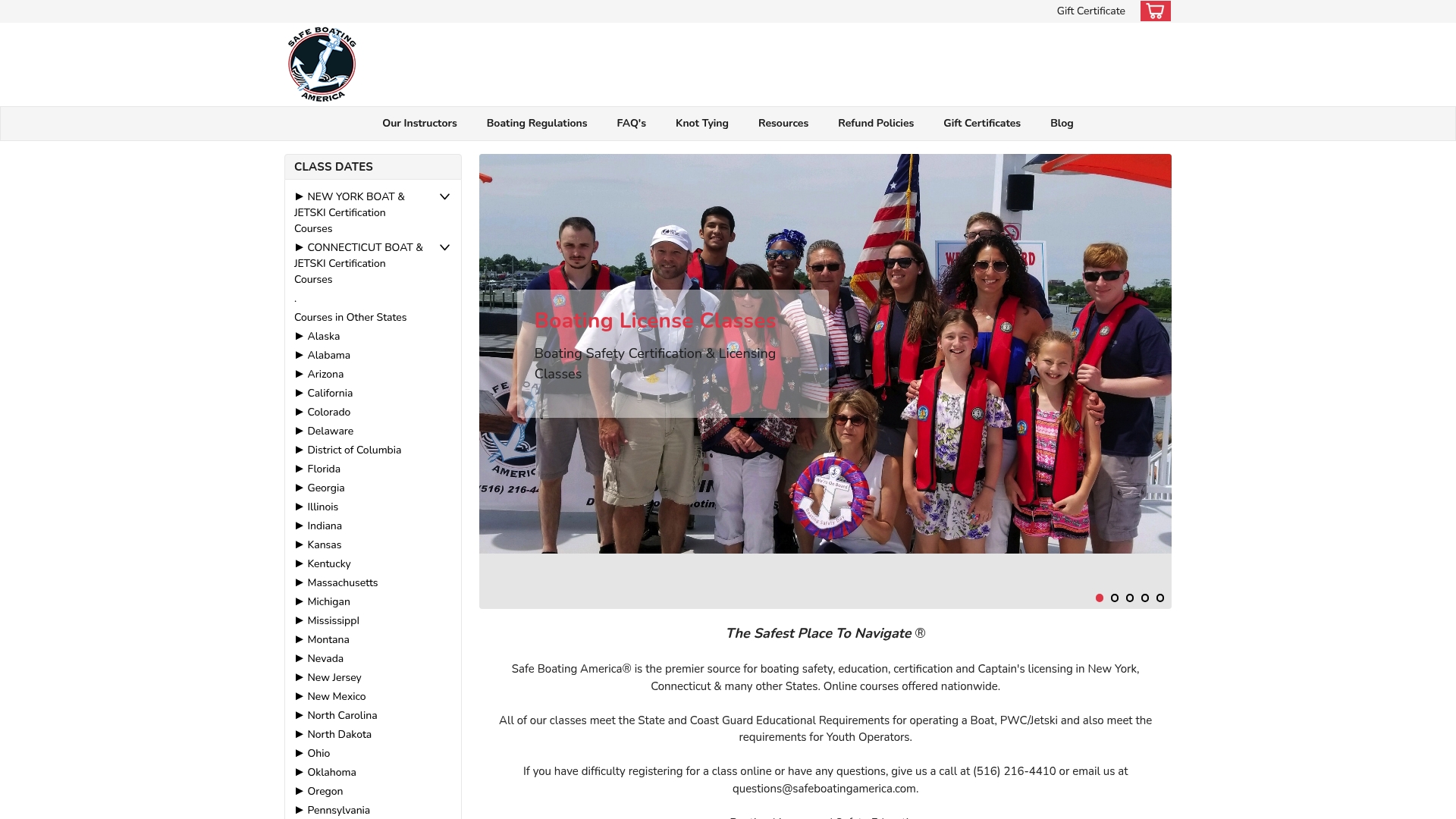
Our live Zoom class is a one-day option at $75 on the Zoom class page. The New York class is $85 and is listed on the NYS Safe Boating Class page. A gift certificate, $75 to $85, suits a teenager’s birthday: see gift certificates.
Our perspective
Age rules look simple on a chart, and they are easy to get wrong at the dock. The most common mix-up we hear about is between the age of the operator and the birth-date cutoff. A parent assumes that because the child is 14, supervision is all that matters. Then it turns out the supervising adult needs a certificate too.
We teach boating safety for a living, and our view is that the certificate is the best thing a young operator can own. It turns a rule into a habit: who has right of way, how to approach a dock, what the PWC lanyard is for. A 12-year-old who has done the coursework operates with more confidence and more care.
That is why we offer state-approved courses online, by live Zoom and in person, taught by State Certified Instructors and USCG-Licensed Captains. A family can pick the format that fits, finish the hours, and have the certificate before the season starts. Adults born after 1997 benefit just as much, since the certificate is what lets them take a friend’s boat out legally.
Richard
FAQ
What is the minimum age to operate a boat in Illinois?
The minimum is 10 years old. Under 625 ILCS 45/5-18, no person under 10 may operate a motorboat, including a personal watercraft. Ages 10 and 11 may operate boats over 10 hp only under direct on-board supervision.
Do I need a boating license in Illinois if I am over 18?
It depends on your birth date. If you were born on or after January 1, 1998, you need a valid Boating Safety Certificate to operate a motorboat over 10 hp. Adults born before that date are not required by the state to hold one.
Can a 12-year-old drive a boat or PWC in Illinois?
Yes. A 12-year-old may operate a motorboat over 10 hp, including a PWC, with a valid DNR-accepted certificate. Without it, a parent, guardian or designated adult 18 or older must supervise directly on board.
How long does the Illinois boating course take?
The course requires a minimum of 8 hours of instruction and a final exam. Students must be at least 11 to take the exam, and 11-year-olds receive their certificate upon their 12th birthday.
Is the Illinois boating certificate valid in other states?
Many states accept a NASBLA-approved certificate from another state, but each state sets its own terms. Check the rules of the state where you plan to boat. Our state guides, such as the Ohio boating age guide, outline those differences.
Sources
- Illinois DNR: Boating Safety Education
- 625 ILCS 45/5-18, Illinois General Assembly
- SB2019 enrolled text, 104th General Assembly
- Illinois Recreational Boating Report 2025
- Handbook of Illinois Boating Laws and Responsibilities
- IDNR Safety Education Program Brochure
- IDNR Boater Safety Week release, May 2026