
Alabama Boating Ages 12–14: What Families Must Bring
No one under 12 may operate a motorized vessel or personal watercraft anywhere in Alabama, and there’s no path to certification below that age. Operators who are 12 or 13 can earn their boater safety certification, but they must have someone 21 or older with a valid operator’s license on board and ready to take the controls at any moment. Once you turn 14 and pass certification, you can run a boat or PWC alone, with no supervisor required.
TL;DR:
- Children aged 12 and 13 can operate a boat only with a 21 or older licensed adult on board who can take immediate control at any moment.
- Unsupervised boat operation is permitted only for those aged 14 and above once they pass certification.
- Minor certification can be obtained through a state exam or an approved course, with extra documentation required for minors, such as a birth certificate and Social Security card.
- Visitors can operate Alabama waters for up to 45 days using an out-of-state certification, which is valid if current and accepted by Alabama.
- Underage operators or unlicensed individuals operating illegally can expose boat owners to liability and legal penalties.
Table of Contents
- What Age Do You Need for an Alabama Boating License?
- How Does Boat Supervision Actually Work?
- How Do You Get an Alabama Boating License?
- Who Is Exempt From the Alabama Boater Exam?
- What Do You Need to Prove Your Boating License Is Valid?
- What Should Families Bring to Get Certified?
- A Parent’s Case for Starting Early, Not Just Legally
- Get Certified Before You Head Out
- Where to Verify These Rules Yourself
- Sources
- FAQ
What Age Do You Need for an Alabama Boating License?
Alabama sets its age brackets in firm, unambiguous tiers, and each one comes with a different set of privileges.
- Under 12: Prohibited from operating any motorized vessel, including personal watercraft. There’s no exam, no course, and no waiver that changes this. ALEA treats this as an absolute floor.
- Ages 12 to 13: Eligible to sit for certification and legally operate, but only with a 21-or-older licensed adult on board who can take immediate control. This isn’t a “supervisor nearby” arrangement. It means physically present in the boat.
- Ages 14 and up: Once certified, these operators can run a boat or PWC solo, with no adult required in the vessel.
- 16-and-older special case: If you buy a vessel and are at least 16, you get a narrow 30-day grace window to complete certification after the purchase date, per the ALEA certification manual.
Visitors get some breathing room, too. Nonresidents can operate in Alabama waters for up to 45 days on an out-of-state certification, and many other states’ approved courses satisfy Alabama’s requirement outright if the visitor holds proof of completion.
How Does Boat Supervision Actually Work?
“On board and in control” has a specific meaning under Alabama law, and it’s stricter than most new boaters assume. The supervising adult must be 21 or older, hold a valid Alabama boater certification (or an accepted equivalent), and sit close enough to grab the wheel or throttle instantly if something goes wrong. Standing at the dock, riding in a separate boat, or being “just a text away” does not count.
Personal watercraft fall under the exact same age and supervision rules as any other motorized vessel. Alabama doesn’t carve out a lighter standard for Jet Skis or WaveRunners, a mistake that trips up plenty of first-time PWC families.
- Sanctioned marine events, such as organized races or exhibitions, may operate under narrow, permit-based exceptions.
- Those permits are issued case by case and don’t create a general loophole for underage solo operation.
- Boat owners who knowingly let an unlicensed or underage person operate can face liability themselves, independent of whatever happens to the operator.
Pro Tip: Before letting a 12 or 13-year-old take the wheel, confirm your supervising adult’s certification is current, not expired. An outdated card can turn a legal outing into a citation.
How Do You Get an Alabama Boating License?
Getting certified in Alabama comes down to two paths, and most families find one significantly faster than the other.
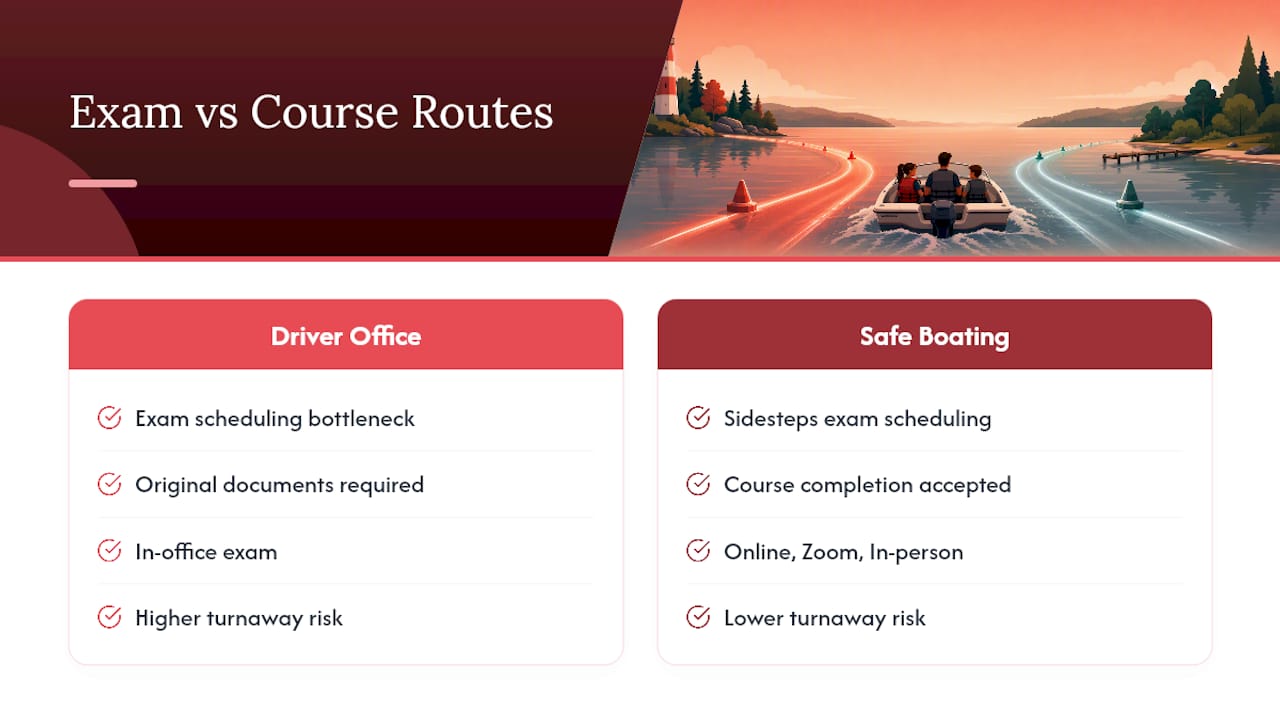
- Take the state exam. Schedule a written test at an Alabama Driver License office through a designated examiner, per Alabama Code §33-5-53.
- Present an approved course completion. A finished ALEA-approved boating course, a valid USCG operator license, or a U.S. Power Squadron certificate satisfies the requirement without a separate exam.
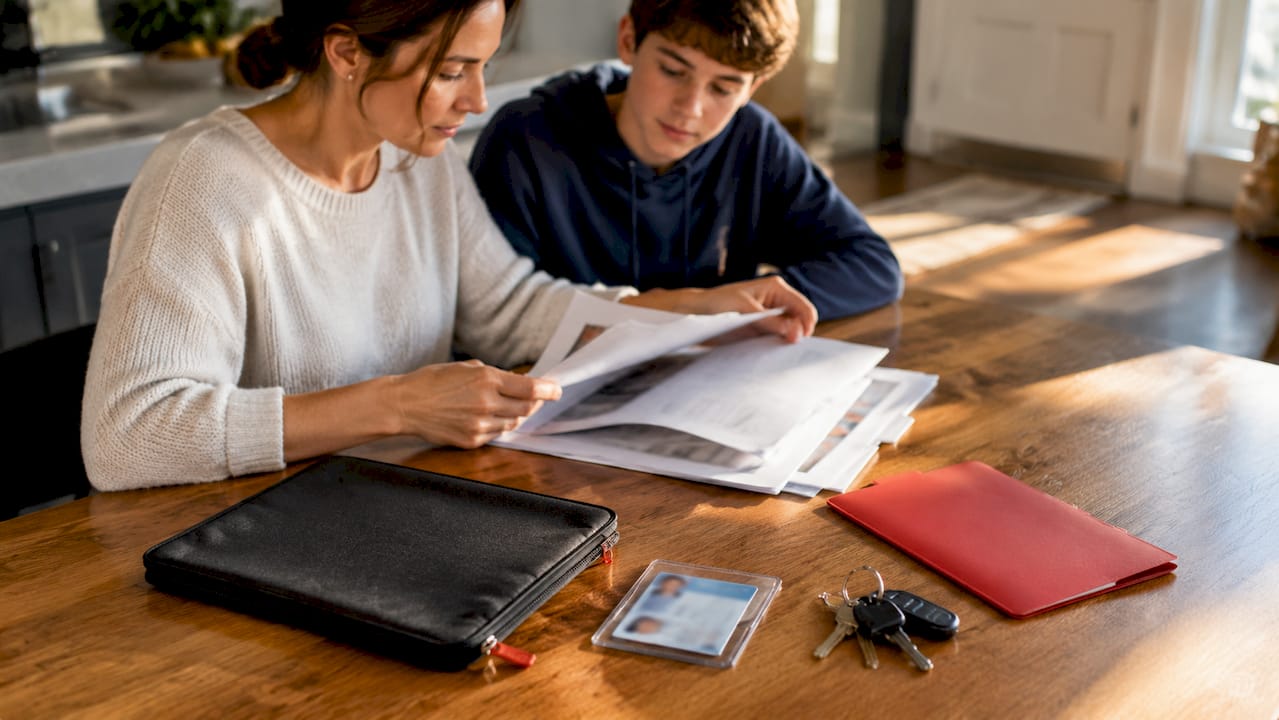
Minors face extra documentation hurdles that trip up more applicants than you’d expect. Bring:
- A certified birth certificate (not a photocopy or hospital keepsake version)
- The minor’s original Social Security card
- A certified school enrollment statement, when requested
Adults typically need a government-issued photo ID. Application and issuance fees apply at the Driver License office, and a duplicate certificate carries its own smaller replacement fee. Once issued, certification usually shows up as a “V” vessel class endorsement added to the driver’s license, or as a standalone vessel-only card for non-drivers.
Call ahead or check current office hours before you go. Driver License offices can be inconsistent about walk-in exam availability, and a wasted trip with a nervous 12-year-old is nobody’s idea of fun.
Who Is Exempt From the Alabama Boater Exam?
Several groups skip the exam entirely under Alabama Code §33-5-52, though exemption from the test never means exemption from the law.
- Anyone born before April 28, 1954
- Anyone who was 40 or older as of April 28, 1994
- Holders of a valid U.S. Coast Guard operator license
- Anyone with a completed ALEA-approved course, USCG Auxiliary, or U.S. Power Squadrons certificate
Rental boats add one more wrinkle. Renting from a licensed marina or rental business exempts the operator from the certification requirement itself, but the underlying age restrictions still apply in full. A 13-year-old renting a pontoon boat still needs a 21-plus adult at the controls.
Nonresidents get the same 45-day window mentioned earlier, and their home-state certification generally counts as long as it’s current.
What Do You Need to Prove Your Boating License Is Valid?
Alabama requires certified operators to carry proof on board and hand it over to law enforcement on request. Getting stopped without it, even if you’re legitimately certified, can turn into an unnecessary headache on the water.
- Certifications tied to a driver’s license expire when that license does.
- Standalone vessel-only certifications default to a four-year expiration from the date of issue.
- Duplicate cards are available for a small fee if yours is lost or damaged.
Owners and operators who let someone operate illegally, whether underage or uncertified, risk legal penalties that may also apply to the boat owner, a liability that can affect caretakers such as parents or grandparents. Adding a vessel class V endorsement to your license keeps everything on one card, which makes roadside and dockside checks simpler.
What Should Families Bring to Get Certified?
Richard, an instructor with Safe Boating America, has seen minors turned away at Driver License offices more often than most parents expect, usually over a missing certified birth certificate or an original Social Security card rather than a photocopy. Safe Boating America’s ALEA-approved courses run online, on live Zoom sessions, and in person, giving families a course-completion path that sidesteps the exam scheduling bottleneck entirely.
Pro Tip: Call the Driver License office the same week you plan to go and confirm their current juvenile document list. Requirements get enforced strictly, and a five-minute call saves a wasted trip.
A Parent’s Case for Starting Early, Not Just Legally
Meeting the minimum age isn’t the same as being ready to handle a throttle in choppy water. Supervised practice matters more than the calendar date when a kid turns 12 or 14. Parents who sit through the course with their teen, then spend a few calm mornings on flat water before opening it up, tend to raise operators who actually respect the machine. Legal compliance and genuine safety aren’t separate boxes to check. They’re the same box.
— Richard
Get Certified Before You Head Out
There are faster ways to satisfy Alabama’s certification requirement without carving out a day for a Driver License office appointment. Some ALEA-approved Alabama boating and PWC courses run online, on live Zoom, and in person, designed to match the exact age and supervision rules covered above.
Course completion counts the same as passing the state exam, and same-day certificate options exist for families working against a weekend trip deadline. An instructor is available throughout the course to answer questions specific to your teen’s age bracket. Before you register, double check the document list for any minor in your household so you’re not scrambling for a birth certificate the morning of your outing. Start with the Alabama boating and PWC certification course and get your family legally certified before the boat ever leaves the dock.
Where to Verify These Rules Yourself
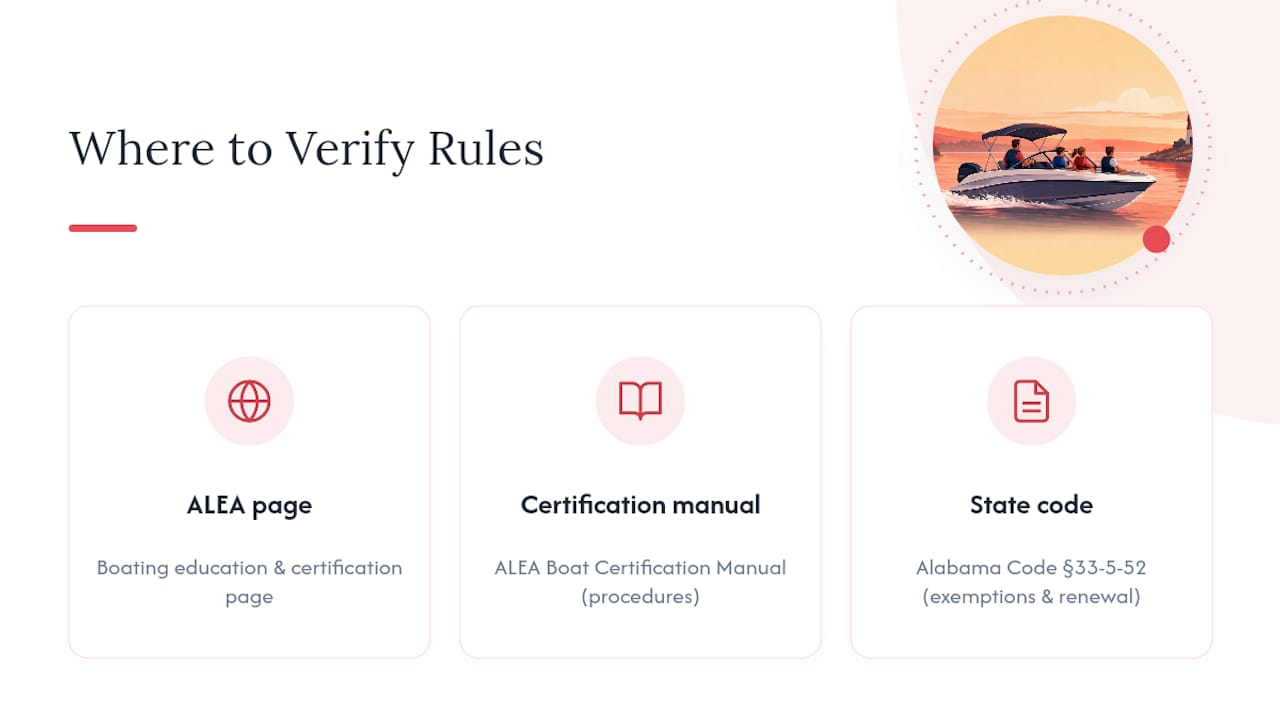
For the primary language behind every rule above, check ALEA’s boating education and certification page, the ALEA Boat Certification Manual for procedural detail, and Alabama Code §33-5-52 for the statutory text on exemptions and renewal.
Sources
- Boating Education and Operator Certification/License | Alabama Law Enforcement Agency
- Boat Certification Manual (ALEA)
- Alabama Code §33-5-53 — Application fee; examinations; exemptions (via Justia)
FAQ
How old do you have to be in Alabama to get a boating license?
You must be at least 12 to obtain Alabama boater safety certification, but 12 and 13-year-olds can only operate with a 21-or-older licensed adult on board and in control. Unsupervised operation requires certification and an age of at least 14.
Can a 13-year-old operate a boat alone in Alabama?
No. A 13-year-old may hold certification but must have a supervisor 21 or older on board and positioned to take immediate control at all times.
Who is exempt from the Alabama boater’s license exam?
Anyone born before April 28, 1954, anyone who was 40 or older as of April 28, 1994, holders of a valid U.S. Coast Guard operator license, and graduates of an approved boating safety course are all exempt from the written exam.
Can I use my Alabama boating license in Florida?
Alabama certification generally satisfies other states’ boating education requirements when the course meets NASBLA standards, but always confirm with the destination state before you travel, since exact reciprocity rules vary.
Do personal watercraft follow the same age rules as boats in Alabama?
Yes. Jet Skis and other PWC are governed by the identical age and supervision requirements as any other motorized vessel in Alabama.