Do You Need a Washington Boating License? Here’s the Fast Path
Anyone age 12 or older operating a motorboat with 15 horsepower or greater in Washington must carry a Boater Education Card, unless a specific exemption applies. If that’s you, the fastest path is simple: complete a NASBLA-approved course or pass an equivalency exam, print your temporary certificate immediately, and either mail the state application yourself or use a vendor that files it for you.
Here’s what that looks like in practice:
- Confirm you’re not exempt (born before January 1, 1955, hold a commercial or U.S. Coast Guard license, or fall under a renter/visitor carve-out).
- Enroll in an approved online, classroom, or home-study course, or sit for an equivalency exam if you already have boating experience.
- Print your certificate of completion the moment you finish. It works as your temporary card for a limited period after course completion.
- Submit the Boater Education Card application with the $10 state fee, or pick a vendor that submits it for you.
Pro Tip: Don’t wait for the mailed card before getting on the water. The printed temporary certificate is fully legal proof of compliance for a limited period after course completion.
Key Takeaways
Washington requires anyone 12 or older operating a motorboat of 15 horsepower or more to hold a Boater Education Card unless specifically exempted.
| Point | Details |
|---|---|
| Confirm your requirement | Check age, horsepower, and exemption status under Washington law before assuming you need a card. |
| Print your temporary certificate | Your completion certificate is valid proof for a limited period after course completion, but only if you print and carry it. |
| Budget for the $10 fee | The state application fee is $10 regardless of course provider; vendor course fees vary separately. |
| Expect a 3–4 week wait | The permanent plastic card typically arrives several weeks after your application is submitted. |
| Choose a vendor wisely | Safe Boating America offers Washington-approved online, Zoom, and in-person courses with same-day certificates. |
Table of Contents
- Washington Boating License Requirements: Who Actually Needs One
- How to Get a Boating License in Washington Step by Step
- Which Approved Course Format Fits You Best
- Do Out-of-State Visitors Need a Washington Boating License?
- Replacing a Lost Card and Avoiding Fines
- How Safe Boating America Gets You Certified Faster
- What the Conventional Advice Gets Wrong
- Get Certified With Safe Boating America Before Your Next Trip
- Sources
- FAQ
Washington Boating License Requirements: Who Actually Needs One
The legal foundation here is RCW 79A.60.640, which spells out exactly who must carry a Boater Education Card and who doesn’t. If you’re operating a motor-driven vessel with an engine rated 15 horsepower or higher, and you’re 12 or older, the law requires you to either hold the card yourself or be directly supervised by someone who does.
Several groups are exempt from this requirement, according to Washington State Parks:
- Anyone born on or before January 1, 1955.
- Operators holding a valid commercial vessel license or a U.S. Coast Guard license.
- People renting a vessel from a business that provides a boater safety checklist at the time of rental.
- Participants in a permitted race or regatta, for the duration of that sanctioned event.
Enforcement is straightforward but not punitive on the first pass. Operating without the required card is a civil infraction under RCW 79A.60.640, which typically means a fine. The statute includes a cure provision, though: if you can show proof you obtained the card within a limited period after course completion of the citation, the penalty can be waived. That said, waiting for a citation to force the issue is a poor strategy when the course itself usually takes just a few hours.
How to Get a Boating License in Washington Step by Step
Getting your card follows a predictable sequence, whether you’re brand new to boating or you’ve been running a boat for decades without ever needing formal proof of it.
- Choose your route. Take an approved course (online, classroom, home-study, or hands-on) or, if you already have solid boating experience, sit for an equivalency exam instead of a full course.
- Finish and print your certificate. The certificate of completion doubles as your temporary card for a limited period after course completion, but only if you print it and keep it accessible on the water.
- Submit your application. Send the Boater Education Card Application along with a copy of your completion certificate and a $10 check or money order to Washington State Parks, or use a vendor that files it for you.
- Wait for your permanent card. According to the state’s own boating safety education brochure, the plastic card typically arrives in the mail several weeks after the application is processed.
The $10 fee is set by the state and doesn’t change based on which course you take. What varies is whether your course provider handles that application step for you or leaves it in your hands. If you’re mailing it yourself, double check that you’ve included the check or money order and a legible copy of your certificate. Mailing errors are one of the most common reasons a card takes longer than four weeks to show up.
One detail trips up a surprising number of new boaters: the temporary certificate is your legal proof while waiting for the permanent card. Losing it before your permanent card arrives, or misplacing it during a busy summer weekend, is worth avoiding by saving a digital copy somewhere you can reprint it if needed.
Which Approved Course Format Fits You Best
Washington doesn’t mandate one format for boater education. It approves several, and Washington State Parks maintains the list of what qualifies.
- Online, self-paced courses. Work through modules on your own schedule, finish in a few hours, and take a final exam online. Best for most first-time boaters who want flexibility.
- Live classroom courses. Instructor-led, often over one or two sessions, with in-person Q&A. Better for hands-on learners or those who want direct access to an instructor.
- Home-study courses. Workbook-based instruction for people without reliable internet access.
- Equivalency exams. Skip the course entirely if you can demonstrate existing competency through a proctored test.
Vendors differ in one important way: some apply for your Boater Education Card on your behalf once you finish, while others hand you a completion certificate and leave the mailing step to you. That distinction matters because it changes how many forms land on your desk. Course fees vary by provider and format, and that price sits on top of the state’s flat $10 application fee, not instead of it.
Pro Tip: Before enrolling anywhere, confirm the course appears on Washington State Parks’ approved list. A course that’s approved in another state isn’t automatically valid here.
Do Out-of-State Visitors Need a Washington Boating License?
Visitors and recent boat buyers get a 60-day grace period, but the rules differ depending on which situation applies to you.
- Nonresident visitors operating a motorized vessel in Washington waters get a limited period after course completion before the state’s education requirement kicks in.
- New boat purchasers get a similar 60-day window from the date of purchase, provided you can produce a bill of sale if asked.
- Equivalent out-of-state or out-of-country certificates are generally accepted, but if you’re unsure whether yours qualifies, contact Washington State Parks directly rather than guessing on the water.
- Boat registration is separate from the education card. The Washington Department of Licensing requires registration within a limited period after course completion of moving to the state or 15 days after an out-of-state purchase, which is a different clock than your education requirement.
Carry your bill of sale, any out-of-state certificate, and ID during that window so an on-water check doesn’t turn into a longer conversation than it needs to be.
Replacing a Lost Card and Avoiding Fines
Cards get lost, wallets get wet, and boats get sold with paperwork still in the glove box. Washington State Parks has a straightforward fix for that.
- Replacement cards cost $5 and can be requested directly from the Boating Program rather than repeating the entire course.
- Operating without a required card is an infraction, but the fine can be waived if you prove you obtained the card within a limited period after course completion of the citation.
- Keep your temporary certificate accessible any time you’re on the water without the plastic card in hand. It’s your primary defense during a law enforcement check.
If both your temporary certificate and permanent card go missing before you’ve gotten either sorted out, contact the Boating Program before filing a duplicate application. Multiple submissions tend to slow processing down rather than speed it up.
How Safe Boating America Gets You Certified Faster
Safe Boating America runs Washington state-approved courses in online, live Zoom, and in-person formats, taught by certified instructors using NASBLA-approved materials. That matters because not every course marketed online actually satisfies Washington’s requirement, and verifying approval status yourself takes time most boaters don’t have before a weekend trip.
Students who complete a Safe Boating America course receive a certificate of completion immediately, which functions as the legal temporary card for a limited period after course completion. Depending on the course selected, Safe Boating America can walk you through the application step or clarify exactly what to mail if you’re filing it yourself, including the $10 state fee and where the paperwork needs to go.
- Same-day certification options for boaters who need proof before their next outing.
- Flexible scheduling across online, Zoom, and in-person formats.
- Instructor support if you’re unsure whether an equivalency exam fits your experience level better than a full course.
Boaters who plan around the temporary certificate, rather than waiting anxiously for the mailed card, spend far less time worrying about compliance and more time on the water.
Pro Tip: If you’re buying a boat this season, take your course before the sale closes. That way your temporary certificate is already in hand the day you take possession.
What the Conventional Advice Gets Wrong
Most guides to getting a Washington boating license treat the course as the finish line. It isn’t. The card application, and specifically the 60 day window the temporary certificate covers, is where people actually run into trouble. I’ve seen the pattern often enough in how these state programs work: someone finishes a course in April, gets busy, misplaces the printed certificate, and by June has no valid proof of anything while the plastic card sits somewhere in transit.
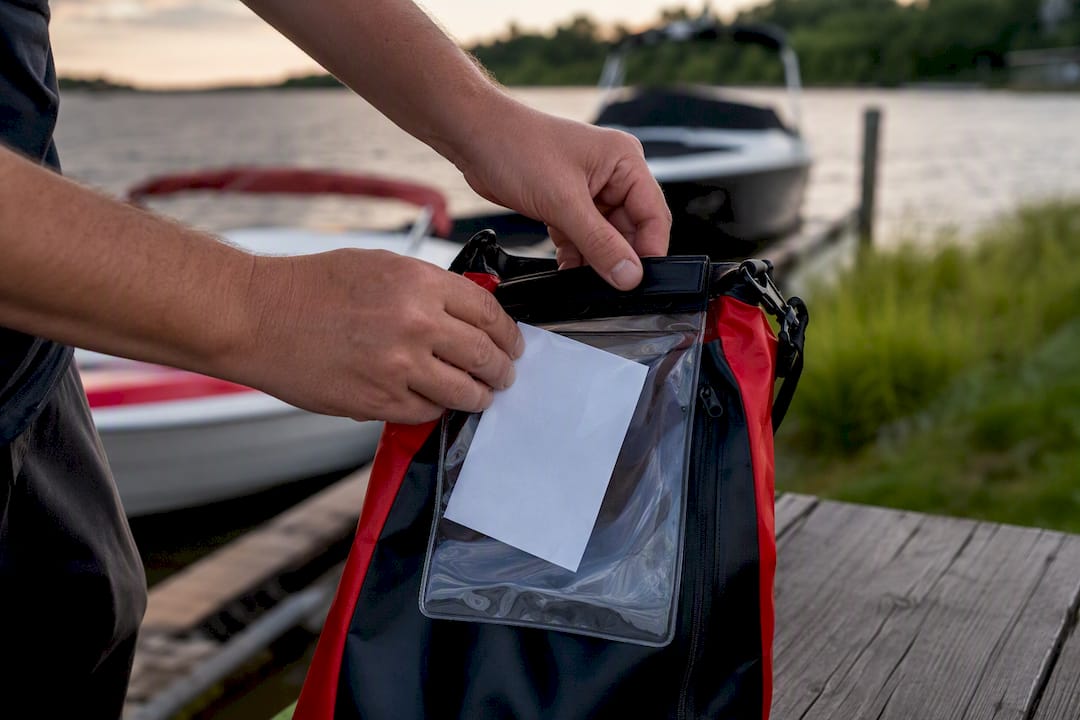
The fix isn’t more course content. It’s better paperwork discipline. Save a digital copy of your certificate the day you finish. Know whether your vendor is filing your application or leaving that step to you, because assuming the wrong one costs weeks. And if you’re an experienced boater who’s been running boats for twenty years without a card, stop assuming the equivalency exam is a hassle. It’s often faster than a full course and gets you the same legal standing.
The state built a reasonably forgiving system, with a cure provision and a 60-day buffer built into the law itself. Most boaters just don’t use it well because they treat the card as an afterthought instead of the actual requirement it is.
— Richard
Get Certified With Safe Boating America Before Your Next Trip
Safe Boating America is the faster route to a Washington Boater Education Card compared to piecing together a course and mailing your own application blind. Its Washington-specific course covers everything the state requires, in a format built around getting you a printable certificate the same day you finish, whether you learn better online, live over Zoom, or in person.
That matters most if you’re staring down a trip this weekend and don’t have several weeks to spare waiting on paperwork. Between the Washington Boating & PWC Certification Course and clear guidance on what boating safety education actually covers, you’ll know exactly what to expect before you enroll instead of guessing at course quality from a search results page. Sign up for the Washington course today and print your temporary certificate the same day you finish.
Sources
- Boater Education Card | Washington State Parks
- Boater Education Courses | Washington State Parks
- Mandatory Boating Safety Education brochure (Washington State Parks)
- RCW 79A.60.640 — Requirements to operate motor-driven boats/vessels—Exemptions—Penalty
FAQ
Do You Need a Boater’s License to Drive a Boat in Washington?
Yes, if you’re 12 or older and operating a motorized vessel with 15 horsepower or greater, unless you fall under an exemption like being born before January 1, 1955, or holding a commercial or U.S. Coast Guard license.
What Are the Requirements for Out-of-State Boaters in Washington?
Nonresidents get a 60-day exemption from the education requirement, and an equivalent out-of-state or out-of-country certificate is generally accepted; contact Washington State Parks if you’re unsure whether yours qualifies.
Can I Get My Washington Boating License Online?
Yes, several NASBLA-approved online courses satisfy the requirement, including options through Safe Boating America, and completing one gives you a printable temporary certificate immediately.
How Long Does It Take to Get a Boating License in Washington?
The course itself can be finished in a few hours, and your certificate acts as a valid temporary card right away; the permanent plastic card typically arrives by mail several weeks after you submit your application.
How Much Does a Washington Boater Education Card Cost?
The state application fee is $10, and a replacement card costs $5; course fees charged by your provider are separate and vary by format and vendor.