Connecticut PWC Laws: Jet Ski Rules and Certificate Requirements

Connecticut requires every personal watercraft (PWC) operator, whether on a Jet Ski, WaveRunner or similar craft, to hold a Certificate of Personal Watercraft Operation (CPWO) issued by the state. Everyone aboard must wear a Coast Guard-approved life jacket, and riding between sunset and sunrise is prohibited. You earn the CPWO by completing an approved course. A one-day class covering both boating safety and PWC operation is the fastest route, and we teach it.
This guide covers the rules a Connecticut Jet Ski or WaveRunner operator needs: the certificate, age limits, equipment, where and when you can ride, the Connecticut River, and the 2026 change that affects owners who lend out their PWC.
TL;DR
- A CPWO is required to operate a PWC in Connecticut. A certificate or license from a state with a reciprocal agreement also qualifies.
- Carry the certificate on board. You earn it through an approved combined boating and PWC course, or by passing the state’s equivalency exam.
- All persons aboard wear a Coast Guard-approved life jacket. Inflatable models do not meet the PWC rule.
- No PWC operation from sunset to sunrise. Stay at Slow-No-Wake within 200 feet of shore, docks, piers, floats and moored vessels.
- Under Public Act 26-60 (2026), an owner may not knowingly let any uncertified person operate their PWC, at any age.
Table of Contents
- Do you need a license to ride a Jet Ski in Connecticut?
- How you qualify for a CPWO
- Age rules for Connecticut Jet Ski operators
- Life jackets and equipment
- When you can ride: the sunset rule
- Speed, distance and wake rules
- Riding on the Connecticut River
- What changed in 2026: owner responsibility
- A checklist before you launch
- Get certified for Connecticut
- Our view
- FAQ
- Sources
Do you need a license to ride a Jet Ski in Connecticut?
Yes. Connecticut does not call it a license. The document is the Certificate of Personal Watercraft Operation, or CPWO. Under Connecticut General Statutes § 15-140j, no person may operate a personal watercraft unless the Commissioner of Energy and Environmental Protection has issued them a CPWO. The same statute allows a person holding a certificate or license from a state with a reciprocal agreement to operate a PWC in Connecticut.
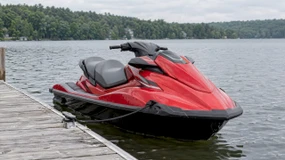
The statute defines a PWC as a vessel under 16 feet, powered by an internal-combustion engine driving a water-jet pump as its primary propulsion. It is designed to be operated by a person sitting, standing or kneeling on it, rather than inside it. That covers Jet Skis, WaveRunners, Sea-Doos and similar craft.
The statute also covers jetted articulated vessels (JAVs), a newer category of jet-propelled personal craft. The same certificate rule applies to them, and under 2026 amendments no person under 16 may operate one.
Two practical points:
- Carry it. The certificate must be on board while you operate.
- Rental and borrowed craft. The rule attaches to the operator, not the owner. Whoever is at the controls needs the certificate, even on a friend’s machine.
NASBLA, the national association of boating law administrators, lists Connecticut as requiring PWC education for all ages. There is no age at which you skip the course.
How you qualify for a CPWO
The statute gives three routes. An applicant must:
- Complete an approved combined safe-boating and PWC course, or
- Meet the requirements for a Safe Boating Certificate (SBC) and complete an approved PWC course, or
- Pass the commissioner’s equivalency examination.
Most riders take the first route, because one class covers both subjects. Our Connecticut boating and PWC certification courses are built for that route. Instructors are state certified, and students are certified the same day. For a step-by-step view of the process, see our guide to getting your CT PWC certificate.
Choosing a class format
| Format | What it is | Price listed on our site |
|---|---|---|
| Zoom Online 1-Day Class | Live instructor-led class from home | $75 |
| In-person Connecticut class | Classroom day with an instructor | See the course page for current sessions |
| Private Connecticut Boating Course | A class arranged for your own group | No published price |
| Online computer-based course | Self-paced course for states that accept it | No published price |
In-person Connecticut sessions run on a recurring schedule, with past dates in the East Hartford area. Check the course page for the sessions open now rather than relying on a date you saw elsewhere.
Riders who live in another state but ride in Connecticut should check the nationwide online courses. Reciprocity means a certificate from a state with an agreement is accepted in Connecticut, but you still carry it with you on the water.
Age rules for Connecticut Jet Ski operators
The age picture has three parts.
- Operators 16 and older need the CPWO like everyone else.
- Operators under 16 who were not issued a CPWO on or before March 9, 2004 may operate a PWC only under onboard supervision of a person at least 18 years old who holds a CPWO. The supervisor must be on the PWC, not watching from shore or another boat.
- Jetted articulated vessels cannot be operated by anyone under 16, per Public Act 26-60.
In practice, a parent supervising a teenager needs their own CPWO, and the teenager should hold one too, since education applies to all ages.
Life jackets and equipment
The PWC life jacket rule is stricter than the general rule for boats. Under the same Connecticut PWC regulation, all persons aboard a PWC must wear a Coast Guard-approved personal flotation device (PFD), and inflatable PFDs are not acceptable. The USCG’s state law summary also lists a Coast Guard-approved PFD as required for Connecticut PWC operation.
What that means when you buy gear:
- Choose a foam or other non-inflatable Coast Guard-approved vest that fits snugly.
- Count passengers before you launch. Everyone aboard wears one, including the person sitting behind you.
- Check the approval label inside the vest before each season.
When you can ride: the sunset rule
Connecticut prohibits PWC operation between sunset and sunrise. The regulation goes further: no person may operate, be aboard or be towed by a PWC in that window. The USCG summary adds that operation is also prohibited during periods of restricted visibility, such as heavy fog.
Plan your return for before sunset, not at sunset. Sunset times shift through the season, so check the time for your launch location on the day.
Speed, distance and wake rules
The operating rules in Regulation 15-121-A15 are specific:
| Rule | Requirement |
|---|---|
| Near shore and objects | No faster than Slow-No-Wake within 200 feet of shore, a dock, pier, float or anchored or moored vessel |
| Exception | Approaching to let a water-skier take off or land |
| Wake jumping | No jumping another vessel’s wake within 100 feet of it in a way that lifts the hull completely out of the water |
| Night | No operation, riding or towing from sunset to sunrise |
Slow-No-Wake means the slowest speed that keeps the craft under control, with no wake. Many riders misjudge 200 feet. It is roughly two-thirds of a football field. Measure it by eye against a known object such as a dock length and err on the side of more distance.
Towing a water-skier
Towing is allowed only on a PWC with a capacity label for at least two persons plus the operator. The state’s regulation also sets minimum dimensions: 119 inches long, 46 inches wide, with a 39-inch seat for three-person capacity. A small one- or two-seat PWC does not meet the towing rule. The label on the craft is your check.

Riding on the Connecticut River
The Connecticut River has its own rules in Regulation 15-121-B15, which applies from the Bulkeley Bridge in Hartford to the Saybrook outer light. Operators must be careful and prudent and use minimum wake or Slow-No-Wake when passing marinas, yacht clubs, launch areas or congested areas.
The posted speed limits are:
- 45 mph on weekdays off-season
- 30 mph on weekends and holidays in season
- 25 mph from half an hour after sunset to half an hour before sunrise
The 25 mph night figure applies to vessels generally. PWCs are still barred from operating between sunset and sunrise, so it gives you no night window on a Jet Ski. The PWC rules above apply on the river as well. Your CPWO and a non-inflatable life jacket for every rider are required there too.
What changed in 2026: owner responsibility
Public Act 26-60, approved May 20, 2026, amended § 15-140j. Before it, the owner-duty provision applied only to uncertified operators under 16. The act removed that age qualifier, so owners may not knowingly permit any uncertified person to operate a PWC or JAV, whatever the person’s age.
An attorney’s 2026 analysis of the act notes the practical effect: lending your Jet Ski to an uncertified adult is now squarely within the owner’s duty.
What owners should do:
- Ask to see the CPWO or a qualifying reciprocal certificate before handing over the keys.
- Keep your own certificate on board.
- Get friends and family certified before the season rather than during it.
For questions about your own liability after an incident, speak with a Connecticut attorney.
A checklist before you launch
- CPWO (or qualifying reciprocal certificate) on board for every operator.
- Coast Guard-approved, non-inflatable life jacket on every rider.
- Return time set before sunset, with weather and visibility checked.
- Riders under 16 accompanied on the PWC by a CPWO holder at least 18 years old.
- Route planned to keep 200 feet from shore, docks and moored boats at Slow-No-Wake.
- Tow only if the capacity label and dimensions qualify.
Get certified for Connecticut
A Connecticut CPWO course is one class, and you leave certified. Our Connecticut classes are taught by state certified instructors and USCG-licensed captains using NASBLA-approved material. The Zoom Online 1-Day Class is listed at $75. For a group, family or crew, the private Connecticut course can be arranged for your own party.
See the Connecticut boating and PWC courses, the Zoom class or the private Connecticut course. Gift certificates for boating courses are available at safeboatingamerica.com, a simple present for a new boat owner.
Our view
The most common mistake we see with Connecticut PWC law is treating the certificate as paperwork. It is the training that matters. The 200-foot Slow-No-Wake rule, the wake-jumping limit and the sunset cutoff exist because most PWC trouble happens close to shore, close to other boats and late in the day.
We built our classes around one day of instruction that gets you certified and on the water. A live instructor lets you ask about your own waters, whether that is the Connecticut River, Long Island Sound or a lake, and what the rules mean there.
The 2026 change to owner responsibility makes this more relevant for households. If more than one person drives the Jet Ski, everyone should be certified. Booking one class for a family or a group of friends is the simplest way to do that, and our private course is arranged for exactly that.
Richard
FAQ
Do I need a license to drive a boat in CT?
Connecticut requires a Safe Boating Certificate for most motorboat operators, and a CPWO for anyone operating a personal watercraft. Our guide to the Connecticut boating certificate explains who is covered and how to apply. A combined boating and PWC class covers both documents’ course requirements.
Can I use my out-of-state certificate on a Jet Ski in Connecticut?
Possibly. Under § 15-140j, a certificate or license from a state with a reciprocal agreement with Connecticut also permits PWC operation. Carry it on board with you. If your state has no agreement, you complete a Connecticut-approved course.
Can I ride a Jet Ski at dusk or after sunset in Connecticut?
No. Connecticut prohibits operating, riding on or being towed by a PWC between sunset and sunrise. It also prohibits operation in restricted visibility. Plan to be back at the dock before sunset.
Can a 14-year-old ride a Jet Ski in Connecticut?
A person under 16 who was not issued a CPWO on or before March 9, 2004 may operate a PWC only with a CPWO holder aged 18 or older aboard supervising. The state’s education rule applies to all ages, so the teenager should take the course too.
Can I let a friend ride my Jet Ski without a certificate?
Not knowingly. Since Public Act 26-60 took effect, an owner may not knowingly permit any uncertified person, of any age, to operate a PWC. Ask to see the certificate first.
Sources
- Connecticut General Statutes § 15-140j
- Conn. Agencies Regs. § 15-121-A15, Personal watercraft
- Regulations of Connecticut State Agencies, PWC operation
- Connecticut River boating regulations, DEEP
- USCG state boating laws, personal watercraft operation
- NASBLA mandatory education
- Connecticut Public Act 26-60
- Connecticut’s new boating rules and injuries on the water